
A BADAGA AND ENGLISH DICTIONARY: GLOSSARY AND GAZETTEER
by Paul Hockings & Christiane Pilot-Raichoor
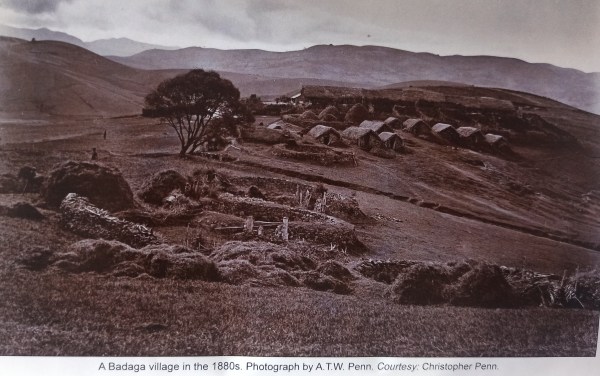
Badaga/Baduga, spoken by an indigenous tribe of the Blue Mountains, the Nilgiris in the Southern India, is an unique Dravidian language. Though wrongly clubbed and considered as part of old/haliya Kannada due to many similarities, it has been proved to be a separate language by itself. Now it figures as an endangered language in the UN list. The Nilgiris, with its many primitive tribes, has been the centre of many researchers and anthropologists for many centuries now. Most prominent among them is, no doubt, Prof. Paul Hockings. His extensive study/research on Badagas during his stay among them in the hills in the 1960s, has resulted in many books and publications which are a great source of information and reference . I found his book on ” Badaga Proverbs – Counsel from the Ancients: A Study of Badaga Proverbs, Prayers, Omens, and Curses “, quoted extensively in the dictionary very interesting and educative. May be there are a couple of glitches here and there but his work is exhaustive, indeed. I am in touch with him and find him to be very friendly and communicative.
Paul Hockings studied anthropology and linguistics at Sydney, Toronto, Chicago, Stanford and California (Berkeley) universities. He was the editor of the Encyclopedia of the Nilgiri Hills (Manohar 2012), as well as author of several other books on the anthropology of that area. The late Christiane Pilot-Raichoor was a linguist with a doctorate (1991) from the University of Paris – Sorbonne, specializing in the Badaga language. She supervised grammar and etymology in the Dictionary.
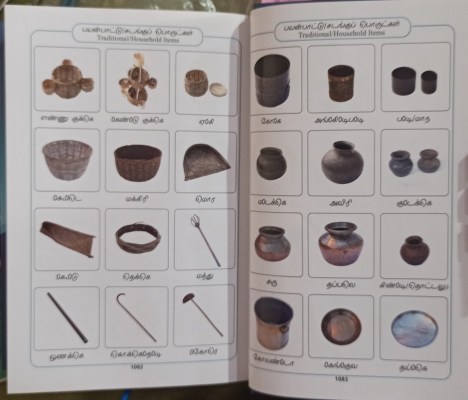
The latest edition of “A Badaga and English Dictionary” has been published by Manohar, Delhi and is priced at Rs.3995/- for a set of two books (three parts), 1024 pages, and is available from Amazon at Rs.3076/– (23% discount)
This dictionary is a must for any serious student of Badaga Language and a great guide & reference to know about Badagas and the Nilgiris – Wing Commander Bellie Jayaprakash


Prof: Paul Hockings, one of the authors, in an email, informs me that
This Dictionary, just released by Manohar Publishers, is a much revised and expanded version of the original Badaga Dictionary, published in Berlin in 1992. The authors for each edition were two anthropological linguists, Paul Hockings and the late Christiane Pilot-Raichoor. Together they have compiled a two-volume dictionary which is without parallel in Dravidian studies. For a start, it is the only dictionary that incorporates a Gazetteer of about 2,000 local placenames, including all Badaga, Toda and Kota villages past and present.
Etymologies are given for most entries, linking Badaga words to forms in the Dravidian Etymological Dictionary of T. Burrow and M.B. Emeneau. But a striking innovation here is that Hockings has for the first time shown that in many Dravidian Languages there remain a just a handful of words ultimately derived from Sumerian. This was the first language ever to produce written records, and it spread from Mesopotamia widely across the Western part of the Indian Ocean, some three thousand years ago, reaching as far as Kerala. Thus the Badaga word ūr or ūru (‘head village’) was derived indirectly from the Sumerian uru, ‘town, village, district’, and the Badaga giri (as in Nilgiri) is cognate with the Sumerian giri,meaning a ortress or refuge.
Another novel feature of the book is that Hockings has been able to comb old maps in order to list the Badaga names of 220 Toda hamlets, most of which no longer exist. Wherever he discusses any village or hamlet he gives its exact location, cited as being so many kilometres from points in Ooty, Kotagiri, Coonoor or Gudalur.
This book opens with a short outline of Badaga cultural history, and an essay discussing the relationship of Badaga with other, neighbouring languages. At the back are ten Appendices, with such useful information as the names, Badaga and scientific, of plants and animals, detailed lists of all villages, names of deities, etc. Also of crucial value is Part 3 of the book, a complete English-Badaga glossary, and for most of the nouns, including all plants, animals and placenames, concise references are given to the extensive literature on the Nilgiri region. This means that if a botanist, for example, even if not particularly interested in the Badaga language, wants some technical information about mango, he or she only has to look up ‘mango’ in this English Glossary, and that will give the comparable Badaga word, the entry for which will include concise references to mango in the botanical literature. In this way the book is more than just a Dictionary, it is a ready-reference book.
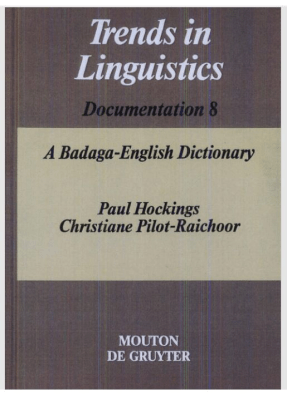
A Badaga English Dictionary – 1992 Edition
Counsel from the Ancients: A Study of Badaga Proverbs, Prayers, Omens, and Curses

Prof. Paul Hockings in his email [3/3/2015] had writen :
Dear J.P., It was really very generous of you to devote so much space to my work in your Badaga website. I do appreciate it.
My reply : Thank you Paul for the email. Since I feel that your books, particularly, ‘Counsel from the Ancients: A Study of Badaga Proverbs, Prayers, Omens and Curses‘ must find a place in every Badaga home, I wished that it was easily available and affordable. Thanking you once again for making Badagas known to the world. – Wg Cdr JP






 Mookuthi
  Chinna




 ==
==



 Badagas of the Blue Mountains