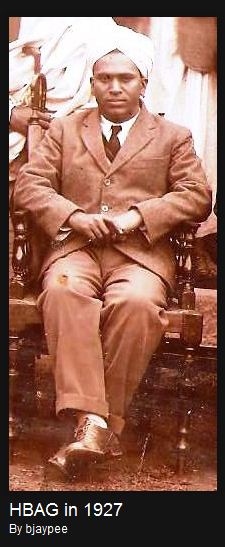
Ari Gowda – a tribute

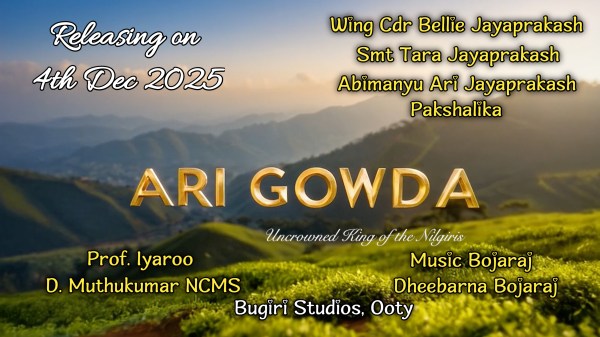
We feel extremely proud to present the following documentary on the life of

Rao Bahadur H B Ari Gowder on this 132nd Birth Anniversary

Ari Gowda – 132nd Birth Anniversary

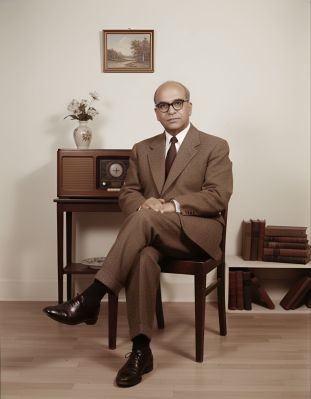
Rao Bahadur HB Ari Gowder

132nd Birth Anniversary

Rao bahadur H B Ari Gowder

(04 – 12 – 1893 — 28 Jun 1971)

AI Photo – Dheebarna Bojaraj

Documentary

We pay our homage and respects to this great Badaga leader

and uncrowned King of the Nilgiris

Must Visit to know all about Badagas

Must visit these pages

Tribal Status of the Badagas

TRIBAL STATUS OF THE BADAGASDr.R.Haldorai

Anthropological study is the basis for considering scheduled (hill) tribe. So, it is considered as
a relevant document in this regard. Anthropologists examine the cultural aspects, traditional
vocations and customs for considering the tribal status. Badagas of the Nilgiri hills have lived long in
isolation in that plateau. As the hill is the home land for these people for a long period, the hill tribe
status for these people is obviously natural one. There is no doubt that their history goes back to
very early period. There is reason to suppose that they are part of a wave immigration that swept
them into South India before Christ1. Since then, they are identified with the Nilgiri hills alone. Their
origin is buried among the secrets of the past.
A tribe, as we find in India is a collection of families or group of families, bearing a common
name, which, as a rule does not denote any specific occupation, generally claiming common descent
from a mythical or historical ancestor and occasionally from an animal, but in some parts of the
country held together rather by the obligations of blood-feud than by the tradition of kinship,
usually speaking the same language, and occupying, or claiming to occupy, a definite tract of
country. A tribe is not necessarily endogamous” (The Imperial Gazetteer of India vol-1: 308).
“The use of the word ‘tribal’ follows South Asian usage, refers to a type of societal organization
and does not imply a lack of sophistication or of economic well- being. It usually does imply a certain
amount of isolation in the past, if not the present. In this context ‘tribal’ contrasts with ‘caste’ as one
of the major organizing principles of South Asian society. The Nilgiri plateau of extreme Western
Tamil Nadu was almost totally isolated until the nineteenth century. It developed unique cultural
complex of its own with at least four Dravidian languages spoken there. They are Toda, Kota, Badaga
and Irula
” (McAlpin 1981 :19) 2 .

Tribe versus Caste
“Today we find no castes in Badaga society” (Hockings, Paul 2005:4) 3 .
Badagas were not under the influence of caste system in any part of their history. In caste
system a person’s social status was determined by his occupation. Although caste depended upon a
person’s occupation it became hereditary in due course. So, it is inevitable to a person to live with an
unalterable particular social status throughout his life. The traditional association between caste
and occupation is far from dissolution. Badagas apparently changed their occupations to suit the
environment. They never developed intrinsic bond with any particular occupation. It is to be noted
that the very name Badaga itself is not derived from any occupation 4 . In India, most of the caste
names are derived from occupations. Badagas major occupations were food gathering, honey
collecting, hunting, buffalo rearing, millet cultivation (that too swift cultivation for some time), cash
crop cultivation, etc., Among these a particular occupation was predominant at a particular time.
And also, all the sub groups of Badaga community engaged the same occupation. In Badaga society
the clans are created not by their profession and they are by birth.
Badaga population was very small up to the beginning of the twentieth century and they
spread over the entire Nilgiri plateau. In that case, for a long period there were very few families in a
haTTi (hamlet) 5 and all the families were descended from a same forefather. So, there was a social
compulsion to venture occupations in common. The origin of the caste system in India is shrouded, but it seems, it originated some two thousand years ago. Caste system is associated with religion
and people were categorized by their occupations. Badagas’ religious beliefs were primitive in
nature, so, the religious side of their social organisation was lacking to originate caste system
jaati (caste) is used in India specifies a subdivision of a larger division varna (a concept based
on colour or race). The varna concept is entirely unknown to Badagas. To uphold caste system the
reincarnation belief played a major role. According to that belief after each life a soul reborn into a
new material form. Badagas’ inclination towards ancestor worship is so strong. They do not have
belief in the past and future births and do not have any idea about karma theory. One of the
religious beliefs of Badagas is that all the dead are there in a particular place near mallaaDu, a
western part of the Nilgiris, in astral bodies and the person who is going to die will join with them 6 .
Unlike the varna system divorce and widow remarriage are prevalent among Badagas.
Badagas do not suffer from any stigma of the kind the depressed castes do.

Egalitarian society
Tribals usually constitute egalitarian societies. The Badagas held the individual in high
respect. The names they christened to their children (e.g. booja = friend; gilla = man having stick in
hand, a respectable; kuNDa = strong man; beLLa = pure hearted man; panne = beautiful woman;
gavuDa = village chief, etc.) indicate the attention given to the individual. Likewise, their respect for
individual is evident in their treatment of the dead. They were buried individually in the earliest
days, under mound. The society was not held together by a king or an employer. Individuals had
their roles as warrior, protector, priests and artisans. Where there was crisis, the people gathered in
an assembly and took decision. The society was governed by the people themselves. During their
agricultural vocational period, that is during the last one and half centuries the families had mostly
the equal share of property. Then the gap between rich and poor was very narrow. They had even
common buffalo shed called ‘tho’ (kraal) and at times they had taken buffalo grazing as a common
venture. They constitute a near egalitarian society at most part of their dwell at Nilgiri hills.

Occupation
Badagas are professing agriculture since the second half of 19th century, that too up to
middle of 20th century they were millet cultivators. Anyhow, once their occupations were buffalo
rearing, hunting and food gathering. These occupations were there along with their agriculture up to
the middle of last century. Once ganje (barley), korali (Italian millet), saame (little millet), eragi
(finger millet), etc., were the popular and staple food grains among Badaga people. Popular kinds of
bread were pottiTTu (wheat dosai) and tuppadiTTu (confectionery). They were made with wheat
flour. Their food is simple and whole some. Culturally, once most of the Badaga families were living a
nomadic life in Nilgiri plateau. They had no permanent settlement. They lived in thatched sheds
called hullumane (hut). They never think of using buffaloes for meat. Nor did they traditionally sell
their milk. It was given away free to poor members of the community. Selling milk is like selling their
own prestige. The only commercial product of milk was the butter. They sacrificed he-buffalo on
certain festivals and funeral of males. The she-buffaloes were considered one’s capital and they
never think of their sale. On some occasions men move from their families with their buffaloes for
better grazing. Badaga tribe is definitely a territorial group. The Nilgiri is the territory of Badagas and
emigrants always refer to it as their home.Badagas entertain a close relation with the Nilgiri tribes and they were economically interdependent.

Tribal council
The Badaga tribal council is so powerful and it exercises considerable control over the
community. Among Badagas the elementary unit of society is the mane (family). Children are
important part of mane and they are treated with kindness and indulgence irrespective of their sex.
Badagas have another wider unit called kuDumbu (consists of few families). Once production of food
was a corporate responsibility of the extended family and it was the function of mane to see that
food was economically used. Each kuDumbu has a doDDamane (a ceremonial house) which gets
importance during festivals, marriages, deaths, etc. All the disputes among the family members are
tried at kuDumbu assembly. Few such kuDumbus exist in a haTTi (hamlet). Each haTTi has a
doDDamane (ceremonial or principal house) and a ‘manda’ (council).
The village ‘manda’ (council) plays an important role in shaping the society with moral
standards. It is headed by a headman called ‘gavuDa’. Each village had its headman, who is assisted
by few elders and decided public matters such as disputes, differences, etc. The village ‘manda’ is
there as not mere council for deliberation, but acted as a strong organ of executive work. There are
three levels of headmanships viz., gottugaara (headman of an haTTi, hamlet), gavuNDikke (headman
of an uur, a larger area, mostly consists of few or more haTTies ), gavuDa (headman of a siime ).
These hierarchic levels show how the system is vogue vigorously and systematically. Unresolved
disputes at kuDumbu level come to the village assembly and then to uur and then to naakkubeTTa
(tribal assembly). The Badagas are divided in four naaDus or districts and are ruled by gavuDas,
tribal chiefs.

Religion
Badagas’ religion seems to have been one of the very primitive types, predominance with
ancestral worship. Badagas consider their ancestral houses as their temples. Special rites are
performed in their ancestral house twice or thrice a year. Any Badaga can act as a priest but among
the clan agnates. The essential features of ordination are abstained from meat eating for few days,
preparing himself for poojas like taking bath in stream, sleeping at temple, etc. Places of worship of
Badagas and nature co-existed beautifully. There are nearly no devotees on ordinary days. But on
the occasion of festivals which falls yearly once large numbers of devotees turn up. Their ancestor is
known as devva (corrupt form of deyvam). The festival of devva is also the harvest festival of
Badagas celebrated alike throughout the community. devva festival is a living tradition in which
almost everyone in the village participates making it a real social thread connecting the entire
society. devva still remains untouched and is performed year after year with unprecedented pomp
and splendour. Because of the universality, it is firmly rooted in the religious faith and tradition.
In Badaga tradition juvikiNDi (water jar), ele kannaaDi (bronze mirror), jegaNDe (victory bell)
represent the very deity itself and these articles get pooja once in a year that too on devva festival.
Except this festival days rest throughout the year these articles are kept in a hidden place at forest.
Goddess hette, a prominent deity, worshipped by the Badagas of Nilgiri hills, is in reality an
ancestor that has been deified. hette is a popular deity of local origin. There are fourteen known
Hhettes worshipped and numerous rites and ceremonies centring on propitiation of goddess Hette.

Badagas claim no divine origin for their religious beliefs. Their customs are mostly pragmatic
and relevant to their day-to-day life. Their marriage customs also do not reveal any supernatural
underpinnings. Badagas observe pollution and ritual purity in limited ways. The religious activities of
the Badagas are very limited. They themselves perform the rituals. For Badagas their tribe is sacred.
They believe in next world and they don’t have rebirth theory. For them the way to salvation is their
tribe. Badagas have remained comparatively free from vedic religious influence.

Clan
Badagas are scattered widely over the hills and their hamlets amount to nearly four hundred
in number. The whole people are closely connected by totemistic clans and intermarriages. The
Badagas are endogamous tribe divided into exogamous clans. The clans are correlated not only with
exogamy but also with totemism. Residences being patrilocal, the Badagas are patrilineal people.
Patrilineal descent (or agnate) is descending from an ancestor down through a series of male links.
Breach of the rule of clan exogamy is regarded as highly dangerous in so far as it entails disastrous
socio-religious consequences. Inheritance of property takes place only through the male line. Hence
the Badaga clans furnish a good example of social organization based on clans. Badagas have fifteen
totemism clans after animals or material objects. People of a clan are agnates and hettappa, a
common ancestor is the binder among a clan. The tribal scenario of India shows the prominent
example of the clans. In consonance with that Badaga maintains its own exogamous clans through
the ages. It is the exogamous character of a clan that makes it a distinctive group. Marriage is one of
the causes for kinship relation.
The existence of totemism in Badaga society on a large scale has been brought to notice in
recent years. Badaga society is broken up into a number of totemistic clans. Each clans bears the
name of animal [kastuuri (musk deer), aane (elephant), naaga (cobra), selandi (spider) ] or material
[beLLi (silver)] or natural objects [ maari (rain), kooveeri (river kaveri), maduva (honey)]. The
members of such a clan may not intermarry. In a peculiar way, in Badaga society the names of
geographical territories also came into being for identifying the clans. In consequence territory
determined names diminished the use of totemistic names. But in bottom line totemistic exogamy
prevailed on a fairly large scale and still in active operation. The American anthropologist Dr.Paul
Hockings and others pointed out their totemistic clans. The clans are exclusively patrilineal groups.
According to F.Metz (1864) the Badagas recognise eighteen classes, each of which has its
own peculiar characteristics. S.M.Natesa Sastri (1909) simplifies this into six septs. Paul Hockings
(1980) identifies sixteen totemic clans among Badagas. They are 1.sooriya kola, 2.sandira kola, 3.
baraTa kola, 4. brammma kola, 5. beLLi kola, 6.selandi kola, 7.kooveeru kola, 8. madure kola, 9.
kastuuri kola, 10. mallige kola, 11. anniya kola, 12.maari kola, 13.madave kola, 14. maaNikka kola,
15.naaga kola and 16. saamandi kola. Totem and exogamous divisions do co-exist and totem is
primary. It is obvious that the clans are the major criterion for identifying the Badaga groups and
their totemic identifications also once popular.

Culture
Badaga culture was evolved in the Nilgiri hills and mainly under the stimulus of the Dravidian
environment. Badagas had earned a reputation of being peace loving people as well as diligent
workers. The nature of their hospitality is praised whoever had a chance to contact them. The
hospitality of Badagas is unparalleled anywhere in India. Any family, however poor, will not allow you to leave without having at least a cup of tea. Prior to the advent of coffee and tea buttermilk
was offered to guests instantly.

Folk-culture is so strong in the Badaga land. There is an unrecorded vast folk culture found in
Badaga land. In fact, this is the real treasure of this simple people. The roots of Badaga culture lie in
its folklore. The fables of this peace-loving people are inspiring. The songs and dance are enchanting.
It has been a part of their lives unknowingly. The interesting part is, in Badaga dance that is not just
the audience who enjoy the show the participants did as well. Dancing and singing were considered
pastime for a tribal community. Badaga dance is in itself unique and interesting. Normally it falls into
a pattern 1-2-3 steps. And then, they have to move according to the co-dancers. The music too
represents the theme of rural life. The popular game among the Badagas was hagaru, in which one bats a ball with a bat and others run and catch.

Badaga funeral ceremony is complex. They consider performing the funeral of their kin,
especially of elders is most important one and they tried to perform the funerals in traditional order
with utmost care.

Badagas have their own lunar and solar time reckoning calendar7. They are using their own
instruments to measure grains 8 . Their food habits and recipes still hold distinctive character.
Badaga wedding is relatively simple with fewer rituals. As soon as bride enters to the
bridegroom’s house with a pot full of water, the wedding got over. In olden days even the garland
exchanging rituals between couple was not in vogue. As per their tradition, the wedding costume is
not grand. Simple white clothes are used for the wedding ceremony. Women have prime
importance in wedding ceremonies. The mother-in-law welcomes her daughter-in-law by offering
water for cleaning her feet. Dowry is unknown in Badaga marriage. They perform their own
traditional rituals on puberty, house warming, birth, etc.,
The un-sewn white garments worn by men and women vary widely from others and it stood
as fundamental ingredients of cultural ethos.
Their houses were uniform in nature with slopping tiled roofs, short wooden doors, mud
floors, open verandah with pials and two rooms (one is allotted for males and another is for females)
Badagas evolved from humble family background. As one of the primitive traits the shyness
of contact with the public at large is seen with them even today.
Badagas have their own tribal medicinal system.
Badagas have the system of patrilineal family descent. The lineage group is extended to
include all those to be related through common descent forms a clan. Badagas have the tradition of
naming their children with the names of their own grandparents. Due to this the proper names like
booja, beLLa, kuLLa, kaaDe, maasi, micci, etc., were so common among Badagas. In this way they
paved the way to know the names of their ancestors up to the very ancient times.

Language
Badagas have a distinctive language of their own and it belongs to the Dravidian family of
languages. The Badaga language is a dominant spoken language of the Nilgiri hills of Tamil Nadu.
Although Badaga language is considered as uncultivated because of its lack of writing system and literature, it fully serves the purpose of Badagas. Study of the Badaga language is important from the
point of view of the culture, habits and social attitudes of the Badagas. In Tamil Nadu, next to Tamils
Badagas are the second largest linguistic group who speak indigenous language of the state. Badagas
are unadulterated by outside influence for a long period. They retain many old and distinct features.
Due to this Badaga language preserves many words that are archaic in Dravidian languages. A careful
study of the Badaga words reveals to us much of the life and thought of the ancient Badagas.
Language is a powerful mode of transmission of cultures. So, the language factor is also a basic
factor for considering tribal status. Most of the tribes in India are bilinguals. But as an exception to
this Badagas were monolinguals comparatively for a longer period. Once lingua franca of the Nilgiris
plateau was Badaga and there was no major language within their reach. However, bilingualism is
seen with the present generation.

Foot-notes

  1. The Badaga tribe of the present order is formed in a peculiar way. Among Badaga clans, major
    clans are there at Nilgiri hills from the ancient times. Subsequently few clans joined with them in
    different times of the history and few new clans were created by the way of marrying female
    members non Badaga males. If any one considers the entire Badaga tribe as a whole, normally he
    fails to understand their history well.
  2. David W.McAlpin, 1981, Proto-Elamo-Dravidian, The evidence and its Implications, The American
    Philosophical Society, Philadelphia.
  3. Hockings, Paul, 2005, Badaga Kinship rules in their socio-economic context, Anthropos vol-77,
    HRAF Publication Information, New Haven Conn
    Hockings, Paul is a well-known Anthropologist who did extensive study on Badaga.
  4. Badagas mention their language as baDugu and their community as baDugaru. In English the term
    Badaga is used for both language and community. Anyhow, because of acquaintance with the
    kaalaamukha saiva in good old times, the common name Badaga had come to being from the term
    buudibaDaga (a man who applies ashes to his body, Lord Siva). The ethnologic Badaga is of the
    indigenous Dravidian origin and in this respect, it does not differ denomination of other Dravidian
    tribes.
  5. The name haTTi derives from the old word paTTi which means cattle (buffalo) pen.
  6. This belief is expressed apparently in one of their death ceremonies called ‘battaarsikkoodu’
    (praying with saamay). In that ritual an elder agnate recites as ‘indu satta aNNa or tamma or
    …beTTuno, peeruno, gumbuno, goDano elli iddaleyu jaati janava kooDa seerali endu battaarsikkiniyo
    (The dead one may wander around a hill or in a marshland or in a thicket or in a gorge. Wherever
    he/she is, we pray for his/her safe journey to join with his/her people). The ballads koolitippe,
    haTTitippe, etc., narrate this concept elaborately.
  7. kuuDalu, aalani, nallaani, aani, aadire, peeraaDi, aavaaNi, perattaadi, doDDadiivige, kirudiivige,
    tay, and emmaaTTi are Badaga months.
  8. maana (half litre), paDi (two mana), kooga (five paDi), makkiri (four kooga or twenty paDi),
    kaNDuga (twenty kooga or five makkiri), balla (four kaNDuga or twenty makkiri).

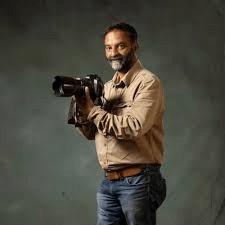
‘Kurinji – Nilgiris’ by the famous photojournalist Raghu Joghee

‘Kurinji – Nilgiris’ by the famous photojournalist Raghu Joghee

Raghu Joghee from Yedapalli Hatti and is personally known to me. He is simple, humble but a great person. He is actively involved in promoting for Badaga Tribal status along with Ganesh Ramalingam. – Wg Cdr JP

Shared from http://www.behance.net

( KATTAE-HU / KURINJI / STROBILANTHES )

The village of Kattae-bettu, nestled in the Nilgiri Hills of Southern India, holds a name deeply intertwined with the natural world and the cultural heritage of the indigenous Badaga community.

The etymology of “Kattaebettu” is derived from “Kattae Hu Bettu,” a phrase that directly

references the unique and ephemeral Strobilanthes kunthiana flower, commonly known as Kurinji or Neelakurinji. This rare bloom, which blankets the hills in a vibrant purplish-blue hue once every twelve years, has profoundly influenced the Badaga people’s traditions, calendar, and sense of place.

The Kurinji Flower and its Significance

The Badaga community, an indigenous group primarily residing in the Nilgiri Hills, the Kurinji flower is more than just a beautiful plant; it is a significant marker of time and a symbol deeply embedded in their cultural fabric. The twelve-year flowering cycle of the Kurinji has historically served as a natural calendar for the Badagas, influencing their agricultural practices, social events, and even their oral traditions.The blooming of the Kurinji signifies a period of renewal and abundance, often associated with specific rituals and celebrations within the community.

Kattaebettu: A Name Rooted in Nature

The name “Kattaebettu” is a testament to this profound connection.”Kattae Hu Bettu” can be broken down to understand its meaning: “Kattae” likely refers to a specific type or characteristic of the flower or its growth, “Hu” means flower in Badaga and other Dravidian languages, and “Bettu” signifies a hill or mound. Therefore, “Kattaebettu” can be interpreted as “the hill of the Kurinji flower” or “the place where the Kurinji flowers bloom.” This naming convention is common among indigenous communities, where geographical features are often named after prominent flora or fauna, reflecting their intimate knowledge and reverence for their environment.

Cultural Influence on the Badaga Community

The influence of the Kurinji flower extends beyond the naming of a village. For the Badaga community, the cyclical blooming of the Kurinji has been integrated into their oral histories, folk songs, and traditional knowledge systems. Elders often recount stories and prophecies linked to the flower’s appearance, and its bloom is sometimes associated with specific agricultural cycles or even significant historical events within the community,

Image may contain: outdoor, tree and grass

Image may contain: outdoor, sky and flower
Image may contain: tree, outdoor and flower
Image may contain: plant, flower and outdoor
Image may contain: outdoor, tree and sky
Image may contain: tree, outdoor and mountain

A great Badaga Song by Bugri Music Academy

Hethegu Dhukkaththa – by Porthy SJ Mani

A great song that describes the evil practice among a few Badagas who despise other Badagas, known as Nattaru, settling in a village which is not native to them but probably have married from that same hatti (Vilage). Great lyrics, haunting music and a video with mainly Thooratti Village people in the cast.

Baduga Music Academy (BMA) Trustee T.Mynalai Bojaraj added this song to create (Badaga) Community Unity Awareness. This is BMA’s first Cultural Project.

A must watch in Toutube Channel

https://youtu.be/xu1aa3RoUh4?si=9TGaSminA1xWbPfV

Lyrics & Vocal – S J Mani – Porthi (Chairman of Bugiri Music Academy)

Music – Bojaraj (Bugri Music Studios, Ooty – 9489717334

Camera & VFX Dheebarna (Bugri Media)

For more info on BMA www.youtube.com/@badugamusic academy

BADAGA SCRIPT – BADAGA BARAE

BADAGA SCRIPT – BADAGA BARAE

(This article was written in 2008/2019. I am adding a separate post on the Badaga script developed by Kadasolai Yogesh Raju, which has a wider acceptance. In that post I have mentioned about how to install his script/fonts in the system and use it – Wg Cdr JP}

It has always been felt that for a language to survive, it should have its own script. It cannot remain only as a spoken language for long. But of course, the script need not be peculiar and specific one pertaining to that particular language.

So too is the necessity of a script for Badaga. Many have attempted to achieve this objective with various degrees of success. But unfortunately, to my knowledge, no records exists, if any. I am no expert on phonetics or languages or much less innovating an unique script. But the urge to have a separate script has convinced me that it is very much possible to ‘ADOPT’ an existing script and ‘ADAPT’ it to Badaga language.

Three languages/scripts come to mind straight away – Tamil, English and Kannada. Tamil – because a majority of us know how to speak and write due to the simple fact that we belong to Tamil Nadu, English – since most of us choose to learn as well as put our children in English medium schools and Kannada – due to the fact that Badaga is more akin to Kannada than any other language [though I firmly beleive that Badaga is a separate language on its own merit and not a dialect of Kannada].

But when trying to choose a script for Badaga, Kannada script is ruled out for the basic reason that most of us do not know the language or familiar with the script and no scope to learn it in our schools in the Nilgiris. Hence the choice between Tamil and English. Badaga ,like many other Indian languages, has very definitive and distinctive sounds/words [I do not know the exact English equivalent] that distinguishes one word from another. Even a small change in pronunciation could result in an entirely different meaning in Badaga. For example,a subtle change in context of the word ‘BAE [bay]’ could mean mouth, bangle, lentil, crop etc. Bella [jaggery] or BeLLa [ a male name] are two entirely different things. So are ‘kallu – stone’ and ‘KaLLu – a drink’. So, what could or should be the choice?

In Tamil script we cannot differentiate ‘K’ from ‘G’ or ‘T’ from ‘D’. This makes a huge impact when Badaga words are written in Tamil script. ‘Gaasu – potato’ is totally different from ‘Kaasu – coin, remove’. Or ‘Ettu – eight’ and ‘Eddu – getup’. Another drawback could be the absence of ‘Ha’ in classical Tamil. On the other hand, in English, we cannot clearly bring out the difference of ‘na’ from ‘Na’ [anna – food, aNNa- elder brother] or ‘halli – lizard’ from ‘haLLi – name, village’. ‘Kalla – a male name’ sounds the same as ‘ kaLLa – a thief.

Yes, it is indeed a little tricky to choose between Tamil and English. But, taking into consideration the younger generation who are going to be the future hope and the irrefutable fact that they are all more familiar with English than Tamil, the choice is English. Keeping in mind the successful adaptation of English script for Malay language (Malaysia) I would plump in for English. With a few minor modifications to overcome the grey areas mentioned above, English script can be easily used in Badaga.

Remember Devanagiri (Hindi) is the script for Nepali. The ‘minor’ modifications that can be undertaken to overcome the drawbacks I referred above could be by using an extra ‘a’ – thus milk can be written as ‘haalu’; ‘dhadi – stick’ can be different from ‘dhaadi – beard’. So on and so forth. We may use ‘capital’ letters to differentiate between ‘bella and beLLa’ as I have done above.What if a complete sentence is in capital letters ? – We may use ‘bold’ letters or underline the words to give the emphasis. Innovative use of – ‘ – [apostrophe] can bring out the difference between “soppu – green ” and “so’ppu – soap” or “kodi – flag” and “ko’di – crore”.

It is said that Indians [read Badagas] will reject 50% of anything without even hearing it, another 50% without understanding it; and if ‘anything is left behind they reject it just for the sake of rejecting it. Like what is happening in many hattis with ‘young gowdas’ ruling the roost.

BUT, ALL YOU TRUE BADAGAS – LET US START SOMEWHERE TO HAVE A SCRIPT FOR OUR LANGUAGE. IMPROVEMENTS AND INNOVATIONS CAN FALLOW. IF MICROSOFT CAN ACCEPT BADAGA AS AN UNIQUE LANGUAGE , THERE MUST BE SOMETHING . SARI THAANE?

<><><><><><><><><><><><><><><><><><><><>><><><><><><><><><><>

Badaga in English Script


numbers.jpg

How the numbers are mentioned in various South Indian Languages is given below. This is from the :WWW -> NET : What I am trying to highlight is the use of English script !?

numbers.jpg

For numbers in more than 5000 languages go to zompist.com

Another Interesting Link -> Badaga language Totally Explained

!!!!!!!!!!!!!!!!!!!!!!!!!!!!!!!!!!!!!!!!!!!!!!!!!!!!!!!!!!!!!!!!!!!!!!!!!!!!!!!!!!!!!!!!!!!!!!!!

BELLE BENGUVE – GARLIC [in whatever language you say, is always good for health – though may not be for “LOVE”]

Notice : belle[white] is written as be!!e at the end
Sanskrit लशुन laśuna yields Hindi लहसन lahsan,
Urdu لہسن lahsan (but also سیر sīr from Persian), Nepali लसुन lasun, Marathi लसूण lasūṇ,
Bengali রসুন rasuna, Gujarati લસણ lasaṇa,
Oriya ରସୁଣ rasuṇa, Punjabi ਲਸਣ lasaṇ, Konkani लोसुण losuṇa.
Tamil has வெள்ளைப்பூண்டு veḷḷaippūṇṭu ‘white herb’, less commonly வெள்ளுள்ளி veḷuḷḷi,
like Malayalam വെളുത്തുള്ളി veḷuththuḷḷi and
Kannada ಬೆಳ್ಳುಳ್ಳಿ beḷḷuḷḷi ‘white onion’, and வெள்வெங்காயம veḷvengkāyam,
like Badaga beḷḷe benguve ‘white onion’.

Sanskrit लशुन laśuna yields Hindi लहसन lahsan, Urdu لہسن lahsan (but also سیر sīr from Persian), Nepali लसुन lasun, Marathi लसूण lasūṇ, Bengali রসুন rasuna, Gujarati લસણ lasaṇa, Oriya ରସୁଣ rasuṇa, Punjabi ਲਸਣ lasaṇ, Konkani लोसुण losuṇa. I wanted to include a choice quote from The Bower Manuscript (better description in this review of Hoernle‘s publication) on the Origin (and folk etymology) of Garlic (quoted in English in The Book of Garlic from an article by von Strubing in Ernährungsforschung), but even the inexpensive Indian edition is a bit steep. So if I manage to track it down, it can be part of the next garlic post. Tamil has வெள்ளைப்பூண்டு veḷḷaippūṇṭu ‘white herb’, less commonly வெள்ளுள்ளி veḷuḷḷi, like Malayalam വെളുത്തുള്ളി veḷuththuḷḷi and Kannada ಬೆಳ್ಳುಳ್ಳಿ beḷḷuḷḷi ‘white onion’, and வெள்வெங்காயம veḷvengkāyam, like Badaga beḷḷe benguve (வெள்ளெவெஙுவெ?) ‘white onion’.
The above interesting piece is taken from ->
http://polyglotveg.blogspot.com/2007/03/garlic.html#rest
<^><^><^><^><^><^><^><^><^><^>
As far as the English script used to show Badaga, I am giving below two examples of 1) the UCLA Phonetics Laboratory [for over half a century, has collected recordings of hundreds of languages from around the world, providing source materials for phonetic and phonological research] and 2) Prof.P Hockings ,From the UCLA Phonetics Lab Archive

(The unicode entry tool was developed by the Linguist List. To obtain it for use in other web pages click here)

EntryBadagaEnglish
(Note on transcriptions: rhoticity (e.g. i˞, e˞, etc. ) indicates half-retroflexion; underdot (e.g. ị, ẹ, etc. indicates full retroflexion)
1noːdisease
2pọːscar
3tọːbuffalo pen / cattle pen
4mo˞e˞sprout, shoot of plant
5ho˞e˞water course
6ko˞e˞carrion
7ka˞e˞weed
8a˞e˞tiger’s den
9kọːgaa type of measure
10ạːeto measure
11kaːsucoin
12ha˞ːsuto spread out
13kạːʃuto remove
14beːmouth
15be˞ːbangle
16bẹːbanana plant
17i˞ːụseven
18to drag
19hu:flower
20hụworm
21hụːytamarind
22ụychisel
23huyto strike
24kaeunripe fruit
25paːimat
26beːmouth
27be˞ː (pharyngealized)bangle
28bẹː (retroflexion)banana
29kaːsucoin
30háːsu (pharyngealized)spread out
31kạːʃu (pharyngealized)take off clothes
32aːeto measure
33a˞e˞tiger’s den
34no˞ːsickness
35poːscar
36tọːbuffalo pen
37ko˞e˞dead body
38huːflower
39hu˞ːworm
40huyto strike
41hu˞ytamarind
42ụychisel

See for more details : http://archive.phonetics.ucla.edu/Language/BFQ/bfq_word-list_1992_03.html

Research on Badaga

I found this interesting article, by Prof: Peter Ladefoged in the net. Is it not fascinating that so much research has been done on our language ?

Peter Ladefoged Languages index

Badaga is a Southern Dravidian Language (Tamil-Kannada branch) spoken by approximately 250,000 people in the Nilgiris hills in Southern India. There are several dialects, only the most conservative having the complete set of contrasts illustrated here.

>Badaga has five vowels /i e a o u/ , all of which can be contrastively half and fully retroflexed.

Half retroflexed vowels are indicated by the diacritic for rhotocity :[a~], fully retroflexed vowels with a subscript dot [a]


This is how Prof: P Hockings depicts the Badaga Words in English script

http://books.google.com/books?id=ykNYExBRIpgC&pg=PA10&ots=lxSXekODAu&dq=badaga+proverbs&sig=q2apINOE0mMtJdmEPzJPaBnyrs8#PPA54,M1

Some more thoughts on adopting English script for Badaga

Picking up from what Prof.Paul Hockings has mentioned – rather the unicode[?] used – in the example shown here from his book Counsel from the Ancients: Study of Badoga Proverbs, Prayers, Omens and Curses (page 54. Outline of Badaga Language – 2.1.2 Vowel Contrasts ) , I am suggesting a simple and straight forward work around.

Image

The words ‘to stand’ & ‘paddy’ are written as ‘nillu & nellu’ . No problems with that.

But ‘whistling’ & ‘to cook’ are written as ‘bi:su & be:su’ . My suggestion is use ‘beesu & baesu’ as they are pronounced.

(FootBall is FUTBAL and Photo is Foto in some languages that go by the pronounciation and thus making it easy).

‘To wander’ ‘suttu’ is used. But to me ‘suttu’ sounds more like ‘to burn’ . I would suggest ‘suthu’ for wandering. [ ‘SUTHUGAL or SUTHUKAL’ sounds familiar, is it not?]. Same thing for ‘property’ – ‘sothu’ ‘ instead of ‘sottu’ which sounds more like ‘sottu’ – ‘drop’ .

To blow ‘oodu’ – udu’ sounds and looks better than ‘u:du’ and ‘odhu’ instead of ‘o:du’ which to a novice like me is ‘run’ or ’tile’ – ‘odu’ .

‘To shine’ – it could be ‘michu’ instead of ‘miccu and ‘muchu’ instead of ‘muccu’ for covering. ‘Muccu’ sounds or looks more like ‘mukku’ – to gobble or swallow .

‘hennu’ [ ‘girl’ ] could be written as ‘heNNu’ [girl] and ‘hannu’ as ‘haNNu’ to bring out the emphasis on ‘N’.

‘nadu’ for ‘middle’ or plant is OK but for ‘country’ it could be ‘ naadu ‘ than ‘na:du’ .

Similarly, my suggestion : – for ‘now’ – ‘ ‘eega’ , ‘bamboo’ – ‘oede’ , ‘village’ – ‘ooru’ ‘

The main and only creteria should be the ease of use and understanding and yes, without the use of , what I would like to term as, ‘dots’ and ‘quotes’.

(I would like to repeat that I am no expert on languages and no intention is implied to hurt the purists and followers of UNICODE etc]

:::::::::::::::::::::::::::::::::::::

Wing Commander Bellie Jayaprakash B.E.(GCT,Madras Univ).,M.B.A (FMS, Delhi Univ)
Contact : bjaypee@gmail.com
belliejayaprakash©2024

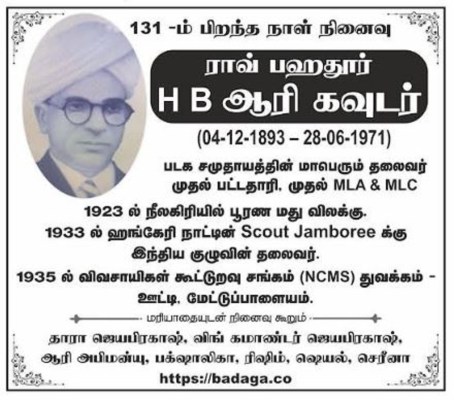
Rao Bahadur H B Ari Gowder – 131st Birth Anniversary

Rao Bahadur H B Ari Gowder

(4 Dec 1893 – 28 Jun 1971)

Rao Bahadur H B Ari Gowder

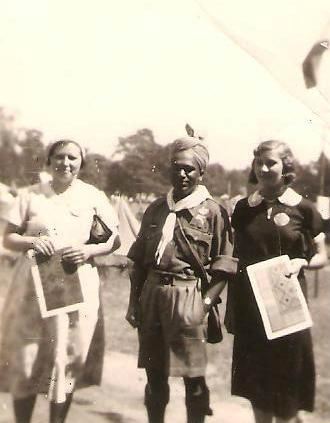
Rao Bahadur H.B.Ari Gowder, the first Badaga graduate, first Badaga M.L.C & M.L.A for a long time who had brought many reforms in/to Badaga Community including ‘prohibition’ (no alcohol – kudi) to Nilgiris in British days itself. Ari Gowder lead the Indian contingent (“INDIAN CONTINGENT) to World Scouts Jumboree held in Godollo, Budapest, Hungary, Europe in the 1933.

Founder of NCMS – Nilgiris Co-Operative Marketing Society at Ooty and Mettupalayam for the farmers of the Hills in 1935

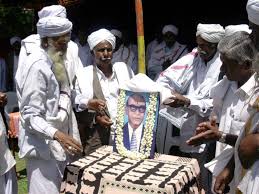
With Collector of the Nilgiris Mrs.Lakshmi Divya Thaneeru, paying homage to Rao Bahadur HB Ari Gowder on his 131st Birth Anniversary

Rao Bahadur Ari Gowder’s grand daughter Mrs,Tara Jayaprakash &

his nephew Wing Commander Bellie Jayaprakash

The Nilgiris Collector Mrs.Lakshmi Bhavya Thanneeru, along with other dignitaries paying homage to Rao Bahadur Ari Gowder on his 131st Birth Anniversary at NCMS Camous, Ooty. She also planted a tree sapling on the occasion.

More than a MILLION hits for our website https://badaga.co

More than a million hits for our website…. 1,20,000 and counting

Started as a hobby but now it is a passion. This website, when started a couple of decades ago, was the second website about Badagas. At that time, I had taken Premature (Voluntary) retirement from Indian Air Force and felt that there was not enough and correct information about our community, the Badagas of the Blue Mountains.

A small community of about 200,000 people that has got such great traditions, customs, culture and an unique language was not being presented to the world with the correct perspective, especially the origin and language.

As I went deeper into various aspects, I was amazed that there is so much to learn and rejoice. Hence my claim & conviction that what we know about Badagas is much less than what we do not know about them.

Over a period of time, visitors to this website grew steadily, gratifying to note that many of the hits are by young Badagas, spread around the world. Averaging about two hundred hits a day.

Now our website has crossed the mile stone of a million hits.

It is with folded hands, I would like to express my gratitude to you all. A big thank you!

  • Wing Commander Bellie Jayaprakash

Learn Badaga

Badaga / Badagu /Badugu is an unique language with its own grammar. Though, some similarities are found with old (haleya) Kannada, Badaga is a separate language.

Orughuvodhu (sleeping) is one of the verb/noun that has its own beauty (Dighvijay.K.Malla, Kundhey Ketchigatti, an enterprising Badaga, brought this up in a recent conversation).

Orughu – sleep. Ollengey Orughu – sleep well

Ollengey Orighidhiya – Did you sleep well?

Orighina – He is sleeing

Orighiya – She is sleeping

Orughu’va – Let us sleep. Appara Jama Aaagi butta, orughuva – It has become quite late, let us sleep.

(koosa) Orughuchchu – make the baby sleep

Orrukku – Sleep. Enaga orrukey bappadhilley – I cant sleep (Sleep does not come to me).

Learn Badaga

Learn Badaga

Namaskara, OLLenge Idhdhaya (Greetings, How are You?)

Namaskara, Naa oLLengay Idddhey, Nodi appara jena aagibutta ( Greetings, I am fine, Long time since I saw you.

Maneya ella oLLenge idhdharaya ?(How are all at Home?)

Ella oLlenge idhdharey (All are fine), Ee thirukku may koravu jaasti (This time rain and cold are more)

Ha, enna Christian nattukaararu maneyga bandhara. ( Yes, my Christians friends will come home)

Subasri Nithya had written recently about Learning Badaga :

I am eagerly waiting to learn more…. Pls do upload some conversations so that we will understand everything....

A great initiative by Ekkuni Hatti

A great initiative by Ekkuni Hatti

Photos & info courtesy – J Krishnan

Seemeiya Madhippu

Seemeiya Madhippu – சீமெய மதிப்பு

by Dr. R.K Haldorai


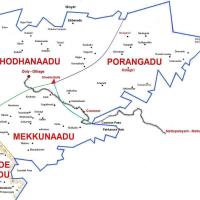
Hanadha Seemey ஹணத சீமெ – Thodhanaadu தொதநாடு
Addadha Seemey அட்டத சீமெ – Porangaadu பொரங்காடு
Aagadha Seemey ஆகத சீமெ – Mekku naadu மேக்கு நாடு
Aarukaasuna Seemey ஆருகாசுந சீமெ – Kundhey குந்தெ

[குறிப்பு: அண= நாக்கு பெள்ளி; அட்ட = எரடு பெள்ளி; ஆக = ஒந்து பெள்ளி; ஆருகாசு = ½ பெள்ளி]


தொதநாடு என்பதற்கு தொட்ட நாடு என்ற ஒரு பெயர் உண்டு. அதாவது இது பெரிய நிலப்பரப்பு அடிப்படையில் மற்ற மூன்று சீமைகளைக் காட்டிலும் அதிகமாக நிலவரி செலுத்தும் சீமையாக இருந்துள்ளது. ஆகையால் இதனை ஹணத சீமை என்று குறிப்பிட்டுள்ளனர். இங்கு ஓர் ஹண என்பது நான்கணா காசைக் குறிக்கும். இதற்கு அடுத்தபடியாகப் பெரிய நிலப்பரப்பைக் கொண்டது பொரங்காடு. தொதநாட்டினை நோக்க பொரங்காடு சற்றேறக்குறைய பாதியளவு நிலப்பரப்பைக் கொண்டது. ஆகையால் ஓர் ஹணவின் பாதியான அட்ட என்ற அடையுடன் அதனைக் குறிப்பிட்டுள்ளனர். அட்ட என்பதற்கு இரண்டு என்பது பொருள். பொரங்காட்டில் பாதியளவாக இருக்கும் மேக்குநாட்டை ஆகத சீமை எனக் குறிப்பிள்ளனர். ஆக என்பதற்கு ஒரு வெள்ளி என்பது பொருள். இருக்கும் நான்கு சீமைகளுள் சிறிய நிலப்பரப்பைக் கொண்டது குந்தை. அதனால் ஆகவின் பாதியாக ஆரு காசு என்ற
அடையுடன் குறித்துள்ளனர். “குந்தெய கூட்டி நாக்கு பெட்ட” என்னும் சொலவடையின் மூலமும் குந்தையின் குறைந்த நிலப்பரப்புத் தன்மை உணர்த்தப்படுவதைக் காணலாம்.

Badaga Language

Badaga Studies (Collected Papers) – by Dr.R K Haldorai

An excellent collection of papers on the Beautiful Badaga Bashe (Language) by one of the most appreciated scholars on Badaga – Dr.RK Haldorai from Kiya Kauhatti


குழந்தைப் பருவம் முதல் பழக்கப்பட்டு வரும் தாய் மொழியில், பேச்சு உறுப்புகள் அம்மொழியின் தன்மைக் கேற்ப வளைந்து கொடுக்கும் பயிற்சி பெற்று விடுகின்றன. தாய் மொழியின் ஒலிகளும், சொற்களும், சொற்பொருள்களும் இயல்பாய் அமைந்து விடுகின்றன. எனவே தான் பிற்காலத்தில் வேறு மொழிகளில் நாம் பேசும் போதும்தாய்மொழி ஒலி அமைப்பை ஒட்டியே பேசுவதும், சில இடங்களில் தாய்மொழிச் சொற்கள் இடையிடையே நம்மை அறியாமல் வந்து விடுவதையும் நம்மால் உணர முடிகிறது. எவ்வாறு நம் முயற்சிக்கு அப்பாற்பட்டு மூச்சு உறுப்புகள் இயங்குகின்றனவோ, எவ்வாறு இரத்த நாளங்கள் இயற்கையாய் தூங்கும் போதும் கூட இயங்கிக் கொண்டிருக்கின்றனவோ அவ்வாறு தாய்மொழி நமக்கு இயல்பாய் அமைந்து விடுகிறது. இதனை நன்குணர்ந்த கல்வியாளர்கள் தாய்மொழி மூலம் கல்வி பெறுவதே மிகச் சிறந்தது எனக் குறித்து வருவதை உலகெங்கும் காண முடிகின்றது. எனவே தான் தாய்மொழிக் கல்வியைப் பல நாடுகள் நடைமுறைப் படுத்திக் கொண்டிருக்கின்றன. தாய்மொழிப் பயிற்சி நன்கு வரப்பெற்ற பிறகு பிறமொழிகளைப் படிப்பது மிகவும் சிறந்தது என அறிஞர்கள் குறிப்பிடுகின்றனர். அதாவது தாய்மொழி அமைப்பைக் கொண்டு பிற மொழி அமைப்புகளை அறியவேண்டும் என்பதாகும். இது மிக எளிமையானதாகவும் இயற்கையானதாகவும்
இருக்கும்.
மொழியின் தன்மை
இயல்பாக மொழிகளில் சிறந்த மொழி சிறப்பற்ற மொழி என்று எதுவும் இல்லை. இப்பின்னணியிலே படகருள் சிலர் தம் தாய்மொழி சிறப்பற்றது எனக் கொண்டு தாய்மொழி படகு என்று சொல்வதற்குத் தயக்கம் கொண்டுள்ளனர். இது அடிப்படையில் ஒரு தவறான கருத்தாகும். ஒவ்வொரு காலக்கட்டத்தில் சில மொழிகள் செல்வாக்கு பெற்று விடுகின்றன. இச்செல்வாக்கு பெரும்பாலும் அரசியல் தொடர்பினாலும் அல்லது சமுதாயத்தில் உயர் மட்டத்தில் இருப்பவராலும்
எய்தப்படுவதாகும். பின் அனைத்து மக்களும் செல்வாக்கு பெற்ற மொழியைப் பின்பற்ற முயல்வது தவிர்க்க முடியாதது ஆகிவிடுகிறது. இவ்வாறான சமயங்களில் செல்வாக்கு பொருந்திய மொழியை அனைவரும் முனைப்புடன் பின்பற்றுவதால்
ஏற்கெனவே வழக்கில் உள்ள மொழிகளில் திரிதல் பெரும்பாலும் நடைபெறும். சிற்றில சமயங்களில் அவை அழிந்தும் விடுகின்றன. வரலாற்றைப் புரட்டிப் பார்த்தால் கிரேக்கம், இலத்தீனம், எபிரேயம் போன்ற பழம் பெரும் மொழிகள் ஒரு
காலத்தில் மிக செல்வாக்கு பெற்றிருந்தமையும் பிறகு அம் மொழிகளைப் பேசுவோர்மிக அருகி வந்ததால் அவை நூலக மொழிகளாக மட்டும் இருந்து வருவதையும் அறிவோம். ஆக அடிப்படையில் எம்மொழியையும் சிறந்தது என்றும் சிறப்பில்லாதது என்றும் சொல்வது தவறு. இன்றைய மொழியியல் அறிவியலுக்கு இது முற்றிலும் பொருந்தாதது. எவ்வாறு மக்கள் தொகை சில காலங்களில் சிறந்த வரமாக கருதப்பட்டும் சில காலங்களில் சாபக்கேடாகக் கருதப்பட்டும் வருகிறதோ அவ்வாறுதான் மொழிகளில் செல்வாக்கும் ஆகும். ஒரு காலத்தில் ஓரிடத்தில் செல்வாக்கு பெற்ற மொழி முற்றிலும் புழக்கத்தில் இல்லாமல் போய் விடுவதும் உண்டு.
செல்வாக்கு பெற்று விளங்கும் மொழிகளைப் பார்த்து சமுதாயத்தில் பலர் மொழிகளைப் பற்றிய ஒரு தெளிவான அறிவு இல்லாமல் இருந்து விடுகின்றனர். இது அவர்களுடைய தவறு அன்று. அவர்கள். கண் முன் இச்செல்வாக்கு பெற்று
வரும் மொழிகள் தான் மிக எளிமையாக தோன்றும். அம் மொழிகளால் பல நன்மைகள் விளைவதும் உண்டு. எனவே அதற்கு முதன்மையிடம் அளிப்பதில் வியப்பேதுமில்லை.
நம்மில் பலர் தாய்மொழியாக படகுவைக் கொண்டிருந்த போதிலும் அம்மொழியினைப் பற்றிய ஒரு சிந்தனை இல்லாமல் இருக்கிறோம். நம் மொழிக்கு எழுத்து இல்லா நிலையைக் காட்டி இம்மொழியில் வாழ்வின் அனைத்துக் கூறுகளையும் பேச- எழுத முடியாது என்பாரும் உளர். இவர்கள் வாக்கில் உண்மை இருப்பது போல தோன்றும். ஆனால் அவை வெறும் மேற்போக்கானவை யாகும். நன்கு அலசிப் பார்ப்போமேயானால் இவையெல்லாம் தவறு என்பது நன்கு விளங்கும். படகு மொழியில் எழுத்து இல்லை; இலக்கணமில்லை. எழுத்தை, இலக்கணத்தை யார் உருவாக்குவது? இவை ஒரு படகு மொழி பேசுபவரால் தான் எளிமையாக உருவாக்க முடியும். ஏன், இவற்றை ஒரு படகு பேசும் ஆள்தான் செய்ய வேண்டும் என வைத்துக்கொள்வதில் தவறு ஏதும் இல்லை. ஆனால் இதுவரை நம் படகு பேசுவோர்களிடையே இம்மாதிரியான எண்ணம் எதுவும் தோன்றியதாக தெரியவில்லை. ஒரு சிலர் இவற்றைப் பற்றி சிந்தனை செய்துள்ள போதிலும் அவர்களால் ஒரு முடிந்த முடிவுக்கு வர இயலவில்லை. இதனால் தான் நம் படகு மொழிக்கு எழுத்து இலக்கணம் முதலியன இதுவரை அமையவில்லை. எழுத்து, இலக்கண முதலியன உண்டாக்கிய பின்பு இலக்கியம் அமைதலும் ஏற்படக்கூடும். கவிதை, கட்டுரை, நாடகம், வரலாறு, உரைநடை, கடிதம் முதலிய அனைத்தும் இம்மொழியில் எழுத வேண்டும். அப்பொழுது அவற்றுள் சிறந்தன இலக்கியங்களாக அமைந்து விடுகின்றன. இலக்கியம் ஒரு மொழிக்கு பெரும் பாதுகாப்பை அளித்து விடுகின்றது. மொழி இலக்கியத்தால் நிலைத்த தன்மை எய்தி விடுகின்றது. இவ்வடிப்படையில் நோக்கும் போது இலக்கியம் முதலியன இல்லை என குறைபட்டுக் கொண்டிருப்பின் யாதும் நிறைவேறாது என்பது நன்கு விளங்கும். அத்துறையில் முயன்று தேவையானவற்றைப் படைக்க வேண்டும். பின், மொழி நாளொரு வண்ணமாய் வளர்ந்து வரும்.
இன்றளவில் உலகில் 7000 மொழிகள் உள்ளன எனக் கணக்கிட்டுள்ளனர். அவற்றுள்
ஒரு சில நூறு மொழிகள் மட்டுமே எழுத்து அமைப்பை கொண்டிருக்கின்றன. மீதமுள்ள ஆயிரக்கணக்கான மொழிகளுக்கு எழுத்துகள் இல்லை. உலகிலுள்ள பெரும் எண்ணிக்கையிலான மொழிகள் வெறும் பேச்சு மொழிகளாகவே பல
நூற்றாண்டுகளாக நிலவி வருகின்றன என்பதைக் கேட்கும் போது நம்மில் பலர் வியப்படைதல் கூடும். அவற்றைப் போன்று தான் நம் படகு மொழியும் ஆகும். படகு மொழி சற்றொப்ப 1500 ஆண்டுகளுக்கு மேலாகப் பேசப்பட்டு வருகிறது என
கணக்கிடலாம். சில ஆயிரம் மக்களால் பேசப்பட்டு வந்த மொழி இலட்சத்திற்கும் அதிகமான மக்களால் பேசி வரும் அளவிற்கு வளர்ந்துள்ளது.
தென் திராவிட மொழிகளில் அதிகப்படியான மக்களால் பேசப்பட்டு வரும் மொழி வரிசையில் ஆறாவது இடத்தில் படகு இருக்கிறது. தெலுங்கு, தமிழ், கன்னடம், மலையாளம், துளு ஆகிய ஐந்து திருந்திய திராவிட மொழிகளுக்கு அடுத்தப்படியாக அதிகப்படியான மக்களால் பேசப்பட்டு வருவது படகு மொழியாகும். இன்னும் ஒரு சிறப்பு
என்னவென்றால் படகு மொழி பேசும் மக்கள் ஓரிடத்தில்- நீலகிரியில் வாழ்ந்து வருவதாகும். இவ்வாறு ஓர் இடத்தில் மொழி பேசுவோர் வாழ்வதால் அங்குள்ள மொழி அழிவதற்கான சாத்திய கூறுகள் மிகக் குறைவு. அரசியல் காரணங்களாலும்
பிறவற்றாலும் பிற மொழி தாக்கம் மிகுதியாக இருந்த போதிலும் மேலும் பலரால் பேசப்பட்டு வருவது மிகவும் வியப்புத் தருவதாக இருக்கிறது. இம்மாவட்டத்திற்கு வரும் பிற மொழி பேசும் மக்களும் படகர்களுடன் ஊடாடி குறுகிய காலத்தில்
படகுவில் உரையாட கற்றுக் கொள்கின்றனர் என்னும் போது இம்மொழியின் தாக்கம் இம் மாவட்டத்தில் எவ்வளவு இருக்கிறது என்பதை கணக்கிட்டுக் கொள்ளலாம்.
தாய்மொழியின் பிற மொழிகளுக்கு இணையான சொற்களும் இலக்கண அமைப்புகளும் இருக்க, இவ்வறிவு இல்லாமல் பிற மொழி அமைப்புகளை மிகுந்த முயற்சியுடன் பயில்கின்றோம். இதனால் பிறமொழிக் கல்வி பல இடங்களில் தோன்றிவிடும். சான்றாக ஒரு படகு குழந்தைக்கு ஆங்கிலம் கற்பிக்கப்படுகிறது என வைத்துக் கொள்வோம். அதிலும் noun, pronoun முதலிய இலக்கண கூறுகளைப் பயிற்றுவித்தலில் பொருள், இடம், ஆள் ஆகியன பெயர்களாகும் எனச் சொல்லி சான்றுக்கு tree, stone, London, John எனச் சொல்லி விடுகின்றோம். இவ் விடங்களில் இதே பெயர் (noun) நம் படகு மொழியிலும் உண்டு ஆங்கிலத்தில் உள்ளது போல் தான் பொருட்கள் இடம் ஆட்கள் முதலியவற்றின் பெயர்களாகும் எனச் சொல்லி சான்றுக்கு மொர, கல்லு, கடநாடு, 0பெள்ள எனச் சொல்வோமே யானால் குழந்தை அப்பெயரைப் (noun) பற்றிய முழு அறிவை மிக எளிமையாகப் புரிந்து கொள்ளும். ஏனெனில் மொர, கல்லு கடநாடு, 0பெள்ள போன்ற சொற்கள் அன்றாட வாழ்வில் மேலும் மேலும் வந்து கொண்டிருக்கின்றன. இவற்றை அடிப்படையாக வைத்து இவர்களுக்குச் சொல்வோமே யானால் எல்லாம் எளிமையாக விளங்கும்.
இவற்றைப் போல் pronoun என்பது பெயர்களுக்கு மாற்றாகக் கருதப்படுவது எனச்சொல்லி he, she, it, they என்பவற்றைச் சான்றுக்கு காட்டுவதுடன் நம் மொழியிலும் pronoun உண்டு அவையும் பெயர்களுக்கு மாற்றாக வரும் தன்மையன எனக் கூறி
அம, அவ, அவக்க, அது, அவெ எனச் சான்றுகள் காட்டப்படுமேயானால் மிக எளிமையாக pronoun பற்றிய அறிவு விளங்கும் என்பது வெளிப்படை. இவ்விலக்கணம் படகு மொழிக்கு மட்டுமே உள்ளதாகக் கருதி விடலாகாது. உண்மையில் எல்லா
மொழியினருக்கும் பொருந்தும். அதாவது தாய் மொழியை அடிப்படையாக வைத்துக் கொண்டு பிற மொழிகள் கற்பதில் பிறமொழி அறிவு மிக எளிமையாக விளங்கிவிடும் என்பது திண்ணம். இங்கு நன்கு அறிந்ததைக் கொண்டு அறியாததை விளக்குவதனாலும், தெரிந்ததைக் கொண்டு தெரியாததை விளக்குவதனாலும் கற்றல் மிக எளிமையாக அமைந்து விடும்.
கிளை மொழி
முன்னர் படகுமொழியைக் கன்னடத்துக் கிளை மொழி என்று சரியான ஆய்வு இல்லாமல் பலரும் பேசி வந்துள்ளனர். படகுமொழிக்கும் கன்னடமொழிக்கும் இடையே சில தளங்களில் ஒற்றுமை நிலவுவதைக் காட்டியே பலரும் இதைக்
கிளைமொழி என்று சொல்லி வந்துள்ளனர். படகுவும், கன்னடமும் திராவிடக் குடும்பத்து மொழிகள். ஒரு மொழிக் குடும்பத்துக்குள் சொல் நிலை, இலக்கண நிலை ஆகியவற்றில் ஒற்றுமை இருக்கத்தான் செய்கிறது. இதைக் கொண்டு கிளைமொழி தகுதியை வரையறுப்பது பொருத்தமற்றது. சொல்லப் போனால் படகுமொழிக்கும் கன்னடத்திற்கும் இடையே உள்ள வேறுபாடு மிகப்பல வாகும். எவ்வாறாயினும் அண்மைக் காலத்தில் படகுமொழியை மொழியியல் அடிப்படையில் ஆய்ந்த அறிஞர்கள் படகு கன்னடத்துக் கிளைமொழி அன்று. அது தனியான ஒரு மொழி என்று தெளிவாக விளக்கியுள்ளனர்.
இலக்கணம் எழுத்துள்ள மொழிகளுக்கு தான் இலக்கணம் உண்டு என்றும் பேச்சுமொழிகளுக்கு இலக்கணம் இல்லை என்றும் பலர் எண்ணிக்கொண்டு இருக்கின்றனர். இக்கூற்று அடிப்படையில் தவறானதாகும். எழுத்துகள் அமையாத பேச்சு மொழிக்கும் இலக்கணம் உண்டு. இலக்கண அமைப்பு இருப்பதால்தான் அது ஒரு மொழியாக உள்ளது; அதில் பேசவும் முடிகிறது. அதேபோல் எழுத்து மொழியே பேச்சு மொழிக்கு அடிப்படையானது என்றும், எழுத்து மொழி பேச்சு மொழியைக் காட்டிலும் காலத்தால் முந்தியது என்றும் பலர் எண்ணிக்கொண்டு இருக்கின்றனர். உண்மையில் எழுத்து மொழியைக் காட்டிலும் பேச்சு மொழி காலத்தால் முந்தியது; அடிப்படையானதும் ஆகும். பேச்சு மொழி தோன்றிப் பல ஆயிரக்கணக்கான ஆண்டுகளுக்குப் பின் தான் எழுத்துகள் தோன்றியுள்ளன.
ஒலி அமைப்பு
எழுத்துகள் இரு நிலைய தாகும். ஒன்று உருவம் பற்றியது; மற்றொன்று ஒலி பற்றியது. முன்னது கண்ணுக்குப் புலனாவது; பின்னது செவியால் கேட்பது. உருவம் பற்றியதை எப்படி வேண்டுமானாலும் மாற்றிக் கொள்ளலாம். இன்று உள்ள எழுத்துகளின் வடிவம் பல மொழிகளில் முற்காலத்தில் இருந்தது போன்று இல்லை. வரி வடிவம் மாற்றத்துக்கு உள்ளாகி வந்துள்ளது. ஆனால் ஒலி அவ்வாறு இல்லை. திரிதல் சிறிது காலத்திற்கேற்ப ஏற்பட்டாலும் பெரும்பான்மை ஒலிகள் மாற்றம் இல்லாமல் இருக்கின்றன. ஒலிகள் மாறினால் பொருள் மாறுபாடு அடைந்து விடும். முந்து திராவிடத்தில் இருந்த 10 உயிரொலியன்கள்தாம் படகுவில் இன்றும் உள்ளன. மெய்யொலியன்களில் 0க், ஜ், 0ட், 0த், 0ப், ஸ், ஹ் ஆகிய ஏழு ஒலியன்கள்
கூடியுள்ளன; ழ், ற், ன் ஆகிய மூன்று ஒலியன்கள் வழக்கிழந்துள்ளன. வரி வடிவம் முதலில் படவெழுத்துகளாக இருந்து, கருத்து எழுத்துகளாக மாறி ஒலியன் எழுத்துகளாக வடிவம் பெற்றுள்ளன என எழுத்துகளின் வளர்ச்சியைப் பற்றி
குறிப்பிடுகின்றனர்.
ஆக ஒலியமைப்பில் ஒவ்வொரு மொழிக்கும் வேண்டப்படும் எழுத்துகளைக் கணக்கிட்டுக் கொள்ள வேண்டும் ஒலி எழுத்துகளைக் கணக்கிட்டு விட்டால் பின் ஒலி எழுத்துகளுக்கு வரிவடிவங்கள் அளித்து விடலாம். அந்நிலையில் படகு மொழிக்கு இன்றியமையாத தனி ஒலியன்களாக 32 இருக்கின்றன. அவையாவன:
உயிர்: அ, ஆ; இ, ஈ; உ, ஊ; எ, ஏ; ஒ, ஓ
மெய்: க், 0க், ங்; ச், ஜ், ஞ்; ட், 0ட், ண்: த், 0த், ந்; ப், 0ப், ம்; ய், ர், ல், வ், ள், ஸ், ஹ்,
இந்தப் பத்து உயிர், இருபத்திரண்டு மெய் எழுத்துகளால் படகுமொழியை எழுதி விடலாம். இவற்றால் படகு மொழியில் இருக்கும் அனைத்துச் சொற்களையும் எழுதிவிடலாம். ஆக இந்த 32 ஒலியன் எழுத்துகள் படகு மொழியின் எழுத்துகளாகும்.
இதன்பின் இந்த 32 எழுத்துகளை எந்த எழுத்துகளால் எழுத வேண்டும் என்று வினா எழுகிறது. இவ் வினாவுக்கு விடை நாம் தாம் காண வேண்டும். ஏனெனில் நாம் அனைவரும் ஒன்று சேர்ந்து முடிவு எடுக்க வேண்டிய கருத்து இது. இதற்குப் பல
வழிகள் உண்டு. அப்பல வழிகளில் நமக்கு உகந்த எளிமையான, அனைவருக்கும் பொருந்துவதை நாம் தேர்ந்தெடுக்க வேண்டும். அவ்வளவுதான்.
புதிய எழுத்து
அங்கும் இங்குமாகச் சிலர் மொழிக்குப் புதியதாக எழுத்து உருவாக்க வேண்டும் எனச்சொல்வதை நாம் கேட்டிருக்கிறோம். உண்மையில் இந்த 32 ஒலியன்களுக்குப் புதியதாக எழுத்துகள் உருவாக்குவது பெருஞ்செயல் அன்று. அதேபோல, 32
எழுத்துகளைப் பழகிக் கொள்வதும் பெரும் சுமையாக இருக்காது. என்றாலும் புதிய எழுத்துகளை மக்களிடையே பரப்புவதற்குப் பெரும் முயற்சி எடுக்க வேண்டி வரும். ஏற்கெனவே ஆங்கிலம், தமிழ் ஆகிய மொழிகளுக்குப் பெரும் இடம்
அளித்துள்ளவர்கள் புதியதாக ஓர் எழுத்தைக் கற்பதற்கு முன் வருவார்களா என்பது ஒரு பெரும் கேள்வி. அடுத்ததாக நாம் உருவாக்கும் எழுத்துக்கு ஏற்றவாறு கணினியில் நிரல் ஏற்படுத்த வேண்டும். இன்றைய நிலையில் இதுவும் பெரும்
செயல் அன்று. ஆனால் இதற்குப் பெருமளவில் பொருள் செலவு ஏற்படும். படகு சமுதாயம் சிறியதாக இருப்பதால் பெரும் செலவு செய்து கணினி பயன்பாட்டிற்குக் கொண்டு செல்வது கடினமான பணியாகும். ஏற்கெனவே நாட்டிலுள்ள எழுத்துகளுள் ஏதாவது ஒன்றினை மேற்கொண்டு இச்சிக்கலைத் தவிர்க்கலாம். இவ்வாறு மேற்கொள்வதால் புதியதாகக் கணினி நிரல் முதலியன உருவாக்க வேண்டிய அவசியம் இருக்காது. ஏனென்றால் அவை ஏற்கெனவே நாம் தெரிவு செய்ய இருக்கும் மொழியில் உள்ளன. பொருள் செலவும் மீதமாகும். அவ்வளவுப் பெரும் முயற்சியும் இதற்கு அவசியம் இல்லை. பிற மொழி எழுத்தை ஒரு மொழிக்கு எடுத்துக் கொள்வது என்பது நாம் மட்டும் மேற்கொள்வதாக இருக்கும் என நினைத்து விடக்கூடாது. பல மொழிகள் பிறமொழி எழுத்துக்களால் எழுதப்பட்டு வருகின்றன என்பதை நாம் மறந்து விடலாகாது. சான்றாகக் கர்நாடக மாநிலத்தில் பேசப்பட்டு வரும் திராவிட மொழிக் குடும்பத்தைச் சேர்ந்த துளு மொழிக்கு எழுத்துகள் இல்லை. முன்னர் அம் மொழியை மலையாள எழுத்தைக் கொண்டு எழுதி வந்திருக்கின்றனர். ஆனால் இப்பொழுது கன்னட எழுத்துகளால் எழுதி வருகின்றனர். இம் மொழிக்குக் கன்னட எழுத்துகளைக் கொண்டு ஆறு மடலங்கள் கொண்ட ஒரு பெரிய அகராதி தொகுக்கவும் செய்துள்ளனர். கோவாவில் பேசப்பட்டு வரும் கொங்கனி மொழியை அம் மாநில மொழியாக்கி அம்மொழியை தேவநாகரி எழுத்து மூலம் எழுத வேண்டும் என அம்மாநில அரசே உத்தரவிட்ட செய்தியினைப் பலரும் அறிந்திருப்பர். கொங்கனி மொழிக்கு எழுத்துகள் இல்லை. ஆனால் தேவ நாகரி எழுத்துகளைக் கொண்டு இனி எழுதப்படும். இவ்வடிப்படையில் இந்த 32 எழுத்துக்களுக்கு வரிவடிவத்தை எந்த மொழியிலிருந்து வேண்டுமானாலும் நாம் எடுத்துக் கொள்ளலாம். எளிமையாக அடையக்கூடிய சில எழுத்துகளை இங்குக் காண்போம்
தமிழ் எழுத்துக்கள்
படகு மொழி பேசப்பட்டு வரும் நீலகிரி தமிழ்நாட்டில் இருப்பதாலும் தமிழ் மொழியை படகர்கள் பலரும் படித்திருப்பதாலும் தமிழ் எழுத்துகள் மூலம் படகுமொழியை எழுதலாம் எனப் பலர் எண்ணலாம். அவ்வாறு செய்வதால் மிக எளிமையாக படகுமொழியை எழுதிவிடலாம் ஆனால் இதில் ஒரு சின்ன சிக்கல் உள்ளது. குறிப்பிட்ட 32 ஒரு எழுத்துகளைத் தமிழ் எழுத்துகளிலிருந்து எடுக்க வேண்டும். தமிழில் நமக்கு வேண்டி எழுத்துகளுள் 28 தாம் இருக்கின்றன. மீதம்
தேவைப்படும் நான்கு எழுத்துகளுக்கு அவற்றின் இன எழுத்துக்கு முன் ஒரு சிறுவட்டம் போட்டு (0க், 0ட், 0த், 0ப்) எழுதி விடலாம். தமிழ் எழுத்துகளைக்கொண்டு 1200 பக்க அளவில் ஒரு பெரிய அகராதியை நெலிகோலு அறக்கட்டளை
உருவாக்கியுள்ளது. மேலும் கதைகள், நாடகங்கள், பாடல்கள், கட்டுரைகள் என்று பலவற்றை நெலிகோலு அறக்கட்டளை எழுதி வைத்துள்ளது.
ஆங்கிலம்
ஆங்கிலத்தில் படகு மொழிக்கு வேண்டிய எழுத்துகள் 21 இருக்கின்றன. படகுக்கு வேண்டிய உயிர் நெடில்கள் அவற்றின் இனக்குறில்களுக்கு மேல் ஒரு கோடு போட்டு வேண்டிய 5 நெடில் உயிரெழுத்துகளைப் பெற்றுக்கொள்ளலாம். t, d, n, l, ஆகிய
நான்கு எழுத்துளின் கீழ் புள்ளி போட்டு முறையே ட், 0ட், ண், ள் ஆகிய எழுத்துகளைப் பெற்றுக்கொள்ளலாம். n, என்னும் எழுத்திற்கு மேல் புள்ளி போட்டு ங் என்னும் எழுத்தையும் n க்குமேல் ஒரு வளைவுக்கோடு போட்டு ஞ் என்னும் எழுத்தையும் பெற்றுக்கொள்ளலாம். இம்முறையிலும் நெலிகோலு அறக்கட்டளை தன் அகராதியில் எழுதியுள்ளது.
இந்தி
இந்தி (தேவநாகரி) எழுத்துகளைக் கொண்டும் எழுதலாம். இந்தி மொழியில் எகர ஒகரங்களில் குறிலுக்கும் நெடிலுக்கும் தனித்தனி எழுத்துக்கள் இல்லை ஆனால் படகுவில் எ, ஏ, ஒ, ஓ ஆகிய எழுத்துகள் தேவை. ஆகையால் இவற்றைத்
தெரிவிக்கும்படி ஏதாவது இரு குறிகளைச்சேர்த்து எ, ஏ, ஒ, ஓ ஆகிய நான்கு எழுத்துகளைப் பெறவேண்டும். மற்றபடி படகுக்கு வேண்டிய எழுத்துகள் எல்லாம் அங்கு இருக்கின்றன.
கன்னடம்
கன்னட மொழியில் படகு மொழிக்கு வேண்டிய 32 எழுத்துகளும் இருக்கின்றன. அதேபோல் தெலுங்கு, மலையாளம் ஆகிய மொழிகளிலும் படகுக்கு வேண்டிய 32 எழுத்துகளும் இருக்கின்றன. ஆகையால் கன்னடம், தெலுங்கு, மலையாளம் ஆகிய
மொழிகளுள்: ஏதாவது ஒரு மொழியின் எழுத்துகளை எடுத்துக்கொண்டால் எவ்வகை மாற்றமும் இல்லாமல் படகு மொழியை எழுதிவிடலாம். இங்கு எவ்வகை குறியீடுகளையும் நாம் மேற்கொள்ள தேவையில்லை. ஏனென்றால் படகு மொழி ஒலியன்களை அடையாளம் படுத்தும் அனைத்து எழுத்துகளும் கன்னடம், தெலுங்கு, மலையாளம் ஆகிய மொழிகளில் இருக்கின்றன.
இவை போல எம்மொழியிலிருந்து வேண்டுமானாலும் எழுத்துகளைப் பெற்றுக் கொண்டு படகுமொழியை எழுதலாம். இம்முயற்சி நம் கையில் தான் உள்ளது. நம் அனைவரும் ஒன்று கூடி இவ் எழுத்துகளுள் எதைப் பயன்படுத்தினால் எளிமையாக அமையும் என ஆராய்ந்து ஏதாவது ஒன்றினை மேற்கொள்ளலாம். புதியதாக பிறமொழி எழுத்துகளை எழுதிப் பழகுவது அவ்வளவு கடினமானதல்ல. 32 எழுத்துகளைச் சிறிது நேரத்தில் எழுதிப் பழகிவிடலாம். அவை காலப்போக்கில்
நமக்கு மிக எளிமையாக அமைந்து விடும். மேலே குறிப்பிட்டவற்றுள் ஏதாவது ஒரு வழியைப் பின்பற்றி படகு மொழியை எழுத முயல்வோமாக. 
விந்தைப்பொருள்
Now, whatever views were formerly held about language, everybody was agreed that language was a most wonderful thing, so wonderful, in fact, that perhaps the wisest thing that could be said about it was that it must have been of superhuman or divine origin (F.Max Muller, The Science of Thought, page 15).
“முன்னர் மொழியைப் பற்றி எவ்வகையான பார்வை கொண்டிருந்தாலும், இப்பொழுது, அனைவரும் மொழி ஒரு விந்தையானது என்பதை ஏற்றுக்கொள்கின்றனர். உண்மையில் மொழி விந்தையிலும் விந்தையானது. மிகை மாந்தர் அல்லது தெய்வத் தொடக்கம் எனக் குறிப்பிடுவது அதைப்பற்றி அறிவார்ந்த வகையில் சொல்வதாக இருக்கும்”

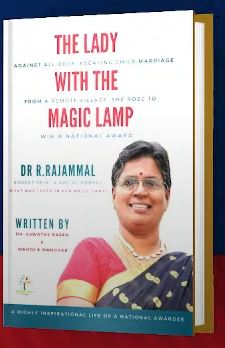
Proud of you Rajamma, once again

A best selling book on Dr.Rajammal, THE LADY WITH THE MAGIC LAMP, is available online

We are proud of you Rajamma, Engaga appara santhosha (we are very happy)! – Wg Cdr JP

The ‘Mistaken Migration from Mysore’ theory

The ‘Mistaken Migration from Mysore’ theory that Badagas have migrated from Mysore plains.

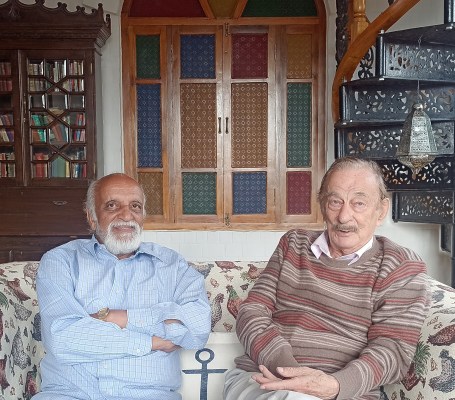
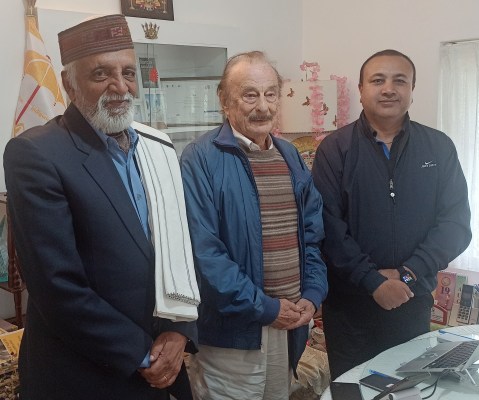
I attended the “In Conversation with Paul Hockings ” meeting, courtesy Ganesh Ramalingam, who is spear heading the movement to restore ST status for Badagas on 19 Aug 2023. Prof. Paul Hockings is on a visit to the Nilgiris.

While giving full credit to Prof. Paul Hockings for writing so much about Badagas and exposing us to the world, I am totally opposed to his view that we are migrants from Mysore.

I had told Prof.Paul Hockings many times earlier through emails and in person in the meeting at Ooty.

(Wg Cdr Bellie Jayaprakash with Prof.Paul Hockings, in turban)

His argument is “please show some evidence that Badagas were in the Nilgiris for a longer period than a few hundred years, (thousand of years), I will definitely change my view.”

I see a subtle change in his perception now. For a specific question ‘why did you write, in the first place, that Badagas migrated from Mysore, his answer was ‘Badagas, themselves told me and pointed to a village near Nanjangud as their ancestral village ‘.

In 1962, when Paul Hockings first started his research on Badagas, he was about 28 and staying in Ketti village. Prof. Paul Hockings, says that he had visited about 80 Badaga villages.

Prof. Paul Hockings accepts and stated on record that Badagas are as indigenous to Nilgiris as British to Britain to a question by Ganesh Ramalingam. This I consider to be a subtle change in the view of Prof. Paul Hockings though he still seems more inclined towards the migration from Mysore theory.

The argument that Badagas have migrated from Mysore area, in the northern side of the Nilgiris MAINLY based on the meaning of BADAGA and/or some Badagas with whom Paul Hockings interacted, informants as he calls them, told them so, is not convincing. In 1960s, the awareness of Badaga Origin, was not well known to the Badagas. Some Lingayats, among the Badagas he gathered the migration information from, could have been falsely influenced, because of their ties with some villages near Nanjangud.

Now that Badagas, some of them highly educated and well informed, have started questioning this mistaken migration theory, we can feel that there is unease in the minds of many scholars and followers who tend to quote Westerners about migration and calling them wrongly as Hindu Refugees escaping the forced religious conversion by Muslim invaders.

The only way to establish our origin and ancestry, once and for all, is to do carbon dating. Paul Hockings, agrees to this and says he is willing to change his perception about the so called Badaga Migration, as that would be scientific.

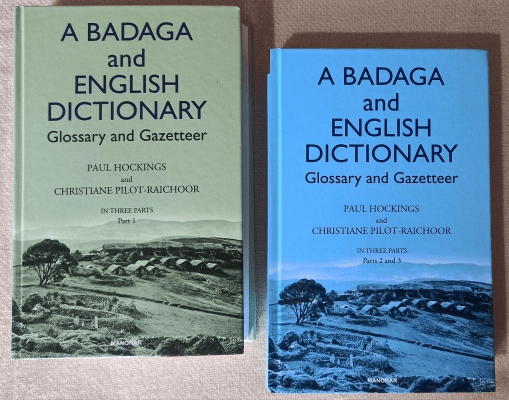
Apart from this important issue of migration, where Prof. Paul Hockings, in my opinion, could have been misinformed, the other research Paul Hockings has done on Badagas, is exemplary. His books on ‘Badaga English Dictionary and Badaga Proverbs‘ along with Christiane Pilot Raichur, are great source of information and should find a place in every Badaga home. 

(Prof. Paul Hockings with Wg Cdr Bellie Jayaprakash at the later’s house in Coonoor. Aug, 2023)

On a personal note, I am willing to sponsor anyone from our community, who can do this carbon dating and also request young Badaga leaders like Ganesh Ramalingam and other friends to initiate a serious attempt on this issue.

Let us prove that we are as old as any other tribe in the Nilgiris and this Migration from Mysore is a big mistake.

Wing Commander Bellie Jayaprakash (Air Veteran, Indian Air Force)

Please also see the page on Badaga Origin


Jakkadha SV Ramachandran comments

Kay Mugadane JP sir

This message should be made loud and clear among every Badaga brothers and sisters. We should get convinced ourselves first.

In my opinion, DNA profiling and DNA mapping would be a better way to scientifically understand the origin of our community.

Regards.

Thank you very much, Ramachandra, I fully agree with you that we, Badagas, should get convinced ourselves first. DNA profiling/mapping could/should also be done. Why not? – Wg Cdr JP

Marriages – why are they failing among Badagas now?

Marriages – why are they failing among Badagas now?

The question is a troubling one but reflects a harsh reality.

Badagas usually get married on ‘arranged system‘. The parents of eligible boys look for a suitable girl from the hattis which have a MOREY (மொரெ). After the customary ‘Hennu Noduvadhu’ – the parents visit the girl’s house, approve the match for the son (many times the boy also accompanies them), and if the ‘CHEMISTRY’ works, then the marriage is fixed – Madhuve Nitchchiya Maadiyaara.

In good old days, the ‘marriage’ gets confirmed only when the girl becomes (seven months) pregnant. That was the time THALI – Kanni (yellow thread) was tied around the girl’s neck ceremoniously by the husband. It was known as KaNNi (kattuva) Madhuve கண்ணி கட்டுவ மதுவே. If the girl does not become pregnant, the problem was always considered to be on the part of the girl (an unfortunate and rather cruel system of the Indian male dominated society). It may be a ground for divorce and in in some cases, a reason for a second wife. Remember, in those days, girls were married off at a very young age.

But the saving grace was that divorcees could get married again and divorce was NOT considered taboo. There were hardly any UNMARRIED boys and girls in hattis.

Unlike those ‘good old’ days, now we find a large number of girls and boys remaining UNMARRIED. In many cases, the failed marriages have resulted in DIVORCED (புடிச்சத) men and women remaining single.

What are the reasons?

  1. Is it due to the (incorrect interpretation of) Morey system?

2. The educated and employed girls, not finding a compatible match?

3. The unreasonable expectation from the boys (and their parents) side that the girls should settle in hattis?

4. The reality that many marriages have failed and resulted in divorces and hence has created a feeling that “better to be single than to get married & get divorced”

On FB and many of the Badaga Madhuve sites, there are many girls and boys willing to get married but suitable matches are not found. Why?

Is it not high time, that a serious thought is given to NO MARRIAGE / FAILED MARRIAGES and some action taken?

Badagas at the cross roads??

(The following were some of my thoughts on the crucial issues facing the Badaga Community, expressed earlier. They remain relevant even today – JP 13 Nov 2021)

Badagas at the cross roads, need to change with changing times

On the 10th and 11th Feb 2018,  a seminar was organised by The Nelikolu Charitable Trust at Coimbatore. The seminar was called “Nangava Nanga Arivo – Let us know about ourselves”. This is to make a select group of scholars/youngsters to present their views on issues concerned/connected with Badaga, both the people and language.

This topic is most appropriate and needed focussed attention.

We Badagas stand at the cross roads, at a crucial time in history. Some of the urgent issues that we face today, if not corrected now, will result in reducing us to history.

I chose to speak on “Badagas at the cross roads, need to change with changing times

Some of the issues I touched upon are

1. Who are Badagas?
The similarity, differences or otherwise of the Badaga, Odaiya and Thoraiya groups,

2. What is Badaga origin?
The myth, mystery and mistakes of migration from Mysore theory.

3. Badaga language.
The decline of the purity of Badaga language due to inadequate knowledge of the present generation. The systematic omission of HA sound from the language and its impact. The influence of Tamil and English on Badaga in the day to day conversations.

4. Moray system
Is the Moray system playing a major role in the large number of marriages breaking up? Is it time to change the fundamentals?

5. Need to involve the women as equal partners
No elaboration is required about this issue when we consider ourselves as HETHE MAKKA

6. Music, Dance, Chant and keeping the traditions
The originality of our music and dance is lost in the present day blind copying of cinema ‘koothattam’ dances. Are we cutting short the important traditions/rituals like funerals due to paucity of time?

7. Way forward
What we should do? – a COURSE CORRECTION ??

8. Conclusion
What we know about Badagas is much less than what we do not know.

~~~~~~~~~~~~~~~

Are we, the Badaga Community, at the cross roads?

With drastic changes that have engulfed every thing around us, how long can we stay and live unaffected?

With farming, especially growing vegetables [potato in particular] becoming a nightmare with monkey menace and green leaf tea prices on a free fall [mind you, still the tea leaf agents, tea factories, tea brokers are all making money when the actual small tea growers are feeling the pinch of  low price that has fallen below Rs.10/- per kg], agriculture that has always associated with Badagas has become an alien word.

With more and more people being forced to leave their villages/Hatties, both for economic and unimaginable reasons [like what happened in Nanjanaadu], following centuries old customs and traditions are becoming difficult.

Added to this is the growing ‘fashion’ among the young and eligible adults to marry ‘outsiders’ that is driving a society to the brink.

Last but the most disturbing is the conversion to ‘another religion’ that has not shown any decline.

Will there be a Badaga Society that is so proud of its unique history, origin, culture, customs, rituals, language and lifestyle, fifty years down the line?

?

?   +   ?

?

Three main factors were high lighted in the last post – Badagas at the cross roads, about the need to change with changing times. One of them is the problem of ‘outside’ marriages and the root causes. ‘Moray’ being one of them. Some clarifications are called for.

Moray, in my opinion, is a very scientifically significant restriction brought in by our Muthappas/Hethappas. This restriction has avoided a lot of health problems associated with ‘in breeding’ and may be one of the reasons for a better health prevailing among Badagas as compared to other native tribes of the Nilgiris.

But, it is mistaken by many that marriages do not take place among people belonging to the same ‘seemay’. Let us elaborate.

https://badaga.co/wp-content/uploads/2008/11/nakku-betta1.jpg?w=486&h=300&h=300

A typical Badaga Village [hatti] consists of houses of brothers [both blood brothers and cousins]. Their chiildren are ‘anna thammaru and akka thangairu – brothers and sisters’. So, the ‘moray’ restriction is very much required as otherwise, one will land up in literally marrying a ‘sister’. Many hattis, not necessarily congruent or geographically adjacent, form a OORU. Many Oorus form the Seemay. The number of villages/hattis in one ooru to another differs. Marriages between OORUS within the same Seemay is very much possible and is in vogue. Like for example,  in Porangaadu Seemay which has many oorus, HATHTHOMBATTU OORU [19 villages] and AARU OORU [6 villages] have marriage relationship. See the page on Hattis for more information.

~~~~~~~~~~~~~~~~~~~~~~~

There was a time when every Badaga household got their FRESH vegetables from their own holas [vegetable gardens next to their houses or a little away from the hatti [village].

2-8-15 008

Be it Avare [beans], gaasu [potatos] or kadaley [peas] or the healthy Keerey Soppu. They were part of the daily menu. Ganji Godhumay [wheat] and baththa  were grown, harvested and made into flour so that Eragittu, Pothittu and baththa hittu could be made very often if not daily. There was no dearth of haalu [milk], majjigay [butter milk], mosaru [curd] and thuppa [clarified butter].

But now, all these seem to be a dream. The basic reason  could be the INVASION of the koda and kaadu emme [monkeys and bisons] which would not spare any thing green. The strict laws related to wild life and their implementation had become a big deterrent in growing vegetables. A family’s wealth was based on the Banda [cattle -number of buffalos and cows] owned. Tho and kottagay [large and individual cattle sheds] were part and parcel of a hatti.

Every Badaga family had atleast a small patch of thotta [tea estate] that would give an assured income. The steep fall in green leaf tea prices and steeper labour wages have made owning and maintaining the estate more of a burden and headache.

Now, everything is uncertain. Health and wealth have become big casualties.

Life in the Naakku Betta [the Nilgiris, the blue mountains] has really become very difficult. Badagas are at the cross roads and in a catch 22 situation.

Future is a big question mark now?? What can we do about it???

~~~~~~~~~~~~~~~~~~~~~

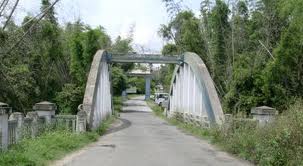
Ari Gowder Bridge

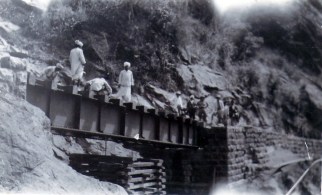
There is small but beautiful bridge, called ARI GOWDER BRIDGE, connecting Tamilnadu and Karnataka States at Kakkanallah, Gudalur taluk in the Nilgiris District. This was built in 1936 when Rao Bahadur HB Ari Gowder was the District Board Chairman.

Ari Gowder

For many years it was not painted and looked bad. We had taken it up with Collector and NCMS for repainting.

Now the Karnataka Badaga Gowda Association, Bangalore has taken the initiative to get a paint the bridge and give it a green and great look through their EC members Mrs.Anitha & Mr.Gokul IFS.

We thank Mr.Saravanan, the President and all members of KBGA.

Quote

The beautiful Badaga Bashe(Language)

Let us learn Badaga/Badagu/Badugu

” Ollenge iddiya ? – How are you ?”

‘Suddi saddha ella olliththa ? – (Roughly) ‘ How is everything ? ‘

1. Are you a Badaga ? – Nee ondu Badagana?

2. Yes, I am a Badaga – Ha, Na ondu Badaga

3. What is your name ? – Ninna hesaru aena ?

4. My name is Bhoja – Enna hesaru Bhoja

5. Which is your village ? – Ninna Hatti edhu ?

[5a. Amme / Thamma, nee ai hatti ? – Girl/ Boy, which is your village?]

6. My village is Bearhatti – Enna Hatti bandu Bearhatti

7. Whose son/daughter are you ? – Nee dara maathi / hennu ?

8. I am Mela thara (top street) Joghi Gowder’s son / daughter – Na Mela thara Joghi gowdaru maathi / hennu

~~~~~~~~~~~~~~~~~~~~~~~~~~~~~~~~~~~~~~~~

Numbers in Badugu /Badaga

1. Ondu (One) 2. Eradu (Two) 

3. Mooru (Three) 4. Naakku (Four) 

5. Iidu (Five) 6. Aaru (Six) 

7. eizhu (Seven) 8. Eattu (Eight) 

9. Ombathu ( Nine)  10. Hathu (Ten) )

11. Hannondu (Eleven) 12. Hanneradu (Twelve)

13. Hadimooru (Thirteen) 14. Hadanaakku (Fourteen)

15. Hadanaidu (Fifteen) 16. Hadanaaru (Sixteen)

17. Hadarizhu (Seventeen)  18. Hadarettu (Eighteen)

19. Hathombathu (Nineteen)  20. Eipathu (Twenty

30. Moovathu (Thirty) 40. Nalavathu (Forty)

50. Iivathu (Fifty) 60. Aravathu (Sixty)

70. Elavathu (Seventy) 80. Embathu ( Eighty)

90. Thombathu (Ninrty) 100. Nooru (Hundred)


  Numeral Badaga 
  0 Zero சூன்ய (Soonya)
  1 One ஒந்து (Ondu)
  2 Two எரடு (Eradu)
  3 Three மூறு (Mooru)
  4 Four நாக்கு (Naaakkuu)
  5 Five ஐது (aidhu)
  6 Six ஆறு (aaru))
  7 Seven இழ்ழு (ézhu)
  8 Eight எட்டு (ettu)
  9 Nine ஒம்பத்து (Ompathu)

Days In Badugu/Badaga

1. Aadivaara (Sunday) – ஆதிவார

2. Sovaara (Monday) – சோவார

3. Mangavaara ( Tuesday) – மங்கவார

4. Bodavaara (Wednesday) – போதவார

5. Chikkavaara (Thursday) – சிக்கவார

6. Bellie (Friday) – பெள்ளி

7. Sani (Saturday) – சனி

(Indhu Eana Jena – what is today ? : Indhu Sovara – Today is Monday.

See the difference , when the day is mentioned VAARA is included but when a day is referred, it is just mentioned as JENA)

Months In Badugu/Badaga

It is said that Badaga month starts on every 10th of the English month. Like for example Koodalu month starts on 10th January.

1. Koodalu (Jan)

2. Aalaani (Feb)

3. Nallaani (Mar)

4. Aani ( Apr)

5. Aadire (May)

6. Aadi (Peraadi) (Jun)

7. Aavaani (Jul)

8. Perattadi (Aug)

9. Dodda Deevige (Sep)

10. Kiru Deevige (Oct)

11. Thai (Nov)

12. Hemmaatti (Dec)

Pleasantly surprised to hear all the Badaga Months being mentioned in this song called ‘Kappu Huttileyu’- a great dance number.

The lyrics of the song go like this :- https://soundcloud.com/bjaypee/03-kappuuttileyu2


Kappu huttileyu neppuna sundari, Oppi hegileyu dhirachiya mundari
Kappu huttile naa hathuna notta dha, Keppu na huttile ondhuna notta tha

Thatti beetha sileyu nee edhega, Kottu beetha hennu naa edhaga
Muthu muthu mookathiga sokki hodhane, netti niddane
Sothu pathu neetha endhu kaathundhu endhe dha, matha hegu dha, madhuvaya matha hegudha,

KOODALU thinguvana koodile singarene , AALAANI thinguvatha aa aagi varasha mamma ,
NALLANI go kollaandhu hega beda, AANI huttidha mele badhila hegine baa mamma ,

AADHIRE jena nodi bae thumbi maathaadu, AADI mudidha mele ododi bannane mamma,
AAVANI thinguvadhoge dhaavani singarava , Arattu perattu aara PERATTASI thinguvadha,

DODDA DIVIGEYA dodda kiru edhega , KIRU DIVIGEYA siri devi aagi banne ,
THAI mae thalaiga thatti kai yoda aatta paatta, HEMMATTI ebbaneyu aemaathithindhu hoga beda ,

Thatti beetha sileyu nee edhaga , Kottu beetha hennu naa edhega

கப்பு ஹுட்டிலெயு நெப்புன சுந்தரி, ஓப்பி ஹெகிலெயு திரசிய முந்தரி
கப்பு ஹுட்டிலே நா ஹத்துன நோட்ட த, கெப்பு ந ஹுட்டிலே ஒந்துன நோட்ட த

தட்டி பீத்த செலெயு நீ எதெக, கொட்டு பீத்த ஹெண்ணு நா எதக
முத்து முத்து மூக்கத்திக சொக்கி ஹொதனே,நெட்டி நித்தனெ
ஸொத்து பத்து நீத்த எந்து காத்துண்டு இந்தெ த, மாத்த ஹேகு த, மதுவய மத்த ஹெகுத,

கூடலு திங்குவன கூடிலே சிங்காரெனெ, ஆலாணி திங்குவத ஆ ஆகி வரஷ மம்ம,
நல்லானி கொ கொள்ளாந்து ஹேக பேட, ஆணீ ஹுட்டித மேலே பதில ஹெகினே பா மம்ம,

ஆதிரே ஜென நோடி பே தும்பி மாத்தாடு , ஆடி முடித மேலே ஓடோடி பன்னனே மம்ம,
ஆவாணி திங்குவதொகே தாவணி சிங்கரவ, அரட்டு பெரட்டு ஆர பெரட்டாதி திங்குவத,

தொட்ட தீவிகியொ தொட்ட கிரு எதெக, கிரு தீவிகியொ சிரி தேவி ஆகி பன்னே,
தை மே தலைக தட்டி கை யோட ஆட்ட பாட்ட, எம்மாட்டி எப்பனேயு ஏமாத்திதிண்டு ஹோக பேட,

தட்டி பீத்த சிலெயு நீ எதக , கொட்டு பீத்த ஹெண்ணு நா எதெக

**************************************

For Badaga songs go here


PECULIARITIES OF BADAGA

Peculiarities of Badaga

Haalu [haa – as in hospital and lu – as in Zulu] means milk

Hallu [ ha- as hurt and llu – as in loo] means tooth [teeth]. note – there is no plural term.

Haasu – spread [the bedding], Haasike – bedding

Hasu – hunger

Maana – Pride, Mana – heart

Kaanu – see, Kannu – eye[s] (example – Doctor-a Kaanu, kanna pathi hegina – See the Doctor, he will tell about the eyes]

~~~~~~~~~~~~~~~~~~~~~

Peculiar Words

There are some words in Badaga that are truly peculiar. for example :

1. GIJI GIJI ( as in Give & Jinx) – Confusion , mess up / disorderly

GIJI GIJI maada beda – Don’t create confusion

Room ekka ethe GIJI GIJI (ya) hadadhe ? – Why is this room in such a mess?


2. 
MURUKKU(LU) (Mu ru ku) – Foul mood / mild anger

Amme Ekka maathaduvadu elle ? – Why is sister not talking ?

Ava murukkindu endhave – She is in a foul mood

3. BADAYI (Ba daa ee ) – Show Off (proud)

Appara badayi maadiya – She shows off a lot

Also see Badaga Language here

http://badaga-language.blogspot.com/

Birds (Hakkilu)

  1. Haddu (Eagle)
  2. Kakke (Crow)
  3. Soray (Dove)
  4. Kili (Parrot)
  5. Emme Hakkilu
  6. Bikkola
  7. Karia(n)chitta (Black bird)
  8. Gubbachi (Sparrow)
  9. Mayilu (Peacock)
  10. Koi (Poultry hen/cock)
  11. Kaadu Koi (Wild hen)
  12. Baathu(koi) – Duck

Mari (chic) –{Koi Mari – chic(ken)}

Also for calf [ for eg) Nei mari – puppy dog]

Animals

Aanay (Elephant)

  1. Kaade -Kaadu Emme – (Bison)
  2. Ottaga (Camel)
  3. Kudire (Horse)
  4. Kaththe (Donkey)
  5. Dana (Cow)
  6. Emme (Buffalo)
  7. Yethu (Bull)
  8. Karu (Calf)
  9. Huli (Tiger)
  10. Singa (Lion)
  11. Siruthe (Panther)
  12. Karadi (Bear)
  13. Maanu (Deer)
  14. Pulli Maanu (Spotted Dear)
  15. Kadamay (Sambar)
  16. Handi (Black Pig)
  17. Kaadandi – kaadu handi – (Wild Pig)
  18. Mullandi – Mullu Handi – (Porcupine)
  19. Seeme Handi (White Pig)
  20. Koda, Korangu (Monkey)
  21. Mola (Rabbit)
  22. Nari (Fox)
  23. Nei (Dog)
  24. Koththi (Cat)
  25. Eli (Rat)
  26. Aame (Turtle)
  27. Nalli (Crab)
  28. Halli (
  29. Haavu (Snake)
  30. Kappe (Frog)
  31. Meenu (Fish)

Insects

  1. Hoo (general for insect)
  2. Nona (Fly)
  3. Selandhi (Spider)
  4. Kunni (Bee)
  5. Eruppu (Ant)
  6. Kosu (Mosquito)
  7. Bendu (Moth/Butterfly)

Anatomy

  1. Mande (Head) – also refers to Hair though there is specific word – Orama
  2. Heddakku (Back of the skull) – usually Badagas have a long heddakku as they donot use cradles. The reason for not using cradles for babies is a story by itself. It is due to the fact that when they left Mysore to escape from the King (Thipu Sultan ?) in the night in a hurry, they had forgotten the baby which was sleeping in the cradle, each thinking that the other person would pick up the child.
  3. Moole (Brain மூளை)
  4. Nethi (Forehead)
  5. Kenni (Cheeks)
  6. Kannu [eye(s)]
  7. Kivi (Ear)
  8. Mookku (Nose)
  9. Bae (Mouth)
  10. Thudi (lip)
  11. Hallu (Teeth)
  12. Naalenge (Tongue)
  13. Dhaade ( Chin)
  14. Thonde (Throat)
  15. Gaththu (Neck)
  16. Maaru – Nenju – (chest)
  17. Mole (Breast மொலெ)
  18. Hiththalu – Bennu – (Shoulder)
  19. Kai (Hands)
  20. Angai (Palm)
  21. Mutti (Elbow – also for knee)
  22. Beralu (Fingers)
  23. Hebbatte – Katte (beralu) – [Thumb]
  24. Ugilu (Nails)
  25. Hotte (Stomach)
  26. Mollu Kudi (Naval)
  27. Nadu – Kattu (Hip)
  28. Pitti (Buttocks)
  29. Thode (Thigh)
  30. Monakkaalu (Knee)
  31. Kaalu (Leg)
  32. Midi (Heel)
  33. Angalu ( sole Foot)

Came across the following Limerick in http://www.oedilf.com/

Badaga by Graham Lester

In the hills out in Tamil Nadu
There are so many fun things to do,
Like Badaga Scrabble,
But don’t let the rabble
Make a Kannada goose out of you.

Badaga is the language of a tribal group of the same name that inhabits the Nilgiri Hills of Tamil Nadu in southern India. It is a dialect of Kannada. (Badaga is an unique and independent Language -JP )

Badugu Kathe Gamalu – competition results

Rao Bahadur Ari Gowder 50th death anniversary Song Competition – Results

Nakkubetta TV Ramakrishna
Mr.Solur G Rama & Mrs. Shanthi Deisingh

Hearty Congratulations to all the winners. But in fact, it is a big win for the Badaga community since we have discovered the fact that there are so many young, some are indeed very young, singers who are going to be our future treasures. In my opinion, each and every participant is a winners. Our best wishes to them.

Advisory Committee

Dr.Sundradevan
Dr.Bhojaraj
Sri. Singa Sadhu
Wg Cdr JP

There are no words to greet and convey our thanks to Ramakrishan and his team in the Nakkubetta TV who have proved that we can conduct such a competition completely online, and make it digitally a great success. The two pillars of this competition are of course, Melur G Rama and Shanthi Deisingh ( who, though based in USA, has given her time and efforts completely). Congratulations to also, to all judges for their great work..

My humble thanks to my colleagues in the advisory committee, IAS Sundradeva, ISRO Bhojaraj and Godalatty Singha Sadhu.

An happy ending indeed. On behalf of Rao Bahadur HB Ari Gowder family, especially my wife Tara, son Abhimanyu Ari and daughter Pakshalika Nanji, I thank Nakkubetta TV, Ramakrisha in particular, for making the Ari Gowder’s 50th Death anniversary year, remarkable and memorable.

The beauty of Ha – sound in Badaga

Badaga or as some like to call Badagu /Badugu, is a ‘classic‘ and independent language spoken by Badagas of the Blue Mountains or the Nilgiri hills, in north -west Tamil Nadu, bordering Karnataka and Kerala.

Though it is unique by itself, it can be said to be akin to Halaiya (old) Kannada more than any Dravidian language. But due to the geo – political reasons, it is more and more identified with Tamil.

Unfortunately, some over enthusiastic scholars and elders have been trying to eliminate the sound ‘ha -ஹ ‘ which is an integral part of the Badaga language and replace it with ‘ah- அ ‘ with some unacceptable justification that these letters (as well as letter like Ja ஜ, Sa ஸ, Sha ஷ ) do not form part of pure/classical Tamil though they are very much in day to day usage. .

Let me elaborate and justify why ha and other letters, like ஜ, ஸ, ஷ etc should remain as a core letters/sounds in Badaga.

A Badaga village is known as Hatti (ஹட்டி) and not as அட்டி.

Our deity Goddess is Hethe – ஹெத்தே and not Athe எத்தே

Some day to day words starting with ha

Ha – ஹ – yes, (Ha ennu – ஹ என்னு – Say yes)

Hagey – ஹகெ – enmity

Haavu – ஹாவு – snake

Hoo – ஹூ – flower, instect

Hui – ஹூய் – hit, tamarind

HaNa – ஹண Money

Hachche – ஹச்செ -Green(alive)

Hallu – ஹல்லு – tooth/teeth

Habba – ஹப்பா – festival

Hannu – ஹண்ணு – fruit

Haddhu – ஹட்து – eagle

Haththu – ஹத்து – ten, climb

Haalu – ஹாலு – milk,

Haavu – ஹாவு – snake

HaLLa – ஹள்ள – river

Hasu – ஹஸு – hunger,

Haasu – ஹாஸு – spread

Hade – ஹடெ -lie down

Haada – ஹாட -plain

HaNe – ஹணே – grass field

HeNa – ஹெண – dead body

Hidi – ஹிடி – catch

Hegilu – ஹெகிலு – shoulder

Hemmaththi – ஹெம்மாத்தி – female/lady/wife

Hendharu – ஹெண்டரு – wife

Hesaru – ஹெசரு – name

Hola – ஹொல – field

Honnu – ஹொன்னு -bridal money ( Rs200 given to the bride’s father to confirm the wedding)

Hogu – ஹோகு – go (Hoittu Banne – ஹோய்ட்டு பன்னெ -good bye)

Horasu – ஹொராசு -outside

Hotte – ஹொட்டெ – stomach

Hoththu – ஹொத்து – sun

Huttu – ஹுட்டு – (blood) relative (huttu Nattu – ஹுட்டு நட்டு – family & friends)

Hudichchu – ஹுடிச்சு -dress up

Huli – ஹுலி – tiger

Huri – ஹுரி – fry ( Huri madakke – a clay pot with a hole used for frying)

HuNNu – ஹுண்ணு – wound

HuNNavae – ஹுண்ணவெ – Full Moon

Hubbathale – ஹுப்பதலெ Hullikkallu – ஹுலிக்கல்லு, Hatti hesaruguva – Names of villages

The importance and necessity of retaining these sounds/letters like Ha ஹ, Ja ஜ, Sa ஸ, Sha ஷ

Jana ஜன – people
Janni ஜன்னி – cold
Jakkadha –  ஜக்கத –  the famous hatti (village)

Hethe nangava Harichali – ஹெத்தே நங்கவ ஹரிச்சலி Let Hethe bless us !

BADAGAS OF NILGIRIS INCLUDED IN UN WORLD’S INDIGENOUS PEOPLES DATA BASE

Extremely happy and proud that Badagas have been recognised as Indigenous people of the Nilgiris, (People of the Mountains by the UNO affiliate based at Rome) by the great efforts of Venugopal Dharmalingam, the Director of the Nilgiri Documentation Centre. Hearty congratulations to him.

This website has been consistently claiming that Badagas are one of the indigenous tribes of the Blue Mountains and we are happy and privileged that in the application submitted to UNO, Venugopal has quoted our website also.

In a function at Ooty, Venugopal Dharmalingam and other Badaga leaders (including Prof. Iyyaro, a Nakkubetta Seemay Gowder, Dr.Mani ex-Director of Central Research Institute, Kasauli and President of Coonoor Badaga Association, Mr.Sivalinga, auditor, Gokul Gowder, a well known Artist and Wg.Cdr.Bellie Jayaprakash), a blown up copy of the recognition approval was presented to the Collector Ms.Innocent Divya today, 16 Oct 2020.

BADAGAS OF NILGIRIS INCLUDED IN UN WORLD’S INDIGENOUS PEOPLES DATA BASE

The Badagas, the largest indigenous social group in the Nilgiris, have been included in the Data Base of World’s Indigenous Peoples by the United Nations Mountain Partnership.

The Inscription on the Badagas says, “ Traditionally Buffalo herders, recently there is a strong trend back to farming with particular attention to organic farming”. On the Badaga language, the Inscription says, “Badaga language (Badaga) is part of the Dravidian language family. One of world’s primary language families spoken by over 200 million people in south, central and north India”.

The Mountain Partnership is a United Nations alliance of partners dedicated to improving the lives of mountain peoples and protecting mountain environments around the world.

Founded in 2002, it has more than 400 members including International Organizations, major private sector organizations and NGOs and 60 governments including India.

MP is currently preparing an international Data Base of Indigenous Peoples and a detailed global map to identify 1. Who are the indigenous and local mountain communities and 2. Where do such communities live?

Indigenous Mountain Peoples are defined by the UN on the following criteria.

1) How long they have been living in a specific territory

2) Their cultural distinctiveness, including exclusive language, social organization, religion and spiritual values, modes of production, laws and institutions;

3) Self-identification, as well as recognition by other groups, or by State authorities, as a distinct community and

4) an history of struggle and exploitation

5) Their continued inhabitation, at least part of the year, on a mountain

6) Their continued use of traditional food systems around mountain ecosystems and

7) Their clear connection to a particular mountain or range.

Based on these criteria, the Nilgiri Documentation Centre, a local research body with nearly four decades of work, submitted the case of the Badagas of Nilgiris for inclusion in the World’s Indigenous Peoples Data Base with all necessary supporting evidence and documents.

The UN Mountain Partnerhiup has accepted the application of the NDC and included the Badaga community in their Data Base of World’s Indigenous Peoples.

Badaga language endangered

The United Nations Economic and Social Council (UNESCO) has already included the Badaga language as ‘Definitely Endangered’ in the UNESCO Atlas of the World’s Languages in Danger.

World’s Indigenous People

Indigenous Peoples are distinct social and cultural groups that share collective ancestral ties to the lands and natural resources where they live. There are approximately 476 million Indigenous Peoples worldwide, in over 90 countries. They make up 6 % of the global population but account for 15 percent of the global poverty. They occupy 25% of the world’s area but safeguard 80% of the global biodiversity.

The UN and Indigenous Peoples

The UN General Assembly proclaimed 1993 as the International Year of the World’s Indigenous People to seek international cooperation for solving problems faced by indigenous people in terms of human rights, environment, development, education and health. August 9 is observed worldwide as International Day of the Indigenous Peoples. India is one of the 144 states which adopted the United Nations Declaration on the Rights of Indigenous Peoples (UNDRIP) by the General Assembly on in 2007. The government is yet to prepare a list of indigenous communities in the country.

Mountains and Indigenous Peoples

Majority of the indigenous peoples live in mountains. The United Nations has recognized that the involvement of indigenous peoples and local communities is essential for sustainable mountain development.

Issued by Indigenous Badagar Alliance

Later on in the evening, Ramakrishnan, owner of Nakkubetta TV anchored an excellent programme on this event. A must watch

Some ‘burning’ issues facing Badagas

[This article/page was published earlier. But, most of the issues touched upon have a great relevance even today – Wg.Cdr JP]

Badagas as a Hill Tribe

BADAGAS as ST

Many Badagas are under the mistaken impression that if they are brought under the “Scheduled Tribe”, it is a degrading step. I do not think so. Badagas are one of the ‘ORIGINAL’ tribes of the Nilgiris along with Todas, Kothas and Kurumas.

The enormous improvements achieved by Badagas in all social factors, in spite of many impediments, should make us feel proud. This success is attributed to one SINGLE factor. Education. For that we must remember with gratitude the pioneer, visionary and philanthropist Rao Bahadur [Hubbathalai Jogi Gowder] Bellie Gowder who built the first School for Badagas – along with free hostel accommodation in Hubbathalai and his son Rao Bahadur HB Ari Gowder who fore saw that in educating a girl, indeed we are educating a family and hence insisted on education for girls and encouraged it fully.

~~~~

‘Scheduled Tribe’ status for Badagas ?!

March, 2008 : Why the latest Tamil Nadu website, http://www.nilgiris.tn.gov.in/
on the Nilgiris is getting on my ‘goat’ is the fact that till recently Badagas were shown as a tribe along with Todas, Kothas, Kurumbas and others. In fact, the following photograph displayed in my website www.badaga.in [ see the page https://badaga.wordpress.com/badaga-dance/ ] was taken from that portal.

Image

But the same has been removed from http://www.nilgiris.tn.gov.in/ now.

Mind you, calling Badagas as a separate tribe and included with others, does not automaticaly give the status of a schedule tribe. And hence, the champions among ourselves who are opposed to ST status, need not feel small

The above website of TN govt is accessed by many tourists mainly foreigners and they are agast not to find anything on or about Badagas.

Many readers may not know that Badagas were listed as a separate entity in the CENSUS till 1981 but after, that courtesy some ill informed ‘idiots’, Badaga are grouped under Kannada (speaking people). What this has done is the huge loss of information of knowing how many Badagas are there [along with all other details like literacy rate, gender wise population etc]. That, SIMPLY MEANS BADAGAS DO NOT EXIST.

What is highly hurting is the fact we have many Badagas including a minister, MLA, many ex-MPs & ex-MLAs who seem to do nothing. Can they not, ATLEAST, shoot out letters to all concerned ? Or, have they forgotten the fact that they are getting a fat pension because of us? I know of an EX-MP who writes to the local police station every now and then emphasising the EX-FACTOR when it comes to grabbing others land for her own kith, but does nothing about the community welfare.

What about the many self appointed leaders of Badaga community, including ex-MLAs, who claim that they are very close to the DMK party leadership ? Why can’t they initiate some action and show the same enthusiasm when they ‘fleece’ the public for money in the name of donation for the party [but lining their own pockets]?

What about many senior government officers, including the only IAS officer who can influence the party in power to take some action ? Firstly, the IAS officer should correct his mother tongue being Badaga and NOT as Tamil as is given in the government official info { a fact I have mentioned in FIRST BADAGA also}.

It is a well known fact that late Rao Bahadur HB Ari Gowder would seek an immediate appointment, to highlight the problems concerning Badagas, with the Collector as well as the State ministers of his time including the great Rajaji who was the CM. Do you know that Rajaji had to apologise to Ari Gowder when he (Rajaji) was delayed for an appointment and Ari Gowder, as MLA, threatened to walk out. I believe, many Collectors of the Nilgiris, would not only address Ari Gowder’s concern expressed over the phone but would consult him on any issue on Badagas.

Why are we keeping quiet ? Why are we behaving like ‘HEBBATHES’ – cockroaches- running away from light and hiding ourselves in darkness??

Badagas under Schedule Tribes ???

I have very strong views on this subject. Before I elaborate on them, I feel that we should first of all be identified as BADAGAS which is not the case as SANTHOSH has rightly mentioned in www://badaga.com “. . our community’s name is not in the list of communities under the BC category. In fact, it is not mentioned under any of the categories.”

I also agree with the views of ‘bhojvija’ who feels that ST tag for Badagas is humiliating…
“…Badagas living in cities and doing/completed education in cities and are upper middle class family and for them it’s not at all a matter if Badagas are non ST. But we have to talk about our entire badaga community. For example an SC/ST guy simply getting govt job if he passed just degree. And government providing more facilities like scholarship, free hostel, books, notebooks etc… In our community so many have stopped their education due to lack of economical support and their entire life style also has been changed as they have to work just as ordinary labourers…. “.

Most of us feel that getting ST status is demeaning and meant mainly for getting admissions to educational institutions and getting jobs easily. The truth could be entirely different.

Even in our own district of the Nilgirs, do you know that we are not taken as a separate community as BADAGAS but are clubbed with other non tribals??? That is one of the reasons why the exact number of Badags is not available? When census is taken Badags are clubbed under Kannadigas / others.

I am afraid, if this sad state of affair continues, after a few years, we will come under the “extinct” community.

Being from an above average Badaga family – economically [God’s grace], having done my professional studies of engineering and business administration etc and having served in the defence services and having mostly lived in big cities like Delhi, Bangalore & Madras for the past forty odd years or educating my children in the elitist schools, colleges and now abroad, I had no occasion to seek the tag of BC.

BUT.. yes this is a big ‘but’ [no pun intended]…

BUT, NOW THAT I VISIT AND INTERACT WITH OUR PEOPLE IN OUR HATTIS ON A REGULAR BASIS, I AM CONVINCED THAT FOR THE UPLIFTMENT OF OUR COMMUNITY AS A WHOLE (as opposed to city based creamy layers) THERE IS AN URGENT NEED THAT :

  1. First, we should be identified as a separate group as BADAGAS like Todas, Kothas,Kurumas etc when the people(tribes) of the Nilgiris are referred to.
  2. For the larger good of the community, Badagas should get the ST status for the benefits available are too many to go into detail.

Nearly eighty years back, Nakku Betta Leader, Rao Bahadur (Rao Sahib then) Bellie Gowder on whose invitation the Governor of then Madras Province visited Hubbathalai Village was presented a memorandum on the Hill Tribes of Nilgiris which included Badagas, Todas & Kothas. In a grand cultural show organised on that eve Badaga dance was presented [by school boys] in their ‘DODDA KUPPACHA”.

dodda-kuppacha.jpg

Rao Bahadur Bellie Gowder, incidentally, was not only the leader of Badagas but represented as leader of all the tribes of Nilgiris (a relatively remote hilly & jungle area and unexplored at that time). The folder he presented to the British Governor, on the occassion of his vist to Hubbathalai [on the invitation of Rao Bahadur Bellie Gowder] containg some rare photos of all the tribes of Nilgiris INCLUDING BADAGAS

Badagas as a Hill Tribe

<

p style=”text-align:center;”>What do you think?

:::::::::::::::::::::::::::::::::::::::::::::::::::::

Let us be FAIR to the fair gender

As I sit down to ponder over the ‘burning issues’ that are bothering the Badaga Community, three issues pop up as very important. The FIRST one is the inequality with which we seem to be treating our women today. Though, this malaise is affecting all the communities in our country, I am concerned that the Badagas who treated their women folk with so much respect and love in the olden days, are slowly but surely pushing them into the second class citizens category.

In earlier days, the girls were married off at a much younger age [Kannu Hoottadha Henga] but with the firm understanding that they [the girls] could seek divorce at any time if there was matrimonial disharmony and that they would be accepted back into the society without any blame and reservation. Getting married again was no big issue. She, always, had the backing of her parents and her brothers as ‘guru mane’ gave unflinching support in all respects mainly financial. This was probably the main reason that the girl children were not given any share in the property.

Being brought up in an atmosphere where complaining and cribbing were not considered as routine, the Badaga women accepted life as it came and were always ready to sacrifice their own comforts. But then, the Badaga men, at least a majority of them, were, also, simple and hard working. Then came the curse of ‘drinking’. And with that, the problems and troubles of Badaga woman increased many fold and took a dramatic turn for the worse. The men folk took full advantage of the vulnerable nature of the women who had the additional burden of bringing up the children. Here, it must be mentioned that a Badaga girl was expected to be pregnant within a few months of marriage and invariably, there was a child to ‘celebrate’ the first wedding anniversary. Followed, of course, with many more children. “Mane thumba Makka” – House full of children – was part of the ‘blessing – Harakkay’.

This put the women in a very disadvantageous position. With many children, divorce was not a choice. Thus, they accepted suffering without complaints.

Education changed the fundamental thinking of girls. Though still faced with the compulsion of early marriage, many girls accepted ‘two children per family’ norm as the best option. But, there was and is still discrimination when it came to giving them share of property. The present law of the land is clear. Girls should get EQUAL share of the property.

The Badaga thinking, mainly mandated and manipulated by men, has found the clumsy excuse of not giving share of the property to the girl children by quoting outdated traditions. This is the problem.

I am convinced that one of the most important and burning issues facing us today is GIVING EQUAL SHARE TO THE GIRLS AS THE BOYS. I am firmly of the view that we have to resolve that we will give equal share to the girls if we have to save our community from falling into disgrace. Let us take that resolution, HERE and NOW.

Wing Commander Bellie Jayaprakash B.E.(GCT,Madras Univ).,M.B.A (FMS, Delhi Univ)
Contact : bjaypee@gmail.com
belliejayaprakash©2006-2024

:::::::::::::::::::::::::::::::::::::::::::::::::::::::::::::::::::::::::::::::::::::


Dr. Rajamma of Kethorai

Image result for rajamma badaga

It has been some time earlier that I had written about Rajamma, a Badaga from Kethorai Village. Though, she has been highly recognised, on a personal level, she has not been treated fairly by Badagas, specially from her own village. Some over indulgent and misinformed gentlemen. She has been excommunicated and not allowed to enter her village.

Her ‘crime‘, marrying a non Badaga some 30 years ago, with whom she hardly lived for a year and got legal separation. Instead of feeling proud about a daughter who has been presented with so many awards as a teacher and social activist, her village people have not been kind to her. They may not be aware that what they have done, preventing her from coming to the village, has caused so much pain to this lady who brought up a son as a single mom.

She is a source of inspiration to women folk.

For her efforts and in recognition an USA university has conferred a doctorate to her. Read her inspiring story below. – Wg.Cdr.JP

 We are happy to learn that she was conferred with Honorary Doctorate by International  Tamil University, USA  on 24th Aug. 2019, for her exemplary service in the field of education and social work.

Dr.Rajamma ( Dean & Educational Consultant. SSAV, CBSE School, Thirumudivakkam ) writes to say :

It is a reward for my 40 years journey. I owe this to my Parents who had given me education, Kendriya Vidyalaya, the great organization where I served for 28 years, the NGOs which gave me a platform to do my social work  and the thousands of my students whom  had traveled with me  in my journey of 40 years.

Tribute to Rajamma from her son Prithvi

There was a dreamy eyed girl who ran to school every morning with tattered clothes, but with big ambitions. When the world around her refused to see how bright she was, she shone even brighter, engulfing all the darkness around her. She climbed mountains nobody ever dreamt of and fought battles she never imagined. In the end, she had the last laugh. This is the story of my Amma who was denied the right to education, but now has an honorary doctorate for her excellence in the field of education and social service.

Your journey, fight for dignity in a society where women were undervalued, and still are, just for being women, has inspired generations of both women and men. Your humility and thirst for knowledge has earned you so many awards that there is no space to keep mine anymore.

You lived your dreams of earning your PhD vicariously through me at first, but look at you now, shining like a pole star.

Thank you for being a purple hibiscus in a world of ordinary red hibiscus. Thank you for being the feminist icon we all need.

—————————————————-

Santhosh Kumar JB has sent the info and the link in ‘The Hindu’ and we have great pleasure in sharing the same with all Badagas.

It was not before the age of 15 that she was first taught the English alphabet. Now, 35 years later, she is a successful teacher in the same subject and is getting ready to leave for New Delhi to receive the Dr.Radhakrishnan Best Teacher Award from President Pratibha Devisingh Patil.
The fact that R.Rajammal is the first generation learner from her family may not be uncommon. But that she belongs to the Badagar community from remote Kethorai Village of Kethi Village Panchayat in Nilgiris District and has come thus far is an inspiring story. People travelling on the famous Nilgiri Mountain Railway might have noticed the Kethi railway station, Coonoor and Udhagamandalam. Her native village Kethorai is a good five-kilometre trek from there.
Ms. Rajammal teaches English and Science to primary students at Kendriya Vidyalaya (II) at Madambakkam near Tambaram. Recognising her rise from modest backgrounds, her contribution to teaching and the Guides movement, the Ministry of Human Resource Development selected her for the prestigious award.
“I am the eldest among five children. I still remember the hardwork of my parents who toiled through the day in tea plantations and small farms raising vegetables,” Ms. Rajammal recalled her childhood days at Kethorai. Five decades back, education in remote hilly areas was scarce but Rajammal made the best of it, excelling in academics till high school.
Being a first generation learner did come in the way but having imbibed the quality of sheer hard work from her parents M.Ramachandran and R.Saraswathi, she never gave up. “We used to walk eight kilometers to high school and back home. It was not before class nine that we were first taught the English alphabet,” Ms. Rajammal said.
As those were the days of college education immediately after S.S.L.C., they had very little time to master English and when she joined Providence College, Coonoor, she found it even more difficult in the initial days. However, with the help of her teachers and classmates, she finished her B.Sc in Botany in high grades and came to Chennai, where she managed to get the job as a teacher at St. Michael’s Academy in Adyar.

Deputation to Moscow
Seven years later, she joined the Kendriya Vidyalaya. After a nation-wide test, she was selected to go on a three-year deputation to Moscow where she served the KV school there. A compere for programmes at INS Rajali in Arakkonam and also during passing out parades of Central Industrial Security Force establishments, Ms. Rajammal has earned popularity for her motivational speeches and also for her work among the underprivileged sections involving school students.
Her association with welfare homes for the senior citizens, destitute women and children had its origins in her childhood. “I visit my native village at least six times a year and spend a long time during the summer vacation. I insist on the importance of education and encourage young girls never to give up till they succeed in life,” Ms. Rajammal said.
Actively involved in the Girl Guides movement, Ms. Rajammal has received the NCERT Award in 2003 for Innovative Teaching Practices in Environmental Studies and the Kendriya Vidyalaya Sanghatan Incentive Award in 2008.
She wants to be a role model for rural women, especially among her Badagar community. Ever indebted to the Kendriya Vidyalaya Sanghatan for the exposure that she has received, she said that she would be only too glad to serve KVS even after her retirement.

K. Manikandan

Learn Badaga

Let us learn Badaga – the unique language of Badagas of the Blue Mountains

” Ollenge iddiya ? – How are you ?”

‘Suddi saddha ella olliththa ? – (Roughly) ‘ How is everything ? ‘

1. Are you a Badaga ? – Nee ondu Badagana?

2. Yes, I am a Badaga – Ha, Na ondu Badaga

3. What is your name ? – Ninna hesaru aena ?

4. My name is Bhoja – Enna hesaru Bhoja

5. Which is your village ? – Ninna Hatti edu ?

[5a. Amme / Thamma, nee ai hatti ? – Girl/ Boy, which is your village?]

6. My village is Bearhatti – Enna Hatti bandu Bearhatti

7. Whose son/daughter are you ? – Nee dara maathi / hennu ?

8. I am Mela thara (top street) Joghi Gowder’s son / daughter – Na Mela thara Joghi gowdaru maathi / hennu

~~~~~~~~~~~~~~~~~~~~~~~~~~~~~~~

Numbers in Badugu /Badaga

1. Ondu (One) 

2. Eradu (Two) 

3. Mooru (Three) 

4. Naakku (Four) 

5. Iidu (Five) 

6. Aaru (Six) 

7. eizhu (Seven) 

8. Eattu (Eight) 

9. Ombathu ( Nine) 

10. Hathu (Ten)

11. Hannondu (Eleven)

12. Hanneradu (Twelve)

13. Hadimooru (Thirteen)

14. Hadanaakku (Fourteen)

15. Hadanaidu (Fifteen)

16. Hadanaaru (Sixteen)

17. Hadarizhu (Seventeen)

18. Hadarettu (Eighteen)

19. Hathombathu (Nineteen)

20. Eipathu (Twenty)

30. Moovathu (Thirty)

40. Nalavathu (Forty)


50. Iivathu (Fifty)

60. Aravathu (Sixty)

70. Elavathu (Seventy)

80. Embathu ( Eighty)

90. Thombathu (Ninrty)

100. Nooru (Hundred)

Days In Badugu/Badaga

1. Aadivaara (Sunday)

2. Sovaara (Monday)

3. Mangavaara ( Tuesday)

4. Bodavaara (Wednesday)

5. Chikkavaara (Thursday)

6. Bellie (Friday)

7. Sani (Saturday)

Months In Badugu/Badaga

It is said that Badaga month usually, starts on every 10th of the English month. Like for example the first Badaga month Koodalu  starts on 10th January.

1. Koodalu (Jan)

2. Aalaani (Feb)

3. Nallaani (Mar)

4. Aani ( Apr)

5. Aadire (May)

6.Aadi (Peraadi) (Jun)

7.Aavaani (Jul)

8.Perattadi (Aug)

9. Dodda Deevige (Sep)

10. Kiru Deevige (Oct)

11. Thai (Nov)

12. Hemmaatti (Dec)


Pleasantly surprised to hear all the Badaga Months being mentioned in this song called ‘Kappu Huttileyu’ . Listen to this great dance number and other Badaga songs here


**************************************

  Hindu-Arabic numeral Badaga and pronunciation
     
  1 ஒந்து   (Ondu)
  2 எரடு (Eradu)
  3 மூறு (Mooru)
  4 நாக்கு  (Naakku)
  5 ஐது (aidhu)
  6 ஆறு (aaru))
  7 எழ்ழு (ézhu)
  8 எட்டு (ettu)
  9 ஒம்பத்து  (Ompathu)

Certain peculiarities of Badaga .

Haalu [haa – as in hospital and lu – as in Zulu] means milk

Hallu [ ha- as hurt and llu – as in loo] means tooth [teeth]. note – there is no plural term.Haasu – spread [the bedding], Haasike – beddingHasu – hunger

Maana – Pride, Mana – heartKaanu – see, Kannu – eye[s] (example – Doctor-a Kaanu, kanna pathi hegina – See the Doctor, he will tell about the eyes]

~~~~~~~~~~~~~~~~~~~~~

Peculiar Words

There are some words in Badaga that are truly peculiar. for example :

1. GIJI GIJI ( as in Give & Jinx) – Confusion , mess up / disorderly

GIJI GIJI maada beda – Don’t create confusion

Room aekka ethe GIJI GIJI (ya) hadadhe ? – Why is this room in such a mess?

2. MURUKKU(LU) (Mu ru ku) – Foul mood / mild anger

Amme Ekka maathaduvadu elle ? – Why is sister not talking ?

Ava murukkindu endhave – She is in a foul mood

3. BADAYI (Ba daa ee ) – Show Off (proud)

Appara badayi maadiya – She shows off a lot

~~~~~~~~~~~~~~~~~~~~~~~~~~~~~~~~~~

Birds (Hakkilu)

  1. Haddu (Eagle)
  2. Kakke (Crow)
  3. Soray (Dove)
  4. Kili (Parrot)
  5. Emme Hakkilu
  6. Bikkola
  7. Karia(n)chitta (Black bird)
  8. Gubbachi (Sparrow)
  9. Mayilu (Peacock)
  10. Koi (Poultry hen/cock)
  11. Kaadu Koi (Wild hen)
  12. Baathu(koi) – Duck

Mari (chic) –{Koi Mari – chic(ken)}

Also for calf [ for eg) Nei mari – puppy dog]

Animals

  1. Aanay (Elephant)
  2. Kaade -Kaadu Emme – (Bison)
  3. Ottaga (Camel)
  4. Kudire (Horse)
  5. Kaththe (Donkey)
  6. Dana (Cow)
  7. Emme (Buffalo)
  8. Yethu (Bull)
  9. Karu (Calf)
  10. Huli (Tiger)
  11. Singa (Lion)
  12. Siruthe (Panther)
  13. Karadi (Bear)
  14. Maanu (Deer)
  15. Pulli Maanu (Spotted Dear)
  16. Kadamay (Sambar)
  17. Handi (Black Pig)
  18. Kaadandi – kaadu handi – (Wild Pig)
  19. Mullandi – Mullu Handi – (Porcupine)
  20. Seeme Handi (White Pig)
  21. Koda, Korangu (Monkey)
  22. Mola (Rabbit)
  23. Nari (Fox)
  24. Nei (Dog)
  25. Koththi (Cat)
  26. Eli (Rat)
  27. Aame (Turtle)
  28. Nalli (Crab)
  29. Halli (
  30. Haavu (Snake)
  31. Kappe (Frog)
  32. Meenu (Fish)

Insects

  1. Hoo (general for insect)
  2. Nona (Fly)
  3. Selandhi (Spider)
  4. Kunni (Bee)
  5. Eruppu (Ant)
  6. Kosu (Mosquito)
  7. Bendu (Moth/Butterfly)

Anatomy

  1. Mande (Head) – also refers to Hair though there is specific word – Orama
  2. Heddakku (Back of the skull) – usually Badagas have a long heddakku as they donot use cradles. The reason for not using cradles for babies is a story by itself. It is said to be due to the fact that when they left Mysore many hundred years ago, to escape from forced conversion to Islam by the King (Mallik Kafir /Thipu Sultan ?) in the night in a hurry, they had forgotten the baby which was sleeping in the cradle, each thinking that the other person wiould pick up the child.
  3. Moole (Brain)
  4. Nethi (Forehead)
  5. Kenni (Cheeks)
  6. Kannu [eye(s)]
  7. Kivi (Ear)
  8. Mookku (Nose)
  9. Bae (Mouth)
  10. Thudi (lip)
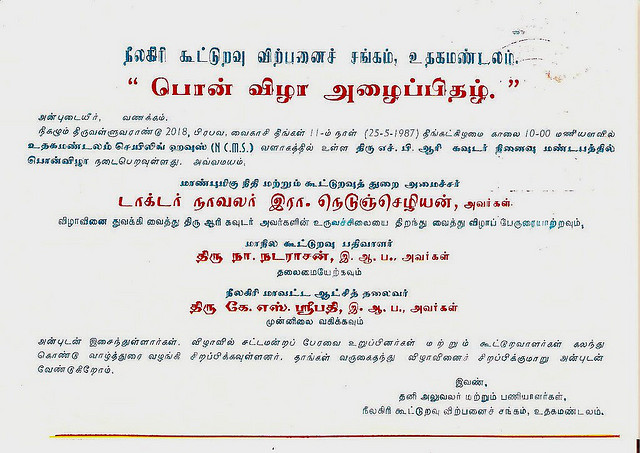
  11. Hallu (Teeth)
  12. Naalenge (Tongue)
  13. Dhaade ( Chin)
  14. Thonde (Throat)
  15. Gaththu (Neck)
  16. Maaru – Nenju – (chest)
  17. Mole (Breast)
  18. Hiththalu – Bennu – (Shoulder)
  19. Kai (Hands)
  20. Mutti (Elbow – also for knee)
  21. Beralu (Fingers)
  22. Hebbatte – Katte (beralu) – [Thumb]
  23. Ugilu (Nails)
  24. Hotte (Stomach)
  25. Mollu Kudi (Naval)
  26. Nadu (Hip)
  27. Pitti (Buttocks)
  28. Thode (Thigh)
  29. Monakkaalu (Knee)
  30. Kaalu (Leg)
  31. Midi (Heel)
  32. Angalu (Foot)


COLOURS (BANNA)

1.Kappu – Black

2.BeLLay – White

3. Keppu (Kechay) – Red

4. Pachchay – Green

 5. Neela – Blue 6. Arichina (Manja) – Yellow

Also see http://badaga-language.blogspot.in/


The Beauty of Ha sound/word in Badaga


Eliminating Ha (word/sound) is sure way of distorting and destroying Badagu language of its originality and purity

Badaga or  Badagu, is a ‘classic‘ and independent language spoken by Badagas of the Blue Mountains or the Nilgiri hills, in north -west Tamil Nadu, bordering Karnataka and Kerala.

Though it is unique by itself, it can be said to be akin to Halaiya (old) Kannada more than any Dravidian language. But due to the geo – political reasons, it is being identified more with Tamil.

Unfortunately, some ‘over enthusiastic scholars’ and a few elders have been trying to eliminate the sound ‘ha -ஹ ‘ (which is an integral part of the Badaga language and) replace it with ‘ah- அ ‘ with some unacceptable justification that these letters (as well as letter like Ja ஜ, Sa ஸ, Sha ஷ ) do not form part of pure/classical Tamil though they are very much in day to day usage.

Let me elaborate and justify why ha and other letters, like ஜ, ஸ, ஷ etc should remain as core letters/sounds in Badaga.

A Badaga village is known as Hatti (ஹட்டி) and not as அட்டி.

Our deity/ Goddess is Hethe – ஹெத்தே and not Athe எத்தே

Some day to day words starting with ha

Haalu – ஹாலு – milk

Habba – ஹப்பா – festival

Hannu – ஹண்ணு – fruit

Haavu – ஹாவு – snake

Jana ஜன – people
Janni ஜன்னி – cold

Jav’voni – Young

Jakkadha –  ஜக்கத –  the famous hatti (village)

Hasu ஹஸு – hunger

Haasu ஹாஸு – spread

Hethe nangava Harichali – ஹெத்தே நங்கவ ஹரிச்சலி

Let Hethe bless us !

Badaga Script – Barey

Badugu Barey (Badaga Script )

Yogesh Raju (Kadasoley)

LEARN BADUGU-Rvd 4(1)

LEARN BADUGU-Rvd 4(2)

LEARN BADUGU-Rvd 4(3)

LEARN BADUGU-Rvd 4(4)

LEARN BADUGU-Rvd 4(5)

Badugu (Badaga) Script

Yogesh 2

Yogesh Raju from Kadasole has been working on a Badaga (he prefers to say Badagu) script for the past fifty odd years. In fact, the script was developed in 1968 itself and was taught in Mael Hosattai of Mael(Mel) Seemay. He is convinced that Badaga – Badagu is an unique Dravidian language by itself (as opposed to being a derivative of Tamil or Kannada, as some over enthusiastic supporters of these languages claim it to be. He has been propagating/teaching Badugu Script ever since.

Badugu Grammar was ‘written’ in two parts eleven years back and was released in a function at Coonoor in a press meet. The script appeared in the Tamil vernacular news paper ‘Dina Thanthi’ in 1991

IMG-20190508-WA0023

A language without a script is bound to face extinction sooner or later. No question about it. Earlier, why even today, many Badagas communicate with each other in Badaga by using the scripts of English or Tamil, in which most of the educated Badagas are proficient with. The draw back of using these languages is that there are no equal or suitable letters (alphabets) to truly bring out some sounds/words used by Badagas.

For example, Ha which is extensively used in Badaga does not have an equivalent in PURE Tamil, though in today’s Tamil, ஹ is freely used. But unfortunately, some professionals, have started using ah – அ instead. They have gone to the extent of justifying this by corrupting words like hatti (village – ஹட்டி) as atti – அட்டி. A sure way to destroy the originality of Badaga.

In English, there is no equivalent to  La – ள or Na – ண which is extensively used. oLLIththu – good or haNa – money etc

See the pages on Badaga Barey under Badaga language in this website

Yogesh has been doing very good service to the society to preserve the greatness of Badaga by not only creating a script but teaching the same to youngsters in schools and online

We wish him success in his endevour – Wg.Cdr. Bellie Jayaprakash

(www.badaga.co )

The HALF-A-CENTUARY OLD BADUGU SCRIPT by  Yogesh Kadasole 

Yogesh 1a 

BADUGU BARE(Y) – Badugu Script, was conceived in 1968. Now it is reaching a greater number that is growing faster.

LakshaNa (grammar) & Maathartha (dictionary) are enriching Badugu, the language of Badugas, a Prilmitive native tribe of Nigiris from more than 2000 years back.

The Badugu bare was born 50 Years ago, at Mel Hosahatty at southern side of Nilgiris, in Kundhe Seeme though I belong to Thodhanaadu seeme.  Then developed other letters in the course of time (the letters were not developed in a day or two); after long research and avoiding any clash between letters and avoiding any confusion when writing with speed and considering the psychology and the writing ability and pattern of the young children the script was developed further and experimented. in 1968 Itself, by teaching younger students and conducting tests.

All these happened at Hosahatty- some names I remember: Markanda at Kunda, Bheema, Mahalinga, Krishnamoorthi (cousin of GuNa magesa, VC of an University in Gujarath), etc. (one interesting incident: one student (4th Std) asked me why there are two ‘in’s in Tamil and why they call one ‘in’ as ‘indh’ when that ‘in’ comes in between a word and why this confusion in Tamil. I wondered at his intelligence and it helped me in analysing the language. I. told the ‘students’ that ‘we are learning our Badugu and should forget about other languages when studying Badugu that our Badugu script has only appropriate letters for the sounds of Badugu language.The beauty is they studied in 3 hours and when I dictated some words (which I did not teach) they wrote them correctly!).


@tv interview @Blru

Then in due course of time the script was corrected for shortcomings and  shape given with writing flexibility- this took some more time, about 6 more months. But at that time the scripts for the words ‘QWA’ and ‘GWA’ were not there, it was Introduced in 1970 only.

After the research in all the ‘sabdha’ (sounds) of Badugu words, by which time Ii had collected and arranged some Badugu words (around 1000 words). In 1991 this script was published by a friend from Nandhatty-Gudalur who is a correspondent of  Tamil Daily “Dina Thandhi”. 

Seeing this news paper article, 15 gentlemen (14 from Kotagiri area and one Tamilian lady from Avinashi) studied it through correspondence. We used to write in inland letters and only in Badugu script,! (the name in the address were also written in Badugu apart from English); I still preserve them (please note that at that time there was no tv and mobiles !!!)

Later on I worked for five years for collecting old and rare Badugu words from very old elders – some words like ‘banda’, ‘mammukoosu’, ‘sisukoosu’, ‘burude’, etc,….from Maelseeme (in Hasanur, bordering Karnataka) also. (25yrs back my father, KP.Raju, a freedom fighter, established a school there and my brother (Ganesh) was teaching there and I also used to go on holidays and taught in that school).

Now around 7000 words have been collected and arranged in alphabetical order. Then started writing ‘Maaththartha’ (dictionary); after writng about 50 pages I felt the immediate need for ‘Lakshana’ (Grammar) and worked for 4 to 5 years , wrote two parts (completed in 2010) of GRAMMAR .

After this, the  script was posted in the Face Book, last year(2012). Because of the efforts taken by BWC (convener: Singan Sathu), more than two thousand people around the world are studying our script through internet. Then, many youngsters who studied it joined and we under the banner of BLPG (which was instrumental in the formation of BMS) started teaching the Badugu Barey at villages in weekends (so far around 50 villages were covered).

Apart from this the ‘Learn Badugu’ lessons are being posted in the FB groups at regular intervals (so far 32 lessons were posted in first phase and in the second phase also many lessons were posted). Now Maththartha (dictionary) work is continuing.

Now FB group BBB has been created and the website- http://www.swadhandhrabadugu.org  started for Badugu and the related history. In April, 2014, we conducted free 3 day camp at Reach Matriculation school, Coonoor, with the help of Prakasam Malla Gowder. Also conducted classes at cities like Coimbatore and Chennai with the support of Badagar Welfare Association, Chennai, and at Gudalur- Gudalur Badugar Nala Sangha, apart from many workshops conducted. Such classes are continuing.

I came out of Indian Bank on VRS, for the purpose of this work and also for services under BBB and BMS. Also visited UAE, at the invitation of Dubai Baduga Association, and taught Badugu script there in Dec. 2014. 

Singhan Sathu (of BWC, and AGM of Corporation Bank, and the previous President of Erode Baduga Association) introduced the Badugu script in face book. BLPG started; then BMS started.Some of the people who are pillars in Badugu teaching are:- Attuboil Raja, Senthil Kerappadu, Harihara Emarald Bhoja, Nijanth G Halagowda, Valli Aanandh, Pavithra, Aneesh, Ajeeth. Sivaraj (Selakore). A 1991 Correspondence student (now a Hindhi and Badugu teacher) has taken the mantle of teaching in many villages with a team, all with the blessings of HirOdayya, the Almighty.

Badugu Badhukku; Long live Badugu.

(From 2016 an exclusive FB group – BADUGU BARE(y) and BAASHE.- has been started. It is dedicated only for Badugu language and Script. Lessons and Videos are posted regularly). 

Yogesh (Kadasolai) mob-8903471808. email: yogeshr070&gmail.com.

Face book group timeline for learning Badugu script:- BADUGU BARE(y)  and BAASHE’ (script and language) -BBB

Website:-     www.swadhandhrabadugu.org

Badaga Blessings

badaga-blessing1sketch by JP

One of the wonderful and deeply meaningful customs of Badagas, is the seeking of the blessings of elders. That is, whenever any person meets/visits an elder, he or she seeks the blessings of the elderly person [elderly does not mean aged/old but only elder by age] by bowing the head and requesting “Harachu (bless me)”. If any headgear like cap/turban is worn, the same is removed before seeking blessings. Foot wear also removed.

The elder, placing his/her right hand [or both hands] on top of the head of the youngster would bless [broadly] with the following words – footwear [kevaru / mettu]as well as the headgear [cap/kovili or turban / mandare] would be removed before blessings are sought / offered.

The elderly person  blesses as ‘ Ondhu Nooru, Saavira Agili [let one become a hundred and then a thousand];  Somi, harachavu,sogavu kodili [may God give good health and happiness]; Hoppa eday, bappa eday ella ollithay barali [let only good things happen while going out or coming back]‘ This tradition not only ensures respect to elders but also shows the close bond. Incidentally, open palms -where the nerves end, is supposed to transmit positive vibrations. Thus, the open palms placed on the head, is the ultimate way of blessing.

If you are new to this custom, it may make us a bit uneasy [ashamed is a very strong word] but when you get used to it, this is pure bliss. Let us start seeking the blessings from the most neglected elders – our parents.

1. OLLithagi, ondhu saaviraagi, ko endu korasi, bo endu bokki, nooru thumbi, naadu jaradu, dheera p(b)oorana aagi, baddukki ba

 [Let everything become good, let one become a thousand(wealth), let ‘ko’ be the call, let it boil as ‘bo’, let 100 (years) be completed, visit all [over] nation(s), be a great and enlightened person & come back with all these.

2. OLLitha Ethi, Hollava ThaLLi, Olagodho Ellava Geddu Ba

[Leave all that is bad, take all that is good , come back winning all/everything in this world]

3. Enna maathi / hennu, , sangatta salippu elladhe oLLenge iru, paddipperi mundhuga hesarethi baa, Hoppa Dhari, Bappa Dhari yo, edinjillu elladhe oLLange agili, Nee olagava gedhdhu ba !

[ Oh my son/daughter, let you live well without any disease or discomfort, let you become famous and may education take you forward, wherever you go, let there be no interruptions or hindrances and  may you come back safely. May you rule [lead] the nation (with your wisdom)]!

Full text :

ondhu, ompaththu aagali,
ondhu, saavira aagali,

harachchava kodali, sogava kodali,
baNda hechchali, badhukku hechchali,
bE hechchali, haalu hechchali, haNNu hechchali,

mane katti, maaru kattili,
ondhu mane, saavira mane aagali,

beNNE bettu aagali, thuppa theppa aagali,
hulla muttile hoo aagali, kalla muttile kaai aagali,
honna muttilE sinna aagali,

bettadhudhu bandhalEyu, beraluga adangali,
attudhadhu bandhalEyu, aangai adangali,

Kattidhadhu kareyali, biththidhadhu baeyali,

aanaiya balava kodali, ariyaa siriyaa    kodali,
budhdhi bevarava kodali,

uri hOgi, siri barali, siri sippaaththi agali,

HOppa ede, bappa ede ellaa, oLLiththe barali,

nooru thumbi, naadu jaradhu, dheera pooraNa aagi,
OLLiththa Eththi, Hollava ThaLLi, olagodho ellaava Gedhdhu,
sangatta salippu illaadhe,
hoppa dhaari, Bappa Dhaari yo, edinjilu iLLaadhe,
padipPeri mundhuga hesareththi,

kumbE kudi haradha engE, angaalu muLLu muriyaadhE,
kO endhu korachchi, bO endhu bokki,
ManE thumba makka hutti, gOttu thumba sosE kondu,

paava pariya nOdi, olagadha hesaru eththi
badhukki baa

ஒந்து, ஒம்பத்து ஆகலி,
ஒந்து, சாவிர ஆகலி,ஹரச்சவ கொடலி, சொகவ கொடலி,
பண்ட ஹெச்சலி, பதுக்கு ஹெச்சலி,
பே ஹெச்சலி, ஹாலு ஹெச்சலி, ஹண்ணு ஹெச்சலி,

மனே கட்டி, மாரு கட்டிலி,
ஒந்து மனே, சாவிர மனே ஆகலி,

பெண்ணே பெட்டு ஆகலி, துப்ப தெப்ப ஆகலி,
ஹுல்ல முட்டிலே ஹூ ஆகலி, கல்ல முட்டிலே காய் ஆகலி,
ஹொன்ன முட்டிலே சின்ன ஆகலி,

பெட்டதுது பந்தலேயு, பெரலுக அடங்கலி,
அட்டுதது பந்தலேயு, ஆங்கை அடங்கலி,

கட்டிதது கரேயலி, பித்திதது பேயலி,

ஆனைய பலவ கொடலி, அரியா சிரியா கொடலி,
புத்தி பெவரவ கொடலி,

உரி ஹோகி, சிரி பரலி, சிரி சிப்பாத்தி அகலி,

ஹோப்ப எடே, பப்ப எடே எல்லா, ஒள்ளித்தே பரலி,

நூரு தும்பி, நாடு ஜரது, தீர பூரண ஆகி,
ஓள்ளித்த ஏத்தி, ஹொல்லவ தள்ளி, ஒலகொதொ எல்லாவ கெத்து,
சங்கட்ட சலிப்பு இல்லாதெ,
ஹொப்ப தாரி, பப்ப தாரி யொ, எடிஞ்சிலு இல்லாதெ,
படிப்பேரி முந்துக ஹெசரெத்தி,

கும்பே குடி ஹரத எங்கே, அங்காலு முள்ளு முரியாதே,
கோ எந்து கொரச்சி, போ எந்து பொக்கி,
மனே தும்ப மக்க ஹுட்டி, கோட்டு தும்ப சொசே கொண்டு,

பாவ பரிய நோடி, ஒலகத ஹெசரு எத்தி
பதுக்கி பா

English Translation

Let  prosperity/good deeds increase nine folds,
[ondhu – one, ombaththu – nine, aagali – happen]
Let a prosperity increase a thousand times,
[saavira – thousand]

Let good helath and happiness be bestowed
[haracha – health, soga – happiness, kodali – given]
Let the cattle wealth / livestock (number of buffalows and cows) increase
[banda – cattle]
Let wealth  increase
[badhukku – wealth]
Let the (sown) crops increase
[bay – crops)
Let the milk (yield) inncrease
[haalu – milk]
Let the fruits increase
[hannu – fruits]

May you build (your own) a house
[manay – house, katti – build]
May you get married
[maaru katti – marriage]
Let one house become a thousand
[may your family increase]

Let the butter [yield] grow like mountain,
[bennay – butter, bettu – mountain]
Let ghei  (made from clarified butter) become large well
[thuppa – ghei, theppa – well]
Let grass turn to flowers and stones to fruits when touched
[Hullu – grass, muttilay – to  touch, hoo – flower, kallu – stone , kaai – unripe fruit]
Let iron turn to gold
[Honna – iron, sinna – gold]
Even if trouble comes in huge amount like a mountain, let it be contained in a finger
[betta – mountain, bandalay – coming, beralu – finger, adangali – contained]
Even if trouble comes like a deep valley, let it be contained in the palm (fist)

Let the cow give milk,
[kattidhadhu – tied cow, karayali – to milk]
Let whatever is sown, grow well
[biththidhadhu – sown, bayyali – grow well]

Let the strengh of Elephant be bestowed (on you)
[Aanay – elephant, bala – strengh]
Let a lot of happiness be given,
[siri – happiness]
May you become intelligent and wise
[budhdi – intelligence, bevara – wisdom]

Let jealousy vanish and happiness prevail
[uri – jealousy /envy]
Let happiness increase manyfold
[sippathi – manyfold]

Let only good things happen wherever you go and come
[Hoppa – going, bappa – coming, eday – place, olliththu – goodness]

Let you live to be a full  hundred  with lots of wisdom so as to make others wonder(envious)
[nooru – hundred, thumbi – full/filled, naadu – nation/others, jaradu – envious, Deera – wisdom, poorana – complete /lots, aagi – become]
Take only the good and leave behind the bad
[olliththu – good,eththi – take, holla’va – bad, thalli – leave behind]
May you win all in this world
[olaga – world, ellava – all, geddhu – win]
without any worries and problems,
[sangatta – worries, salippu – problems/hesitation]
Let there be no hinderance on your ways
[dhaari – path /way, edinjallu – hinderance]
Let you come up in life with wisdom given by education
[paddippu – education, mundhuga – coming forward]

Like a pumpkin plant that grows and spreads
[kumba kudi – pumpkin plant, haradu – spread]
Let not thorns stop your steps
[Aangaal – foot, mullu – thorn, muriyadhay – embed (in the sole)

Let your name and fame spread wide and far and called by all and overflow
[korachi – calling, bokki – overflow]
Let your home be filled with children
[makka – children, hutti – born]
and let there be many daughters in law
[gottu – corner, thumba – full,sosay – daughter in law]

May you look after your dear and near ones
[pava paria – near and dear ones]
Earn a great name in this world
[hesaru – name, eththi – earn]

And  live with PROSPERITY

(sources :My mother  B.Idyammal , Appukodu Lakshmi Ammal, Balasubramaiam’s ‘Paame’, Sivaji Raman’s ‘Badaga Samudhaayam’ and  my own interaction with Badaga  elders)

:::::::::::::::::::::::::::::

Wing Commander Bellie Jayaprakash B.E.(GCT,Madras Univ).,M.B.A (FMS, Delhi Univ)
Contact : bjaypee@gmail.com
belliejayaprakash©2006-2019

:::::::::::::::::::::::::::::::::::::::::::::::::::::::::::::::::::::::::::::::::::::

Learn Badaga

How the relations are called in Badaga ( query from Ram Siva)

1.Mother – Awway (others but not commonly used – Awwa, Amma, Thayee)

2.Father – Appa (Thandhey)

3.Elder sister – Akka

4.Elder brother – ANNa

5.Younger sister – Ammey (Thangei)

6.Younger brother – Thamma

7.Son – Maathi

8.Daughter – HeNNu

9.Grand Mother – Heththey

10.Grand Father – Iyya

11.Father’s elder brother – Dhoddappa

12.Father’s younger brother – Kunnappa

13.Mother’s elder sister – Dhoddawway

14.Mother’s younger sister – Kunnawway

15.Mother’s brother – Mmma

16.Father’s sister – Mammi

17.Elder brother’s wife – Aththigay

18.Husband’s sister – Aththigay

19.Children – Kunavay

20.Child – Koosu

21.Elders – Dhoddavakka

22.Youngsters – Kunnavakka

23.Young – Javvoni

24.Friend – Nattukara ( male), Nattukaththi (female)

25.Lover – Priyakaara, Priyakaathi (??)

26.Natta – an outsider from another Hatti (village)

  1. Husband – Ganda

  2. Wife – Hendaru (Hemmathi)

  3. Son in law – Aliya

  4. Daughter in law – Sosay

  5. Co brother – Juddukka

  6. Brother in law – Bawa (Mamma)

  7. Mudukka – Old man

  8. Mudukki – Old woman

  9. Mothers brothers – Guru Mane Mammanavakka

Learn Badaga

The following have been taken from my earlier posts.

A couple of days back, I received the following email from a young mother [name withheld] who wrote to say :

Dear Sir,   It gave immense pleasure for me to visit your website. I was always amazed to know about the community and the culture.

I am a Non Badaga and married last Dec to a Badaga from ………..

And Recently on the ….. of this month I gave birth to a baby. My husband and my in laws want me to learn Badaga  as I have to talk to the baby in Badaga for her to pick up the language.

Please help me learn the language by sending me some day to day conversations .

Thanks in Advance. Best Regards.

My reply :-
Thanks a lot for your email. I am delighted to learn that you find my website[s] interesting and informative.
I have given a few ‘lessons’ about LEARN BADAGA in my websites/blogs. ….
When you meet any elder, especially your in-laws and hubby’s grand parents, bow your head and say, ‘Kumbidichivi – meaning bless me. They are expected to touch your head and say, “Badhukku” – long live. You will find that any elder Badaga will be thrilled with this gesture as many do not follow this wonderful custom and your day will be made.
As a new mother, for about 40 days after delivering a baby, you are a ‘baththya hemmathi’ with some diet and other restrictions.
 “Hosa koosuga, ondhu muthu kodu’ – give the new born baby a kiss.

—————————-

The following sentences are meant to address elders with respect.

[Like in Tamil – instead of Nee it is Neengal when we talk to an elder]1.How are You – Ollenge [ஒள்ளெங்கெ] idhara?2.How is your health? – Ninga Sogava idhara / odambu ollenge hadadhaiya?

3.How is the weather? – Seemey ethey hadadhey?

4.what did you eat for breakfast/lunch/dinner. – Orakkadhu [morning] / Hagalu [afternoon] / santhu [evening], aena hittu thindhi?

5.Would you like to have some tea? – Josee Tea kudithaariya ?

6. (Girl/Boy) Baby is doing good. –  [kandu/hennu] Koosu ollenge idharey

7.(Girl/Boy) Baby is naughty. – [Kandu/Hennu] Koosu appara kurumbu

8.We are coming tomorrow. – Enga naayiga banna’ne’yo

The following have been taken from my earlier posts.

Let us learn Badaga

” Ollenge iddiya ? – How are you ?”

‘Suddi saddha ella olliththa ? – (Roughly) ‘ How is everything ? ‘

1. Are you a Badaga ? – Nee ondu Badagana?

2. Yes, I am a Badaga – Ha, Na ondu Badaga

3. What is your name ? – Ninna hesaru aena ?

4. My name is Bhoja – Enna hesaru Bhoja

5. Which is your village ? – Ninna Hatti edu ?

[5a. Amme / Thamma, nee ai hatti ? – Girl/ Boy, which is your village?]

6. My village is Bearhatti – Enna Hatti bandu Bearhatti

7. Whose son/daughter are you ? – Nee dara maathi / hennu ?

8. I am Mela thara (top street) Joghi Gowder’s son / daughter – Na Mela thara Joghi gowdaru maathi / hennu

~~~~~~~~~~~~~~~~~~~~~~~~~~~~~~~

Numbers in Badugu /Badaga

1. Ondu (One) 11. Hannondu (Eleven)

2. Eradu (Two) 12. Hanneradu (Twelve)

3. Mooru (Three) 13. Hadimooru (Thirteen)

4. Naakku (Four) 14. Hadanaakku (Fourteen)

5. Iidu (Five) 15. Hadanaidu (Fifteen)

6. Aaru (Six) 16. Hadanaaru (Sixteen)

7. eizhu (Seven) 17. Hadarizhu (Seventeen)

8. Eattu (Eight) 18. Hadarettu (Eighteen)

9. Ombathu ( Nine) 19. Hathombathu (Nineteen)

10. Hathu (Ten) 20. Eipathu (Twenty)

30. Moovathu (Thirty) 40. Nalavathu (Forty)

50. Iivathu (Fifty) 60. Aravathu (Sixty)

70. Elavathu (Seventy) 80. Embathu ( Eighty)

90. Thombathu (Ninrty) 100. Nooru (Hundred)

Days In Badugu/Badaga

1. Aadivaara (Sunday)

2. Sovaara (Monday)

3. Mangavaara ( Tuesday)

4. Bodavaara (Wednesday)

5. Chikkavaara (Thursday)

6. Bellie (Friday)

7. Sani (Saturday)

Months In Badugu/Badaga

It is said that Badaga month usually, starts on every 10th of the English month. Like for example the first Badaga month Koodalu  starts on 10th January.

1. Koodalu (Jan)

2. Aalaani (Feb)

3. Nallaani (Mar)

4. Aani ( Apr)

5. Aadire (May)

6.Aadi (Peraadi) (Jun)

7.Aavaani (Jul)

8.Perattadi (Aug)

9. Dodda Deevige (Sep)

10. Kiru Deevige (Oct)

11. Thai (Nov)

12. Hemmaatti (Dec)

Pleasantly surprised to hear all the Badaga Months being mentioned in this song called ‘Kappu Huttileyu’ . See the widget on the right and click to listen to this great dance number

**************************************

Hindu-Arabic numeral Badaga and pronunciation
1 ஒந்து   (Ondu)
2 எரடு (Eradu)
3 மூறு (Mooru)
4 நாக்கு  (Naaakkuu)
5 ஐது (aidhu)
6 ஆறு (aaru))
7 எழ்ழு (ézhu)
8 எட்டு (ettu)
9 ஒம்பத்து  (Ompathu)

Certain peculiarities of Badaga .

Haalu [haa – as in hospital and lu – as in Zulu] means milk

Hallu [ ha- as hurt and llu – as in loo] means tooth [teeth]. note – there is no plural term.
Haasu – spread [the bedding], Haasike – bedding
Hasu – hunger

Maana – Pride, Mana – heart

Kaanu – see, Kannu – eye[s] (example – Doctor-a Kaanu, kanna pathi hegina – See the Doctor, he will tell about the eyes]

~~~~~~~~~~~~~~~~~~~~~

Peculiar Words

There are some words in Badaga that are truly peculiar. for example :

1. GIJI GIJI ( as in Give & Jinx) – Confusion , mess up / disorderly

GIJI GIJI maada beda – Don’t create confusion

Room aekka ethe GIJI GIJI (ya) hadadhe ? – Why is this room in such a mess?

2. MURUKKU(LU) (Mu ru ku) – Foul mood / mild anger

Amme Ekka maathaduvadu elle ? – Why is sister not talking ?

Ava murukkindu endhave – She is in a foul mood

3. BADAYI (Ba daa ee ) – Show Off (proud)

Appara badayi maadiya – She shows off a lot

~~~~~~~~~~~~~~~~~~~~~~~~~~~~~~~~~~

Birds (Hakkilu)

  1. Haddu (Eagle)
  2. Kakke (Crow)
  3. Soray (Dove)
  4. Kili (Parrot)
  5. Emme Hakkilu
  6. Bikkola
  7. Karia(n)chitta (Black bird)
  8. Gubbachi (Sparrow)
  9. Mayilu (Peacock)
  10. Koi (Poultry hen/cock)
  11. Kaadu Koi (Wild hen)
  12. Baathu(koi) – Duck

Mari (chic) –{Koi Mari – chic(ken)}

Also for calf [ for eg) Nei mari – puppy dog]

Animals

  1. Aanay (Elephant)
  2. Kaade -Kaadu Emme – (Bison)
  3. Ottaga (Camel)
  4. Kudire (Horse)
  5. Kaththe (Donkey)
  6. Dana (Cow)
  7. Emme (Buffalo)
  8. Yethu (Bull)
  9. Karu (Calf)
  10. Huli (Tiger)
  11. Singa (Lion)
  12. Siruthe (Panther)
  13. Karadi (Bear)
  14. Maanu (Deer)
  15. Pulli Maanu (Spotted Dear)
  16. Kadamay (Sambar)
  17. Handi (Black Pig)
  18. Kaadandi – kaadu handi – (Wild Pig)
  19. Mullandi – Mullu Handi – (Porcupine)
  20. Seeme Handi (White Pig)
  21. Koda, Korangu (Monkey)
  22. Mola (Rabbit)
  23. Nari (Fox)
  24. Nei (Dog)
  25. Koththi (Cat)
  26. Eli (Rat)
  27. Aame (Turtle)
  28. Nalli (Crab)
  29. Halli (
  30. Haavu (Snake)
  31. Kappe (Frog)
  32. Meenu (Fish)

Insects

  1. Hoo (general for insect)
  2. Nona (Fly)
  3. Selandhi (Spider)
  4. Kunni (Bee)
  5. Eruppu (Ant)
  6. Kosu (Mosquito)
  7. Bendu (Moth/Butterfly)

Anatomy

  1. Mande (Head) – also refers to Hair though there is specific word – Orama
  2. Heddakku (Back of the skull) – usually Badagas have a long heddakku as they donot use cradles. The reason for not using cradles for babies is a story by itself. It is due to the fact that when they left Mysore to escape from the King (Thipu Sultan ?) in the night in a hurry, they had forgotten the baby which was sleeping in the cradle,each thinking that the other person wiould pick up the child.
  3. Moole (Brain)
  4. Nethi (Forehead)
  5. Kenni (Cheeks)
  6. Kannu [eye(s)]
  7. Kivi (Ear)
  8. Mookku (Nose)
  9. Bae (Mouth)
  10. Thudi (lip)
  11. Hallu (Teeth)
  12. Naalenge (Tongue)
  13. Dhaade ( Chin)
  14. Thonde (Throat)
  15. Gaththu (Neck)
  16. Maaru – Nenju – (chest)
  17. Mole (Breast)
  18. Hiththalu – Bennu – (Shoulder)
  19. Kai (Hands)
  20. Mutti (Elbow – also for knee)
  21. Beralu (Fingers)
  22. Hebbatte – Katte (beralu) – [Thumb]
  23. Ugilu (Nails)
  24. Hotte (Stomach)
  25. Mollu Kudi (Naval)
  26. Nadu (Hip)
  27. Pitti (Buttocks)
  28. Thode (Thigh)
  29. Monakkaalu (Knee)
  30. Kaalu (Leg)
  31. Midi (Heel)
  32. Angalu (Foot)

COLOURS (BANNA)

1.Kappu – Black
2.BeLLay – White
3. Keppu (Kechay) – Red
4. Pachchay – Green
 5. Neela – Blue
6. Arichina (Manja) – Yellow

Also see http://badaga-language.blogspot.in/

Let us make Badaga Hattis ‘CLEAN’

A clean India i.e an open defecation free India, is a must for being a developed country.

A clean Nilgiris, Nakku Betta, will make us one step closer to the achievement of a clean India.

For making India and the Nilgiris clean, open defecation free,  every Badaga Hatti (village) should have a toilet in every house. Where it is not possible for some odd houses to have toilets, there must be public toilets built by collective effort.

Badagas are right on top on many social factors. The most important one could be, Prime Minister Modi’s Beti Bachav, Beti Padav slogan and scheme.

We would have added another feather in our caps, if we have ensured that our hattis are really and truly open defecation free.

Let us strive to bring in that reform in our villages.

Let ‘Kaaduga Hoppadhu‘ (going to the forest for defecation) be a thing of the past.

Some ‘burning’ issues facing Badagas

[This article/page was published a few years back. But, most of the issues touched upon have a great relevance even today – Wg.Cdr JP]

Badagas as a Hill Tribe

BADAGAS as ST

Many Badagas are under the mistaken impression that if they are brought under the “Scheduled Tribe”, it is a degrading step. I do not think so. Badagas are one of the ‘ORIGINAL’ tribes of the Nilgiris along with Todas, Kothas and Kurumas.

The enormous improvements achieved by Badagas in all social factors, in spite of many impediments, should make us feel proud. This success is attributed to one SINGLE factor. Education. For that we must remember with gratitude the pioneer, visionary and philanthropist Rao Bahadur [Hubbathalai Jogi Gowder] Bellie Gowder who built the first School for Badagas – along with free hostel accommodation in Hubbathalai and his son Rao Bahadur HB Ari Gowder who fore saw that in educating a girl, indeed we are educating a family and hence insisted on education for girls and encouraged it fully.

~~~~

‘Scheduled Tribe’ status for Badagas ?!

March, 2008 : Why the latest Tamil Nadu website, http://www.nilgiris.tn.gov.in/
on the Nilgiris is getting on my ‘goat’ is the fact that till recently Badagas were shown as a tribe along with Todas, Kothas, Kurumbas and others. In fact, the following photograph displayed in my website www.badaga.in [ see the page https://badaga.wordpress.com/badaga-dance/ ] was taken from that portal.

Image

But the same has been removed from http://www.nilgiris.tn.gov.in/ now.

Mind you, calling Badagas as a separate tribe and included with others, does not automaticaly give the status of a schedule tribe. And hence, the champions among ourselves who are opposed to ST status, need not feel small

The above website of TN govt is accessed by many tourists mainly foreigners and they are agast not to find anything on or about Badagas.

Many readers may not know that Badagas were listed as a separate entity in the CENSUS till 1981 but after, that courtesy some ill informed ‘idiots’, Badaga are grouped under Kannada (speaking people). What this has done is the huge loss of information of knowing how many Badagas are there [along with all other details like literacy rate, gender wise population etc]. That, SIMPLY MEANS BADAGAS DO NOT EXIST.

What is highly hurting is the fact we have many Badagas including a minister, MLA, many ex-MPs & ex-MLAs who seem to do nothing. Can they not, ATLEAST, shoot out letters to all concerned ? Or, have they forgotten the fact that they are getting a fat pension because of us? I know of an EX-MP who writes to the local police station every now and then emphasising the EX-FACTOR when it comes to grabbing others land for her own kith, but does nothing about the community welfare.

What about the many self appointed leaders of Badaga community, including ex-MLAs, who claim that they are very close to the DMK party leadership ? Why can’t they initiate some action and show the same enthusiasm when they ‘fleece’ the public for money in the name of donation for the party [but lining their own pockets]?

What about many senior government officers, including the only IAS officer who can influence the party in power to take some action ? Firstly, the IAS officer should correct his mother tongue being Badaga and NOT as Tamil as is given in the government official info { a fact I have mentioned in FIRST BADAGA also}.

It is a well known fact that late Rao Bahadur HB Ari Gowder would seek an immediate appointment, to highlight the problems concerning Badagas, with the Collector as well as the State ministers of his time including the great Rajaji who was the CM. Do you know that Rajaji had to apologise to Ari Gowder when he (Rajaji) was delayed for an appointment and Ari Gowder, as MLA, threatened to walk out. I believe, many Collectors of the Nilgiris, would not only address Ari Gowder’s concern expressed over the phone but would consult him on any issue on Badagas.

Why are we keeping quiet ? Why are we behaving like ‘HEBBATHES’ – cockroaches- running away from light and hiding ourselves in darkness??

Badagas under Schedule Tribes ???

I have very strong views on this subject. Before I elaborate on them, I feel that we should first of all be identified as BADAGAS which is not the case as SANTHOSH has rightly mentioned in www://badaga.com “. . our community’s name is not in the list of communities under the BC category. In fact, it is not mentioned under any of the categories.”

I also agree with the views of ‘bhojvija’ who feels that ST tag for Badagas is humiliating…
“…Badagas living in cities and doing/completed education in cities and are upper middle class family and for them it’s not at all a matter if Badagas are non ST. But we have to talk about our entire badaga community. For example an SC/ST guy simply getting govt job if he passed just degree. And government providing more facilities like scholarship, free hostel, books, notebooks etc… In our community so many have stopped their education due to lack of economical support and their entire life style also has been changed as they have to work just as ordinary labourers…. “.

Most of us feel that getting ST status is demeaning and meant mainly for getting admissions to educational institutions and getting jobs easily. The truth could be entirely different.

Even in our own district of the Nilgirs, do you know that we are not taken as a separate community as BADAGAS but are clubbed with other non tribals??? That is one of the reasons why the exact number of Badags is not available? When census is taken Badags are clubbed under Kannadigas / others.

I am afraid, if this sad state of affair continues, after a few years, we will come under the “extinct” community.

Being from an above average Badaga family – economically [God’s grace], having done my professional studies of engineering and business administration etc and having served in the defence services and having mostly lived in big cities like Delhi, Bangalore & Madras for the past forty odd years or educating my children in the elitist schools, colleges and now abroad, I had no occasion to seek the tag of BC.

BUT.. yes this is a big ‘but’ [no pun intended]…

BUT, NOW THAT I VISIT AND INTERACT WITH OUR PEOPLE IN OUR HATTIS ON A REGULAR BASIS, I AM CONVINCED THAT FOR THE UPLIFTMENT OF OUR COMMUNITY AS A WHOLE (as opposed to city based creamy layers) THERE IS AN URGENT NEED THAT :

  1. First, we should be identified as a separate group as BADAGAS like Todas, Kothas,Kurumas etc when the people(tribes) of the Nilgiris are referred to.
  2. For the larger good of the community, Badagas should get the ST status for the benefits available are too many to go into detail.

Nearly eighty years back, Nakku Betta Leader, Rao Bahadur (Rao Sahib then) Bellie Gowder on whose invitation the Governor of then Madras Province visited Hubbathalai Village was presented a memorandum on the Hill Tribes of Nilgiris which included Badagas, Todas & Kothas. In a grand cultural show organised on that eve Badaga dance was presented [by school boys] in their ‘DODDA KUPPACHA”.

dodda-kuppacha.jpg

Rao Bahadur Bellie Gowder, incidentally, was not only the leader of Badagas but represented as leader of all the tribes of Nilgiris (a relatively remote hilly & jungle area and unexplored at that time). The folder he presented to the British Governor, on the occassion of his vist to Hubbathalai [on the invitation of Rao Bahadur Bellie Gowder] containg some rare photos of all the tribes of Nilgiris INCLUDING BADAGAS

Badagas as a Hill Tribe

What do you think?

:::::::::::::::::::::::::::::::::::::::::::::::::::::

Let us be FAIR to the fair gender

As I sit down to ponder over the ‘burning issues’ that are bothering the Badaga Community, three issues pop up as very important. The FIRST one is the inequality with which we seem to be treating our women today. Though, this malaise is affecting all the communities in our country, I am concerned that the Badagas who treated their women folk with so much respect and love in the olden days, are slowly but surely pushing them into the second class citizens category.

In earlier days, the girls were married off at a much younger age [Kannu Hoottadha Henga] but with the firm understanding that they [the girls] could seek divorce at any time if there was matrimonial disharmony and that they would be accepted back into the society without any blame and reservation. Getting married again was no big issue. She, always, had the backing of her parents and her brothers as ‘guru mane’ gave unflinching support in all respects mainly financial. This was probably the main reason that the girl children were not given any share in the property.

Being brought up in an atmosphere where complaining and cribbing were not considered as routine, the Badaga women accepted life as it came and were always ready to sacrifice their own comforts. But then, the Badaga men, at least a majority of them, were, also, simple and hard working. Then came the curse of ‘drinking’. And with that, the problems and troubles of Badaga woman increased many fold and took a dramatic turn for the worse. The men folk took full advantage of the vulnerable nature of the women who had the additional burden of bringing up the children. Here, it must be mentioned that a Badaga girl was expected to be pregnant within a few months of marriage and invariably, there was a child to ‘celebrate’ the first wedding anniversary. Followed, of course, with many more children. “Mane thumba Makka” – House full of children – was part of the ‘blessing – Harakkay’.

This put the women in a very disadvantageous position. With many children, divorce was not a choice. Thus, they accepted suffering without complaints.

Education changed the fundamental thinking of girls. Though still faced with the compulsion of early marriage, many girls accepted ‘two children per family’ norm as the best option. But, there was and is still discrimination when it came to giving them share of property. The present law of the land is clear. Girls should get EQUAL share of the property.

The Badaga thinking, mainly mandated and manipulated by men, has found the clumsy excuse of not giving share of the property to the girl children by quoting outdated traditions. This is the problem.

I am convinced that one of the most important and burning issues facing us today is GIVING EQUAL SHARE TO THE GIRLS AS THE BOYS. I am firmly of the view that we have to resolve that we will give equal share to the girls if we have to save our community from falling into disgrace. Let us take that resolution, HERE and NOW.

Wing Commander Bellie Jayaprakash B.E.(GCT,Madras Univ).,M.B.A (FMS, Delhi Univ)
Contact : bjaypee@gmail.com
belliejayaprakash©2006-2019

:::::::::::::::::::::::::::::::::::::::::::::::::::::::::::::::::::::::::::::::::::::


Badaga Script – Badaga Barae

(I had written this post in 2007  and the same is reproduced here as I feel it is relevant  even today)

It has always been felt that for a language to survive, it should have its own script. It cannot remain only as a spoken language for long. But of course, the script need not be peculiar and specific one pertaining to that particular language. So too is the necessity of a script for Badaga.

Many have attempted to achieve this objective with various degrees of success. But unfortunately, to my knowledge, no records exists, if any. I am no expert on phonetics or languages or much less innovating an unique script. But the urge to have a separate script has convinced me that it is very much possible to ‘ADOPT’ an existing script and ‘ADAPT’ it to Badaga language.

To know more about the BADAGA SCRIPT or rather the need for one go here

Badaga Script

JP’s Badaga Script – ENGBAD or simply BADAGU (BADDU)

Though some friends may feel odd about my adopting an existing Language – English- and adapting it to write in Badaga, for the time beingI will stick to English to express in Badaga (Script). I have used ‘Azhagi’ translirate software which when installed, lets you to type in English to convert  the same into Tamil, to show my ‘Badaga Script – ENGBAD or Baddu

The conventions used are;

  1. Capital letter brings out emphasis – like o is just o – ஒ [ like in only] but O is OH – ஓ [like in old].  For example, oday – break -ஒடெ, NOdhu – see – நோடு
  2. OHdhidhama niddhana, OHdidhama erindina – ஒதிதம நித்தன ஓடிதம எரண்டின   – one who is educated stops [to analyse the situation] but one who is hasty – trips [to fall]. See the sutle difference of OHdhina – ஒதின and OHdina – ஓடின
  3. Extra ‘a’ is stretching the word – like kade[move] is கடெ but  Kaade [a female name] is காடெ
  4. Letters which are not in English alphabet but available in Badaga (and Tamil) can be accessed by using the shift key(Capital) – like l is ல but L is ள , n is ந but  N is ண் . zh is ழ
  5. Capital S is ஸ, small s is ச (ch will also brings out ச)

Now some sentences typed in English and what they bring out in Tamil

  • enna heNNU enna kaNNU maakke – என்ன ஹெண்ணு என்ன கண்ணு மாக்கெ- My daughter is like my eyes
  • ELaya nOdi Edasa bE da – ஏளய நோடி ஏடச பேட – Donot redicule the poor
  • Kalla maaththi kaLLa alla – கல்ல மாத்தி கள்ள அல்ல – Kalla’s son is not a thief.
  • Maadhi mammi madhi kettudhuve – மாதி மம்மி மதி கெட்டுதுவெ – Madhi aunty’s mind is gone
What do you think?


Badagas of the Blue Mountains

Welcome to this site which is all about the

Badagas of the Blue Mountains

Baarivi, Odhivi, Nodivi & Ohridivi

[‘Baarivi, Odhivi, Nodivi & Ohridivi’ in Badaga means ‘Come, Read, See & Listen’]

badaga

1.Badaga Origin [What we DO NOT know about Badagas is more than what we know about them. Such is the mystery of Badaga Origin. Read the complete article here]

2.Badaga Language [“It appears that there are none who know ‘PURE’ Badaga. This is not due to lack of words in Badaga. Lot of Badaga words have been forgotten [due to the influence of Tamil and English] and hence become extinct”.]

3.Badaga Names [What is in a name, a rose smells the same by any other name” so said a great poet. But is it so ? In the context of preserving the culture of a community, the names given to both persons and places can play a very crucial part.]

4.Badaga Songs [Music and Badagas are inseparable. Be it the ever green dance (aatta) numbers, the sad savu (funeral) songs or the beautiful ballads…sky is the limit. For some nice Badaga songs click here

5. Badaga Villages – Hattis [Badagas, generally, refer to their village or hamlet as ‘ HATTI ‘ spread around ‘Nakku Betta’ (the Nigiris). Nakku Betta literaly means four (Nakku) Mountains (betta) though there are many hills around which the villages are located]

6. Hethay Amma History [Hethay Amma is the deity of all Badagas. Hethai Habba is always on the first MONDAY (SOVARA), the most sacred day of Badagas, after the full moon (paurnami – HUNNAWAY ) that falls in (Tamil) Margazhi month, that is the 9th day after eight days of ‘Kolu’]

7.Badaga Jewellery [The main ornaments are the nose ring called ‘ MOOKUTHI ‘ and the ear ring known as ‘CHINNA’ . Chinna , literaly means gold but usually refers to ear rings. The type shown above is worn both by men and women. Of course, the ‘ BELLI UNGARA ‘ [silver finger ring] has a special place in Badaga tradition and considered to have medicinal / health benefits]

8.Badaga Wedding [Badaga customs and traditions are known for their simplicity, adaptibility and practicality. In this respect a Badaga wedding follows a set of simple rules that has been almost the same over the centuries. But for a minor change here and there, it has been almost the same in all the villages spread across the Nakku Betta or the Nilgiri Hills]

9.Badaga Funeral [Ever since I became aware of the verses of ‘Karu Harachodhu’, I felt how nice it would be if these beautiful words could be given in English [ both in script and as translation] so that the present day youngsters could understand one of the most important and significant part (prayer) of Badaga funeral rites]

10.All about Ari Gowder [Rao Bahadur H.B.Ari Gowder, the first Badaga graduate, first Badaga M.L.C & M.L.A for a long time who had brought many reforms in/to Badaga Community including ‘prohibition’ (no alcohol – kudi to Nilgiris in British days itself. Ari Gowder lead the Indian contigent (yes, “INDIAN CONTIGENT) to World Scouts Jumboree held in Europe in the 1930s]

11.First Badaga It will be very interesting [I hope as well as informative & motivating] to list all those BADAGAS who were / are the ’FIRST’in any field.Where I am not sure, I have put a question mark, so that someone may supply the correct or corrected info

12. Rare Photos [..The title says it all ..]

13. Badaga Day [May 15th is celebrated as Badaga day, every year. Many may not be aware that this has been done from 1993 onwards. The Porangadu Seeme (Mainly Kotagiri Area) has been celebrating this day as ‘Ari Gowder Day’ also, in honour of Rao Bahadur H B Ari Gowder…]

14.Badaga Poems [One of the enchanting aspects of Badaga Language is its disarming simplicity. But though the sentences are swathed in sweetness of simple words, it can contain deep expressions of emotions conveyed in the proper usage of rhymes [holla – alla] or pair words [huttu – nattu] apart from other attributes]

15.Badaga Elders [There are a few elderly Badagas spread among our Hattis and Cities who are so well informed about us. May be due to their age or the personal interest and individual atrributes, they know about our origin, customs, culture or anything connected and concerning Badagas. It is a shear blessing to meet them.]

16. Badaga Recipes [Badagas usually grow vegetables in their small patch(es) of land called ‘HOLA’ (see photo) for their regular use apart from other commercial crops like potato, cabbage, carrot and cauliflower etc. These would also include many varities of beans, peas, greens, corn etc]

17.Badaga Proverbs [One of the fascinating and interesting aspect of Badaga [both people & language] is the free use of delightful but deep meaning proverbs called “ DODDARU SHLOKA”. When you engage an elderly Badaga into any conversation, you are sure to hear a lot of these proverbs thrown in to make / emphasis a point]

18.Badaga Calendar [Badaga month should start on the 10th of an English month as far as possible and also to ensure that the number of days in a month is either 30 or 31 days. Since Badagas consider ‘Sovara’ (Monday) as the most auspicious and ‘holy’ day, they have attached a lot of importance to that day]

19.Badaga Script It has always been felt that for a language to survive, it should have its own script. It cannot remain only as a spoken language for long. But of course, the script need not be peculiar and specific one pertaining to that particular language. So too is the necessity of a script for Badaga. Many have attempted to achieve this objective with various degrees of success. But unfortunately, to my knowledge, no records exist. I am no expert on phonetics or languages or much less innovating an unique script. But the urge to have a separate script has convinced me that it is very much possible to ‘ADOPT’ an existing script and ‘ADAPT’ it to Badaga language.

20. Badaga Poetry

21. General

~~~~~~~~~~~~~~~~~~~

  • Bravo, Rajamma of Kethorai - Kethorai Rajamma, who made all  those known her , especially the Badagas, very proud by winning an award from the President of India, recently has written to say, Dear Mr.JP…, My earnest greetings..Your efforts for the beautiful bagadas of the … Continue reading
  • Time to change with changing times? - Narmu  writes : “I am new to this site. I am very proud to be a Badaga girl. Our people are very loving, caring and are with humanity to a great extent except when it comes to inter caste marriage. … Continue reading
  • An active Collector with an Activist - Dr. R. Rajammal, who is a President Awardee, Woman Achiever, Educationist & Social Ambassador, from Kethorai is well known to all of us. She writes, On 8th of June, I had the opportunity to meet Madam INNOCENT DIVYA, IAS, District Collector … Continue reading
  • Marrying a person with no MORAY - dharshani raj  (dharshani.ds@gmail.com) asks ‘I want to know if it is wrong in marrying a person with no moray’  This question, though appears to be simple, is an important one since many of us, including the self – appointed GOWDAS … Continue reading
  • Dr.Sundaradevan, the First Badaga IAS officer writes…. - Dr. Sundaradevan Nanjiah  IAS I am a regular visitor to your website for more than a year now.  Please accept my congratulations for a splendid job.  I can appreciate the enormous efforts put in by you single-handedly in gathering so … Continue reading

******************


Badaga Dictionary

A lot of young friends who visit this website ( truly humbled and thrilled that there are more than 627,000 hits – JP) ask me whether there are any books to 1) learn Badaga language and on 2) Badaga Dictionary.

There are some books on Badaga Language and you can find the list on the page ‘Books on Badaga .

Prof.Paul Hockings
Christiane Pilot-Raichoor

 Prof.Paul Hockings has brought out ‘A Badaga English Dictionary‘ way back in 1992 along with (late) Christiane Pilot-Raichoor.

Some pages from this book are given below.

See A Badaga _ English Dictionary 


Prof.Paul Hockings informs me that the book A Badaga – English Dictionary was published in 1992, and is 865 pages long. Moreover the fully revised expansion of it is now ready for publication, and will be about 1000 pages long. A shorter and cheaper Student Edition is also planned (13 Feb 2019)

Another very useful and in my opinion a great source of interesting information on Badagaru Dhoddaru Shloka (proverbs) along with dictionary is
Counsel from the Ancients: A Study of Badaga Proverbs, Prayers, Omens and Curses

I understand that Nelikolu Trust is bringing out a Badaga – Tamil – English (authored by Dr.Haldorai) soon. It must be very interesting since Tamil, understood by many Badagas, is included.


From Prof.Paul Hockings

(Reproduced)
Dear J.P.
    I found a comment on your website to the effect that “It is ironic that despite research by Western scholars the Badagas are little known overseas”. I think you are altogether too pessimistic about this matter. The Badagas are in fact widely known, and are the subject of articles in four encyclopaedias that can be found today in several hundred libraries worldwide, viz:
Castes and Tribes of Southern India, I: 63-124
Encyclopaedia of the Nilgiri Hills,1: 2-8, 36-39, 91-113, 252-256, 296-301, 327-332, 347-351, 417-421; 2: 524-525, 541-546, 569-571, 577-580, 607-611, 727-730, 758-779, 815-816, 827-829, 980-981, etc.
Encyclopedia of Medical Anthropology, 2: 572-578
Encyclopedia of World Cultures, 3: 14-18
This means that many thousands of students and professional scholars have read about Badagas in these reference books over the past century. The hundreds of articles that have been published on Badagas in popular magazines as well as academic journals reflect (and often quote) the widespread use of these particular resources. A detailed bibliography (Hockings, 1996) has revealed that the Nilgiris region is the most thoroughly studied and documented of any rural part of South Asia, without exception.
    With regards,
         Paul
Dear J.P.,
    I often look at your website, and of course often see a list of “Books about Badagas”, some of which are in Tamil and not easily obtained. The impression you give with that title is that these are the only books available on the subject. But the books which scholars most commonly cite when writing about Badagas are usually missing from your list! You could correct that list most easily by changing the heading to read “selected recent books about Badagas,” unless it would be more accurate to say “Books by Badagas”. 
    For the record, these are the books that are most commonly cited in publications, such as academic articles, about the Badagas (in alphabetical order):
Heidemann, Frank M.
    2006    Akka Bakka: Religion, Politik und duale Souveränität der Badaga in den Nilgiri Süd-Indiens. Berlin: LIT-        Verlag.
Hockings, Paul

    1980    Ancient Hindu Refugees: Badaga Social History 1550-1975.The Hague: Mouton Publishers; New     Delhi: Vikas Publishing House.

    1980     Sex and Disease in a Mountain Community.New Delhi: Vikas Publishing House; Columbia, Mo.: South Asia Books.

    1988     Counsel from the Ancients: A Study of Badaga Proverbs, Prayers, Omens and Curses. Berlin: Mouton de Gruyter.

    1992    A Badaga-English Dictionary (by Paul Hockings and Christiane Pilot-Raichoor).Berlin and New York: Mouton de Gruyter. 

    1996     Bibliographie générale sur les Monts Nilgiri de l’Inde du sud 1603-1996 / A Comprehensive Bibliography for the Nilgiri Hills of Southern India, 1603-1996 / Eine umfassende Bibliographie der Nilgiri-Berge Südindiens, 1603-1996Bordeaux: Université Michel de Montaigne.

    1999    Kindreds of the Earth: Badaga Household Structure and Demography. New Delhi, London and Thousand Oaks: Sage Publications; Walnut Creek, Cal.: AltaMira Press.

    2001     Mortuary Ritual of the Badagas of Southern India. Fieldiana, Anthro­pology, (new series) 32. Chicago: Field Museum of Natural History.
    2012    Encyclopaedia of the Nilgiri Hills. (Paul Hockings, ed.) New Delhi: Manohar Books

    2013    So Long a Saga: Four Centuries of Badaga Social History. New Delhi: Manohar Publishers & Distributors.

Ranga, Nayakulu Gogineni

    1934    The Tribes of the Nilgiris (Their Social and Economic Conditions). Bezwada: Vani Press.

(Whoever wrote the “Badaga” article in Wikipedia seems unaware of this literature.) I have not included here several dissertations, as they are not really publications, and are often difficult to get hold of.
   With best wishes,
    Paul
It is always a pleasure to receive communications from Prof. Paul Hockings, an authority on Badagas, the people and Badaga, the language.
It will be very true to say that he has made Badagas, originally a small tribe living only in the Nilgiris [now, of course, spread around the world] known all over the globe with his well researched books and articles. Many of them can be easily accessed online.
Thank you Paul,
Wg.Cdr. JP
Rejoinder from Prof.Paul Hockings:
Thank you for your quick response, J.P.
You touch on a very important matter, that the Badagas are becoming, shall we say, internatonalised. There are dozens of Badaga families where I live in Silicon Valley, and their children and grandchildren are growing up as Americans, or elsewhere as Australians or Britons.
We social scientists find that the third generation of immigrants in some “new” country get very curious abut their ancestors and the culture too, and want to know more about it. So in a sense you and I are planning to pass on the most accurate description we can to people who need to know the details, but in many cases are not born yet!
There’s no point in lamenting that the old ways are no more, but at least we can try to preserve something in print and photography for those who will need it later on.
As always,
Paul

Badaga Language, the beauty of ‘HA’ sound

Badaga or as some like to call Badagu, is a ‘classic‘ and independent language spoken by Badagas of the Blue Mountains or the Nilgiri hills, in north -west Tamil Nadu, bordering Karnataka and Kerala.

Though it is unique by itself, it can be said to be akin to Halaiya (old) Kannada more than any Dravidian language. But due to the geo – political reasons, it is more and more identified with Tamil.

Unfortunately, some over enthusiastic scholars and elders have been trying to eliminate the sound ‘ha -ஹ ‘ which is an integral part of the Badaga language and replace it with ‘ah- அ ‘ with some unacceptable justification that these letters (as well as letter like Ja ஜ, Sa ஸ, Sha ஷ ) do not form part of pure/classical Tamil though they are very much in day to day usage. .

Let me elaborate and justify why ha and other letters, like ஜ, ஸ, ஷ etc should remain as a core letters/sounds in Badaga.

A Badaga village is known as Hatti (ஹட்டி) and not as அட்டி.

Our deity Goddess is Hethe – ஹெத்தே and not Athe எத்தே

Some day to day words starting with ha

Haalu – ஹாலு – milk

Habba – ஹப்பா – festival

Hannu – ஹண்ணு – fruit

Haavu – ஹாவு – snake

I intend opening an exclusive blog to high light the importance and necessity of retaining these sounds/letters like Ha ஹ, Ja ஜ, Sa ஸ, Sha ஷ
Jana ஜன – people
Janni ஜன்னி – cold
Jakkadha –  ஜக்கத –  the famous hatti (village)

Hasu ஹஸு – hunger

Hethe nangava Harichali – ஹெத்தே நங்கவ ஹரிச்சலி

Let Hethe bless us !

Badaga Blessings

One of the wonderful and deeply meaningful customs of Badagas, is the seeking blessings of elders. That is, whenever any person meets/visits an elder, he or she seeks the blessings of the elderly person [elderly does not mean aged/old but only elder by age] by bowing the head and requesting “Harachu (bless me)”.
 If any headgear like cap/turban is worn, the same is removed. The elder, placing his/her right hand [or both hands] on top of the head of the youngster would bless [broadly] with the following words – footwear [kevaru / mettu]as well as the headgear [cap/kovili or turban / mandare] would be removed before blessings are sought / offered. The elderly person  blesses as ‘ Ondhu Nooru, Saavira Agili [let one become a hundred and then a thousand];  Somi, harachavu,sogavu kodili [may God give good health and happiness]; Hoppa eday, bappa eday ella ollithay barali [let only good things happen while going out or coming back]‘

Badaga Blessings

 This tradition not only ensures respect to elders but also shows the close bond. Incidentally, open palms -where the nerves end, is supposed to transmit positive vibrations. Thus, the open palms placed on the head, is the ultimate way of blessing.
If you are new to this custom, it may make us a bit uneasy and shy but when you get used to it, this is pure bliss.

Let us start seeking the blessings from the most neglected elders – our parents.

1. Ollithagi, ondhu saaviraagi, ko endu korasi, bo endu bokki, nooru thumbi, naadu jaradu, dheera p(b)oorana aagi, baddukki ba

[Let everything become good, let one become a thousand(wealth), let ‘ko’ be the call, let it boil as ‘bo’, let 100 (years) be completed, visit all [over] nation(s), be a great and enlightened person &amp; come back with all these.

2. Ollitha Ethi, Hollava Thalli, Olagodho Ellava Geddu Ba

[Leave all that is bad, take all that is good , come back winning all/everything in this world]

3. Enna maathi / hennu, , sangatta salippu elladhe ollenge iru, paddipperi mundhuga hesarethi baa, hoppa dhari, Bappa Dhari yo, edinjillu elladhe ollange agili, Nee olagava hedithu ba !

[ Oh my son/daughter, let you live well without any disease or discomfort, let you become famous and may education take you forward, wherever you go, let there be no interruptions or hindrances and  may you come back safely. May you rule [lead] the nation (with your wisdom)]!

Full text :

ondhu, ompaththu aagali,

ondhu, saavira aagali,

harachchava kodali, sogava kodali,

baNda hechchali, badhukku hechchali,

bE hechchali, haalu hechchali, haNNu hechchali,

manE katti, maaru kattili,

ondhu manE, saavira manE aagali,

beNNE bettu aagali, thuppa theppa aagali,

hulla muttilE hoo aagali, kalla muttilE kaai aagali,

honna muttilE sinna aagali,

bettadhudhu bandhalEyu, beraluga adangali,

attudhadhu bandhalEyu, aangai adangali,

Kattidhadhu karEyali, biththidhadhu bEyali,

aanaiya balava kodali, ariyaa siriyaa  kodali,

budhdhi bevarava kodali,

uri hOgi, siri barali, siri sippaaththi agali,

HOppa edE, bappa edE ellaa, oLLiththE barali,

nooru thumbi, naadu jaradhu, dheera pooraNa aagi,

OLLiththa Eththi, Hollava ThaLLi, olagodho ellaava Gedhdhu,

sangatta salippu illaadhe,

hoppa dhaari, Bappa Dhaari yo, edinjilu iLLaadhe,

padippEri mundhuga hesareththi,

kumbE kudi haradha engE, angaalu muLLu muriyaadhE,

kO endhu korachchi, bO endhu bokki,

ManE thumba makka hutti, gOttu thumba sosE kondu,

paava pariya nOdi, olagadha hesaru eththi

badhukki baa

ஒந்து, ஒம்பத்து ஆகலி,
ஒந்து, சாவிர ஆகலி,ஹரச்சவ கொடலி, சொகவ கொடலி,
பண்ட ஹெச்சலி, பதுக்கு ஹெச்சலி,
பே ஹெச்சலி, ஹாலு ஹெச்சலி, ஹண்ணு ஹெச்சலி,

மனே கட்டி, மாரு கட்டிலி,ஒந்து மனே, சாவிர மனே ஆகலி,

பெண்ணே பெட்டு ஆகலி, துப்ப தெப்ப ஆகலி,ஹுல்ல முட்டிலே ஹூ ஆகலி, கல்ல முட்டிலே காய் ஆகலி,ஹொன்ன முட்டிலே சின்ன ஆகலி,

பெட்டதுது பந்தலேயு, பெரலுக அடங்கலி,அட்டுதது பந்தலேயு, ஆங்கை அடங்கலி,

கட்டிதது கரேயலி, பித்திதது பேயலி,

ஆனைய பலவ கொடலி, அரியா சிரியா கொடலி,புத்தி பெவரவ கொடலி,

உரி ஹோகி, சிரி பரலி, சிரி சிப்பாத்தி அகலி,

ஹோப்ப எடே, பப்ப எடே எல்லா, ஒள்ளித்தே பரலி,

நூரு தும்பி, நாடு ஜரது, தீர பூரண ஆகி,

ஓள்ளித்த ஏத்தி, ஹொல்லவ தள்ளி,

ஒலகொதொ எல்லாவ கெத்து,சங்கட்ட சலிப்பு இல்லாதெ,

ஹொப்ப தாரி, பப்ப தாரி யொ, எடிஞ்சிலு இல்லாதே,

படிப்பேரி முந்துக ஹெசரெத்தி,

கும்பே குடி ஹரத எங்கே,

அங்காலு முள்ளு முரியாதே,

கோ எந்து கொரச்சி,

போ எந்து பொக்கி,மனே தும்ப மக்க ஹுட்டி, கோட்டு தும்ப சொசே கொண்டு,

பாவ பரிய நோடி, ஒலகத ஹெசரு எத்தி

பதுக்கி பா

English Translation

Let  prosperity/good deeds increase nine folds,[ondhu – one, ombaththu – nine, aagali – happen]

Let a prosperity increase a thousand times, [saavira – thousand]

Let good health and happiness be bestowed[haracha – health, soga – happiness, kodali – given]

Let the cattle wealth / livestock (number of buffalows and cows) increase[banda – cattle]

Let wealth  increase[badhukku – wealth]

Let the (sown) crops increase[bay – crops)Let the milk (yield) increase[haalu – milk]

Let the fruits increase[hannu – fruits]May you build (your own) a house[manay – house, katti – build]

May you get married[maaru katti – marriage]

Let one house become a thousand[may your family increase]

Let the butter [yield] grow to a mountain,[bennay – butter, bettu – mountain]

Let ghei (clarified butter) made become large like a well[thuppa – ghei, theppa – well]

Let grass turn to flowers and stones to fruits when touched[Hullu – grass,muttilay – touched, hoo – flower, kallu – stone , kaai – unripe fruit]

Let iron turn to gold[Honna – iron, sinna – gold]

Even if trouble comes in huge amount like a mountain, let it be contained in a finger[betta – mountain, bandalay – coming, beralu – finger, adangali – contained]

Even if trouble comes like a deep valley, let it be contained in the palm (fist)

Let the tied cow give milk,[kattidhadhu – tied, karayali -milking]

Let whatever is sown ,grow well[biththidhadhu – sown, bayyali – grow well]

Let the strengh of Elephant be bestowed (on you)[Aanay – elephant, bala – strengh]

Let a lot of happiness be given,[siri – happiness]

May you become intelligent and wise[budhdi – intelligence, bevara – wisdom]

Let jealousy vanish and happiness prevail[uri – jealousy /envy]

Let happiness increase many fold [sippathi – manyfold]

Let only good things happen wherever you go and come[Hoppa – going, bappa – coming, eday – place, olliththu – goodness]

Let you live to be a full  hundred  with lots of wisdom so as to make others wonder(envious)[nooru – hundred, thumbi – full/filled, naadu – nation/others, jaradu – envious, Deera – wisdom, poorana – complete /lots, aagi – become]

Take only the good and leave behind the bad[olliththu – good,eththi – take, holla – bad, thalli – leave behind]

May you win all in this world[olaga – world, ellava – all, geddhu – win]without any worries and problems,[sangatta – worries, salippu – problems/hesitation]

Let there be no hindrance on your ways[dhaari – path /way, edinjallu – hindrance]

Let you come up in life with wisdom given by education[paddippu – education, mundhuga – coming forward]Like a pumpkin plant that grows and spreads[kumba kudi – pumpkin plant, haradu – spread]

Let not thorns stop your steps[Aangaal – foot, mullu – thorn, muriyadhay – embed (in the sole)

Let your name and fame spread wide and far and called by all and overflow[korachi – calling, bokki – overflow]

Let your home be filled with children[makka – children, hutti – born]

and let there be many daughters in law[gottu – corner, thumba – full, sosay – daughter in law]

May you look after your dear and near ones[pava paria – near and dear ones]

Earn a great name in this world [hesaru – name, eththi – earn]And  live with PROSPERITY

(sources : My mother (late) Hubbathalai B.Idyammal , Appukodu Lakshmi Ammal, Balasubramaiam’s ‘Paame’, Sivaji Raman’s ‘Badaga Samudhaayam’ and own interaction with  badaga village elders)

:::::::::::::::::::::::::::::

No articles, images and other material in this website can be reproduced without the written permission of 

Wing Commander Bellie Jayaprakash B.E.(GCT,Madras Univ).,M.B.A (FMS, Delhi Univ)

Contact : bjaypee@gmail.com

belliejayaprakash©2019

:::::::::::::::::::::::::::::::::::::::::::::::::::::::::::::::::::::::::::::::::::::

125th birth Anniversary of H.B.Ari Gowder

December 4th, 2018 is the 125th birth anniversary of Rao Bahadur Hubbathai Bellie Gowder ARI GOWDER, a great Indian and a great Badaga.

H.B.Ari Gowder 
(4-12-1893 to 27-6-1971)

Rao Bahadur H.B.Ari Gowder, the first Badaga graduate, first Badaga M.L.C & M.L.A for a long time( in the 1920s, 30s and 40s) at the time of British Raj,  had brought many reforms in/to Badaga Community in particular and the other tribals of the Nilgiris in general.

He was the leader of the Badaga community and his words were taken as final. He would preside over the Nakku Betta Badaga gathering at Nattakal near Kotagiri, known in Badaga as “KOOTTU”.

This image has an empty alt attribute; its file name is koottu-at-hubbathalai.jpg

Ari Gowder was honoured by the British Empire on many occassions.

May 15th is Badaga Day and is celebrated as Ari Gowda day.

Ari Gowder’s father Rao Bahadur Bellie Gowder was the engineering contactor responsible for laying the Nilgiri Mountain Railway from Mettupalayam to Ooty (the work was completed in 1908).After his death in 1935, Ari Gowder was the Railway contractor of this sector till his death in 1971.

hjbgat-bridge33.jpg

Ari Gowder lead the Indian contigent (yes, “INDIAN CONTIGENT) to World Scouts Jumboree held in Budapest in Hungary in 1932.

Being a great philanthropist, he had done a lot for the betterment of Badagas and other tribal communities of the Nilgiris. He was instrumental to establish Nilgiri Co-Op Marketting Society (NCMS) at Ooty, to save the small farmers-especially Badagas- from the exploits of middlemen & traders at  vegetable mandis in Mettupalayam. 

He was also the Nilgiris District Board Chairman and the (road) bridge built in 1936 connecting Tamil Nadu and Karnataka states at Kakkanalla, Masinagudi (Guladur) is named as Ari Gowder bridge.

He was the President of NCMS for more than 30 years, till his death and during his time, NCMS was considered as one of the best co-op societies in India. His statue has been erected in the NCMS at Ooty in appreciation of his great work for the society.

Image result for ari gowder


Since he donated the land, the road in front of Mambalam Railway Station in Chennai (Madras) is named after him (known as Ariya Gowder road). 

On this day we bow our heads in reverence and respect to this great Indian and Great Badaga !

Hethe Habba

Hethe Habba

This year, the Hethe Habba will be celebrated on 31 Dec 2018.

To know more about Hethe and Hethe Amma history, click on the pages given above.

You can read  Hethe Amma history here

and download (pdf) here

May Hethe Amma’s blessings be showered on you and your family !

Badaga Origin

Dr. Rajkumar Krishnan (Naihatti), Australia

My heartfelt appreciation for Prof. Hockings and Wg.Cdr.JP for starting this critical discussion on the origin of Badagas.

It is very sad that despite advancement in technology in the last 15-20 years (from world wide web to genetic testing and archaeological technology), we remain where we started nearly 60 years ago trying to find the answer to the question; are badagas indigenous or not to the Nilgiris?

It is time for some serious research from multiple sources like linguistic, gene testing, archeological, historical etc rather than rely on books or papers written without any evidence (from self proclaimed experts writing their own views). I am not sure where funding for this kind of research can be found even if we did manage to find individuals interested in this kind of research.

There are other interesting things that need looking into like; what are the histories for Todas, Kotas andKurumas (as Wg.Cdr. JP has asked)? are their documented histories proven by research or from some self proclaimed experts’ views? How valid is cross reference, collateral history and inference from these works when applied to Badaga origins? Why does Badaga language contain some Telugu words (like gudi – temple,  netturu – blood)? How and where is the Telugu connection and what is it’s significance if any? Are Badaga rites and rituals found elsewhere (in Karnataka or Andhra) or are they unique? If unique then how do you account for a community (only few thousands in number, few hundred years ago, if migration theory is to be accepted) which spoke a dialect without written language, manage to develop its rites and rituals with deep meaning and significance (like ‘Karu harasodu’). The absence of dowry system, acceptance of widow remarriage, mutually acceptable divorce and remarriage are all advanced hallmarks of an Indian community not found in Karnataka or elsewhere. How did a group of migrants (if migration happened) decide to have better ethics and way of life (usually immigrants carry their customs & traditions from their homeland)?

Dr.Rajkumar adds :Thanks for publishing my comments . With ref to Telugu/Kannada words. Interestingly, gudi and netturu are also halaya Kannada words and are rarely used in modern Kannada. Kothi in Telugu is monkey albeit pr as kothionounced

Badagas have their own ‘Hethai’ goddess and festivals and I believe were more nature worshippers (pagans), but in last 40-50 years many Hindu gods have made it into the hatti temples (including some Christianity )? They are now living worldwide and is it in the genes of the Badagas to constantly evolve and change reflecting an immigrant past?

Medically, there is huge incidence of sick sickle disease and other associated haemoglobinopathies amongst Badagas. The flip side to these medical disorders is that it genetically confers resistance against malaria. Now why do the Badagas living in the Nilgiris, where there is no threat of any malaria needs these protective genes? These disorders are primarily found in the Mediterranean and some Indian populations. Does this prove migration theory ? if so when was the migration? or is this part of the diverse Indian gene pool with all its idiosyncrasies and patterns?

Badagas are making significant strides economically as well as educationally in the last 30-40 years. I hope in near future we will all reflect, introspect and realise the need to find the truth about our origin.

I have high regards and respect for Prof. Hockings and his work on Badagas. He himself has stated that he has interviewed about 800 Badagas for his research. I am sure he will also accept that this form of interview and research is not critical scientific evidence. People during these interviews will simply repeat what their forefathers and others have told them. There is certainly no intent to falsify or gain anything but neither is this a confirmation of truth . I can understand that given the lack of any scientific facilities for research, this is the best he can do and I am sure that he has done it in good faith.

There is lot of speculation and assumptions from both indigenous Badaga and non indigenous writers and researchers on Badaga origins.We should not forget the fact that many documented articles and books from the past are mainly written from what these authors have been told and/or what they have inferred from interviews (again done in good faith). It is important that we keep asking more questions until the truth is found.

About Dr.Rajkumar :

 “The Daily Examiner” 14th Mar 2014

GP happy with move to the Clarence

dr.raj


A SENSE of adventure and a better quality of life brought Dr Krishnan Rajkumar to Australia but he had no idea just how easy life in the Valley could be.

“We wanted a change. I wanted to travel with my wife and kids,” he said.

“We thought we would try Australia. We always wanted to visit Down Under.”

Better known as Dr Raj, the newest addition to the Queen Street Clinic said the biggest surprise about moving to the Clarence Valley was that he could find everything he needed in the area.

“It’s all been very lovely. We are starting so see a few places – Maclean and Lawrence are very beautiful places,” he said.

“The children have all their extracurricular activities like dancing, the schools are good, shopping – we have not felt the need that we have to leave every weekend.

“Indian spice shopping-wise, it’s just down the road to Woolgoolga.”

Dr Raj said he was originally from Ooty in the hills of India but studied medicine in Chennai, with postgraduate studies in basic surgery and ear, nose and throat.

He worked in England from 1997 until moving to Australia at the beginning of the year with his wife and two daughters, who are in Years 5 and 9.

Dr Raj said he liked the variety of work involved in general practice.

“You don’t know who is going to walk in with what,” he said.

He said talking to people was the best thing about being a doctor. “That’s another thing with general practice,” he said. “It’s more like a holistic approach. You get to know the whole person.”

Dr Raj has taken on the patients of Dr Bruce Wakefield and said he looked forward to meeting and getting to know all of them.

SOME POPULAR BADAGA MISCONCEPTIONS

SOME POPULAR BADAGA MISCONCEPTIONS

Prof.Paul Hockings

Dear JP,
    I have been meaning for some time to send you something  that has been troubling me. While it is a great improvement in things that we now have Badagas publishing books about their culture, most of these books seem not to be based on well-established scholarship on South India, but rather personal impressions. Contrary to what Trump might say, in the long run you can’t have alternate histories of a people, some of which are based on critical research and others of which are not. The critical research is what will last while at the same time being modified by further research.
    Anyway, it would be nice if you can publish what I have written, in the hope that some rather more critical discussion will take place. I have interviewed some 700-800 Badagas (which I don’t think anyone else has done) and I have tried in my books to distill the essence of their thoughts while acknowledging that there are always differences of opinion depending on what part of a society you are located in.  – Paul

The ubiquity of the internet these days, and of Badagas who are perfectly capable of using it, has allowed for a lot more discussion about Badaga matters than used to be the case. And the proliferation of books about the Badagas over the past half-century, when there had been virtually none before that, has given plenty of people food for thought. This is all to the good, of course, and contrasts greatly with the earlier situation. But I would like to point out that some serious yet pervasive misconceptions have arisen in recent years that should be addressed.
The first one to mention, because it is perhaps the oldest, is that it was “western scholars” who decided that the Badagas of the Nilgiris came there from southern Mysore several centuries ago, and that those same scholars decided this because the name of the people means “northerner”. Since I am one of those scholars let me make several point in response.

First of all, from the 1820s onwards, the only writers who showed the slightest interest in Badagas were Westerners. Badagas themselves were certainly unconcerned, no doubt thinking that without literacy they could not have had history. I can mention only two exceptions to this statement. Pandit S.M. Natesa Sastri was a noted Brahmin folklorist (1859-1906) who was reputed to speak 18 languages, Badaga being one of them. Of course, one could not make a decent living being a folklorist in the 19th century, and so Natesa Sastri was employed as a warden in the Ootacamund jail. This gave him ample opportunity to question its Badaga inmates, of whom there apparently were several dozen. As a result of these investigations he published several articles in the Madras Christian College Magazine that are full of valuable and highly accurate information, including verbatim prayers and other samples of the Badaga language. It is of course a great regret that he never made his findings more accessible. The other exception to my statement about Western scholars was a Badaga, M.K. Belli Gowder of Accanakal (Achchanekallu), who early in the 20th century collected a great deal of factual information about the folklore; but he kept it all in notebooks and published almost nothing except for several letters in the South of India Observer. These two writers aside, Indians have shown no interest in Badaga culture until quite recently.

The second point I need to emphasize is that Western scholars never made up their identification of the Badaga homeland in southern Mysore: THIS WAS WHAT TRUSTED BADAGA ELDERS TOLD THEM. In my own research I was told by numerous elders, from 1962 onwards (in other words, by people born around 1900 or just before), that the names of some of the ancestral villages were still known; and they dictated to me Accalli, Agasvadi, Belladi, Gundulupete, Hasanuru, Honnahalli, Jakkalli, Kakkadur-Karahalli, Kavaspadi, Kongahalli, Sulur, and Urigaddige. All of these places (except Hasanuru) lie within a very restricted area not far from Nanjurugudi, a pilgrimage centre which Badaga informants regularly visited because, even in the 19th century, they claimed it was their ancestral home. None of the above sentences were made up by me: I am simply reporting what reliable elderly informants told me half a century ago. Why would I falsify this matter, and why would they lie about it? Ever since the 1820s Europeans have occasionally been asking Badagas where their ancestors had come from, and always got answers along these lines. Even Father Fenicio, visiting Kunda in 1603, met Badagas who told him they lived in three villages and had come from the plains to the north.

Another point of contention arises over the very name “Badaga”. We are all agreed it is a Kannada word originally, and means “northerner” or “from/in the north”. But this apparently has led one modern Badaga writer into real confusion. I have not read his book because my Tamil is pretty hopeless these days, but Sivaji Raman’s book Badaga Samudayam, as reported in this website, seems to make wild and totally unsubstantiated claims about how “Badaga language finds extensive mention in old – purana – Tamil literature like Tholkappiam”. This is nonsense because, first, the language of the Nilgiri Badagas did not have any separate existence from Kannada until several centuries ago; and secondly, the “Badaga” referred to here were people who, from a Karnataka perspective, were indeed “northerners” but were people who we know spoke Telugu! In short, they had nothing at all to do with the Nilgiri peoples, as they were living in what we now know as Andhra. The Tolkappiyam dated to around the 3rd century AD, a time before anything is known about any Nilgiri peoples, and some 1400 years before Badaga became established as a Nilgiri language. That great Tamil work was in fact referring to the early Telugu language. For scholars of Dravidian literature this fact about “Badagas” has been common knowledge since at least the 19th century, so it is sad to find people who are not really familiar with Indian philology still making this baseless claim about mention in the Puranas in the 21st century.

There have been a few Badagas who in recent years have claimed a great antiquity for the Badaga occupance of the Nilgiris. One person recently wrote on a website that the Badagas had been on these hills for “8000 years”. Not only is this totally preposterous, as we know nothing about the names or locations of ethnic groups anywhere in India prior to the adoption of writing, least of all on the Nilgiris; but such ludicrous claims just serve to make Badaga history laughable to any serious scholars of South India. There were Mesolithic cultures in parts of India 8000 years ago, but even if archaeologists eventually demonstrate presence of humans here on the Nilgiris even 1000 or 2000 years ago, there would still be no evidence that the people involved were Badagas in any sense. In fact, the earliest Nilgiri occupants were probably Kurumbas, because (a) there are some Badaga hattis with Kurumba placenames, as the Kurumbas had already left, and (b) Kurumba magic seems to be identical with Buddhist magic, which otherwise disappeared from South India around 1000 years ago, along with Buddhism and Jainism generally.

I don’t doubt that IF evidence were to show a greater antiquity for the Badaga occupance of these hills it might bolster some current political arguments. But the fact remains that there is a great deal of evidence for the Badagas having arrived 4-5 centuries ago and virtually none for any earlier arrival. The relevant evidence has been examined closely by a number of anthropologists and historians over the years, so it is not just a matter of one man’s “opinion”. Indeed, old Toda and Kota folktales don’t even mention the presence of Badagas. I need hardly add that creating imagined or false histories of the Badagas that are not based on a scrutiny of all available facts will be an irreparable disservice to future generations, who are likely to ask more searching questions about their ancestry.

Though I may not agree with some of the views, specially on the origin of Badagas, of Prof. Paul Hockings, there is no denying the fact that he has spent considerable amount of time and efforts in his research on and of Badagas and brought them out in his books. Also, there is no denying the fact that some Badagas had migrated from the plains of Mysore about four/five ceneturies ago.

Can it be that Badagas existed  in a very few hattis in the Nilgiris for a long, long time much before this migration, a view I strongly believe in?

Rao Bahadur Hubbathalai Bellie Gowder, (he could speak eleven languages),  a contractor (he was called Bellie Maistry) who was instrumental in laying the mountain railways from Mettypalayam to Ooty, presented a memorandum, listing Badagas as one of the original tribes of the blue mountains (The Nilgiris) along with Thodas, Kothas, Kurumas and Irulas, to the Governor of Madras in 1923 who visited Hubbathai hatti on his personal invitation. I have some of the photos taken on that occassion.

Is it correct that Thodas and Kothas have not mentioned Badagas in their folktales ? What exactly is the origin of these two tribes?

Do Thoreyas and Odeyas really consider themselves as Badagas? Are their traditions, rituals , customs and culture, specially marriage and funeral rites same as other Badaga groups (which have mingled so much that you cannot distinguish a Gowda from a Haruva, Adhikari or Kannakka)? In one of the funerals at Sakkalatti, I noticed some changes that are different from other ‘main stream’ hattis. Incidentally, I was told that, in the Kattery group of hattis (Lingyats/Lingakuttis) have decided to accept Basavanna as superior to Shiva. Marriages with Mysore brahmins(non Badagas) is still common in these hattis.

Unless we, Badagas, undertake extensive research to an alternative Prof.Paul Hockings’s views with scientific proof, our contention will remain as personal impressions, as he says.

Critical discussions are most welcome.

Wing Commander Bellie Jayaprakash


Badaga Population

What is the Size of the Badaga Population?

paul2.jpg

Prof.Paul Hockings

A quick Internet search suggests there is no authoritative figure for the total of Badaga speakers — and language is the best indicator in earlier censuses as to who was a Badaga and who was not, since virtually no one spoke that language unless they were Badagas in culture too. What one does find in the Internet today is some people claiming there are 135,000 and some claiming 400,000 Badagas. Claims for an unusually large Badaga population might be useful in making certain political arguments, but they appear not to be based on any facts. I would like to speak about the issues that lie behind this discrepancy, however, without entering into political topics.

Very early counts of Badagas were probably not so far from the truth. Thus B.S. Ward’s count of 3,778 Badagas in 1821 might have been a slight undercount, but even if they were under-enumerated by 10% (a pure guess on my part) the real figure would still be little more than 4,000. Slowly improving diet and public health over the 19th century in the Nilgiris District could therefore reasonably lead to the figure of 19,476 in the “official” census of 1871, half a century after Ward’s count (which was done for the administration of Coimbatore District).

Moving on a whole century to the censuses of independent India, we find in 1971 a count of 104,392 Badaga speakers. But after this things seem to go awry, because we get no official figure in the 1981 census. So far as I know this was a result of a political decision at some high level: to treat the Badaga language as a dialect of Kannada, and so to lump all the Badagas in with all the Kannada speakers who lived in this District. This gave quite a large figure, but no indication as to how much of it was to be accounted for by Badaga speakers.

After two books were published by Christiane Pilot-Raichoor (who sadly passed away earlier this month), working in collaboration with me — namely “Counsel from the Ancients” (1988) and “A Badaga-English Dictionary” (1992) — I think it came to be accepted that Badaga is a separate language rather than a dialect of Kannada.

A dictionary documenting the language of the Badaga community of the Nilgiri Hills in Southern India, based on linguistic data recorded throughout the period from 1963 to 1990, and designed with the requirements of the non-native English speaker in mind. For such users, first, the method of transcription of Badaga words is phonetic, and bears no reference to either English or Tamil ways of transcribing the language. Secondly, several English words are commonly listed together as translations of one Badaga lexeme

By 1991 we get a census total of 134,187 Badaga speakers. This is obviously not out of line with the 1971 figure (above). Accepting these census figures as accurate, the population had increased by 55% over the period 1951-1971, and by 28.5% over the next 20 years, 1971-1991.

What we see here is a not-unexpected drop-off in the rate of population growth. I say it was not unexpected (at least to me) for these reasons:
As spelled out in my book “Kindreds of the Earth” (Hockings, 1999), Badaga women in their fertile years began to adopt family planning from 1975 onwards, whereas before that date there was strong opposition within the Badaga commuity to that practice even though many people already knew about it. So from 1981 onwards one would expect the reduction in the rate of population increase that the censuses document, and a reduction in average family size.
In 1971 very few Badagas were living outside the Nilgiris District; for the most part, just a few hundred students at South Indian colleges. So the enumeration up to that census was an accurate reflection of the District’s Badaga population.

Front CoverThis book focuses on the household of the Badagas, a community that lives in the Nilgiri Hills in southern India. Paul Hockings reports his unique longitudinal study of this community, covering 27 years of measurement and sociocultural change in four sample villages, where he conducted censuses every nine years. Combining his knowledge of anthropology, demography, and linguistics, the author focuses primarily on demographic transition and social change over time. He also studies kinship, marriage, household structure, and various aspects of Badaga contemporary life, including the influence of the mass media

But in the half-century since then we have seen more and more Badaga families settling in large Indian cities elsewhere, as well as in North America, Europe and Australia, largely as a result of the scintillating opportunities to be found within the information technology industry. The fact that today a visit to almost any Badaga village shows a large number of homes either locked up or rented out to non-Badagas is a reflection of the new situation. The continuing low price for tea, together with high levels of education, jointly brought about this situation.

Badaga Christians may number today about 4,500, but it is difficult to be precise about their number. While nearly all Badaga Hindus still choose another Badaga for their marriage partner, according to custom, and speak Badaga, there is not such a strong tendency among the Christians, who quite often marry someone who is a Christian from elsewhere in South India. This means that such families may not have been enumerated in recent censuses as Badaga speakers if they were mainly speaking Tamil or some other language.

One must conclude therefore that if the census enumerated 134,514 in 2001 — an increase of only 0.0025% over the 1991 figure — any claim of a total of 400,000 is altogether baseless. It would require an increase in the rate of population growth that has not been seen in modern times even in the most explosive parts of Africa: an increase of something like 300% during the present century!
My very detailed study of four central Nilgiri villages over a 27-year period, spelled out in the 1999 book “Kindreds of the Earth” referred to above, found an overall “increase”, in families where the woman had completed her fertile years, of only 1.6 children per couple — hardly enough to maintain the population at its current level towards the end of the last century. This meticulous calculation, based on sixteen village-level censuses, was in fact borne out precisely by the 0.0025% rate of increase mentioned above.

Reduction of family size to where a couple has only one or two children is characteristic of modernization, as it allows the parents to concentrate their resources better on the care and education of the children do have. When I completed the 1999 study the rate in Japan was also 1.6 children per older couple, exactly the same as I found in the central Nilgiris.

Christiane Pilot-Raichoor (1951-2018)

Christiane Pilot-Raichoor

Raichoor 1

All photos from https://lacito.hypotheses.org/2131

Along with Prof.Paul Hockings, Christiane Raichoor had done extensive research on Badaga, both the people and language. As a Badaga myself, I consider her view that Badaga is an independent language, has added enormous weight to that view. The Bdaaga Dictionary that she co-authored with Paul Hockings is truly a treasure trove.

She passed away on 16 July 2018.

Badagas have lost a great friend and guide.

May her soul RIP.

Must Visit

Lt. Meera, First Badaga Lady Naval Officer

Lieutenant Meera, First Badaga Lady to have become a Naval Officer.

(Wing Commander Bellie Jayaprakash, Air Veteran, first Badaga to have joined Indian Air Force as an Officer in 1972)

I have been mentioning that there is a great opportunity for young Badaga women (as well as men) to join the Indian Armed Forces as officers. With a handsome salary, a safe future, excellent chance to serve the country, it should be the first choice as a job. There are many branches/streams in the three Military Services, including FLYING.

It was a great pleasure to meet Meera from Achanekal, Kethi, the First Badaga Lady to have joined Indian Navy as an officer in 2022. This smart young lady, who is on a short leave, had dropped in at my place and shared some of her thoughts. Daughter of Ravindranath and Malathi, Meera, did her schooling in various Kendra Vidyalayas around the country, since her dad was in the Armed Forces Medical Core (AMC). She did her graduation in Engineering from Hindustan Engineering College, Coimbatore. She worked in a private concern for three years, before deciding to join the Armed forces.

After passing the Combined Defence Services Examination and appearing in SSB (Services Selection Board) Calcutta, Meera was selected to undergo training at Officers Training Course at Naval Academy, Ezhimala, Kerala, in 2022.

Now, she is promoted as a Lieutenant and posted in AP. Surely she will get many more promotions and achieve laurels in her career in Navy. Being an inspiration, Meera is about to tie up the knot in blissful marriage with another Badaga Naval Officer.

We are proud of Meera and wish her the very best.

(Those young Badaga girls who wish to join the Indian Armed Forces may contact her at meeraraveendar08@gmail.com)

______________________________________

R.Meera, the first woman Naval Officer from Badaga Community, with her parents (DC)

B.Ravichandran wrote in Deccan Chronicle (30 may 2022) : R. Meera, hailing from Achanakal village near here, has become the first woman naval officer from Badagas, the single largest ethnic community in the Nilgiris. The villagers celebrated her rare achievement when she arrived at her native village on Sunday. Meera’s father M. Ravindranath alias Sundar has worked in the army hospital wing as a technical assistant. Meera, who started her education at the Kendra Vidyalaya in Aruvankadu near here, went on to study in the Kendra Vidyalayas at Pune, Delhi and Jammu before joining engineering at Hindustan Engineering College, Coimbatore. After completing her BE, her ambition for a career in the Indian armed forces made her take the Combined Defence Services examination. After clearing the examination, she also sailed through the interview at the staff selection board and was selected to join the Indian Navy. After completing 22 weeks of training, she passed out of the Indian Naval Academy in Ezhimala, Kerala, to become a sub-lieutenant to join duty in the naval armament inspectorate cadre in Kochi. She has thus become the first woman naval officer from the Badaga community. Meera said her life with her parents in north India helped her learn Hindi well and the army environment in which she lived gave her the confidence to try her luck in the armed forces. “Now, I feel proud. There are ample job opportunities for women in the armed forces. Women need to develop confidence and courage to take up a career in the armed forces and serve the nation. To be in the defence services itself is a special pride. They should also develop a strong will to achieve their goals,’’ she added. (https://www.deccanchronicle.com/nation/in-other-news/300522/meera-first-badaga-woman-to-become-naval-officer.html)

Remembering you, Mother !

You would have  been 113 on 2nd September!

Idyammal in 1927

A journey that was extraordinary ! A life full of challenges !!

But you never gave up !

The steely determination with which you faced  fate and life, is an inspiration for many generations!!

Happy birthday to Mrs.Idyammal [Idy Hethe], wherever you are!!

Idyammal -1997

You were everything for us, in all those glorious 99 years and 10 months when you were ‘here’.

As we were preparing to celebrate the ‘century’, you chose to leave this earth just a couple of months earlier….

How time flies!

Elle idhale’yu engava harachu

[Bless us all from where ever you are]

Gone but not forgotten, Mrs.Idyammal

14th Death Anniversary – Mrs.Idyammal Bellie Gowder

You were everything for us for all those glorious 99 years and 10 months.

When we were preparing to celebrate the ‘century’, you chose to leave this earth just a couple of months earlier ….. to bless us all from the heaven far above.

Elle idhale’yu engava harachu [Bless us all from where ever you are]

Fourteenth Death Anniversary (13-7-2025)


Idyammal Bellie Gowder
BornSeptember 05, 1912
Hubbathalai, The Nilgiris
DiedJuly 13, 2011 (aged 99)
ParentsRao Bahadue HJ Bellie Gowder and Nanji Hethe
Sister ofRao Bahadur HB Ari Gowder
SpouseB.K.Bellie Gowder [Bearhatti]
MOM 5.jpg

[Autographed pencil sketch of Mom by JP in 1964 while she was reading Femina ]

“I know my mother looks much older than what she is but those wrinkles have the charm of their own. They indicate the signs of her great endurance; and the hard life she has to lead through to bring her children to lead a life that is respected and regarded by others” – JP 24-1-68

Dear Hands

[Grace Noll Crowell]

My mother’s hands were beautiful,
They are not always smooth and white
They were so busy making dull
And lusterless things clean and bright.

They reached so often to caress
A hurt child crying in the night
They moved as quick as fluttering birds
Among the cups and spoons at tea

They did a thousand lovely things
And did them all so graciously
There is no way to sum them up
The countless things she did for us.

[photo of  Idy Hethe’s hand by her grandson Abhi Ari -2010]

We pay our homage and respect to Idy hethe !

Proud of you Megha Raman

Proud of you Megha Raman

Megha is, probably, the first Badaga to get into a Indian Institute of Management after clearing the CAT, in the All India level. She has done her graduation in Metallurgical Engineering, from PSG Technology, Coimbatore. She worked for two years at Titan Engineering and Automation Ltd and has freelancing experience in digital marketing which sparked a deep interest in the field and motivation to do MBA.

Hailing from BETHIMORA, a small hamlet located near Kookal, near Kotagiri. Her Parents are Raman and Sivagami, humble farmers who have tirelessly worked and encouraged Megha in her education and to pursue her interest in higher studies.

Megha is wondering if any other Badaga women have pursued a MBA degree from any other IIM or similar institution to that she could learn from their experiences and stories that would incredibly motivating and insightful.

Are there any scholarships or support programs – either from within Badaga Community or elsewhere – that could help students to pursue higher studies? (In case of any info, please send the same to this website (bjaypee@gmail.com) or Megha at 24pgp163@iimraipur.ac.in )

Megha flanked by her parents and sister Monika

We wish Megha all success in her career.