Rao Bahadur HB Ari Gowder
132nd Birth Anniversary
Rao bahadur H B Ari Gowder
(04 – 12 – 1893 — 28 Jun 1971)
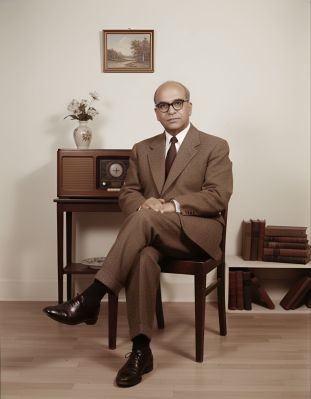
AI Photo – Dheebarna Bojaraj
Documentary
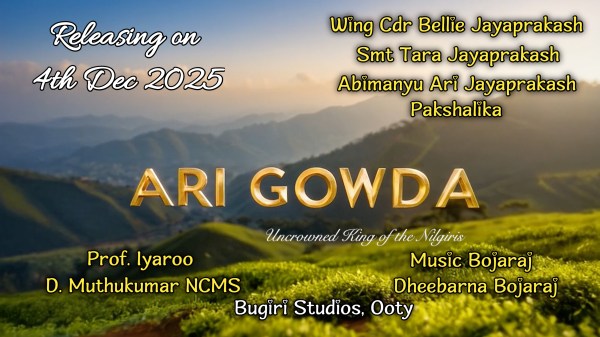
We pay our homage and respects to this great Badaga leader
and uncrowned King of the Nilgiris

Rao bahadur H B Ari Gowder
(04 – 12 – 1893 — 28 Jun 1971)
We pay our homage and respects to this great Badaga leader
and uncrowned King of the Nilgiris
Must visit these pages
Posted in badaga

TRIBAL STATUS OF THE BADAGAS – Dr.R.Haldorai
Anthropological study is the basis for considering scheduled (hill) tribe. So, it is considered as
a relevant document in this regard. Anthropologists examine the cultural aspects, traditional
vocations and customs for considering the tribal status. Badagas of the Nilgiri hills have lived long in
isolation in that plateau. As the hill is the home land for these people for a long period, the hill tribe
status for these people is obviously natural one. There is no doubt that their history goes back to
very early period. There is reason to suppose that they are part of a wave immigration that swept
them into South India before Christ1. Since then, they are identified with the Nilgiri hills alone. Their
origin is buried among the secrets of the past.
“A tribe, as we find in India is a collection of families or group of families, bearing a common
name, which, as a rule does not denote any specific occupation, generally claiming common descent
from a mythical or historical ancestor and occasionally from an animal, but in some parts of the
country held together rather by the obligations of blood-feud than by the tradition of kinship,
usually speaking the same language, and occupying, or claiming to occupy, a definite tract of
country. A tribe is not necessarily endogamous” (The Imperial Gazetteer of India vol-1: 308).
“The use of the word ‘tribal’ follows South Asian usage, refers to a type of societal organization
and does not imply a lack of sophistication or of economic well- being. It usually does imply a certain
amount of isolation in the past, if not the present. In this context ‘tribal’ contrasts with ‘caste’ as one
of the major organizing principles of South Asian society. The Nilgiri plateau of extreme Western
Tamil Nadu was almost totally isolated until the nineteenth century. It developed unique cultural
complex of its own with at least four Dravidian languages spoken there. They are Toda, Kota, Badaga
and Irula” (McAlpin 1981 :19) 2 .
Tribe versus Caste
“Today we find no castes in Badaga society” (Hockings, Paul 2005:4) 3 .
Badagas were not under the influence of caste system in any part of their history. In caste
system a person’s social status was determined by his occupation. Although caste depended upon a
person’s occupation it became hereditary in due course. So, it is inevitable to a person to live with an
unalterable particular social status throughout his life. The traditional association between caste
and occupation is far from dissolution. Badagas apparently changed their occupations to suit the
environment. They never developed intrinsic bond with any particular occupation. It is to be noted
that the very name Badaga itself is not derived from any occupation 4 . In India, most of the caste
names are derived from occupations. Badagas major occupations were food gathering, honey
collecting, hunting, buffalo rearing, millet cultivation (that too swift cultivation for some time), cash
crop cultivation, etc., Among these a particular occupation was predominant at a particular time.
And also, all the sub groups of Badaga community engaged the same occupation. In Badaga society
the clans are created not by their profession and they are by birth.
Badaga population was very small up to the beginning of the twentieth century and they
spread over the entire Nilgiri plateau. In that case, for a long period there were very few families in a
haTTi (hamlet) 5 and all the families were descended from a same forefather. So, there was a social
compulsion to venture occupations in common. The origin of the caste system in India is shrouded, but it seems, it originated some two thousand years ago. Caste system is associated with religion
and people were categorized by their occupations. Badagas’ religious beliefs were primitive in
nature, so, the religious side of their social organisation was lacking to originate caste system
jaati (caste) is used in India specifies a subdivision of a larger division varna (a concept based
on colour or race). The varna concept is entirely unknown to Badagas. To uphold caste system the
reincarnation belief played a major role. According to that belief after each life a soul reborn into a
new material form. Badagas’ inclination towards ancestor worship is so strong. They do not have
belief in the past and future births and do not have any idea about karma theory. One of the
religious beliefs of Badagas is that all the dead are there in a particular place near mallaaDu, a
western part of the Nilgiris, in astral bodies and the person who is going to die will join with them 6 .
Unlike the varna system divorce and widow remarriage are prevalent among Badagas.
Badagas do not suffer from any stigma of the kind the depressed castes do.
Egalitarian society
Tribals usually constitute egalitarian societies. The Badagas held the individual in high
respect. The names they christened to their children (e.g. booja = friend; gilla = man having stick in
hand, a respectable; kuNDa = strong man; beLLa = pure hearted man; panne = beautiful woman;
gavuDa = village chief, etc.) indicate the attention given to the individual. Likewise, their respect for
individual is evident in their treatment of the dead. They were buried individually in the earliest
days, under mound. The society was not held together by a king or an employer. Individuals had
their roles as warrior, protector, priests and artisans. Where there was crisis, the people gathered in
an assembly and took decision. The society was governed by the people themselves. During their
agricultural vocational period, that is during the last one and half centuries the families had mostly
the equal share of property. Then the gap between rich and poor was very narrow. They had even
common buffalo shed called ‘tho’ (kraal) and at times they had taken buffalo grazing as a common
venture. They constitute a near egalitarian society at most part of their dwell at Nilgiri hills.
Occupation
Badagas are professing agriculture since the second half of 19th century, that too up to
middle of 20th century they were millet cultivators. Anyhow, once their occupations were buffalo
rearing, hunting and food gathering. These occupations were there along with their agriculture up to
the middle of last century. Once ganje (barley), korali (Italian millet), saame (little millet), eragi
(finger millet), etc., were the popular and staple food grains among Badaga people. Popular kinds of
bread were pottiTTu (wheat dosai) and tuppadiTTu (confectionery). They were made with wheat
flour. Their food is simple and whole some. Culturally, once most of the Badaga families were living a
nomadic life in Nilgiri plateau. They had no permanent settlement. They lived in thatched sheds
called hullumane (hut). They never think of using buffaloes for meat. Nor did they traditionally sell
their milk. It was given away free to poor members of the community. Selling milk is like selling their
own prestige. The only commercial product of milk was the butter. They sacrificed he-buffalo on
certain festivals and funeral of males. The she-buffaloes were considered one’s capital and they
never think of their sale. On some occasions men move from their families with their buffaloes for
better grazing. Badaga tribe is definitely a territorial group. The Nilgiri is the territory of Badagas and
emigrants always refer to it as their home.Badagas entertain a close relation with the Nilgiri tribes and they were economically interdependent.
Tribal council
The Badaga tribal council is so powerful and it exercises considerable control over the
community. Among Badagas the elementary unit of society is the mane (family). Children are
important part of mane and they are treated with kindness and indulgence irrespective of their sex.
Badagas have another wider unit called kuDumbu (consists of few families). Once production of food
was a corporate responsibility of the extended family and it was the function of mane to see that
food was economically used. Each kuDumbu has a doDDamane (a ceremonial house) which gets
importance during festivals, marriages, deaths, etc. All the disputes among the family members are
tried at kuDumbu assembly. Few such kuDumbus exist in a haTTi (hamlet). Each haTTi has a
doDDamane (ceremonial or principal house) and a ‘manda’ (council).
The village ‘manda’ (council) plays an important role in shaping the society with moral
standards. It is headed by a headman called ‘gavuDa’. Each village had its headman, who is assisted
by few elders and decided public matters such as disputes, differences, etc. The village ‘manda’ is
there as not mere council for deliberation, but acted as a strong organ of executive work. There are
three levels of headmanships viz., gottugaara (headman of an haTTi, hamlet), gavuNDikke (headman
of an uur, a larger area, mostly consists of few or more haTTies ), gavuDa (headman of a siime ).
These hierarchic levels show how the system is vogue vigorously and systematically. Unresolved
disputes at kuDumbu level come to the village assembly and then to uur and then to naakkubeTTa
(tribal assembly). The Badagas are divided in four naaDus or districts and are ruled by gavuDas,
tribal chiefs.
Religion
Badagas’ religion seems to have been one of the very primitive types, predominance with
ancestral worship. Badagas consider their ancestral houses as their temples. Special rites are
performed in their ancestral house twice or thrice a year. Any Badaga can act as a priest but among
the clan agnates. The essential features of ordination are abstained from meat eating for few days,
preparing himself for poojas like taking bath in stream, sleeping at temple, etc. Places of worship of
Badagas and nature co-existed beautifully. There are nearly no devotees on ordinary days. But on
the occasion of festivals which falls yearly once large numbers of devotees turn up. Their ancestor is
known as devva (corrupt form of deyvam). The festival of devva is also the harvest festival of
Badagas celebrated alike throughout the community. devva festival is a living tradition in which
almost everyone in the village participates making it a real social thread connecting the entire
society. devva still remains untouched and is performed year after year with unprecedented pomp
and splendour. Because of the universality, it is firmly rooted in the religious faith and tradition.
In Badaga tradition juvikiNDi (water jar), ele kannaaDi (bronze mirror), jegaNDe (victory bell)
represent the very deity itself and these articles get pooja once in a year that too on devva festival.
Except this festival days rest throughout the year these articles are kept in a hidden place at forest.
Goddess hette, a prominent deity, worshipped by the Badagas of Nilgiri hills, is in reality an
ancestor that has been deified. hette is a popular deity of local origin. There are fourteen known
Hhettes worshipped and numerous rites and ceremonies centring on propitiation of goddess Hette.
Badagas claim no divine origin for their religious beliefs. Their customs are mostly pragmatic
and relevant to their day-to-day life. Their marriage customs also do not reveal any supernatural
underpinnings. Badagas observe pollution and ritual purity in limited ways. The religious activities of
the Badagas are very limited. They themselves perform the rituals. For Badagas their tribe is sacred.
They believe in next world and they don’t have rebirth theory. For them the way to salvation is their
tribe. Badagas have remained comparatively free from vedic religious influence.
Clan
Badagas are scattered widely over the hills and their hamlets amount to nearly four hundred
in number. The whole people are closely connected by totemistic clans and intermarriages. The
Badagas are endogamous tribe divided into exogamous clans. The clans are correlated not only with
exogamy but also with totemism. Residences being patrilocal, the Badagas are patrilineal people.
Patrilineal descent (or agnate) is descending from an ancestor down through a series of male links.
Breach of the rule of clan exogamy is regarded as highly dangerous in so far as it entails disastrous
socio-religious consequences. Inheritance of property takes place only through the male line. Hence
the Badaga clans furnish a good example of social organization based on clans. Badagas have fifteen
totemism clans after animals or material objects. People of a clan are agnates and hettappa, a
common ancestor is the binder among a clan. The tribal scenario of India shows the prominent
example of the clans. In consonance with that Badaga maintains its own exogamous clans through
the ages. It is the exogamous character of a clan that makes it a distinctive group. Marriage is one of
the causes for kinship relation.
The existence of totemism in Badaga society on a large scale has been brought to notice in
recent years. Badaga society is broken up into a number of totemistic clans. Each clans bears the
name of animal [kastuuri (musk deer), aane (elephant), naaga (cobra), selandi (spider) ] or material
[beLLi (silver)] or natural objects [ maari (rain), kooveeri (river kaveri), maduva (honey)]. The
members of such a clan may not intermarry. In a peculiar way, in Badaga society the names of
geographical territories also came into being for identifying the clans. In consequence territory
determined names diminished the use of totemistic names. But in bottom line totemistic exogamy
prevailed on a fairly large scale and still in active operation. The American anthropologist Dr.Paul
Hockings and others pointed out their totemistic clans. The clans are exclusively patrilineal groups.
According to F.Metz (1864) the Badagas recognise eighteen classes, each of which has its
own peculiar characteristics. S.M.Natesa Sastri (1909) simplifies this into six septs. Paul Hockings
(1980) identifies sixteen totemic clans among Badagas. They are 1.sooriya kola, 2.sandira kola, 3.
baraTa kola, 4. brammma kola, 5. beLLi kola, 6.selandi kola, 7.kooveeru kola, 8. madure kola, 9.
kastuuri kola, 10. mallige kola, 11. anniya kola, 12.maari kola, 13.madave kola, 14. maaNikka kola,
15.naaga kola and 16. saamandi kola. Totem and exogamous divisions do co-exist and totem is
primary. It is obvious that the clans are the major criterion for identifying the Badaga groups and
their totemic identifications also once popular.
Culture
Badaga culture was evolved in the Nilgiri hills and mainly under the stimulus of the Dravidian
environment. Badagas had earned a reputation of being peace loving people as well as diligent
workers. The nature of their hospitality is praised whoever had a chance to contact them. The
hospitality of Badagas is unparalleled anywhere in India. Any family, however poor, will not allow you to leave without having at least a cup of tea. Prior to the advent of coffee and tea buttermilk
was offered to guests instantly.
Folk-culture is so strong in the Badaga land. There is an unrecorded vast folk culture found in
Badaga land. In fact, this is the real treasure of this simple people. The roots of Badaga culture lie in
its folklore. The fables of this peace-loving people are inspiring. The songs and dance are enchanting.
It has been a part of their lives unknowingly. The interesting part is, in Badaga dance that is not just
the audience who enjoy the show the participants did as well. Dancing and singing were considered
pastime for a tribal community. Badaga dance is in itself unique and interesting. Normally it falls into
a pattern 1-2-3 steps. And then, they have to move according to the co-dancers. The music too
represents the theme of rural life. The popular game among the Badagas was hagaru, in which one bats a ball with a bat and others run and catch.
Badaga funeral ceremony is complex. They consider performing the funeral of their kin,
especially of elders is most important one and they tried to perform the funerals in traditional order
with utmost care.
Badagas have their own lunar and solar time reckoning calendar7. They are using their own
instruments to measure grains 8 . Their food habits and recipes still hold distinctive character.
Badaga wedding is relatively simple with fewer rituals. As soon as bride enters to the
bridegroom’s house with a pot full of water, the wedding got over. In olden days even the garland
exchanging rituals between couple was not in vogue. As per their tradition, the wedding costume is
not grand. Simple white clothes are used for the wedding ceremony. Women have prime
importance in wedding ceremonies. The mother-in-law welcomes her daughter-in-law by offering
water for cleaning her feet. Dowry is unknown in Badaga marriage. They perform their own
traditional rituals on puberty, house warming, birth, etc.,
The un-sewn white garments worn by men and women vary widely from others and it stood
as fundamental ingredients of cultural ethos.
Their houses were uniform in nature with slopping tiled roofs, short wooden doors, mud
floors, open verandah with pials and two rooms (one is allotted for males and another is for females)
Badagas evolved from humble family background. As one of the primitive traits the shyness
of contact with the public at large is seen with them even today.
Badagas have their own tribal medicinal system.
Badagas have the system of patrilineal family descent. The lineage group is extended to
include all those to be related through common descent forms a clan. Badagas have the tradition of
naming their children with the names of their own grandparents. Due to this the proper names like
booja, beLLa, kuLLa, kaaDe, maasi, micci, etc., were so common among Badagas. In this way they
paved the way to know the names of their ancestors up to the very ancient times.
Language
Badagas have a distinctive language of their own and it belongs to the Dravidian family of
languages. The Badaga language is a dominant spoken language of the Nilgiri hills of Tamil Nadu.
Although Badaga language is considered as uncultivated because of its lack of writing system and literature, it fully serves the purpose of Badagas. Study of the Badaga language is important from the
point of view of the culture, habits and social attitudes of the Badagas. In Tamil Nadu, next to Tamils
Badagas are the second largest linguistic group who speak indigenous language of the state. Badagas
are unadulterated by outside influence for a long period. They retain many old and distinct features.
Due to this Badaga language preserves many words that are archaic in Dravidian languages. A careful
study of the Badaga words reveals to us much of the life and thought of the ancient Badagas.
Language is a powerful mode of transmission of cultures. So, the language factor is also a basic
factor for considering tribal status. Most of the tribes in India are bilinguals. But as an exception to
this Badagas were monolinguals comparatively for a longer period. Once lingua franca of the Nilgiris
plateau was Badaga and there was no major language within their reach. However, bilingualism is
seen with the present generation.
Foot-notes
Posted in badaga

Now you can access our website www.badaga.co on your smart phone.
Remember to access many multi media posts like Badaga Songs and Dance.
 Enjoy! Your feedback is most welcome!!

What we know about Badaga, both language and people, is less than what we DO NOT KNOW ABOUT THEM

my mother, Mrs.Idyammal Bellie Gowder,

my uncle Rao Bahadur HB Ari Gowder and

my grand parents Rao Bahadur HJ Bellie Gowder and Nanji Ammal
Barivi, Nodivi, Oridivi, Odhivi !
Now you can access our website www.badaga.co on your smart phone.
Remember to access many multi media posts like Badaga Songs and Dance.
Enjoy! Your feedback is most welcome!!
 | Joghee Raman on Ari Gowda – 132nd Birth… |
 | Gokul Gowder on Lt. Meera, First Badaga Lady N… |
 | Elisabeth Jensen on Nice to see these ladies with… |
 | Meghna on Learn Badaga |
 | Gokul on Seemae [See’may] & M… |
 | Mahesh Joghee Gowder on Indrani Radhakrishnan at Cambr… |
 | freemortally2a5fac29… on Hethey Habba at Hubbathal… |
 | fadingphantom956cdb2… on Happy New Year ! |
 | Sottae on Seemae [See’may] & M… |
| Adithya on Time to change with changing… |
 | Raveendran K on Badaga Origin |
 | Rajkumar B on NCMS Campus named after Rao Ba… |
 | Ann on Badaga Weddings |
| freemortally2a5fac29… on Sholur G Raman’s New Bad… |
 | R.RAJAMMAL on More than a MILLION hits for o… |
 Proud to be an Indian : Proud to be a Badaga
~~~~~~~~~~~~
This website is Designed, developed and maintained by Wing Commander Bellie Jayaprakash ~~~~~~~~ |

Tara's Creations
Namaskara – Greetings [Namasthe – Vanakkam],
Ollengay Iddhaya? – How are you?,
Ninna Hesaru A’ena? – What is your name?,
Maduvay aagi buttava? – Are you married?,
Nee a’ hattigha koodidhe? – You are married to [the boy/girl from] which village?,
Appara Santhosha – Thank you very much.
Aakkaday – That side,
Eekkaday – This side,
Horasu – Outside,
Baa – Come,
Bannay – [I] will come,
HOnay – Will go,
Hadadha’ya – Is it there?
KaaNay – Missing
>>
More than 1028,000 visitors
################################

::::::::::::::::::::::::::::::::::::::::::::::::::::::::::::::::::::::::
Aakkaday - That side, Eekkaday - This side, Horasu - Outside, Baa - Come, Bannay - [I] will come, HOnay - Will go, Hadadha'ya - Is it there? KaaNay - Missing
<><><><><><>><><>><><>
More than 1026,000+ visitors
################################
:::::::::::::::::::::::::::::::::::::::::::::::::::::::::::::::::::::::::::::::::::::
Now you can access our website www.badaga.co on your smart phone.
Remember to access many multi media posts like Badaga Songs and Dance.
Enjoy! Your feedback is most welcome!!
 In Badaga, MOON is ‘THINGUVA’, Full Moon is “HUNNAWAY” & New Moon is “MUTTU”
☂ ☂☂☂☂☂ ☂
|
|
Do you feel very strongly about any issue concerning Badaga Community? Have the urge to pour your heart out ? Feel free to express yourself without any inhibition and send them to bjaypee@gmail.com


Tiger is HULI in Badaga Lanuage

Here's a question that was posed to the Dalai Lama:
"What thing about humanity surprises you the most?"
His answer is : "MAN - Because he sacrifices his health in order to make money. Then he sacrifices his money to recuperate his health. And then he is so anxious about the future that he doesn't enjoy the present,
And as a result he doesn't live in the present or the future. And he lives as if he's never going to die and then he dies having never really lived".
Donate Your Eyes
 ==
==



 Mookuthi
  Chinna



 Badagas of the Blue Mountains