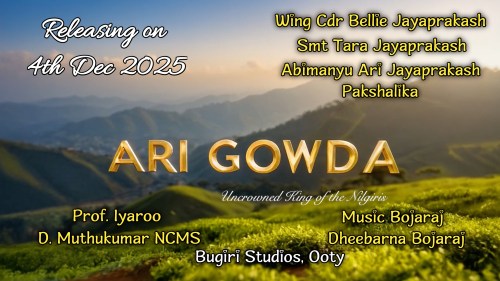
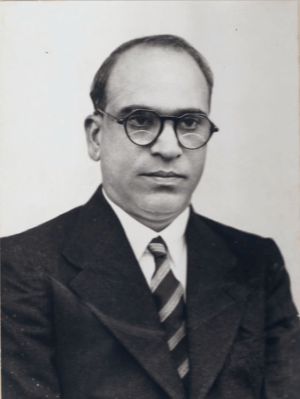
Documentary on Rao Bahadur H B Ari Gowder released on 4th December, 2025
Pip: There are mountains, and then there are the Nilgiris — where the Badaga community has been keeping records, honoring ancestors, and occasionally making the rest of us look underprepared for our own history.
Mara: This episode, from Wg Cdr Bellie Jayaprakash, centers on one of those acts of honoring — a tribute to a figure whose life shaped the community in ways worth sitting with.
Pip: Let’s start with the man himself.
Ari Gowda — A Life Worth Remembering
Mara: The question this post puts in front of us is a simple but serious one: how do you mark a hundred and thirty-two years since someone was born, and make it feel like more than a date on a calendar?
Pip: The post answers that directly. The introduction frames it as a point of collective pride — “We feel extremely proud to present the following documentary on the life of Rao Bahadur H B Ari Gowder on this 132nd Birth Anniversary.”
Mara: That framing matters. This isn’t a dry archival note — it’s a community presenting something it made, about someone it considers worth the effort of a documentary. The pride in that sentence is doing real work.
Pip: A documentary is a particular kind of tribute. It means someone gathered footage, or photographs, or testimony — assembled a life into something watchable. That’s a significant act of preservation for any community’s history.
Mara: And the title “Rao Bahadur” is itself a signal. That was a formal honorific granted under British administration in India, typically for distinguished public service. Ari Gowder carrying that title tells you something about the scale of his standing — both within the Badaga community and in the wider civic context of his era.
Pip: So you have a man who earned formal recognition from the colonial administration, being honored a century and a third later by his own community, on film. That’s a long arc of regard.
Mara: The documentary is linked directly in the post — it’s the centerpiece, not a footnote. The written introduction is brief, but it’s clearly designed to hand the reader straight to the film.
Pip: Which is the right call, honestly. Some stories are better watched than summarized.
Mara: The Nilgiris have a way of producing figures whose lives carry that kind of weight — and the work of recording them is how communities stay legible to themselves across generations.
Pip: A hundred and thirty-two years, and someone still made the documentary.
Mara: That’s the thread worth following — how a community keeps its own record. More from the Blue Mountains next time.
Discover more from Badagas of the Blue Mountains
Subscribe to get the latest posts sent to your email.




 Mookuthi
  Chinna




 ==
==




![Seemae [See'may] & Morae [Mo'ray] (relationship)](https://i0.wp.com/badaga.wordpress.com/files/2008/11/nakku-betta1.jpg?resize=200%2C200)