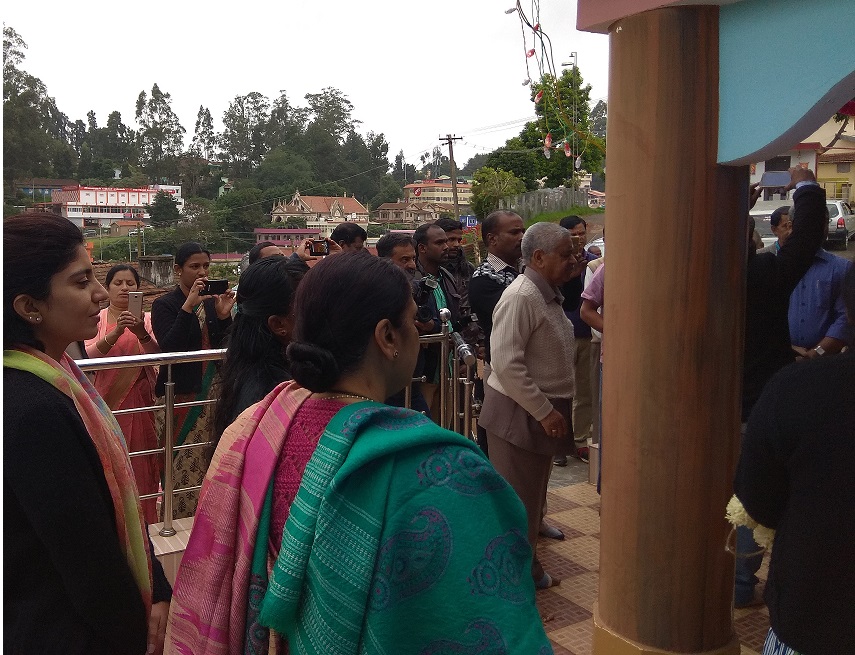
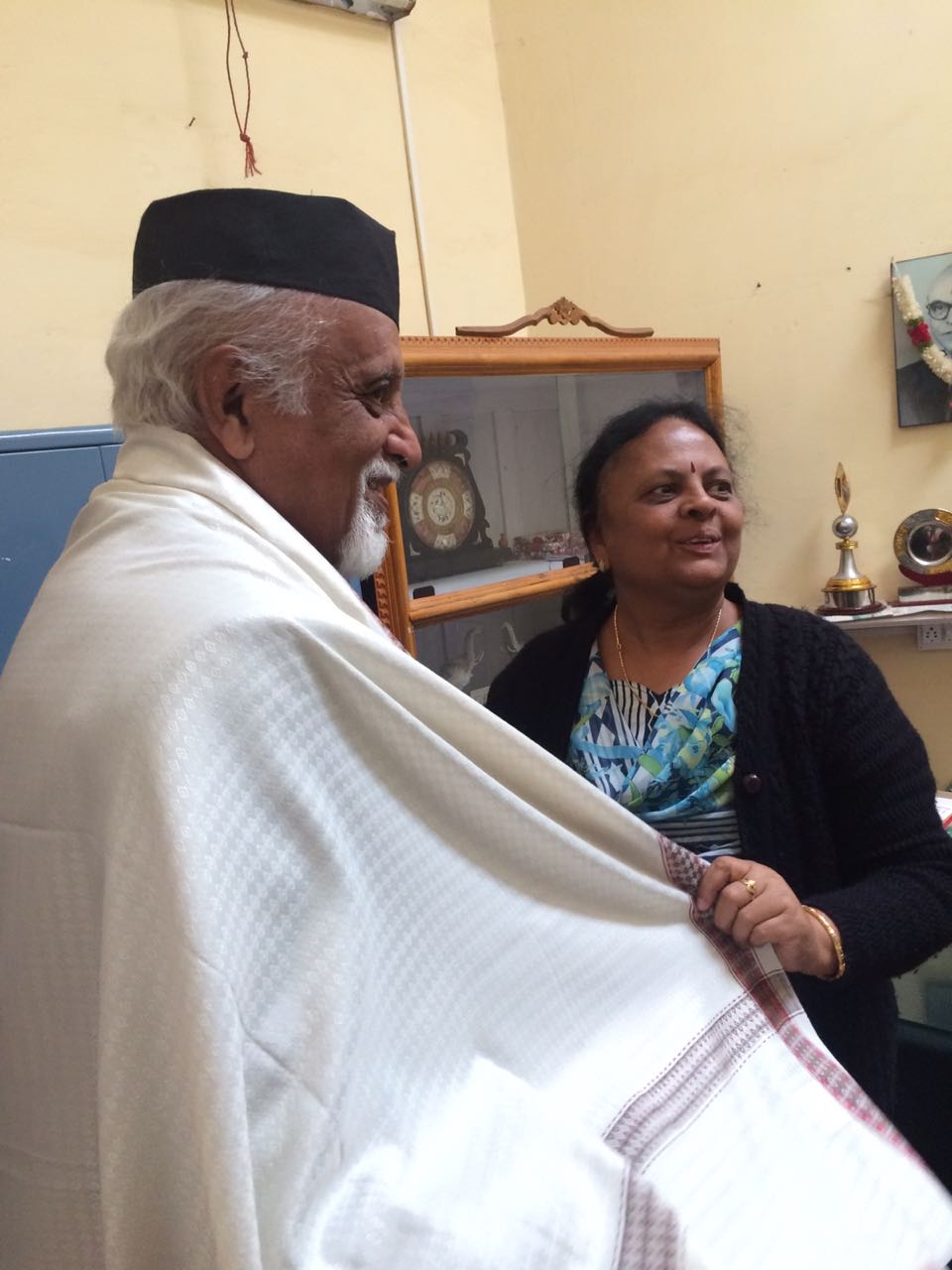
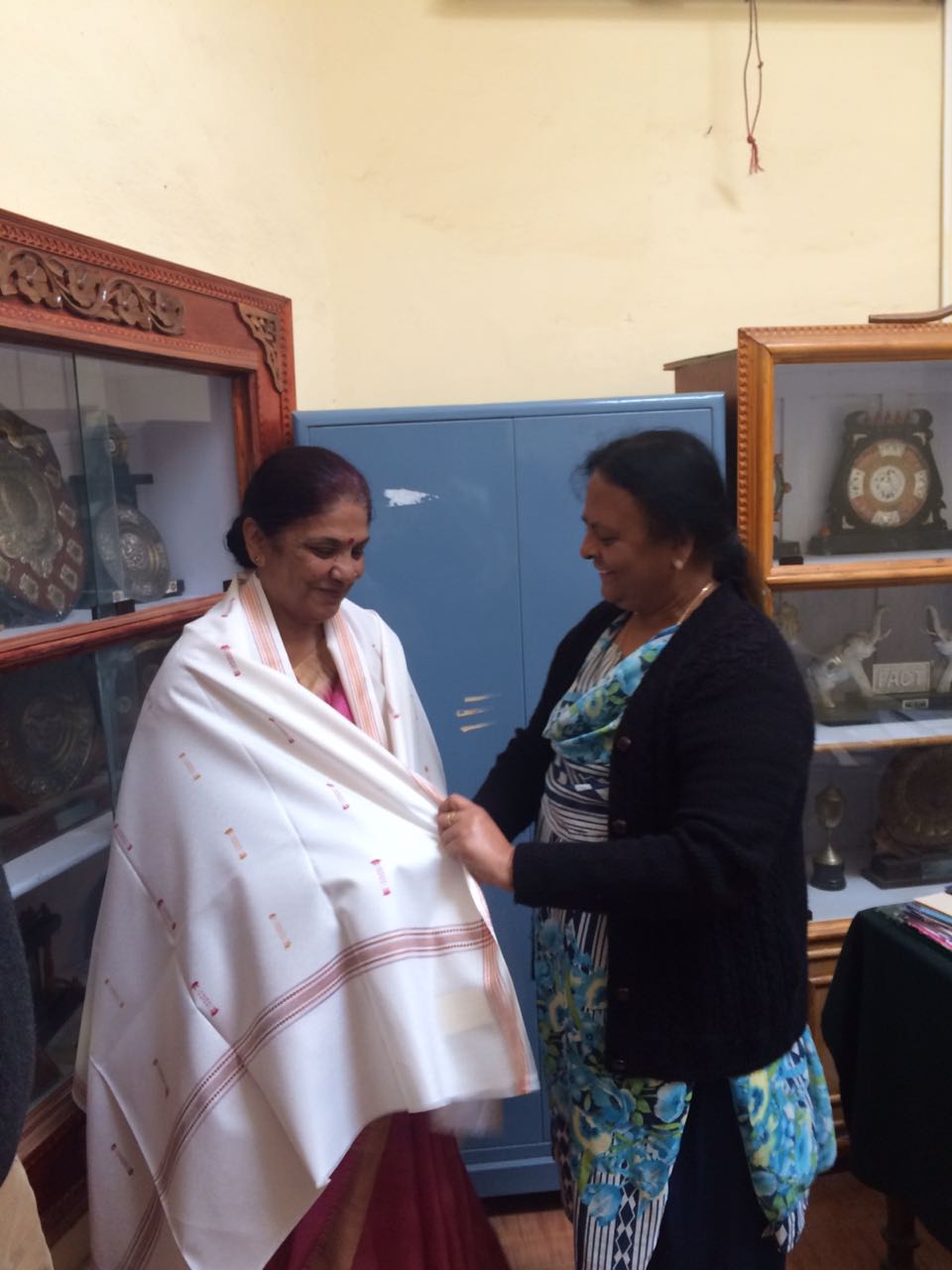
Badaga Day 15th May 2018

Badaga Day 2018

[Thanks to the great initiative and efforts of Dharmalingam Venugopal]

Badaga Day will be celebrated in a grand manner at the

Young Badaga Association Hall

on Wenlock Road on May 15, 2018 (Tuesday), 

as part of the ongoing Nilgiri Summer Festival,

The celebrations will provide an opportunity for the tourists and the local people to learn about the unique 

 Badaga culture and history apart from enjoying the distinctive Badaga cuisine.

Badaga Food Festival will offer nearly 20 different healthy delicacies prepared in with traditional ingredients. According to writers, “Badaga cookery displays the widest range of techniques among the various ethnic groups of Nilgiris. Their method of food preparation include frying, roasting in a pot, roasting on fire and baking”.

The delicacies offered will include Tuppadittu, Soppu, Avare Udakka, Hachchiike, Sandege, Keerettu, Ubbittu, Gangi Koo, Haalu Koo, Mudthittu, Batha Koo, Gasu Bathal and Bella Koo.

There will be also an exhibition on Badaga history and culture showcasing photographs, books and traditional arte facts.

A painting exhibition by a leading Badaga artist will also be on display.

The Badaga Cultural Show which will follow the exhibitions will feature a wide variety of original songs and dances.

The celebration which will be open from 11-00am to 5-pm is open to all.

The Badagas are requested to attend in their traditional dress of ‘Thundu and Mundu’.

For Contact : Organsing Volunteers,YBA 9751435777

[for more info on ‘Badaga Day’ see —->  badaga.co/badaga-day-15th-may ]


A Shame and Challenge to Badagas

A Shame and Challenge to Badagas !

 This year is the 200th year of modern Nilgiris. The idea was proposed my  me (a Badaga). The administration has magnanimously accepted the idea and dedicated this Summer Festival to Bicentenary Celebrations.

A number of Committees have been formed to conduct the festival. The Badagas have been given due representation. I was also offered a membership but I had to excuse myself for some reasons.

Mr. T.Gundan (a Badaga) has been put in the Bicentenary Committee. It is indeed a due recognition of the contribution of  the  Badagas to the Nilgiris.

At the same time, I made a proposal to the YBA to conduct a 10-Day Badaga Summer Festival to showcase our history, culture, hospitality, products, talents and entertainments  in which thousands of our women, children and aged people could participate.

Because May is a lean month for marriages, the YBA Hall could be made easily available for the festival which can make every Badaga proud.

But the proposal has been rejected.  Mr. Gundan should be very much aware of this.

When we are so particular about our personal ego, publicity and name , should we not care a bit at least for the name and fame of our community and the happiness of our people?

How can these Badagas bask in the glory of  being  in the official committees and deny  our own people an opportunity to participate in the festival.

This is outright hypocrisy and betrayal of the Badagas.

Badagas have no shortage of  talent, goodwill and funds. It will be a permanent shame if the Badagas fail to make their presence felt during this Summer Festival.

How many Badaga  youth, men and women will take up this challenge? I offer my cooperation and good wishes.

Dharmalingam Venugopal (9444365360)

Kannerimukku Village

The Nilgiris District – 150 years old

 The Nilgiris District will be 150 years on August 18

Dharmalingam Venugopal  Nilgiri Documentation Centre

Amidst the excitement of the current summer season and the bicentenary celebrations of modern Nilgiris, a most significant milestone of the district has almost been forgotten. August 18th of this year will mark the 150th year of the birth of Nilgiris as a separate district.

Under Madras Act I of 1868, the Neilgherry Hills were separated from the district of Coimbatore on the 18th August 1868 and placed under a Commissioner.  The  Neilgherry Act received the assent of the Governor General on 6th June . The new district contained about 1000 square miles with a population of 88,142,  of whom 2616 were Europeans. The extent of land under plantations was 13,372 acres.

According to the reasons given for the creation of the  new district, “the arrangement, under which Neilgherry Hills were formerly treated for revenue and administrative purposes as a taluk or sub-division of the Collectorate of Coimbatore was found to work unsatisfactorily; that under this arrangement adequate provision was not made for the administrative requirements of the hills and that the Collector of Coimbatore had ample work on the lowlands of his district to occupy the whole of his time”.

At the same time, the duties of the Civil and Sessions Judge on the Neilgherries, which for judicial purposes formed a separate Zillah, were found to be extremely light.  The Act, therefore abolished the appointment of Civil and Sessions Judge and Special Assistant Collector and provided  for the creation of the office of the Commissioner and Assistant Commissioner , assigning to these officials the whole of the duties, administrative as well as judicial.

The first Commissioner was James Wilkinson Breeks.   Breeks who  was the author of ‘An Account of the Primitive Tribes and Monuments in the Nilagiris,’ entered the Madras Civil Service in 1849. He was appointed private secretary to Sir William Denison, governor of Madras, in 1861.  In  1864,  owing to ill-health, he left India and joined a mercantile firm in London, with the intention of retiring from the public service. But he returned to Madras in  1867, and was shortly afterwards appointed to the newly constituted office of commissioner of the Nilgiris.

Appeal to to the Collector of the Nilgiris

PRAY Form STONE HOUSE HERITAGE COMMITTEE

Dharmalingam Venugopal

Stone House, Ooty is next only in importance to Fort St George in Chennai in the Heritage buildings of Tamil Nadu.

Stone House was the first building of the British Empire in a hill station. How Sullivan managed to build it is a mystery and a miracle. That it has survived to this day more or less in the same form is yet another miracle.

Sir Thomas Munro, the Patron-Governor of South India stayed in Stone House for two nights in 1826.

Missionary scholars like Rev.G.U.Pope had taught in Stone House

For over 70 years half of India was administered for nine months from Stone House. Viceroys and Governors had sat in council in Stone House.

After independence, Stone House became a temple of learning , thanks to the efforts of the local leaders and blessings of state leaders like Kamaraj and Rajaji.

Government Arts College was opened on June 17, 1955 by the then Governor Sri Prakasa in the presence of Education cum Finance Minister C. Subramaniam.

5000 people from all over the district who took out a procession from Gandhi Maidan to the College attended the function.

H.B.Ari Gowder, M.L.A and President of the Nilgiri College Committee welcomed. He said that the only hope of raising the standard of living of the people in the hills to the level of that of the people in neighbouring districts lay in educating the maximum number of children up to the highest standard as possible.

Minister C.Subramaniam pointed out that the government policy was to encourage only technical colleges and leave the responsibility for arts colleges to private initiatives. But government made an exception for Nilgiris because of the great enthusiasm of the local people to go to college.

The real credit for the college must go to the great leader Kamaraj who overruled all objections and the grand old statesman Rajaji who fully supported the cause.

Kamaraj’s dream of educating generations of Nilgiri people has come true and those who benefited by the collages have risen to great heights as government officials, doctors, bankers, businesspersons, agriculturists, engineers, lawyers, accountants and every field.

There cannot be a more important heritage in Nilgiris than Stone House.

Stone House deserves to be celebrated, promoted and preserved in this Bicentenary Year of Modern Nilgiris.

The building and the environs of Stone House today is not what it should be. No point in blaming anyone. But if the public and old students of the college could come together a great deal can be done for the historical campus.

By myself I cannot take up this huge initiative. I appeal to the public and the old students to come forward and form a Committee of Volunteers.


You make us proud , Dr.Haldorai

Dr.RK Haldorai from Kiya Kawvatti, a well known Badaga who has published many books have been honoured by the Government of Tamil Nadu.

Haldorai

You make us proud, Dr.Haldorai

Hubbathalai N Siva is invited for Trade 2018 & XXI Commonwealth Games

TRADE 2018 & XXI COMMONWEALTH GAMES GOLD COAST 2018,QUEENSLAND, AUSTRALIA

Nilgiris Small Farmer to Introduce Speciality Nilgiris Teas in the event

The XXI Commonwealth Games is being held in Australia from 4-15,April, 2018 in Gold Coast.

Alongside the event, the first of its kind TRADE 2018 is also going to be held in Sydney and Queensland for the 71 member-countries of Commonwealth between 11-15, April 2018 led by the Premier of Queensland,Ms.Annastacia Palaszczuk and many High Level Business Delegations are participating in the event.

The Federation of Indian Chambers of Commerce & Industry (FICCI), is also taking a High Level Indian Business Delegation to the event including Agri-Business Sector to explore possibilities of Joint Ventures, Marketing Associations, FDI Opportunities, etc., through its India Ascent Networking Sessions and Business Matching Sessions.

The Indian Business Delegation is meeting the Queensland Premier along with Union Sports Minister, Col.Rajyavardhan Rathore to explore business possibilities in the growth and transformation between India and other Commonwealth Countries.

Mr.Sivan, a Small Farmer from Peria Hubbathalai Village of the Nilgiris is also invited to the event to introduce the products of Organic Speciality Nilgiris Teas( White Tea, Green Tea and Orthodox Black Tea, having various health benefits to the tea drinking consumers) produced by the Nilgiris Small Farmers’ Consortium brand of OOTYFRESH. This event is going to take the Quality and Speciality Nilgiris Teas to many Commonwealth Countries and set to bring in new market opportunities, investments, etc. to the Nilgiris into Plantation and rural-based Eco-Tourism projects.

There is no doubt that through these initiatives, the livelihood conditions, sustainable developments and inclusive growth of the Nilgiris Small Farmers will be improved if they produce quality speciality teas on their own in the Nilgiris by establishing mini tea factories in their villages.


Wishing Siva all the very best.

2017 Nature Photographer of the Year Contest by National Geographic – a Badaga based in Singapore

Picture of a orangutan

[Photograph by Jayaprakash Joghee Bojan.
courtesy – National Geographic ]

Surrounded by wildlife in the hills of the Nilgiris district, Tamil Nadu, India, Bojan grew up with a love of nature. A point-and-shoot hobbyist during the 18 years he worked in Bangalore, he began to seriously pursue photography in 2013, buying his first DSLR and joining National Geographic’s Your Shot community.

Around breakfast time on an August morning in Borneo’s Tanjung Puting National Park, Jayaprakash Joghee Bojan took off his shoes, hoisted his new camera, and slid into cold, chest-deep water stained an opaque brownish-red by the tannins of submerged roots.
Trusting the rangers to warn him if a crocodile appeared, Bojan inched along—gently, to avoid startling the male orangutan wading through the river only yards away.
“Honestly, sometimes you just go blind when things like this happen,” Bojan later tells National Geographic. “You don’t feel the pain, you don’t feel the mosquito bites, you don’t feel the cold, because your mind is completely lost in what’s happening in front of you.”

Bojan knew he was witnessing something special. Orangutans are famously wary of water—their long arms are better suited to swinging in the trees than dog-paddling—so the unusual sight made him wonder. Why would a member of this arboreal species attempt a dangerous river crossing?
It’s possible that widespread habitat loss due to clearing forests for palm oil cultivation has forced the critically endangered primate into areas it would have previously avoided. But whether or not palm oil plantations are behind this orangutan’s atypical behavior, its wary expression and vulnerable posture compel viewers to imagine the threats it faces.
It’s that sense of a rare, weighty moment that led the judges of the 2017 Nature Photographer of the Year contest to select Bojan’s image as the grand prize winner. But the picture almost didn’t happen at all.

(Read the full article here)

The beautiful Badaga Bashe[Maathu] – language

The beautiful Badaga Bashe[Maathu] – language

Ponga Bellie Ranga Raaju’s son ANANDHAA [Thangaadu – Orenaayi]

Anandhaa 1

Anandhaa 3

Anandhaa6Anandhaa 2Anandhaa5Anandhaa7Anandhaa 11Anandhaa 12Anandhaa 4Anandhaa 13Anandhaa 10Anandhaa 9Anandhaa 8


A Badaga Singer with golden voice

 Kerban Bella Gowder

Over a period of time, I have listened to a lot of Badaga singers [some were as good as professionals] but the best in my opinion is KERBEN BELLA GOWDER who had a golden voice. I met him for the first time all most three decades ago. He could play harmonium, ‘bull bull tara’ and ‘thambutte’ [drum] with equal ease and elan, His greatest ability was to compose and render songs on the spot, some times suitably changing the verses to suit the occasion.

He was a much sought after singer in any function, be it a wedding, savu or anniversary. Just with a couple of his colleagues accompanying on the thambutte [mathalam] and jalra [cymbals], he would sing while playing the harmonium. Sadly, no songs were recorded in any studio. His savu [sad] songs would bring tears streaming down even in the hardest of hearts.Another, great contribution of Bella Gowder is his rendering of many Badaga Ballads – the best being ” BERADA BELLIE “ I had the great fortune of recording [on a tape recorder] some of his songs when he had visited my home at Hubbathalai on a few occasions. Luckily I could trace them recently.

It is with a great sense of honour and as a tribute to this gifted singer I have uploaded some of his BERADA BELLIE as well as KAARA CHENNE and other songs on the net so that all of us can listen to his golden voice. The voice quality of some of these streaming songs may not be very good due to the original recording having been done on a tape recorder.


kerban-bella-gowder.jpg
I bow my head in dedication to Kerben Bella Gowder who passed away a few years back.

Listen to the streaming music of “BERADHA BELLIE” and “KAARA CHENNE” ballads in the golden voice of Bella Gowder

Beradha Bellie Songs

::::::::


BADAGA SCRIPT – BADAGA BARAE

BADAGA SCRIPT – BADAGA BARAE [படக பரே – எழுத்து ]

[படக மொழியை எப்படி எழுதலாம்?]

It has always been felt that for a language to survive, it should have its own script. It cannot remain only as a spoken language for long. But of course, the script need not be peculiar and specific one pertaining to that particular language.

So too is the necessity of a script for Badaga. Many have attempted to achieve this objective with various degrees of success. But unfortunately, to my knowledge, no records exists, if any. I am no expert on phonetics or languages or much less innovating a unique script. But the urge to have a separate script has convinced me that it is very much possible to ‘ADOPT’ an existing script and ‘ADAPT’ it to Badaga language.

Three scripts come to mind straight away – Tamil, English and Kannada.Tamil – because a majority of us know how to speak and write due to the simple fact that we belong to Tamil Nadu, English – since most of us choose to learn as well as put our children in English medium schools and Kannada – due to the fact that Badaga is more akin to Kannada than any other language [though I firmly believe that Badaga is a separate language on its own merit and not a dialect of Kannada].

But when trying to choose a script for Badaga, Kannada script is ruled out for the basic reason that most of us do not know the language or familiar with the script and no scope to learn it in our schools in the Nilgiris. Hence the choice between Tamil and English. Badaga ,like many other Indian languages, has very definitive and distinctive sounds/words [I do not know the exact English equivalent] that distinguishes one word from another. Even a small change in pronunciation could result in an entirely different meaning in Badaga. For example, a subtle change in context of the word ‘BAE [bay]‘ could mean mouth, bangle, lentil, crop etc. Bella – பெல்ல [jaggery] or BeLLa – பெள்ள [ a male name] are two entirely different things. So are ‘kallu கல்லு – stone’ and ‘KaLLu கள்ளூ – a drink’. So, what could or should be the choice?

In Tamil script we cannot differentiate ‘K’ from ‘G’ or ‘T’ from ‘D’. This makes a  huge impact when Badaga words are written in Tamil script. ‘Gaasu – potato’ is totally different from ‘Kaasu – coin, remove’. Or ‘Ettu – eight’ and ‘Eddu – getup’. Another drawback could be the absence of ‘Ha’ in classical Tamil. On the other hand, in English, we cannot clearly bring out the difference of ‘na’ from ‘Na’ [anna – அன்ன food, aNNa – அண்ண elder brother] or ‘halli – ஹல்லி  lizard’ from ‘haLLi – ஹள்ளி name, village’. ‘Kalla கல்ல – a male name’ sounds the same as ‘ kaLLa கள்ள – a thief.

Yes, it is indeed a little tricky to choose between Tamil and English. But, taking into consideration the younger generation who are going to be the future hope and the irrefutable fact that they are all more familiar with English than Tamil, the choice is English. Keeping in mind the successful adaptation of English script for Malay language (Malaysia) I would plump in for English. With a few minor modifications to overcome the grey areas mentioned above, English script can be easily used in Badaga.

Remember Devanagiri (Hindi) is the script for Nepali. The ‘minor’ modifications that can be undertaken to overcome the drawbacks I referred above could be by using an extra ‘a’ – thus milk can be written as ‘haalu ஹாலு’; ‘dhadi தடி – stick’ can be different from ‘dhaadi தாடி – beard’. So on and so forth.

We may use ‘capital’ letters to differentiate between ‘bella and beLLa ’ as I have done above. What if a complete sentence is in capital letters ? – We may use ‘bold’ letters or underline the words to give the emphasis. Innovative use of – ‘ – [apostrophe] can bring out the difference between “soppu  ஸொப்பு – green ” and “so’ppu ஸோப்பு – soap” or “kodi கொடி – flag” and “ko’di கோடி – crore”. [I have used https://vengayam.net/translate/tamil.html for Tamil transliteration. Google Input Tools online https://www.google.com/intl/ta/inputtools/try/ is another great util for Tamil to English and vice versa]

It is said that Indians [read Badagas] will reject 50% of anything without even hearing it, another 50% without understanding it; and if ‘anything’ is left behind they reject it just for the sake of rejecting it. Like what is happening in many hattis with ‘young gowdas’ ruling the roost.

BUT, ALL YOU TRUE BADAGAS – LET US START SOMEWHERE TO HAVE A SCRIPT FOR OUR LANGAUGE. IMPROVEMENTS AND INNOVATIONS CAN FALLOW. IF MICROSOFT CAN ACCEPT BADAGA AS AN UNIQUE LANGUAGE , THERE MUST BE SOMETHING .

SARI THAANE ? OK??

(first appeared in my blog http://badaga-script.blogspot.in/ )
<><><><><><><><><><><><><><><><><><><><>><><><><><><><>