Marriages between hattis from the same SEEMAY

I’m from Horanally under Mekku Nadu. My doubt is according to the details, Pororai hatti also comes under Mekku Nadu. But people normally marry in between these two hatties . Please clear my doubt


Clarification

a) A girl/boy cannot marry a boy/girl from the same hatti  to which they both belong to .

b) A girl/boy cannot marry a boy/girl from the same Ooru (a group of hattis) to which they both belong to.

c) BUT A GIRL/BOY CAN  MARRY A BOY/GIRL FROM THE SAME SEEMAY TO WHICH THEY BOTH BELONG TO.

What is Moray (relationship)?

In simple terms, Badagas, [being a very small community], have evolved, over the centuries, a system in which marriages are not ‘fixed’ – call it arranged if you want, between certain hattis (villages) since the ‘blood’ relationship  among them is considered to be very ‘close – anna thamma moray’.

How this could have happened is, like, in olden days, one brother deciding to move away from the hatti he was born in to establish a ‘new’ hatti for various reasons. For example, a brother from Hubbathalay could have moved to Eethoray. Hence, the male children of the elder bro X in Hubbathalay would/could not marry the female children of younger brother Y in Eethorai as they are considered brother and sister (being the children of two brothers).

Hence, Hubbathalay hatti has no moray for marriages with Eethoray.

This brings us to the grouping of various hattis into Ooru [communes] and Seemay.

So,where do we start to check about ‘Moray’?

Since, time immemorial, every Badaga belonged to a village, irrespective of his place of residence. For example, Kada [now, Srivasa Ramachandra] and Kangi [Lokeswari Renuka] are the son and daughter of Bhoja  and Laxmi , living in Ooty [this can be, Bangalore, London or Boston in USA]. Since Bhoja is the son of Rama Gowder of ‘Hannu Mora Hatti’ [ or Jakkadha, Dhavani or Ketchigatti for that matter], Kada and Kangi belong to HM Hatti for practical or rather, moray purposes. By the way, in olden days, all Badagas belonging to Gowda [group] were known as Bellie Gowder, Ari Gowder etc.

So all the youngsters of HM Hatti are brothers and sisters. Marrying among themselves is, thus prohibited.

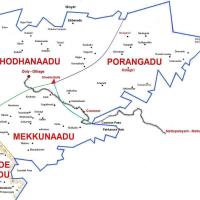
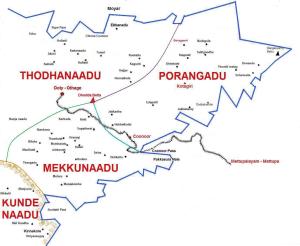
Now, our ancestors, being wise men of yonder, grouped certain hattis into communes called OORU. These hattis need not be very close to each other. The number of hattis forming a ooru need not be of a specific number. The next grouping done by our forefathers is forming a SEEMAY. Hence, a Seemay contains a few Oorus [which in turn has many villages]. And our Muthe Muhappa [the first of the ancestors] divided the Nilgiris into Nakku Betta [Four Mountains/massifs] to where all the Badagas belong to. See the division of Seemays and hattis in my websites here – Hattis, Ooru & Seemay or here

To put simply, a cluster of closely built houses formed a street -thara, [the thatched and later country tiled houses have common walls).

A few tharas formed a hatti with well defined and demarcated areas like ‘Dhodda Manay’ [big house- literally], ‘suthu kallu’ [mostly with a bikka mora (olive tree), gudi [temple],hanay [grass ground] etc.

A few hattis to Ooru. A few oorus to Seemay.

Four seemays namely 1)Thodha Naadu 2)Porangaadu 3)Mekku Naadu 4) Kunde [Naadu],  to NAAKKUBETTA. see Hattis, Ooru & Seemay.
And now to specifics

As far as MORAY for marriages are concerned,

a) A girl/boy cannot marry a boy/girl from the same hatti  to which they both belong to .

b) A girl/boy cannot marry a boy/girl from the same Ooru to which they both belong to.

c) BUT A GIRL/BOY CAN  MARRY A BOY/GIRL FROM THE SAME SEEMAY TO WHICH THEY BOTH BELONG TO.

There is a wrong impression that you cannot marry from the same seemay.

My own example

My father, Bellie gowder, one of the few educated Badagas was born in 1896 in Bearhatti ( the real surprise is that my grandfather Kada Gowder decided to educate my father in St.Michael’s in Coimbatore. In those days, I understand, he had to be taken upto Mettupalayam in a Kattay Bandi [bullock cart]. He got a job in Cordite Factory, Aravankadu near Hubbathalai. He married my mother Kaade (Idy ammal), daughter of Rao Bahadur Bellie Gowder and sister of Rao Bahadur Ari Gowder.

Bearhatti is one of the six hattis belonging to AARUOORU [six villages], Jakkadha [Jagathala] being the ‘head’ village. Hubbathalay is one of the hattis coming under HATHOMBATHU OORU [nineteen villages]. Both these villages belong to PORANGAADU.

After marriage, firstly for convenience as cordite factory is closer to Hubbathalai than Bearhatti and secondly being the youngest daughter of Rao Bahadur Bellie Gowder who was the Naakku Betta Gowda (chief) at that time and as she was only 15 at the time of marriage in 1927, my parents decided to settle down in Hubbathalai.

But my mother being a fiercely ‘PROUD” lady insisted that she would stay only in a new house built a little away from the main Hubbathay hatti. Thus, was born my ‘home’ called ‘DHODDI’ in 1948.

For all practical puposes, we are Nattaru (Guests- literally) of Hubbathalay.

Story does not end here. Though, I was born and brought up in Hubbathalay, I am married to Tara, grand daughter of Rao Bahadur Ari Gowder of Hubbathalay. That is, my mother and wife are from the same hatti.

Please note ; It is very common to see many marriages among boys and girls living in the same village. Living, I said and NOT BELONGING to the same village. But they are perfectly suited to each other and probably known to each other from childhood. May be their marriage is a LOVE marriage.

Exceptions

Incidentally, there are a few marriages solemnised  between the boys and girls belonging to the same Ooru. In one of the cases known to me, a boy from Eethoray is married to a girl from Hubbathalay – both belonging to Haththombathu Ooru. Though, it created some flutter in the beginning, it has been accepted now (due to the fact a rich and politically very influential person is involved??)

Do you know that Kodhumudi is one of the villages which is considered as two separate villages consisting of Mel Kodhumudi and Kiya Kodhumudi and marriages between them is normal?

When you refer to Kinnakorai, in fact it refers to six/seven hattis and marriages do take place among themselves as some hattis in them is consided to be completely made up of Nattarus??

More on Moray

So what happens when a boy belonging to Kavaratti of Thodha Naadu seemay wants to marry a girl from Yedapalli Village of Porangaadu Seemay ?

This appears to be a case of NO MORAY in the sense moray is neutral here and not prohibited. And, in my opinion, there should not be any problem.

Causes for confusion

Originally or rather in the earlier days, marriages took place only within the groups like Gowdas, Lingayats[Lingakattis],Haruvas, Odayas and Thorayas as they formed their own hattis. For example, Odhanatty near Jakkadha is a hatti of Thorayas and it does not come under Aaru Ooru [and hence Porangadu Seemay].

Without going into the details of the unfortunate vertical divide of Badagas, in the early 1900s, where one section was against the compulsory invitation of Kothas [to ‘harakkolu idippudhuga’ – playing music on payment in kind or cash, which ended in huge expenses and debts for the family of the deceased with devastating results. The funeral was not an oneday affair but went on for week and all the ‘guests’ who had come from far and wide, had to be looked after with food and drinks.  The expenses of funerals were not NOT borne by [all houses in] the hatti as is the practice now] for funerals and another insisting on inviting Kothas.

The section of Badagas who were against inviting Kothas was lead by Hubbathalai [Rao Bahadur Bellie Gowder, who introduced many reforms like 1) the funeral expenses would be borne by the whole village 2) education for all Badagas etc] and the other section by Thangaadu.

Another cause for this division was the claim of  Thangaadu [Haruva Katchi] led group that when they attend the funeral of Gowda, they would only touch the head [saavu muttodhu], irrespective of the age of the deceased saying that they were the priets. Generally, when a Badaga attends a funeral, as a mark of paying respect to the deceased, the feet or the head is touched depending on whether the dead is elder or younger.

I am skipping many more details since this would distract from the topic MORAY which is under discussion.

But these days, marriages among these groups [Gowdas, Haruvas, Lingakattis] have become common. Hubbathalai has marriage relation with Thangaadu or the Lingakatti Hatti of Sakkalatti [Sogathorai] with Eethorai or Bearhatti.
[to be continued]

Sathish Krishnan commented on Marrying a person with no MORAY

‘Thanks for the detailed explanation. I belong to Balacola and I’ve heard elders saying that there is no moray for any marriages within Maekunadu seemay, and Kundey seemay is the best suit for us. But your blog says there is only restriction for marriages within a village or within a ooru (group of villages), and no restriction for marriages within a seemay. It is contradicting and please clarify the same. I will be looking forward for further updates to this blog’

Hello Sathish, Thanks for the comments. First for the contradiction part. I am saying that “no marriages within a hatti and Ooru but yes within a Seemay as long as the Oorus are different. Like 6 Ooru can tie nupital knots with 19 ooru – both being from Porangaadu“. As far as your Hatti Bakkola (Balacoloa?), Mekkunaadu Seemay are concerned, I am NOT in a position to clarify but as far as Kundey Seemay – yes I agree. More in updates soon – Wg Cdr JP

Ooty’s Coovam of despair

World Environment Day

 Ooty’s Coovam of despair

 Dharmalingam Venugopal

 The Kodappamund channel, equivalent of the Coovam canal of Chennai, has been at the core of Ooty’s environmental problems defying any solution.
The Kodappamund channel runs for a length of 5.5km of which 3.06 km is within the Ooty town.  It is the only source of water to the 20 ha Ooty lake. The channel is also the only storm water drainage in the town.

However, in reality the channel has become one of the largest dumping yard of the country carrying the waste of millions of tourists and locals.

The much abused channel has the potential for an unprecedented environmental disaster in terms of pollution and landslides. The channel could become the death knell of the ‘sweet half-English Neilgherry air’ as  eulogized by Poet Tennyson.

39 years ago, the channel was the cause of 1978 Ooty floods which altered the world famous face of Ooty forever.

Since then the channel has become the carrier of open sewage in the town gradually choking the Ooty lake. A government report concedes, ‘Earlier, under National Lake Conservation Plan, remediation of the Ooty lake was successfully done by the Public Works Department. But, due to the continued letting in of sewage water, the quality of water has deteriorated and is not up to the standards now’.

During the monsoon, the channel’s woes turn worst. According to another government report,‘The local body has provided Pucca Storm Water Drains (only 16% of road length) in some portions of the town. Other areas are drained through natural slopes. Increase in development activities in the town, over the past years, has resulting in reduced carrying capacity of the drains due to siltation, encroachments and solid waste dumping. The drains carry the wastewater disposal and in many places, the functions of storm water drains are choked with garbage, which creates environmental problems and need regular maintenance by the urban local body’.

Over the years several plans have been tried to cleanse the channel including increasing the sewage connections in the town, desilting and construction of check dams. But the problem has hardly been addressed.

Only  a strong public movement can halt the abuse of the vital Kodappamund channel.

A taste of the hills – keeping traditional Badaga food alive!

[Article and photos from The Hindu, dt 1 Jun 2017]

A taste of the hills – keeping traditional Badaga food alive!

Samita-Balakrishnan

As traditional Badaga food slowly begins to vanish, a few people are making an effort to keep the memories alive

For someone who is a foodie and a fitness freak, stumbling upon dishes that are both healthy and delicious is like hitting the jackpot. When I frantically scrolled through my Pinterest feed, looking for “healthy desserts”, I quite forgot that there was a satisfyingly delicious dessert that was made right at home. My favourite hatchike, a Badaga dessert made out of millets.

I remember when my hethai (grandmother) served us hatchike every other day. Now, living away from my hatti (village), it is a forgotten dish along with many other old favourites. Happily, all is not lost as there are people from the community who are striving to revive and preserve the fading traditions of the Badagas of the Nilgiris.

Harsha Bellie, 48, a Badaga from Coonoor, often invites people to visit or stay with her. She enjoys serving them a healthy and tasty Badaga hittu (meal). “Not many know what hatchike is,” she says and recounts, how earlier, her relatives sent ready-to-eat millet cereal. It is becoming a rarity now, she says.

Hatchike is made using little millet or samai, which is suitable for all age groups, says Bellie. It has several health benefits for both men and women. Preparing hatchike is a cumbersome process, she admits. It involves boiling, roasting and pounding the millet to de-husk it and, finally, winnowing to blow off the husk.

I still remember when my hethai would sit by the ole (fireplace) and roast grains in a madake (earthen pot) with a hole on the side, using a huri-kolu (a wooden stick with a cloth tied at the end to make a ball). Sadly, this now remains only in my memory. Hatchike is usually served with milk and grated coconut.

Bellie is keeping these memories alive by inviting tourists to sample Badaga fare. A group called Veg Voyages stops at her place every year as a part of its vegan tour. She introduces the tourists to some of the customs of community life, to a typical Badaga house where the grains are stored in the atulu (loft/attic), to Badaga music and dance and to enne hittu (a sweet dish of maida) that is dipped into black coffee and eaten. This is rounded off with an authentic Badaga meal, served in a ganguva (copper/brass plate) filled with kadimittu, eragi hittu, batha hittu, avare udaka, soppu, sandege and bathal. Of course, hatchike is the dessert. For vegans, instead of milk, Bellie serves it with coconut milk.

Eragi hittu — or ragi mudde in Kannada — is made of finger millets and is a healthy alternative to rice and wheat. A depression is made in the mudde and ghee poured into it. It is then eaten with soppu (greens) and avare udaka (beans curry). During the hethai habba (our biggest festival), it is a beautiful sight to see all Badagas wearing white, sitting in rows and eating avare udaka and kuu (rice) in the green hills.

Apart from millets, the earlier Badaga cultivated barley and wheat. It was common to see these grains spread out in the courtyards to dry under the sun. They would then be fried, and used to make a variety of dishes. With such practices disappearing, dishes like ganjike, the base of which is ganje (barley), have also become a rarity. The increase in tea cultivation led to the decline in the cultivation of millets and other grains in the Nilgiris.

Our ancestors consumed what they grew, made sure they replenished the soil and prepared almost everything from scratch. If they wanted butter, they would churn milk using a pot and plunger, a rope and bare hands. This process called haalu sorakodu has now been replaced by mixers and machines. Even the hati maasu hudi (masala used in the gravies) was home made but is now available readymade in shops. ). Since everything was hand milled, there was no adulteration and the food was extremely healthy. People stayed active and there was plenty of social interaction when relatives or neighbours lent a helping hand in grinding and pounding.

Bellie firmly believes that if more people followed older traditions, both the people and the earth would be healthier. She says that she would dearly love to grow more grains and encourage others to do the same in their hola (fields) for at least a few tasty meals every month.

For Badaga food habits and some mouth watering recipes, visit the pages in http://www.badaga.co – Wg.cdr.JP

More than 500,000 hits !

Image result for badaga.co

http://www.badaga.co

More than 500,000 hits !

Thank you all from the bottom of my heart – JP

The Day Nilgiris became a Hill Station

The Day Nilgiris became a Hill Station
Dharmalingam Venugopal [Nilgiri Documentation Centre, Kotagiri]
Today is the day, 190 years ago,  Governor Sir Thomas Munro gave his stamp of approval to establish a Hill Station on the Nilgiris.
Though the Nilgiri mountains have been in the possession of the British since 1800, it was only  after Collector John Sullivan’s visit to the hills in 1819 that the idea of founding a station on the hills for revitalizing sick soldiers was formed.Sir_Thomas_Munro
A factor  that greatly helped this idea was the appointment of Sir Thomas Munro as Governor of Madras Presidency in 1820. Munro was a close friend of the Sullivans  and they were part of a progressive front to develop India.
From 1820 Sullivan made repeated requests to the Madras government to set up a hospital in the hills and did everything in his capacity to facilitate such a decision by building roads, houses and introducing English vegetables, trees and fruits.  Till that time sick soldiers and officials had to go to England or Mauritius or Capt Town for rest and recuperation.
However, the Board of Control in London was not convinced and turned down Sullivan’s proposal. They also rejected Sullivan’s plan to use Ooty lake waters to irrigate lands in Erode because the outlay of Rs.2000  estimated was too much !
The Board in London simply did not believe that so near to the Coimbatore plains was a cold and salubrious place which was the dream of every British languishing in the hot, disease ridden plains of India.
Munro finally visited the Nilgiris in 1826 and saw for himself what Sullivan had been eulogizing about for the past six years.
On May 28, 1827, Munro sent his recommendation to the Board stating that though the Nilgiris may not be suitable or viable for setting up a hospital, officers of the civil and military services should be encouraged to visit the hills on their own for recovery of their health. To facilitate that Munro proposed that the government could take on rent Sullivan’s  Stonehouse  which would  accommodate 8 to 10 officers.
To reinforce his proposal, Munro argued that a sum of Rs.170 lakhs had been spent in the previous three years on sending sick officers to England  and therefore “ If only a very small proportion of these Officers could be restored to health by a temporary residence on the Hills instead of a Voyage to Europe the charges incurred by Government would be amply repaid”.
Stating further that the healthfulness of the Nilgiris had not been correctly assessed by the young medical officers who had  spent only a short time on the hills, Munro recommended, “It would probably require a long continued course of medical and scientific observation conducted by a competent person with the assistance of an adequate establishment of servants and the proper meteorological apparatus to determine fully on the capabilities
of the climate of the Nielgherries”
“It seems therefore advisable that we should station permanently on the Hills a Medical Officer qualified to make the necessary observations on their climate. I propose that Mr. Haynes be selected for this purpose and be appointed to the medical charge of the Nielgherries with a salary of Rupees 350 and the usual Palenkeen allowance for servants and Medicine”, Munro added in his recommendation.
It was a tragic irony that Munro’s recommendations were accepted by the Board of Control at London on July 6, 1827, the day on which Sir Thomas Munro met his untimely death at  Pattikonda in Andhra Pradesh.
Very interesting and informative.  Thanks for sharing. – Raminder Chowdhary
I think that at some point Sullivan began to make daily weather observations to back up his case. – Paul Hockings

Food that Can Replace Pills

Fourteen Foods that Can Replace Pills

Whenever we start feeling ill, the first thing we do is reach for the medicine cabinet. The problem with taking pills is that even though they’ll probably help with your predicament, they’re also bound to have unwanted side effects. The best solution is to use these 14 natural remedies, which are just as efficient as drugs.

1. Bananas – Stress and anxiety

Next time you feel stressed, grab a banana! With an average of 105 calories and 14 grams of sugar, a banana will boost your blood-sugar levels and help combat hunger. Additionally, a banana contains 30% of your daily requirement of Vitamin B6, which helps your brain in the production of serotonin – a chemical that helps reduce stress.

2. Yogurt – Constipation and gas

One and a half cups of yogurt are packed full of probiotics that assist in digestion and improves the stomach’s ability to digest dairy and legumes – a major cause of gastric gasses.

3. Raisins – High blood pressure

A large handful of resins (approx. 60) contains over 200mg of potassium, as well as 1 gram of fiber. These are strongly recommended as part of a diet to help reduce blood pressure. Recent studies show that the polyphenols in grapes, raisins and wine, help maintain the circulatory system and reduce blood pressure.

4. Apricots – Kidney stones

4 dried apricots contain 2 grams of fiber, 235mg of potassium and just 3mg of sodium. This combination is highly effective at preventing minerals from getting trapped in your kidneys, which is the cause of the most common kidney stones.

5. Tuna – Foul mood

A can of tuna contains about 800mg of Omega-3, a fatty acid that is considered vital in the treatment of depression. Omega 3 is even an approved treatment for depression by the American Psychiatric Association.

6. Ginger tea – Nausea

A time-old proven treatment for nausea, ginger has also been scientifically proven to be helpful in dealing with nausea caused by motion sickness as well as morning sickness. It is as effective as anti-nausea medicine, but without the side effects (such as ‘cottonmouth’ and lethargy)

7. Basil – Indigestion

Studies suggest that the eugenol in basil is highly effective as a gastric painkiller, nausea reduction, cramping and diarrhea by eliminating bacteria Salmonella and Listeria. Basil is also effective at preventing halitosis.

8. Pears – High cholesterol

The average pear contains 5 grams of the dietary fiber Pectin, which helps clear the body of ‘bad cholesterol’ (LDL).

9. Cabbage – Stomach ulcers

In a research published by the John Hopkins Medical School, it was found that the sulforaphane in cabbage helps battle the helicobacter pylori bacteria (a main cause for ulcers). It is believed that sulforaphane may also help prevent gastric tumors.

10. Figs – Hemorrhoids

Dried figs are rich in dietary fiber, which in turn, produce softer feces and aiding in reducing hemorrhoids and the liness of developing them.

11. Potatoes – Headaches

Amedium-sized potato contains 37 carbohydrates, which help reduce headaches by increasing serotonin production in the brain.

12. Garlic – Yeast infection

Garlic contains many essential oils that help prevent the development of yeast infections.

13. Chamomile tea – Heartburn

A great treatment for gastric inflammation, cramping, heartburn and gas, is mixing 2 teaspoons of chamomile tea in a cup of boiling water and brewing it for about 20 minutes and then drinking it.

14. Orange juice – Lethargy

The fructose in orange juice is a natural and fast-working stimulant, and research has proven the ability of Vitamin C to reduce damage caused by free radicals and provide the body with energy. Vitamin C is also a key factor in maintaining iron levels in our blood, which keeps it oxygenated.

C S Chandramouli

Congratulations Dr.Haldorai !

Life time achievement award being conferred on Dr. R.Haldorai from Kiya Kauhatti

Nellikolu Charitable Trust, headed by Dharuman of Kekkatti, Yellanalli, who has been doing commendable work to make Badagas to know about themselves [Nangava Nanga Arivo – let us know about ourselves], is going to confer Life Time Achievement Award to Dr.R.Haldorai, author of many books on and of Badagas on the 27th May 2017 at Ooty.

Hearty Congratulations to Dr.Haldorai !

Congratulations, Dr.Devaraj, from Kethoray Village

Congratulations, Dr.Devaraj

Makkal Sevaiyin Magathuvam” written by Dr.G.N.Devaraj,M.B.A.,M.Phil.,B.G.L.,D.Lt .,[Stenographer, CSTI,President,Govt Employees Co-Op Society,Bhavanisagar,VP,TNGEA, Sathyamangalam], from Kethoray hatti/village, Civil Service Training Institute, Bhavanisagar received best book award from World Tamil University, Washington DC, USA, on convocation at Music Academy, Chennai on 18.3.2017.


Ooty – Kodapamund : Throwing caution to winds

Kodapamund : Throwing caution to winds

Dharmalingam Venugopal  [Nilgiri Documentation Centre]

 Kodapamund  originally referred to a Toda mund at the boundary between the traditional  divisions of  Todanad and Mekunad. The Toda mund was abandoned sometime in mid-19thcentury, probably after the opening of Kotagiri-Ooty road.

Map- Kodapamund in 1920s

During the British period it was the preferred residential area for top officials including Major Kelso, the first Commander of the Nilgiri hills.

Post independence,  it remained for long  a sleepy settlement  of hard working farmers, washer men and milk men. The Kodapamund reservoir  fed by streams originating from the Doddabetta ranges used to be perennial source of drinking water for the town.

Degradation of Doddabetta ranges in the 1970s  led to the 1978 landslides and floods which turned the life-giving Kodapamund reservoir  into a killer taking away more than 100 lives.

Since then, the Kodapamund  water channel has been major source of pollution and sewage in the town gradually choking up the Ooty lake.

The Kodapamund channel is the only source of water to the 20 ha lake and runs for a length of 5.5 km of which 3.06 km is within the Ooty town. According to a study, ‘the Channel  is converted into the dumping place of the different types of waters by small hotels, land encroachers, market, shop keepers etc., moreover it has been the outlet for the sewage of the unauthorized house owners and the rain water drains are utilized for this purpose’.

Hundreds of similar studies and crores of funds have been spent  in the name of cleaning up of  the Kodapamund channel and the lake but to no avail so far.

Kodapamund,  situated on the Dodabetta slopes, has become increasingly susceptible to  landslides in recent years. Slides on the Eastern flank of Kodapamund  near the grave yard and on the North east of  grave yard have been recorded. On the road side huge retaining walls reminds one of the vulnerability of the area which has become one of the heaviest  traffic area in the district.

Of late, the Kodapamund area has been allowed to grow into a major tourism area with facilities such as hotels, shops and entertainment centres mushrooming all over. Monstrous buildings are raised right on the road margin with total disregard for building rules, drainage or slope safety. Neither rules nor reason appears to slow down the roller coaster development of Kodapamund.

Severely high traffic, steep slopes, lack of drainage, high density of heavy constructions, excessive and indiscriminate tourist activities amidst   vegetable farming make  Kodapamund a prime spot for environmental  catastrophe.


Make Tribal Resource Centre unbiased

Call to make Tribal Resource Centre unbiased

Dharmalingam Venugopal  Nilgiri Documentation Centre. Kotagiri

badaga-5-tribes2

The Hon’ble Chief Minister of Tamil Nadu today inaugurated the Resource Centre for Tribal Culture at Ooty near the Botanical Gardens.

The Centre is expected to showcase the unique tribal culture of the Nilgiris which was based on mutual good will and interdependence, equal respect for each other and no violence. This exceptional culture is unparalleled in the mountain cultures of the world.

However, the display of the Nilgiris culture will be incomplete if any of the indigenous Nilgiri communities, particularly the Badagas, the largest social group, are excluded.

As a local cultural centre, it should not be exclusive to the Scheduled Tribes or the Primitive Tribes. It should depict the tribal culture of the Nilgiris as a whole.
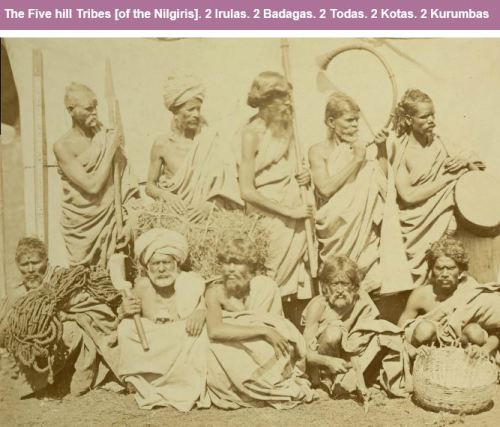
Originally, the Nilgiri tribes recorded were the Todas, Kotas, Badagas, Irulas and Kurumbas. There is no record of how long these tribes have been in the mountains.

The first written record on these tribes was by Father Giacomo Fenicio who visited the hills in 1603. He was the author of “South Indian Religions” in Portuguese, published in 1609. During his two months stay on the hills he mentions only the Todas and Badagas. The former numbered about 300 and the latter about 500.

He saw in the Badaga village “hens, goats, rice and lentils, mustered, garlic and honey” and observed “ The Badagas are like the Malabars and they do business with the Todas selling rice and buying from them butter made of buffaloes’ milk for which they find a market at Manarghat”. Badagas spoke Kannada and some Malabar, he wrote.

There was no mention about any tribe coming from anywhere or how long they were on the hills.
The next written record on Nilgiris was after nearly two centuries in 1812 by William Keys, Assistant Revenue Surveyor sent by Coimbatore Collector W. Garrows.

The population of the hills as recorded by him was, ‘2516 individuals of which 1647 were Baddugars, 292 were Lingayats, 268 were Thoraiars, 179 were Todas and 130 were Kotas.

He was the first to mention that, “The Baddagurs, so called from their having settled on the mountains from the northward, speak the Cannady language and are the principal inhabitants as well as cultivators of the land”. It is not clear on what basis Keys made this statement.

In any case, according to the “Historical Records of The Survey of India 1800-15”, “Keys and McMahon were the first surveyors to enter the Nilgiri hills, and it is not surprising that their training at the observatory had not qualified them to make much of a success of the hill features”. Keys also described the Nilgiri climate at “inhospitable” with the result Collector Garrows took no further interest in the hills.

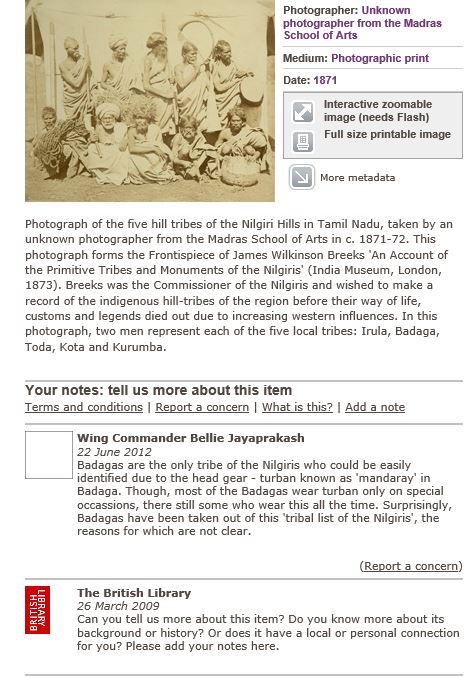
It was finally left to J.W.Breeks, the first Commissioner of Nilgiris, to make the distinction clear. Breeks distinguished the Todas, Kotas, Kurumbas and Irulas as “Jungle race” and documented them in his monumental work, “An Account of the Primitive Tribes and Monuments of the Nilgiris” in 1873. He categorically mentioned, “The Badagas cannot be called an aboriginal or a jungle race”.

Breeks however, included as a Frontispiece, the now famous photo of Five Hill Tribes which included the Badagas.

The authorities, should, therefore have no further reservations about depicting the cultures of all the Nilgiri people or tribes in the Resource Centre.

badaga-5tribes