Badagas & the ST status

Dear Mr Bellie Jayaprakash,
 
This is Pratiksha Ramkumar here from the Times of India, Coimbatore. I am doing a story on why Badagas feel they need the ST status……
 
— First, why do you believe that Badagas deserve the ST status and all the benefits that come with it? Do you not believe that the Badaga community is way ahead in terms of access to education, healthcare and amenities compared to other tribes like Kothas and Irulas?
— Todas have the ST status, how do you believe this has helped the community retain their unique culture and move forward economically?
— Do you know any examples of reasonably affluent Badaga community members who flourished in the tea glory years but today has to find alternate livelihoods and careers because the tea industry is not doing well enough now?
— Can you give me any examples which portray a real need for the ST status for the Badaga community?
Your questions on ST status for Badaga were as I anticipated.
I would like to answer from a different but broader perspective.
Should there be ‘reservation’ in our country at all in terms of access to education, healthcare and basic amenities? Yes, only to the poorest and most deserving who have no means to access the above. Not based on caste, community, region or religion.
But, as long as ‘vote bank politics’ plays the prominent role in our country, ‘reservation’ is a ‘revered’ word and cannot be wished away. Dalits and tribals are considered to be permanently poor and looking ‘after them’ is politically correct.
Who are Badagas and what is their origin?
Badagas, contrary to ‘thrust [their views] down the throat’ researchers who claim that ALL Badagas are migrants from the Mysore plains based ONLY on the name Badaga [one of the meanings of it being North], I firmly believe that we are one of the ORIGINAL hill tribes of the Nilgiris like the Todas, Kothas and Kurum(b)as and irulas.
Badagas have been living in the Nilgiris [Naakku Betta – four mountains] for many, many centuries. Their origin, like that of Todas, Kothas or Kurumas, is still a mystery. With very distinct customs, culture and traditions, not to forget the language, what we know about Badagas is far less than what we do not know.
Many, even among the Badagas, feel that calling ourselves as Tribal is demeaning. I equate these people with those who considered it below dignity to call themselves as Indians a few years back. I am a proud Indian and a proud Badaga. Both are ‘accidents’ of birth. Happy ones, at that.
Now, why do we need the status of ST? Is it only for the economic benefits that come with it?
If you compare with other tribes like Todas, Kothas and Kurumas in the Nilgiris, Badagas are far ahead in almost all the social factors. About two hundred years ago, all the hill  tribes of the Nilgiris, were, more or or less on the same ‘plane’. The drastic changes have occurred only in the last hundred odd years when education was given the top priority by this community and girl child was given importance, even if it was not an equal one.
Even poor and daily wage earning Badagas ensure, at least a majority of them, that their wards get educated that too in an English medium school.
The ST status is required not to compare/compete with other tribes but to get the best of education in prime institutes like IITs. Basically being intelligent, Badagas can easily get admissions with some ‘push’, available to ‘STs’. Same would be true for clearing the UPSC examinations. Had there been this ST status granted earlier, there could have been a dozen or so Badaga IAS officers by now.
Secondly, Nilgiris is the only place which Badagas can claim to be their native place. The Nilgiris (district) has only one parliamentary constituency and alas, that one is RESERVED. Meaning Badagas cannot contest as long as this ‘reservation’ remains. Effectively putting a stop to the political ambition of the natives of the land. ST status eliminates this anomaly.
With the tea leaf prices crashing to all time low, Badagas have lost the main source of their economic independence. Added to this is the difficulties in farming or growing vegetables and other cash crops due to the ‘free roaming’ Bisons, elusive wild boars and destructive monkeys. With no industries worth the name located in the Nilgiris, educated Badaga Youth has to seek jobs in the plains. I know of many Badagas who have sold their small land holdings and settled in the plains.
Not that all the Badagas are in highly paid jobs. Many work on daily wage basis. Even in the plains like Coimbatore or Tripur, many work as servers in hotels or as Nurses/aayas in hospitals.
So, ST status helps economically too.
Todas may not have fully benefited with the ST status economically, basically due to the fact that, majority of the community has been addicted to the liquor. The free flow of ‘daaru/drinks’ is the biggest curse for the mountain people. Unfortunately, the State Government has chosen to turn a blind eye and a generation has been destroyed. Though, Badagas too are ‘very liberal‘ with liquor, luckily there are many ‘teetotalers’ as a balancing factor.
ST status, in my opinion, will help the Badagas economically, educationally and politically and will definitely help in preserving the traditions and culture, the most noteworthy being the famous Badaga hospitality.
Wing Commander Bellie Jayaprakash

Hethe Poems

cropped-fromthe-halla.jpg

Benign Goddess ‘Maasi Hethe’

by
Dr.R.K.Haldorai,
(haldoraitamil@gmail.com)

haldorai


1. Beacon-light

We have all come here with pure mind Let us sing in praise of Hethe
We are presented clothes, water and food
Hethai is reputed for Her magnanimity
She is the foremost among noble women
She is the beacon light of our race.

2. Glory

Glory to You, Oh ‘Maasi Hethe’
We are singing Your praise
To unburden our ego
Your zeal towards Your devotees
Is so well renounced
Your glory defies our comprehension
Glory to You Oh ‘Maasi Hethe’

3. Contentment

When we sing the glory of Maasi Hethe
We shall not indulge in gossip
Nor perform actions which are taboo
Of alms and gifts, we shall give liberally
We shall follow the path of a life
Of contentment and happiness
We sing the glory of Maasi Hethe

Continue reading

New Era Badaga Songs, ‘Hatti Koosu’

I have always been saying that what we know about Badaga is much less than what we DO NOT know about Badaga, both people and language. That is true of not only the past but the present too.

I have come across this catchy Badaga song, ‘HOLAYYA’  on the youtube, which the singer cum producer PRANESH RAGUNATH describes as a new era Badaga song. This is part of the album “HATTI KOOSU”.

H koosu

Hatti Koosu – means a village boy and the song Holayya gives a subtle but necessary social message to a Badaga girl, ‘why you should marry a Badaga boy’.

The title ‘Holayya’ is misunderstood by some. Holayya simply means an outsider and was freely used by Badagas in earlier days. Though now, a politically correct word like ‘naadu jena’ is used more often.

For a Badaga, there are only two types of people. Either a Badaga [native] or a Holayya [outsider – that included everybody from a brahim to a dalit]. The word is definitely not meant to be racist. It just identifies a Badaga from others.

Listen to this modern, or rather New Era Badaga song here.


Badaga Proverbs

Badaga Proverbs

baddu Proverbs

Click here for more

Women’s Day

Badagas of the blue mountains in The Nilgiris of Southern India,  99% Hindus, worship the female deity HETHAI/HETHEY [pronounced as heth’thay] as their main goddess.. Hethey literally means grandmother. But the ones revered as Goddess’ are all young and referred as MAYADHA KANNI (mysterious woman).

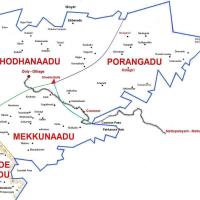
Though every Badaga village called hatti,  has one or more than one Hindu temple, there are ONLY three main HETHEY temples, located in Beraganni, Peddhuva and Jakkadha, all in the Porangadhu Seemay  (Badaga hattis are divided into four seemays in  The Nilgiris, called Naakku(four) Betta (mountains). Beraganni and Pedduva Hetheys are sisters. There are , of course, a few more Hethey temples in other seemays like in Ketti.

Due to an unwritten restriction and age old tradition, no new Hethey temples can be built in any hatti. The week long festival celebrated as Hethey Habba that falls in December/January once a year, is the biggest one.

But, unfortunately, the Hethey temples and the associated festivals have many restrictions for women – MAINLY FOR WOMEN.

I have asked many well meaning and devoted [to Hethey] Badagas ‘why these restrictions have been imposed on women’ but could not get any convincing answers.

There is a raging debate going on about entry of women into Iyappa Temple in Sabari Malai [Kerala].

Societies are changing  and equal rights to women cannot be denied or delayed.

On this women’s day, let us pray to goddess Hethey and hope that the restrictions imposed be removed.

There cannot be any bar in/on FAITH!


Badagas of the Blue Mountains

Welcome to this site which is all about the

Badagas of the Blue Mountains

‘Baarivi, Odhivi, Nodivi & Ohridivi’ in Badaga means ‘Come, Read, See & Listen’

1.Badaga Origin [What we DO NOT know about Badagas is more than what we know about them. Such is the mystery of Badaga Origin. Read the complete article here]

2.Badaga Language [“It appears that there are none who know ‘PURE’ Badaga. This is not due to lack of words in Badaga. Lot of Badaga words have been forgotten [due to the influence of Tamil and English] and hence become extinct”.]

3.Badaga Names [What is in a name, a rose smells the same by any other name” so said a great poet. But is it so ? In the context of preserving the culture of a community, the names given to both persons and places can play a very crucial part.]

4.Badaga Songs [Music and Badagas are inseparable. Be it the ever green dance (aatta) numbers, the sad savu (funeral) songs or the beautiful ballads…sky is the limit. For some nice Badaga songs click here

5. Badaga Villages – Hattis [Badagas, generally, refer to their village or hamlet as ‘ HATTI ‘ spread around ‘Nakku Betta’ (the Nigiris). Nakku Betta literaly means four (Nakku) Mountains (betta) though there are many hills around which the villages are located]

6. Hethay Amma History [Hethay Amma is the deity of all Badagas. Hethai Habba is always on the first MONDAY (SOVARA), the most sacred day of Badagas, after the full moon (paurnami – HUNNAWAY ) that falls in (Tamil) Margazhi month, that is the 9th day after eight days of ‘Kolu’]

7.Badaga Jewellery [The main ornaments are the nose ring called ‘ MOOKUTHI ‘ and the ear ring known as ‘CHINNA’ . Chinna , literaly means gold but usually refers to ear rings. The type shown above is worn both by men and women. Of course, the ‘ BELLI UNGARA ‘ [silver finger ring] has a special place in Badaga tradition and considered to have medicinal / health benefits]

8.Badaga Wedding [Badaga customs and traditions are known for their simplicity, adaptibility and practicality. In this respect a Badaga wedding follows a set of simple rules that has been almost the same over the centuries. But for a minor change here and there, it has been almost the same in all the villages spread across the Nakku Betta or the Nilgiri Hills]

9.Badaga Funeral [Ever since I became aware of the verses of ‘Karu Harachodhu’, I felt how nice it would be if these beautiful words could be given in English [ both in script and as translation] so that the present day youngsters could understand one of the most important and significant part (prayer) of Badaga funeral rites]

10.All about Ari Gowder [Rao Bahadur H.B.Ari Gowder, the first Badaga graduate, first Badaga M.L.C & M.L.A for a long time who had brought many reforms in/to Badaga Community including ‘prohibition’ (no alcohol – kudi to Nilgiris in British days itself. Ari Gowder lead the Indian contigent (yes, “INDIAN CONTIGENT) to World Scouts Jumboree held in Europe in the 1930s]

11.First Badaga It will be very interesting [I hope as well as informative & motivating] to list all those BADAGAS who were / are the ’FIRST’in any field.Where I am not sure, I have put a question mark, so that someone may supply the correct or corrected info

12. Rare Photos [..The title says it all ..]

13. Badaga Day [May 15th is celebrated as Badaga day, every year. Many may not be aware that this has been done from 1993 onwards. The Porangadu Seeme (Mainly Kotagiri Area) has been celebrating this day as ‘Ari Gowder Day’ also, in honour of Rao Bahadur H B Ari Gowder…]

14.Badaga Poems [One of the enchanting aspects of Badaga Language is its disarming simplicity. But though the sentences are swathed in sweetness of simple words, it can contain deep expressions of emotions conveyed in the proper usage of rhymes [holla – alla] or pair words [huttu – nattu] apart from other attributes]

15.Badaga Elders [There are a few elderly Badagas spread among our Hattis and Cities who are so well informed about us. May be due to their age or the personal interest and individual atrributes, they know about our origin, customs, culture or anything connected and concerning Badagas. It is a shear blessing to meet them.]

16. Badaga Recipes [Badagas usually grow vegetables in their small patch(es) of land called ‘HOLA’ (see photo) for their regular use apart from other commercial crops like potato, cabbage, carrot and cauliflower etc. These would also include many varities of beans, peas, greens, corn etc]

17.Badaga Proverbs [One of the fascinating and interesting aspect of Badaga [both people & language] is the free use of delightful but deep meaning proverbs called “ DODDARU SHLOKA”. When you engage an elderly Badaga into any conversation, you are sure to hear a lot of these proverbs thrown in to make / emphasis a point]

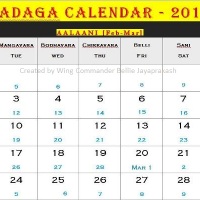
18.Badaga Calendar [Badaga month should start on the 10th of an English month as far as possible and also to ensure that the number of days in a month is either 30 or 31 days. Since Badagas consider ‘Sovara’ (Monday) as the most auspicious and ‘holy’ day, they have attached a lot of importance to that day]

19.Badaga Script It has always been felt that for a language to survive, it should have its own script. It cannot remain only as a spoken language for long. But of course, the script need not be peculiar and specific one pertaining to that particular language. So too is the necessity of a script for Badaga. Many have attempted to achieve this objective with various degrees of success. But unfortunately, to my knowledge, no records exist. I am no expert on phonetics or languages or much less innovating an unique script. But the urge to have a separate script has convinced me that it is very much possible to ‘ADOPT’ an existing script and ‘ADAPT’ it to Badaga language.

20. Badaga Poetry

21. General

~~~~~~~~~~~~~~~~~~~

******************

A Badaga temple with a Irula priest at Siriyur (Sigoor)

?

Siriyur (Sigoor) Temple

The annual Siriyur Amman (Mother Goddess) festival concluded today [01-03-2016] in the scenic low lands of Nilgiris amidst stark deciduous forests. The clearing forms part of the Mudumalai Tiger Reserve.

Thousands of devotes descended at the venue to spend the night awake to worship Siriyur Amman and participate in the fire walking in the early morning. Siriyur (meaning auspicious village) was a former fortress below the northern Nilgiri slopes, 16.5km NE of Ootacamund. It was an archaeological site in ruins before 1822.

Siriyur temple is  Badaga temple with a Irula priest.

?

photos by Dharmalingam Venugopal

India joins Mountain Partnership
 In a move that is significant to the mountain areas of the country, India has joined the UN Mountain Partnership from the first of February this year. A recent UN report ‘Mapping the vulnerability of mountain peoples to food insecurity’ had observed that while world’s poverty had declined, poverty in mountain areas had increased substantially.
The Mountain Partnership is a United Nations voluntary alliance of partners dedicated to improving the lives of mountain peoples and protecting mountains environments around the world. Founded in 2002, the Mountain Partnership addresses the challenges facing mountain regions  by tapping the wealth and diversity of resources, knowledge, information and expertise from and between members in order to stimulate concrete initiatives at all levels that will ensure improved  quality of life and environments  in the world’s mountain regions.
Currently, the Mountain Partnership has 270 members: 57 governments, 14 intergovernmental organizations, 194 major group organizations (e.g. civil society, NGOs and the private sector) and 5 sub-national authorities.
There are six NGO members from India including Nilgiri Documentation Centre which is the only member from south India.
The decision of the government to join the Mountain Partnership is in line with a number of mountain-centric decisions taken by the Modi government.


 Dharmalingam Venugopal

Nilgiri Documentation Centre, Kotagiri

Coppers from paupers – the Badaga Gesture to Gandhiji

Coppers from paupers

Dharmalingam Venugopal [Nilgiri Documentation Centre]

Not long after the Mahatma wrote about paupers in 1928 (The Hindu Feb 21) he made a weeklong tour of the Nilgiris. On Feb 2, 1934 he addressed public meeting at Kotagiri which was, ‘attended by about 6,000 people, mostly Badagas, a hill tribe. They presented to Gandhiji a purse and an address of welcome’.

Matha Gowder of Kannerimukku village, a young Badaga who was then free lancing for the South of India Observer wrote the welcome address. The Badagas had also made a modest collection of coins to be presented to Gandhiji. As Matha Gowder completed his welcome speech with a humble offer to accept the ‘coppers from paupers’, Gandhiji was immensely pleased and appreciated the gesture.

Matha Gowder, the eldest son of Andi Gowder of Bayly and Brock, Donnington, Kotagiri died young. Dr. K. M. Anandan, a legendary doctor who was the Medical Officer in Kotagiri is said to have lamented, ‘with Matha gowder his English too has died’.


Convert Race course for Sports Tourism

Convert Race course for  Sports Tourism

Dharmalingam Venugopal

Venu

A lingering legacy of the British in Ooty was the love of sports of all kind. Englishmen brought, among other sports, gymkhana, polo, cricket, boating, tennis, shooting and horse racing to the Nilgiris. They also invented the game of snooker here.

Sports, particularly, football, cricket and hockey continued to be popular throughout the district. Nilgiris produced legendary football and hockey players in 1950s and 60s. The district was chosen as the acclimatization centre for the Indian contingent to the 1968 Olympic Games in Mexico. Several national level championships were held at Ooty since then.

Sports activities have steadily declined in the last two decades for lack of promotion, modern sports facilities and sponsor for sports events.

A proposal has now been made to set up a high altitude sports facility in the Nilgiris. This ought to be done in a manner that will combine revival of local interest in sports and promotion of sports tourism in the district. Continue reading

Badaga Names

[Reproduced and edited]

“What is in a name, a rose smells the same by any other name” so said a great poet. But is it so ? In the context of preserving the culture of a community, the names given to both persons and places can play a very crucial part.

In our history of many thousand years, naming of places was generally and literally linked to NATURE. Be it on names given to villages like ‘Bikka Mora Hatti [Olive Tree Village]’ or ‘Hubbathale [Chinese Pagoda tree/grass]’ or ‘Osa Hatti [New Village]’.

Badagas had [ I am very sad to use ‘past tense’ here] a great tradition of naming their children after their ancestors, usually a deceased grand parent. By this they not only ensured that the dead are constantly remembered but also to differentiate Badaga as an unique entity as a tribe with their own traditions and customs.

Jayaprakash, Sabbarish, Yudhister, Abhishek, Parmesh, Ramesh, Satish, Vivek, Vinodh Bhuvanesh or Shalini, Shakila, Sudhalini, Nivideta, Kaushalya etc are, hold your breadth, some of the names of the so called modern(?) Badaga men and women. If you have to identify persons only from the names, then the above mentioned could be from any part of our country.

Contrast these with names like Bellie, Jogi, Kada, Hala, Sevana, Jevana, Moracha, Nandhi, Ari, Boja, Bella, Ajja, Madha or Kangi, Nanji, Madhi, Kade, Masi, Dhali. Straight away, these names not only point to Badagas but also remind us of our great ancestors.

I have always wondered, why being from a ‘STAUNCH BADAGA’fied family I was named Jayaprakash. My mom who is 96 years old now, tells me that when I was to be named in 1948, a much elder cousin who was both a bully and the first of his generation, insisted on this name because he was a follower of Jayaprakash Narain. Of course, the consolation is that in our generation (one earlier to the present one) everybody was compulsorily given a Badaga name also. For example, my Badaga name is JEVANA. Unfortunately, while registering the name for joining the school, the Badaga name was not included and hence Jayaprakash -and the short form of JP -got stuck. In one of those ironies of fate, when I had to give the [initials expanded] name to join the Indian Air Force as a commissioned officer, my father’s name Bellie became my first name and since we do not have a family name common to all brothers and sisters, Bellie is how I am known  these days and yes, I am quite happy about it.

If we continue to name our children as we do now by following the blind and bad advise of some ‘IYER’ who advises that the name has to start with X or Y, we can surely and sadly bury one of our best traditions of NAMING our children only with Badaga names and thus preserving and protecting our culture and KULA (clan).

The least we can do is, while naming the new born babies, ensure that a Badaga name is also given and that Badaga name is definitely included in the school records as well as for other important requirements like voter ID, passport etc .

[On a personal note, on our part we (my wife & I) have ensured that our children’s names include Badaga names ARI & NANJI [Rao Bahadur Ari Gowda was great grandfather to my son and Rao Bahadur Bellie Gowda’s wife Nanji was great great grandmother to my daughter] along with their other so called names.

As a first step, may I request the readers to list out all the old, original and exclusive Badaga names (both male and female) and give a serious thought to this serious problem. 

Some Badaga names that come to my mind :

Male names :

  • Ari, Ajja, B(h)oja, Bellie, Bela(Mada), Bella, B(h)eema, Bidia, Bulla, Dona, Gedda, Gujja, Hala, Hiriya, Jevana, Jogi, Kada, Kariabetta, Kakkamalla, Kalla, Kari, Kulla, Linga, Madha, Madiya, Moracha, Nandi, Nanja, Pada, Pokka, Raju, Ranga, Sevana, Sele, Thatha, Thippa.

Female names :

  • Beeki, Bulli, Chenne, Chinna, Doni, D(h)ali, Gange, Gangamma, Gauri, Giriji, Hali, Hallamma, Hui, Jevani, Kade, Kangi, Lingi, Madi, Malle, Masi, Nanji, Panne, Paru, Rukki, Sevani, Sing(a)ri.

JP adds (17  Dec 07) found this in the special issue of Kovai Badagar Sangam [1982]by M.Parvathi and B. Ramamurthy

Popular Badaga Names

Male :

  • Ajja, Andi, Appi, Ari, Bella, Bellie, Bemma, B(h)oja, B(h)ola,  Bijja, Bulla, Chevana, Dhona, Dhooma, Dhunda, Dolla, Gedda, Gejje, Gilla, Gowda, Gujja, Hala, Halli, Hiriya, Hucha, Huchi, Joghee, Jogha, Kada, Kakkamalla, Kala, Kali, Kalla, Kari, Komb, Konga, Krishna, Kunda, Linga, Macha, Madha, Madia, Malla, Malli, Matha, Morcha, Nanja, Nandi, Pamba, Peela, Rama, Ranga, Sakkarai, Sakkolai, Selai, Senna, Setti, Sevana, Singri, Sirangi, Thippa

Female :

  • Akkama, Beeki, Bijji, Chevani, Chinnamma, Devi, Dhundi, Gangi, Gavari, Haalamma, Haali, Honni, Jevani, Kade, Kali, Keppi, Lingi, Madhi, Mallai, Maanikka, Mallajji, Maasi, Michi, Nanji, Peeri, Rangi, Rani, Rukki, Sennai , Sirigi, Thippi

GODALATTY SINGHAN SATHU adds:

We have been known by the seemai to which we belong, to start a new relationship.For example I do not Know whether I call you (Bellie Jayaprakash) Mamma or Anna.If you belong to Merkunad to which I belong, I will call you Anna/Appa/Ayya.I you are from Thodhanad Seemai straight away I can address you as Mamma.This unique identity has to be preserved for posterity.

Hence my suggestion is to have names like

MEKKUNAD GODALATTY SINGHAN SATHU- MY NAME
MEKKUNAD GODALATTY JEYANTHI SATHU-MY WIFE
MEKKUNAD GODALATTY PRASHANTH SATHU-MY SON


The generation next wants an identity. My younger son calls himself Sevana Yashwant (Sevana is my great grandpa’s name)..


So let us start this movement.Great movements have started with small steps …….

Yes, I agree with Sathu about addressing other Badagas properly (Morapadi Koruchodhu). Since I belong to Poragangadu Seeme, it is in order that we address each other (depending on the age of course) as MAMMA [Uncle].

The disgusting thing these days is youngsters addressing any Badaga elder simply as ANNA or AKKA[elder brother & elder sister]. Even the general term AYYA or HETHE [grandpa & grandma] is so much more respectful.

Though the suggestion to include the SEEME before the Village name carries a lot of merit, there are a couple of catches.

You see, every SEEME (consisting of a large group of villages) is divided into communes known as OORUs (consisting of a particular number of villages in one group).

That is, NAKKU BETTA [of the BADAGA COMMUNITY] consists of Four SEEMES -> divided into many OORUs -> subdivided into individual Hattis [villages]. In a Village, everybody is a brother/sister and hence marriage among themselves is taboo.

For example, under PORGANGADU SEEME, ‘HATHOMBATHU [19] OORU’ and ‘AARU[6] OORU’ are two of the many communes.

All males, say, in AARU OORU are ANNA THAMMARU [brothers] and hence cannot marry from families within these six villages. But a boy from AARU OORU can marry a girl from HATHOMBATHU OORU. Or vice versa. Example, I am from AARU OORU (Beratty) and my wife is from 19 OORU (Hubbathalai).

That simply means for people of AARU OORU the people of HATHOMBATHU OORU are MAMMA & MAMMI and hence ‘madhuve maaduva MORAE hadadhe’ (The relation to marry exists).

The beauty of the system is that boys from both Beratty & Hubbathalai [villages belonging to Porangadu Seeme] can marry girls from the same village belonging to a different SEEME [say girls from Ketchigatty of KUNDHE SEEME]. Conversly, a boy from Ketchigatti can marry a girl of his choice either from Hubbathalai or Beratty. Or for that matter, he can marry a girl from within his (Kundhe) Seeme but NOT from the same village or OORU.

I am reminded of an exception though. In the village KODHUMUDI hatti, there are two groups belonging to MELA HATTI and KIYA HATTI (roughly, upper and lower streets) and a person from one group can marry from the other group. Probably, one of the few exceptions of marriage taking place from within  the same hatti (village).

Yes, this topic is not only very interesting but very important. Hope it gets the attention it deserves.

Also see here or here

<><><><><><><><><><><><><><><><><>

Website of Wing commander Bellie Jayaprakash that is regularly updated and more info added

On the unique BADAGA community of the Nilgiris in Southern India…their origin, language, culture and customs !!


^^^^^^^^^^^^^^^^^^^^^^^^^^^^^^^^^^^^^^^^^^^^^^^^^^^^^^^^^^^^^^^^^^^

No articles, images and other material in this website can be reproduced without the written permission of
Wing Commander Bellie Jayaprakash B.E.(GCT,Madras Univ).,M.B.A (FMS, Delhi Univ)
Contact : bjaypee@gmail.com
belliejayaprakash©2016

:::::::::::::::::::::::::::::::::::::::::::::::::::::::::::::::::::::::::::::::::::::