Women’s Day

WomensDayAny society that can claim to be really developed, has be the one that has given WOMEN equal status in all walks of life.

If we are proud to be HEHTE AMMA MAKKA [children of Goddess Hethe], let us remember that SHE is a woman.

On this women’s day, let us pledge that IN THE EMPOWERMENT OF WOMEN lies our WELFARE.

Hetheyawakka, awway, akka, ammay ella – engava harachivi {Grand mothers, mothers, elder and younger sisters – bless us]

Ariyalur and Badaga Pilgrims

Ariyalur and Badaga Pilgrims

by Dharmlingam Venugopal [Nilgiri Documentation Centre]

The moving story recalling the chilling experience of the Ariyalur train tragedy in the columns of the Hindu has rekindled varied memories connected with the incident.

Among the 142 ill fated victims of Ariyalur train accident on Nov 24, 1956 were 34 Badaga pilgrims from the Jakkanarai village of Kotagiri in the Nilgiri district. Members of the village  Pandarpur Bhajan Sabha, a group of  60 of them were returning from Pandarpur when they decided to extend their tour to Rameswaram.

An young lawyer from the same village who had then just finished law in Chennai  had pleaded with them to wait till the cyclonic rains abated. He had also had an ominous dream the previous night. The pilgrims consoled the young lawyer saying that a young one’s dream was harmless and proceeded towards their watery grave.

14 of them escaped with serious to mild injuries but some of them died soon after haunted by the nightmare of the ghastly memory, one man literally taking his gun out and shooting in the darkness for days.

The young lawyer later got all the victims compensation through a prolonged effort and they all together invested in an Ariyalur Tea Factory which ran for over twenty years.

The people of Jakkanarai village built a memorial near the spot of the accident with the names of the victims and for the next fifty years regularly offered prayers at the spot on the day of the tragedy. The memorial still stands covered by roadside bushes.  Since then they have built a replica of the memorial in their village itself for offering annual prayers.

Ariyalur[Click on the pix for enlargement]


Happy birthday, Rukmani Bhojraj!

There are some Badaga women and men who have sacrificed a lot with the single minded devotion to keep up the family name and traditions. In the bargain, they had to undergo a lot of suffering which they endure in silence. This is especially true with many Badaga women of the earlier generations who were married of at the very young age in a male dominated society.

Everyone of their life history, the pains and pleasures, can make a fascinating story.

024 (2)

One such person is Mrs.Rukmani Bhojraj. Daughter of Kundah Kettichigatti  B.K.Bella Gowder, she was married to Rao Bahadur Ari Gowder’s only son H.A.Bhojraj at a rather young age of 15 years.

In the initial years of her marriage, apart from taking care of three small children, Rukmani Bhojraj had to supervise everything very meticulously since both (her father in law) Ari Gowder and (husband) Bhojraj were particular about the details on how the guests were treated.

She had to run the household affairs at Ari Gowder bungalow called Panorama, at Coonoor,  mostly by herself as there were constant stream of visitors and guests who came to meet Ari Gowder who was a M.L.A and contractor of Railways.

A lot of government  officers from Madras [now Chennai] and district officials like the Nilgiris Collector, came often to discuss and dispose of matters of importance. large number of Badagas also came to seek solace and sort out their problems with the Nakku Betta leader.

In the typical Badaga hospitality, all visitors and guests were treated with snacks and food – hasuga and hittu. The kitchen fire at Ari Gowda’s bungalow was always on. ‘Ari Gowdana hittu maneya kitchu endu kathira’.

Rukmani Bhojraj is very warm hearted and makes friends easily with strangers. She is very popular with neighbours of all ages.

Today, 19th Feb 2014, is her 80th birthday and we wish her long life and good health!

Name: MAGESH KANNAN [magisubramaniam@gmail.com]
Great Great Great.
Wish her Long Life. Hethe, Ninna Gava maravadhuga mudia. Hethappa slog amake, arathu bandhamaga Annava kodu, Berathu bandhamaga Bekkia kodu. You kept the elders slogam alive. Thanks Hethe Amma.

Nanjanadu – let it be ‘Nenjuna Nanju Elladha Naadu”

Update by Dharmalingam Venugopal [22 Feb 2014]

Nanjanad needs relief, reconciliation and rehabilitation

A visit to the strife-torn Nanjanadu shows that with a little sensitivity on the part of all concerned, the senseless death of two innocent lives, the huge damage to properties and the blot on the peace-loving community could have been avoided.
The administration deserves all praise for posting a massive and understanding contingent of law enforcers to bring the situation under control.
With the spontaneous gesture of hundreds of community people descending on the village every day to condole and console the villagers the Badaga brotherhood is also aiding healing process.
However, a closer look shows that the deceptive calm could again be shattered if relief, reconciliation and rehabilitation efforts are not set in motion forthwith.
The victims’ families, one with a baby of five months and another with a college going youth, deserve the compassionate solatium of the Hon’ble Chief Minister through the recommendation of the district administration.
Enquires show the preference for a committee, comprising a representative of the Sri Ramakrisha Mutt, a high ranking retired government official and a retired police officer both settled in the district, to initiate the process of reconciliation.
The district administration would do well to support a Badaga Week during the coming Summer Festival to bring together and showcase the talents of the Badagas in music, dance, painting, photography, writing and other fine arts. Such an event in Anna stadium will give an opportunity to the Badagas to bond together while giving a grand treat to the tourists. A part of the proceeds can be set aside for rehabilitation in Nanjanad.

Dharmalingam Venugopal
[Hon. Director,Nilgiri Documentation Centre, Kotagiri] writes on

BADAGA FACTIONALISM

Badagas need  Alternative Dispute Settlement system

According to Social scientists, group conflict is a pervasive feature common to all levels of social organization. Group conflicts are either inter-group between two groups or intra-group  between individuals within a group.

Although both forms of conflict have the ability to spiral upward in severity, group level conflicts are generally considered to be more powerful as “groups are generally even more competitive and aggressive than individuals”. However, there is evidence that a large proportion of group conflicts are indeed personal conflicts.

The two main sources of intergroup conflict have been identified as competition for material rewards or for social rewards like respect and esteem.

According to the noted Badaga scholar, Paul Hockings, there is no published evidence of any kind of factional division or katchi as it is locally called, among the Badagas until the late 1850s. Since then  two types of factions have continued to plague almost all the Badaga villages. One based on personal factions stemming from strong difference of opinion about someone’s personal grievance. The second and more common type was each village taking one side or the other in some dispute of general concern to everybody. However, Prof Hockings concludes that the Badaga society has managed to reduce its tensions over the years by its big leap towards modernization.

Observers will recall that during the decade of the tea boom in the 1990s there was absolutely no incident of faction fights in the Badaga villages. Therefore, long term mitigation for Badaga factional fights lies in more modernization and development in the villages.

Sociologists say that within small groups, both constructive and destructive conflict occurs and it is important to accentuate the constructive conflict and minimize the destructive conflict.

In recent times Badaga have grown to be litigious and seek the law courts for every personal and social issue. The delay in disposal of cases or the deliberate attempt in dragging the cases or the manipulation of verdict often lead to build up of tension which at times end in avoidable tragedy.

What the Badaga society need most now is a mechanism for Alternative Dispute Settlement which is faster, cheaper and mutually more satisfactory.

There are a number of highly credible retired judges and administrators available in the state and the district for arbitration.

Let some Badaga social organization like the Nelikolu Trust take the initiative to set up an ADS for the Badagas.

~~~~~~~~~~~~~~~~~~~~~~~~~~~~~~~~~~~~~~

Wg Cdr JP :- Just heard the sad news that two persons have died in the clashes between two groups of BADAGAS at Nanjanadu Village over conducting Puja at the temple. Real shame !!

Enemies of Badagas are Badagas themselves.

Oh, God, they can kill in the name of GOD. Can there be anything more painful ?

Are we still proud to be Badagas??

I wrote earlier :-

An appeal to the people of Nanjanadu Hatti [24-10-2013]

Nanjanadu hatti, probably, is the biggest hatti of Badagas. More than a thousand houses.

100_6860

I visited this hatti a couple of days back to attend the funeral of a close relative. What shocked me is the fact that there are two factions in this hatti and one faction does not attend the functions of another.

It appears that the deep division among families, the fathers, mothers, brothers and sisters took place due to a dispute  about the SHIVA temple which is located at the very entrance of the village.

We have always believed that FAITH in the ALMIGHTY unites the people. How can GOD be the reason for division?

How can the people of this great hatti let such a thing happen and seek justice in the higher courts of Justice when, with a simple act of give and take, the issue can be resolved within minutes?

Is it not high time that the educated youngsters of Nanjanadu take the initiative to bring back harmony to this beautiful place?

A few days back, I had published a new post “… finding the 18th camel (see below)” in which I had highlighted the need to find a ‘common ground’. Can we NOT find the common ground right in front of the SHIVA Temple which remains locked?

You, the people of Nanjadu Hatti, will you listen to this appeal to unite?

Will you invite the people of Nakkubetta to a grand function of unification very soon??

Badaga Proverbs – Doddaru SHLOKA

Badaga Proverbs – Doddaru SHLOKA

One of the fascinating and interesting aspects of Badaga [both people & language] is the free use of delightful but deep meaning proverbs called “ DODDARU SHLOKA”. When you engage an elderly Badaga into any conversation, you are sure to hear a lot of these proverbs thrown in to make / emphasis a point.

Prof. Paul Hockings, probably the most authentic researcher on and of Badaga lists more than a thousand Badaga proverbs, 1730 to be precise. May be he had extensively borrowed these from the unpublished manuscript of M.K.Bellie Gowder. He feels that 1730 could be a complete figure containing all the proverbs . See his book,’Counsel from the Ancients: Study of Badaga Proverbs, Prayers, Omens and Curses’. He has given the meaning in English as well thus making it easy to understand in a beautiful manner.

Though I find his collection extremely interesting and educative, I do not agree with some of the conclusions he draws on certain proverbs. For example, on the proverb, ‘Odhidhama Niddhana, Oddidhama Erandina’ .

Prof.Hockings interpretation is quite different to what I feel is the correct meaning. I think ‘a person who spends time learning and pondering (over a problem) is better than the one who runs away (in a hurry) and thus trips over. [Odhidhama – learned one , Niddhana – stops to ponder over[think] a problem, Oddidhama – one who runs away or is in a hurry, Erandina – trips over.

It is common practice for Badaga mothers to tell their young children ‘Oda beda , Erandiray’ – Donot run, you will trip over (a stone or any obstruction). That is ‘ do not be in a hurry and take a hasty decision’.

Another one is ‘Michidhavaga Morande Kolu Bangara’. The lady who does not listen to her husband /any one (Michidha Hemmathi) is bound to land up as a widow (when ‘Morande Kolu – a small stick of morende tree – replaces her jewellery [bangara] – nose ring and ear rings during the Ole Kattuva ritual of husband’s death / funeral ceremony). Prof.Hockings feels Mechidhavaga (see the difference between michidhava – one who does not listen- and mechidhava – one who is appreciated by all – even a morende kolu is enough as jewellery.

Actual proverb could have been, ‘Michi dhavaga Moranday kolu Bangara, Mechi dhavaga Morenday Kolu Singara’

Is it a case of beautiful wordplay (pun) by our ancestors??

I have listed a few of the proverbs here, or….….read more here

Rare Photos

'''Topographic map of Nilgiri Hills showing so...

Image via Wikipedia

On the unique BADAGA community of the Nilgiris in Southern India…their origin, language, culture and customs !!

Website of Wing commander Bellie Jayaprakash that is regularly updated and more info added

The following photos are from Thurston’s Book “Castes and Tribes of South India” published in 1909 by Government of India Press, Madras

Badaga Temple

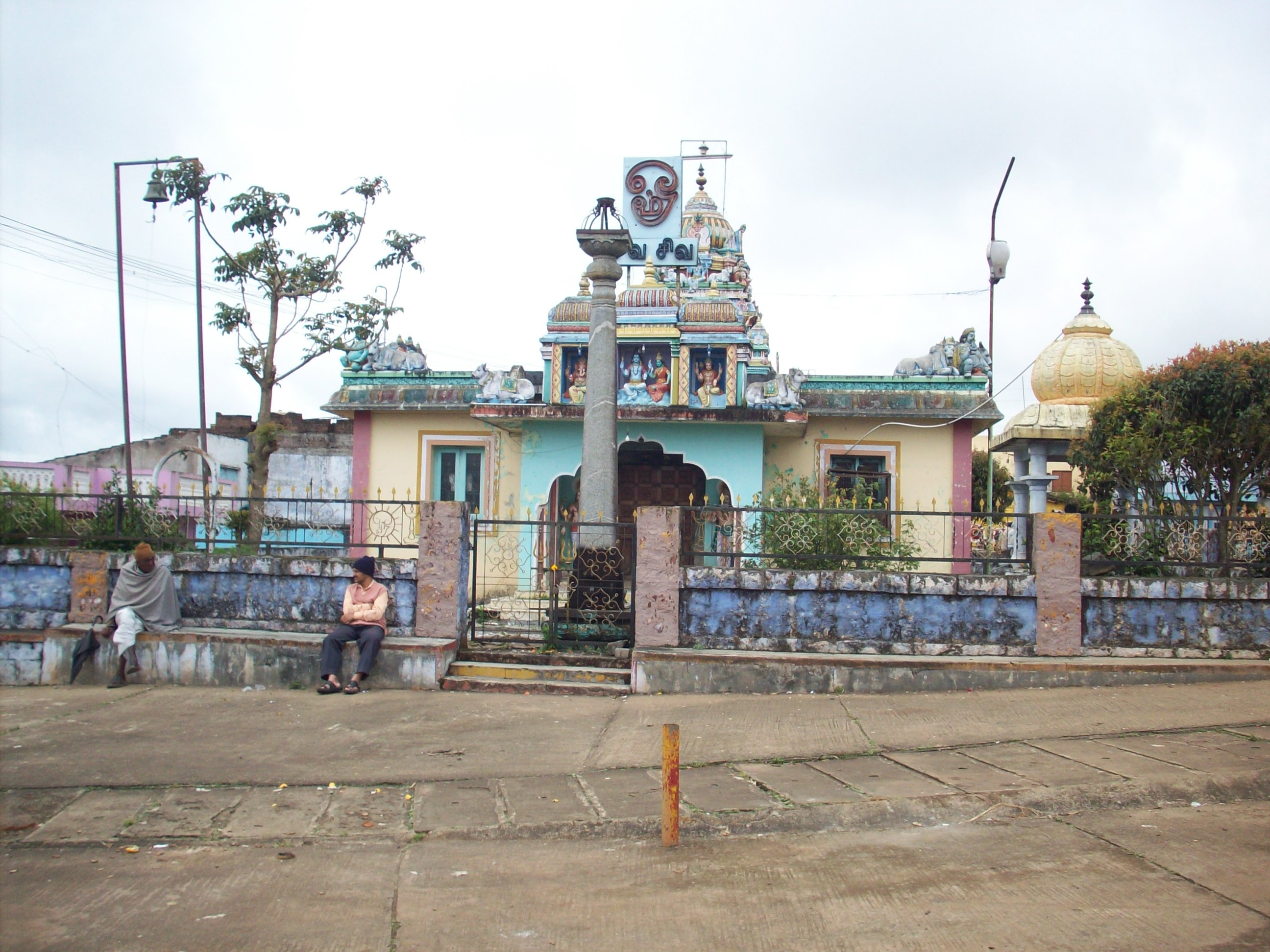
Badaga Temple – This must be one of the oldest Badaga temples as the photo was published in 1909. The deity of this temple? Also, notice the elephant, horse and the snake on the outer wall. Any guess as to where this temple is located??

Madivale

Madivale

Badaga girls in 1909 or earlier

Badaga girls in 1909 or earlier. At first glance it appears as those these girls are wearing ‘pattu – head gear’.Take a closer look, their heads have been partially shaved. Did this signify any particular custom or period in the lives of these very young girls. No info available in Thurston’s book

Fire Making by Badagas -1909

See more here

Dharmalingam Venugopal on John Sullivan Memorial

Many tourists who visit the beautiful Blue Mountains, the Nilgiris – [‘NakkuBetta’ to Badagas] are not aware that these picturesque hills, are rich with many historical facts and features. One such is the John Sullivan Memorial at the Badaga hamlet Kannerimukku.
NDC

Real credit should be given to Dharmalingam Venugopal, the man behind SAVE THE NILGIRS campaign, for the creation and care taking of this memorial along with ‘ Nilgiris Documentation Centre’Venugopal

To know more visit – John Sullivan Memorial here

JS Memorial

Dharmalingam Venugopal has posted a video

on the memorial, which is highly informative and educative; it is a must see video.

By the way, in the later part of the video we lean that,  it was during Ms.Supriya Sahu’s tenure as the Collector of the Nilgiris that this memorial came into existence in 2002.

Supriya SahuOne remembers that this lady collector has done a lot to the improvement and environment of the hills. Be it the ‘Plastic Free’ movement or the road bumps on the Mudumalai Forest Road [Ooty-Mysore road] that saved a lot of wild life when crossing the road from the speeding motorists.

(photos from the video)

Badaga Funeral Rites

Many a time, when we realize that some of our elders and educated have felt the need to put our old customs, traditions, rites etc on record – be it a manuscript or a printed booklet, it becomes a source of reference for many generations that follow.

I had the good fortune of reproducing the ‘Hethe Amma History’ by Naduhatti Bogga Mada Gowder published in 1925 [see the page on HETHE] and now the ‘ SAAVU HARAKKE -Funeral Prayer’ originally complied and published by Ketti -Achenekal M.Kala Gowder on 25-9-1944 and reproduced by M.K.Nanja Gowder [ see below the 8th edition]. He had been gracious to acknowledge the support extended by Rao Bahadur H.B.Ari Gowder’s family in his effort.

It is important to mention that Ketti Achenekal Mr.M.K.Nanja Gowder’s manuscipts have been extensively quoted by many researchers including Prof.Paul Hockings.

Karu Arachodhu 1
Karu Harachodhu 2
Karu Harachodhu 3 Karu Harachodhu 4

For more on BADAGA FUNERAL RITES go here or here

Badaga Calendar

Badaga Calendar
by Dr.R.K.Haldorai

Badagas can boast with their own time-reckoning calendar. Once they followed their own full-fledged time-reckoning system and they practiced it even for their day to day life. But, it is to our dismay that at present most of the Badagas have only a little knowledge about that. Due to the easy accessibility of universally adopted Gregorian calendar and the arrival of panjaangam calendar at local market Badagas gradually disused their calendar system. However, it is to our surprise that still few have not forgotten the names of twelve months of the Badaga calendar. 1. kuuDalu, 2. haalaani, 3. nallaani, 4. aani, 5. aadire, 6. peeraaDi, 7. aavaaNi, 8. peraTTaadi, 9. doDDa diivige, 10. kiru diivige, 11. tay, and 12. hemmaaTTi are the twelve Badaga months. The basic unit of computation in a calendar is the day. Badagas used to dawn to dawn reckoning.

At the outset that the Badaga month begins always on a new moon day. For the Badagas the period between one new moon and the next new moon is a month. tinguva is the Badaga name for both moon and month and it expresses lunar month unequivocally, is roughly thirty days (Actually it consists 29. 5306 days). So, it is apparent that Badaga new year too begins on new moon day. It falls on different day every year because Badaga calendar is a lunisolar calendar. Every alternative year consists of thirteen new moon days . So one new moon day should be discarded without counting during every alternative year.

On which new moon day Badaga year begins? And which new moon day is be discarded without counting during alternative year? If we answer to these questions the doubt persists on Badaga calendar will disappear once for all.

“Exact time-reckoning is not a vital requirement for pastoral nomads. On the other hand, the correlation of lunar and solar time-reckoning was a necessary component of the urbanization process of the early agriculture societies. The solar year is roughly 365 days and lunar months make roughly 354 days, so a purely lunar time-reckoning is out of step with the season, which are determined by the yearly course of the sun. A lunisolar calendar was an essential instrument in administration and religion; it enabled the co-ordination of trade and agricultural activities (forecasting of seasonal yearly monsoons and floods) and the celebration of seasonal feasts at the proper time.”(Asko Parpolo). Badagas were pastorals comparatively for a longer period and they undertook the agriculture profession later on. Hence their time- reckoning consists of lunar months and solar year.

Badagas consider the bright half of the lunar month as auspicious and they prefer these days for religious activities. “muuru jena here” is considered as one of the most auspicious day in the Badaga religious beliefs. It falls on the third day after new moon. Considered as a holy day, it is the ideal day for conducting puujaas and celebrating festivals. It is believed that whatever new venture one makes on this day (or the waxing moon period days) will be tremendously successful. Badagas prefer marriage and other ceremonies on these days and they see even the milking the first time of a buffalo or cow on these days.

Badagas follow the south Indian lunisolar calendar. yugaadi or ugaadi festival marks the new year day for the south Indian people who follow the south Indian lunisolar calendar. It begins on the day after the first new moon after the sun crosses equator from south to north on spring equinox*, i.e. after March 21. meelsiime Badagas celebrate honneeru or doDDa habba (first ploughing) festival of a year on yugaadi day. With this one can assume that the first ploughing festival marks the new year day for the Badaga people too. On yugaadi new moon day the Badaga month aani begins. However most of the Badagas consider kuuDalu is the first month of a year. As yugaadi falls on the day after new moon day, it is easy to find the new moon on which kuuDalu month begins. We have to go back three new moon days from the yugaadi new moon. This year Badaga new year began on 1st January, 2014.

The yugaadi time- reckoning itself unaccounting a new moon during alternative years. So when we follow the yugaadi era the unaccounting an extra new moon day during alternative years goes along with it. For Badagas, the alternative year which bears thirteen new moon days is saribarusa. saribarusa goes along with an intercalary month i.e. an extra month ( or days) inserted in particular year. The intercalary month precedes the month that bears the same name. It is said that this calendar (yugaadi) reckons dates based on the Shalivahana era, which begins its count from the supposed date of the founding of the empire by the legendary hero Shalivahana.

* equinox = time or date at which sun crosses equator and day and night are equal (March 21, September 23). March 21st is spring equinox day .

In the page on Badaga Calendar, I have taken 10th of English month as the first day of a Badaga month. Dr.Haldorai’s article above, throws a different but more convincing argument.
As I have mentioned, one of the puposes of this website is to learn our old traditions [that are slowly vanishing] and come to a consensus on any issue where there may be more than one possibility. Differences of opinions are bound to be there but they can be easily solved. One such in my view is ‘Badaga Calendar’. – Wg Cdr JP

Proud to say we got 300,000 hits !

WP Hits

Extremely grateful to one and all for ‘HITTING’ us 300,000 times.

This landmark was reached on – 6th January, 2014 !!

Thanks again for the new year gift !!!

Uri Hogi, Siri Barali