Badaga Studies (Collected Papers) – by Dr.R K Haldorai

An excellent collection of papers on the Beautiful Badaga Bashe (Language) by one of the most appreciated scholars on Badaga – Dr.RK Haldorai from Kiya Kauhatti

Badaga Studies (Collected Papers) – by Dr.R K Haldorai
An excellent collection of papers on the Beautiful Badaga Bashe (Language) by one of the most appreciated scholars on Badaga – Dr.RK Haldorai from Kiya Kauhatti
Posted in badaga
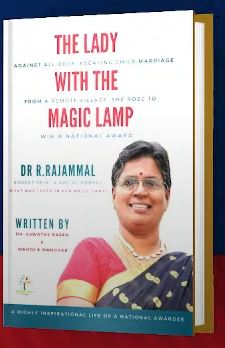
In the recently held function on 9 Sep 2023, for Out Standing Educators by the governor of Tamil Nadu His Excellency Ravi, Dr.Rajammal, a Badaga lady from Kethorai, about whom we have written earlier also, was honoured. The function was held in Chennai.
Around 20 national and State Awardees were honoured and Dr.Rajammal was the no.1 in the list. Only she was given the privilege to address the gathering. See the video below.

We are proud of you Rajamma, Engaga appara santhosha (we are very happy)! – Wg Cdr JP
Janardhan Nanjundan, (a Badaga from Thudhalai, is an indigenous researcher, with a background in Sociology, Anthropology, linguistic and demographics) writes
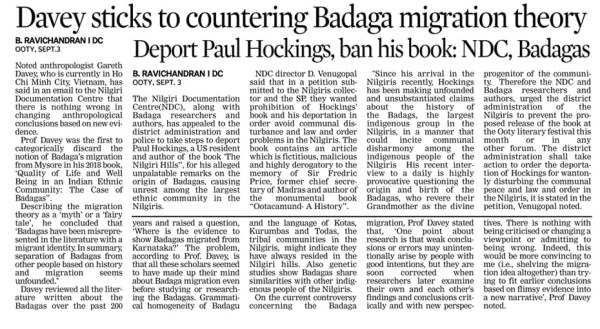
Anthropologist Gareth Davey, (a former colleague of Paul Hockings) who is currently in Ho Chi Minh City, Vietnam, has said in a recent email to Dharmalingam Venugopal of NDC (Yukesh Saravanan, from Kannerimukku and a Software Engineer based at Bangalore, confirms this), that there is nothing wrong in changing anthropological conclusions based on new evidence.
Prof Davey was the first to categorically discard the notion of Badaga’s migration from Mysore in this 2018 book, ‘Quality of Life and Well Being in an Indian Ethnic Community: The Case of Badagas”. Describing the migration theory as a ‘myth’ or a ‘fairy tale’, he concluded that ‘Badagas have been misrepresented in the literature with a migrant identity. In summary, separation of Badagas from other people based on history and migration seems unfounded’.
Davey reviewed all the literature written about the Badagas over the past 200 years and raised a simple, basic question, ‘Where is the evidence to show Badagas migrated from Karnataka?’. The hundreds of books written till then had only one evidence, namely, ‘some Badagas told they came from Mysore’. Who were they? On what basis they said that? Did they show any evidence? Nothing was known.
The problem, according to Prof. Davey, is that all these scholars seemed to have made up their mind about Badaga migration even before studying or researching the Badagas.
Grammatical homogeneity of Badagu and the language of Kotas, Kurumbas and Todas might indicate they have always resided in the Nilgiri hills. Also genetic studies show Badagas share similarities with other indigenous people of Nilgiris.
On the current controversy concerning the Badaga migration, Prof Davey stated that, ‘One point about research is that weak conclusions or errors may unintentionally arise by people with good intentions, but they are soon corrected when researchers later examine their own and each other’s findings and conclusions critically and with new perspectives. There is nothing with being criticized or changing a viewpoint or admitting to being wrong. Indeed, this would be more convincing to me (i.e., shelving the migration idea altogether) than trying to fit earlier conclusions based on flimsy evidence into a new narrative’.
Posted in badaga
THE NILGIRI COLLECTION
Stanford University, a major university in Silicon Valley, California, has now established in its library ‘the Nilgiri Collection‘. This is the largest collection of books, articles, manuscripts, dissertations and maps dealing with the Nilgiris to be found anywhere in the world — even bigger than what is in the British Library. The books date from 1820 onwards, down to the present.
The material is still in process of being catalogued, but a catalogue of it may be found at < https://searchworks.stanford.edu/ catalog?q=%22Nilgiri+Collection.%22&search_field=subject_terms >.
At present there is no online access to the material, as it has to be consulted in the library’s Special Collections room in Palo Alto. But as the library is digitising vast amounts of material nowadays, we might hope for online access later on. The librarian who is in charge of this and all South Asian books is Dr. Ryan Perkins, a historian, and he may be reached at c.ryanperkins@stanford.edu
Information, kind courtesy : Prof. Paul Hockings, the Anthropologist par excellence, who is on a visit to the Nilgiris
Posted in badaga
I attended the “In Conversation with Paul Hockings ” meeting, courtesy Ganesh Ramalingam, who is spear heading the movement to restore ST status for Badagas on 19 Aug 2023. Prof. Paul Hockings is on a visit to the Nilgiris.
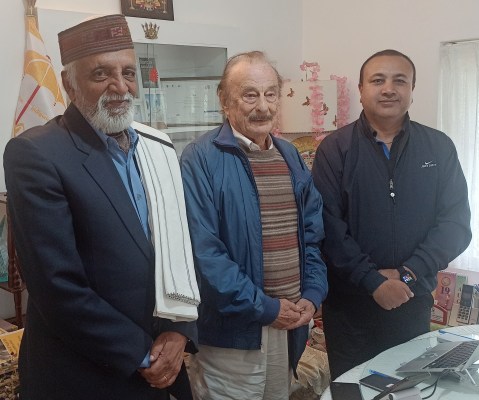
While giving full credit to Prof. Paul Hockings for writing so much about Badagas and exposing us to the world, I am totally opposed to his view that we are migrants from Mysore.
I had told Prof.Paul Hockings many times earlier through emails and in person in the meeting at Ooty.

His argument is “please show some evidence that Badagas were in the Nilgiris for a longer period than a few hundred years, (thousand of years), I will definitely change my view.”
I see a subtle change in his perception now. For a specific question ‘why did you write, in the first place, that Badagas migrated from Mysore, his answer was ‘Badagas, themselves told me and pointed to a village near Nanjangud as their ancestral village ‘.
In 1962, when Paul Hockings first started his research on Badagas, he was about 28 and staying in Ketti village. Prof. Paul Hockings, says that he had visited about 80 Badaga villages.
Prof. Paul Hockings accepts and stated on record that Badagas are as indigenous to Nilgiris as British to Britain to a question by Ganesh Ramalingam. This I consider to be a subtle change in the view of Prof. Paul Hockings though he still seems more inclined towards the migration from Mysore theory.
The argument that Badagas have migrated from Mysore area, in the northern side of the Nilgiris MAINLY based on the meaning of BADAGA and/or some Badagas with whom Paul Hockings interacted, informants as he calls them, told them so, is not convincing. In 1960s, the awareness of Badaga Origin, was not well known to the Badagas. Some Lingayats, among the Badagas he gathered the migration information from, could have been falsely influenced, because of their ties with some villages near Nanjangud.
Now that Badagas, some of them highly educated and well informed, have started questioning this mistaken migration theory, we can feel that there is unease in the minds of many scholars and followers who tend to quote Westerners about migration and calling them wrongly as Hindu Refugees escaping the forced religious conversion by Muslim invaders.
The only way to establish our origin and ancestry, once and for all, is to do carbon dating. Paul Hockings, agrees to this and says he is willing to change his perception about the so called Badaga Migration, as that would be scientific.
Apart from this important issue of migration, where Prof. Paul Hockings, in my opinion, could have been misinformed, the other research Paul Hockings has done on Badagas, is exemplary. His books on ‘Badaga English Dictionary and Badaga Proverbs‘ along with Christiane Pilot Raichur, are great source of information and should find a place in every Badaga home.
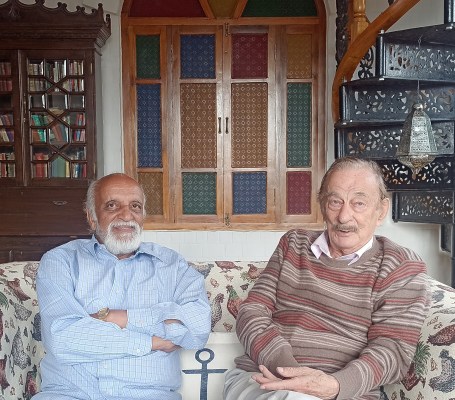
On a personal note, I am willing to sponsor anyone from our community, who can do this carbon dating and also request young Badaga leaders like Ganesh Ramalingam and other friends to initiate a serious attempt on this issue.
Let us prove that we are as old as any other tribe in the Nilgiris and this Migration from Mysore is a big mistake.
Wing Commander Bellie Jayaprakash (Air Veteran, Indian Air Force)
Please also see the page on Badaga Origin
Jakkadha SV Ramachandran comments |
Kay Mugadane JP sir
This message should be made loud and clear among every Badaga brothers and sisters. We should get convinced ourselves first.
In my opinion, DNA profiling and DNA mapping would be a better way to scientifically understand the origin of our community.
Regards.
Thank you very much, Ramachandra, I fully agree with you that we, Badagas, should get convinced ourselves first. DNA profiling/mapping could/should also be done. Why not? – Wg Cdr JP
900,000+hits, How do I thank you ?
Our website https://badaga.co has crossed the 900,000 visits this month, June 2023.
Targeted at a tribal community of about 300,000 Badagas, this website, an one man’s effort, gets about 200 hits a day.
How can I thank you, with mere words!
Wing Commander Bellie Jayaprakash (Coonoor)
bjaypee@gmail.com
A BADAGA AND ENGLISH DICTIONARY: GLOSSARY AND GAZETTEER
by Paul Hockings & Christiane Pilot-Raichoor
Badaga/Baduga, spoken by an indigenous tribe of the Blue Mountains, the Nilgiris in the Southern India, is an unique Dravidian language. Though wrongly clubbed and considered as part of old/haliya Kannada due to many similarities, it has been proved to be a separate language by itself. Now it figures as an endangered language in the UN list. The Nilgiris, with its many primitive tribes, has been the centre of many researchers and anthropologists for many centuries now. Most prominent among them is, no doubt, Prof. Paul Hockings. His extensive study/research on Badagas during his stay among them in the hills in the 1960s, has resulted in many books and publications which are a great source of information and reference . I found his book on ” Badaga Proverbs – Counsel from the Ancients: A Study of Badaga Proverbs, Prayers, Omens, and Curses “, quoted extensively in the dictionary very interesting and educative. May be there are a couple of glitches here and there but his work is exhaustive, indeed. I am in touch with him and find him to be very friendly and communicative.
Paul Hockings studied anthropology and linguistics at Sydney, Toronto, Chicago, Stanford and California (Berkeley) universities. He was the editor of the Encyclopedia of the Nilgiri Hills (Manohar 2012), as well as author of several other books on the anthropology of that area. The late Christiane Pilot-Raichoor was a linguist with a doctorate (1991) from the University of Paris – Sorbonne, specializing in the Badaga language. She supervised grammar and etymology in the Dictionary.
The latest edition of “A Badaga and English Dictionary” has been published by Manohar, Delhi and is priced at Rs.3995/- for a set of two books (three parts), 1024 pages, and is available from Amazon at Rs.3076/– (23% discount)
This dictionary is a must for any serious student of Badaga Language and a great guide & reference to know about Badagas and the Nilgiris – Wing Commander Bellie Jayaprakash


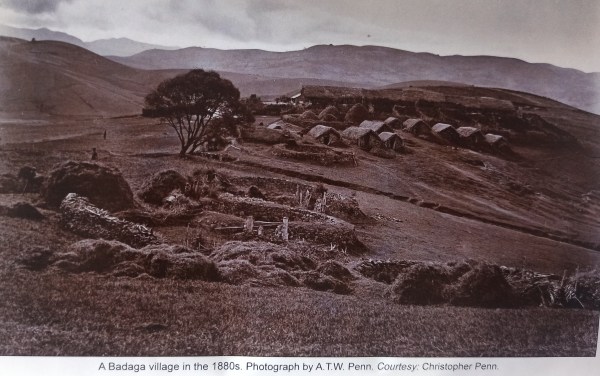
Prof: Paul Hockings, one of the authors, in an email, informs me that
This Dictionary, just released by Manohar Publishers, is a much revised and expanded version of the original Badaga Dictionary, published in Berlin in 1992. The authors for each edition were two anthropological linguists, Paul Hockings and the late Christiane Pilot-Raichoor. Together they have compiled a two-volume dictionary which is without parallel in Dravidian studies. For a start, it is the only dictionary that incorporates a Gazetteer of about 2,000 local placenames, including all Badaga, Toda and Kota villages past and present.
Etymologies are given for most entries, linking Badaga words to forms in the Dravidian Etymological Dictionary of T. Burrow and M.B. Emeneau. But a striking innovation here is that Hockings has for the first time shown that in many Dravidian Languages there remain a just a handful of words ultimately derived from Sumerian. This was the first language ever to produce written records, and it spread from Mesopotamia widely across the Western part of the Indian Ocean, some three thousand years ago, reaching as far as Kerala. Thus the Badaga word ūr or ūru (‘head village’) was derived indirectly from the Sumerian uru, ‘town, village, district’, and the Badaga giri (as in Nilgiri) is cognate with the Sumerian giri,meaning a ortress or refuge.
Another novel feature of the book is that Hockings has been able to comb old maps in order to list the Badaga names of 220 Toda hamlets, most of which no longer exist. Wherever he discusses any village or hamlet he gives its exact location, cited as being so many kilometres from points in Ooty, Kotagiri, Coonoor or Gudalur.
This book opens with a short outline of Badaga cultural history, and an essay discussing the relationship of Badaga with other, neighbouring languages. At the back are ten Appendices, with such useful information as the names, Badaga and scientific, of plants and animals, detailed lists of all villages, names of deities, etc. Also of crucial value is Part 3 of the book, a complete English-Badaga glossary, and for most of the nouns, including all plants, animals and placenames, concise references are given to the extensive literature on the Nilgiri region. This means that if a botanist, for example, even if not particularly interested in the Badaga language, wants some technical information about mango, he or she only has to look up ‘mango’ in this English Glossary, and that will give the comparable Badaga word, the entry for which will include concise references to mango in the botanical literature. In this way the book is more than just a Dictionary, it is a ready-reference book.
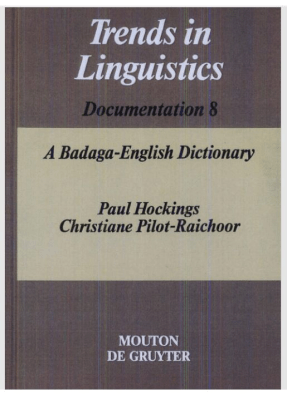
A Badaga English Dictionary – 1992 Edition
Counsel from the Ancients: A Study of Badaga Proverbs, Prayers, Omens, and Curses

Prof. Paul Hockings in his email [3/3/2015] had writen :
Dear J.P., It was really very generous of you to devote so much space to my work in your Badaga website. I do appreciate it.
My reply : Thank you Paul for the email. Since I feel that your books, particularly, ‘Counsel from the Ancients: A Study of Badaga Proverbs, Prayers, Omens and Curses‘ must find a place in every Badaga home, I wished that it was easily available and affordable. Thanking you once again for making Badagas known to the world. – Wg Cdr JP

Having gone through this dictionary (priced at Rs.600, purchased from Mr Maathu, who was kind enough to have it delivered to me at Coonoor) and can say without any hesitation that this book must find a place in every Badaga household. – Wing Commander Bellie Jayaprakash
Trilingual Dictionary of the Badaga language
by Dr.Haldorai and others
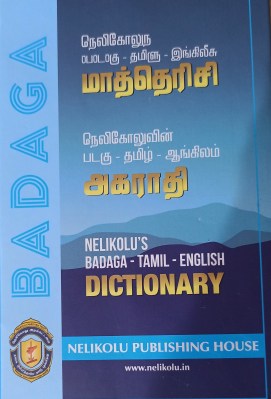

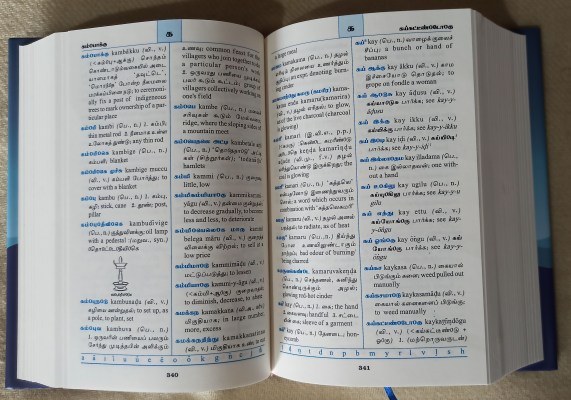
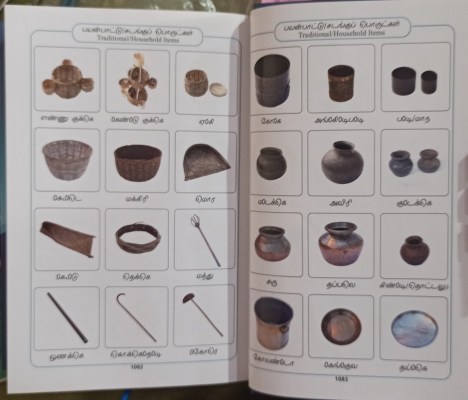
(Dr.Haldorai Writes) The role of the dictionary in language development is significant. A dictionary gives all or most of the words of a language in alphabetical order with meaning. The richness or strength of a language is made up of its words. Thus, a dictionary which contains units of language (words) does fully show the richness or the strength of the language. That is why the Nelikolu Charitable Trust opts a dictionary that is ideal for displaying all of the Badaga language resources. It is said that knowledge of grammar, etymology, linguistic study and compilation of words are the core skills for a dictionary making.
The Nelikolu Charitable Trust has been actively pursuing the dictionary project by setting up a dictionary team which contains persons of these four skills. Our objective is that the new Dictionary, a fully Badaga initiative, would be more comprehensive, user-friendly and accessible even to those with limited or no knowledge of English.
Badagas have long been associated with the Blue Mountains. Thus Badagas’ knowledge related to Blue Mountains is enormous. Therefore, there is no doubt that the Badaga language will be very helpful to know the matters related to the Blue Mountains in full. This Badaga dictionary contains a lot of matters related to Badagas way of life besides news related to the Blue Mountains as well as.
This dictionary is a supplement to school and college textbooks; a repository of words that Badaga singers want; a rare treasury for those who want to know the wonderful nuances of the Badaga language; the crutch of levelling the ever-changing culture; above all, it is the life saving medicine that keeps the Badaga language on life from its present endangering path.
As a result of more than a decade of dedicated work on the Badaga dictionary, it has evolved into a 920 page dictionary volume with over 17,000 main entries and 5000 sub entries. In addition to this 24 pages of preface and 176 pages of appendixes, it became a big volume with 1120 pages.
The main author of the Badaga – Tamil _ English Dictionary is Dr.R.K.HALDORAI who is a founder member of Nelikolu Charitable Trust
(I have had the pleasure of meeting Dr. Haldorai, a few times, a very nice and humble gentleman. A few lines about him. – Wg Cdr JP)

After his schooling from Kil Cowhatty and Nanjanad, he did his graduation (in Tamil) from Govt. Arts College Ooty, did his M.O.L. (Master of Oriental Language, Tamil)- Annamalai University, B.Ed. & M.Ed. – Annamalai University and M.A. (Gandian Thought) – Madurai Kamaraj University, Ph.D. – Madras University.
Born in 1952, Dr.Haldorai, M.A., M.Ed., M.O.L.,Ph.D, a highly educated Badaga, is from Kiya Cowatty (Muthorai) and lives in Tambaram, Chennai .
He is married to M.Shanthi, B.Com. (Kunna Hubbathalai) and has a daughter Dr.H.Gayathri, (Siddha Medical Practicenor).
He was a Lecturer in Tamil, Govt. R.C College of commerce, Bangalore (1977 – 1979).And held the post of Special Grammar Compiler, Directorate of Tamil Etymological Dictionary Project, Govt. of Tamilnadu
Dr. Haldorai knows Kannada (speak, read and write), Malayalam and Telugu (read and write).
Done Certificate Courses in Hindi & Sanskrit.
Work done on Badaga
Books Published on Badaga: Thirteen (9 in Tamil, 4 in English)
2.Marriage among the Nilgiri Badagas, 2006
3.Badaga –English Self Instructor, 2009
4. A Practical Key to the Badaga Language, 2011
Dr. Haldorai has published numerous articles in English and has presented many papers in Dravidian Linguists Association, Thiruvananthapuram
Posted in badaga
Obituary of Dr. William (Bill) Allister Noble
William (Bill) Allister Noble, affectionately known as Sandy, 89, of Albuquerque, NM passed away peacefully in his sleep on December 31, 2021.
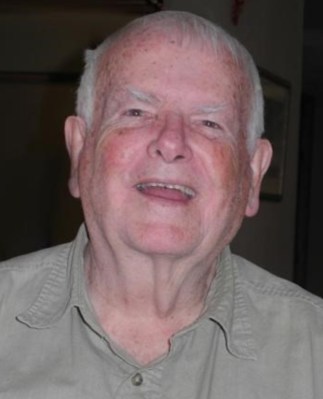
Bill was born on April 20, 1932, in Nagercoil, Tamil Nadu, India during the British Raj. He was the youngest of four children born to Dr. William Alexander Noble and Etna Dodd Noble. His father was a Salvation Army missionary doctor who ran the Catherine Booth Hospital in Nagercoil from 1921 to 1960. Bill’s family lived on the grounds of the hospital which were always bustling with patients, their families, and hospital staff. He and his brother attended Breeks, a boys boarding school in Ootacamund, nestled in
the highland forest adjacent to botanical gardens. It was there that he developed a deep love for nature and for the area’s indigenous tribes like Badagas, Todas, Kothas & Kurumas; specifically, the Toda tribe who had a hamlet next to his school.
At 18 he left India for the United States where he earned a BA and MA in Geography from the University of Georgia in Athens. While married to Louisa Booth he completed his PhD in Cultural Geography/Anthropology from Louisiana State University in 1968. He spent his career working as a professor at the University of Missouri, Columbia. He retired in 1996 and moved to Bend, to be near family.
Bill had incredible curiosity, a passion for research, and a love of nature photography and all inhabitants of the natural world. He considered India his spiritual home and focused his academic research on India and the Toda. He published widely and collaborated often. His areas of expertise included Toda architecture, temporal changes in grasslands, early agriculture, Hindu
temples, Nilgiri geology, centered courtyards, peasant dwellings, knives, prehistoric ruins, tribal settlement patterns, and the evolution of the Toda from nomadic buffalo herders to farmers. He photographed “Sati” memorials across India, a Hindu practice in which a widow sacrifices herself on her husband’s funeral pyre. In the United States, he published articles on bristlecone pines, tobacco barns in Missouri, and an Antebellum plantation in Georgia. He dedicated time to researching impatiens that occur on the coasts of both India and Africa to further support the idea of continental drift, and the long-range, high-altitude migrations of certain bird species.
When his daughters were young, he took advantage of his summers off to take them on two six-week camping trips across the American Southwest. Other adventures with him included trips to India, China, and the Galapagos. He was the parent who arrived with his sleeping bag and a list of esoteric adventures to occupy the month ahead. They were always chasing down a rare
flower, migrating birds, or an endemic mammal – sometimes with no luck. He could sleep anywhere and made friends wherever he went. He was our greatest fan and lifelong cheerleader. His daughters are grateful that he moved to Albuquerque to be part of their lives for the past decade.
Bill is preceded in death by his sister Dorothy Floyd of Atlanta, GA, his brother John Noble of Bend, OR, and Charlie Noble who died in childhood. He is survived by his daughters Catherine Noble (Nick Nuccio) and Jennifer Noble, two grandchildren, Sophie Nuccio and Max Noble, five nephews, and a niece.
His daughters add : We wish to thank his numerous caretakers for their tireless loving care and friendships.
We plan to fulfill his wish to scatter his ashes on Mukurthi peak in South India in 2023.
A celebration of his life will be held in Albuquerque, on June 11th. Contact his daughters for details.
Posted in badaga
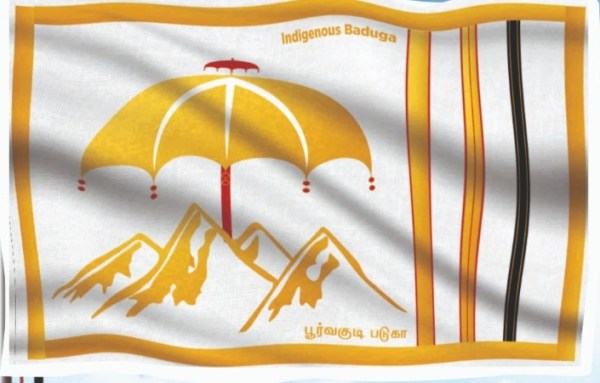
Badaga Flag has been designed & developed by Ganesh Ramalingam, in line with the culture and customs of Badagas.
(Badaga Day is celebrated on 15th May every year)
Ganesh Ramalingam has not only taken the complete initiative to get Scheduled Tribe status for Badagas but also doing a lot to the community, in consultation with elders, spread around the Nakku Betta.
Posted in badaga

Now you can access our website www.badaga.co on your smart phone.
Remember to access many multi media posts like Badaga Songs and Dance.
 Enjoy! Your feedback is most welcome!!

What we know about Badaga, both language and people, is less than what we DO NOT KNOW ABOUT THEM

my mother, Mrs.Idyammal Bellie Gowder,

my uncle Rao Bahadur HB Ari Gowder and

my grand parents Rao Bahadur HJ Bellie Gowder and Nanji Ammal
Barivi, Nodivi, Oridivi, Odhivi !
Now you can access our website www.badaga.co on your smart phone.
Remember to access many multi media posts like Badaga Songs and Dance.
Enjoy! Your feedback is most welcome!!
 | Joghee Raman on Ari Gowda – 132nd Birth… |
 | Gokul Gowder on Lt. Meera, First Badaga Lady N… |
 | Elisabeth Jensen on Nice to see these ladies with… |
 | Meghna on Learn Badaga |
 | Gokul on Seemae [See’may] & M… |
 | Mahesh Joghee Gowder on Indrani Radhakrishnan at Cambr… |
 | freemortally2a5fac29… on Hethey Habba at Hubbathal… |
 | fadingphantom956cdb2… on Happy New Year ! |
 | Sottae on Seemae [See’may] & M… |
| Adithya on Time to change with changing… |
 | Raveendran K on Badaga Origin |
 | Rajkumar B on NCMS Campus named after Rao Ba… |
 | Ann on Badaga Weddings |
| freemortally2a5fac29… on Sholur G Raman’s New Bad… |
 | R.RAJAMMAL on More than a MILLION hits for o… |
 Proud to be an Indian : Proud to be a Badaga
~~~~~~~~~~~~
This website is Designed, developed and maintained by Wing Commander Bellie Jayaprakash ~~~~~~~~ |
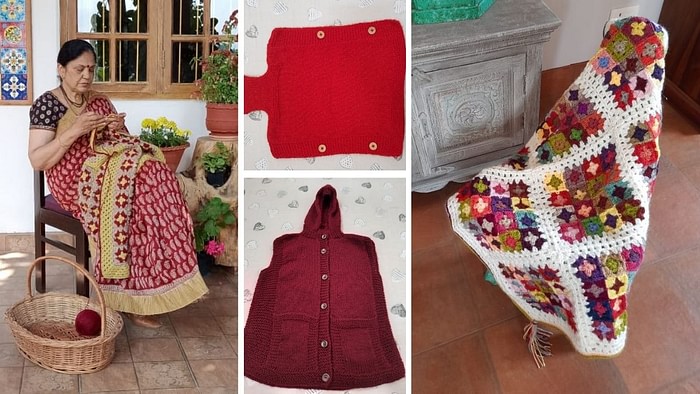
Tara's Creations
Namaskara – Greetings [Namasthe – Vanakkam],
Ollengay Iddhaya? – How are you?,
Ninna Hesaru A’ena? – What is your name?,
Maduvay aagi buttava? – Are you married?,
Nee a’ hattigha koodidhe? – You are married to [the boy/girl from] which village?,
Appara Santhosha – Thank you very much.
Aakkaday – That side,
Eekkaday – This side,
Horasu – Outside,
Baa – Come,
Bannay – [I] will come,
HOnay – Will go,
Hadadha’ya – Is it there?
KaaNay – Missing
>>
More than 1028,000 visitors
################################

::::::::::::::::::::::::::::::::::::::::::::::::::::::::::::::::::::::::
Aakkaday - That side, Eekkaday - This side, Horasu - Outside, Baa - Come, Bannay - [I] will come, HOnay - Will go, Hadadha'ya - Is it there? KaaNay - Missing
<><><><><><>><><>><><>
More than 1026,000+ visitors
################################
:::::::::::::::::::::::::::::::::::::::::::::::::::::::::::::::::::::::::::::::::::::
Now you can access our website www.badaga.co on your smart phone.
Remember to access many multi media posts like Badaga Songs and Dance.
Enjoy! Your feedback is most welcome!!
 In Badaga, MOON is ‘THINGUVA’, Full Moon is “HUNNAWAY” & New Moon is “MUTTU”
☂ ☂☂☂☂☂ ☂
|
|
Do you feel very strongly about any issue concerning Badaga Community? Have the urge to pour your heart out ? Feel free to express yourself without any inhibition and send them to bjaypee@gmail.com


Tiger is HULI in Badaga Lanuage

Here's a question that was posed to the Dalai Lama:
"What thing about humanity surprises you the most?"
His answer is : "MAN - Because he sacrifices his health in order to make money. Then he sacrifices his money to recuperate his health. And then he is so anxious about the future that he doesn't enjoy the present,
And as a result he doesn't live in the present or the future. And he lives as if he's never going to die and then he dies having never really lived".
Donate Your Eyes
 ==
==

![Seemae [See'may] & Morae [Mo'ray] (relationship)](https://i0.wp.com/badaga.wordpress.com/files/2008/11/nakku-betta1.jpg?resize=200%2C200)




 Mookuthi
  Chinna


 Badagas of the Blue Mountains