Category Archives: badaga

First Badaga

Update to the page on FIRST BADAGA
It will be very interesting,  informative and educative to list all those BADAGAS who were/are the ‘FIRST’ in any field. Where I am not sure about some details, I have put a question mark, so that some reader may supply the correct information.

The following list, by no stretch of imagination, is exhaustive or exclusive. I am sure that there are many more Badagas, both men and women, who deserve to be called ‘FIRST BADAGA’ for their pioneering work in many fields.

If some have not been included, it is due to the problem of not getting ‘correct/authentic’ information. My request to all Badagas or those who know about Badagas is, please forward the deails/names of individuals [if possible with photos] whom you think should be featured in this page. It will be a great pleasure and honour to include them in this list. After all, the idea behind this topic of FIRST BADAGA is to serve as an inspiration and motivation to young Badagas. – Wg Cdr JP

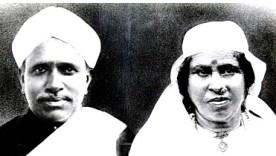
Rao Bahadur HJ Bellie Gowder
[Hubbathalai > married Nanji Ammal from Jakkadha, 18?? – 1935]
Image

-First Badaga to be honoured by the British with ‘ Rao Sahib & Rao Bahadur’ titles ( late 1920s)

  • [probably] First to speak and write in Eleven Languages including Badaga, Toda, Kotha, Kuruma, Kannada, Tamil, Malayalam,Telugu, English, Hindi & Spanish WITHOUT ANY FORMAL EDUCATION (his mother stopped him from attending a make shift school run by a Badaga in his verandah – thenay as she was scared that the teacher would punish Bellie Gowda because as a child, he was a prankster).
  • First to open a school at Hubbathalai (later named as Rao Bahadur Bellie Gowder Board High School) basically to cater to Badaga students [a hostel was also built for them].
  • Credited with building tracks for the Nilgiri Mountain Railway from Mettupalayam to Ooty in early 1900s. A railway bridge near Lovedale station is named after him.
  • Brought many path breaking reforms in the Badaga Community.
  • He was the undisputed ‘King [Naakku Betta Leader]’ of the Nilgiris during his life time. A musical gramophone record was brought out by HMV titled ‘Bahadur Bellie Gowda, Naakku Bettaga Raja’. The singer was from Jakkadha.
  • It was said, ‘Bellie Gowda Ayyana mane kitchu, kedodhe illey – The fire in the hearth/kitchen in Bellie gowda’s house was always burning’ meaning there was a constant stream of visitors to his house. His wife Nanji Hethe, a stickler for cleanliness, would personally fetch fresh water from a stream at a considerable distance from Hubbathalai Hatti though there plenty of servants.
  • He would present a gold block semi conical shaped like a jaggery – bella piece to any hubbathalai girl who was getting married.
  • He was one of the very few who had a phone connection in the Nilgiris in early 1900s. His phone number was in two digits and less than 20. The phone he had was the old classical two piece type – separate ear piece and hand held mouth piece.

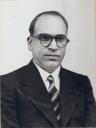
Rao Bahadur HB Ari Gowder
[Hubbathalai > married Gauri Ammal from Jakkadha, 4-12-1893 – 26-6-1971)
Image

– First Badaga Graduate, Presidency College , Madras (1920?)

  • First Badaga to tour the world (1930)
  • First Badaga to lead an Indian Delagation (World Scout Jumboree in Hungary)(1930)
  • First Badaga MLA & MLC (1940)
  • First son (after his father Rao Bahadur HJ Bellie Gowder) also to be honoured with Rao Bahadur title.

N.Lingan
[Thangadu >13 Nov 1908 – 1964]

– Fist Badaga Lawyer
– First President of the local Bar Association
– First Chairman of the Udhagamandalam Municipal Council (UMC) after Independence
He was trustee of institutions like the Assembly Rooms and the Lawley Institute.
When the Nilgiri district was in dire need of a higher education facility, Mr.Lingan became a member of a 14-member committee headed by Rao Bahadur HB Ari Gowder, which was instrumental in the Government Arts College coming into being here during 1955. [ Info courtesy – Devaraj Rangan, Porore]

KM Sevannah Gowder
[Bearhatty > married Sarojini Madhan from Hulikal, 1915 – 1999, Mrs.Akkama Devi’s elder brother]

– First Engineer [B.E (Mech) – Madras University]

  • First Professor (?) Engineering College Guindy & GCT, Coimbatore,

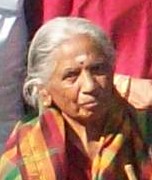
Mrs. Akkama Devi
[Bearatty – married > HB Joghee Gowder [HB Ari Gowder’s brother] from Hubbathalai, 1917 -2012 ]
Image
photo from The Hindu

– First Badaga woman graduate

– First Badaga woman MP
Continue reading

Paul Hockings books on Badaga(s)

I had written earlier that:

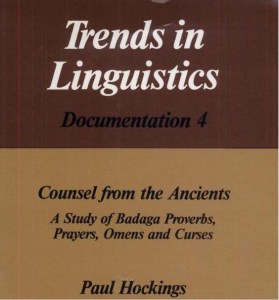
Prof.Paul Hockings has been the most authentic scholar/researcher whose studies on Badagas may be considered to be very comprehensive. May not agree with some of his findings especially about the Badaga origin [that Badagas migrated from the Mysore plains] but the wealth of information that he has exposed in his books is greatly appreciated. If I have to choose a single book out of many of his works, without hesitation I would go for Counsel from the Ancients: A Study of Badaga Proverbs, Prayers, Omens and Curses‘. Unfortunately, this book is very expensive but you can access most of the pages online.

phpro.jpg
Prof. Paul Hockings in his email [3/3/2015] writes :

paul2.jpg

Dear J.P.,

It was really very generous of you to devote so much space to my work in your Badaga website. I do appreciate it.

I noticed that you again mentioned the high price of my two large books on the Badaga language. While the price has no doubt always been high, there is a reason for it, and it is not my profiteering. Linguistic texts like these are very difficult to get published by the most reputable publishers, because they see the market for such books as a very small group of linguistic specialists. I was thus very fortunate to be able to get the world’s top linguistic publisher, Mouton, to bring out both books. The problem however is a straightforward one: because the books were printed in Berlin, the printers had to be paid German printers’ union wages; and these are extremely high. On the positive side, the Dictionary is held y 125 research libraries worldwide, which means that data is available on the Badaga language in very many countries..

Thank you Paul for the email. Since I feel that your books, particularly, Counsel from the Ancients: A Study of Badaga Proverbs, Prayers, Omens and Curses‘ must find a place in every Badaga home, I wished that it was easily available and affordable. Thanking you once again for making Badagas known to the world.- Wg Cdr JP

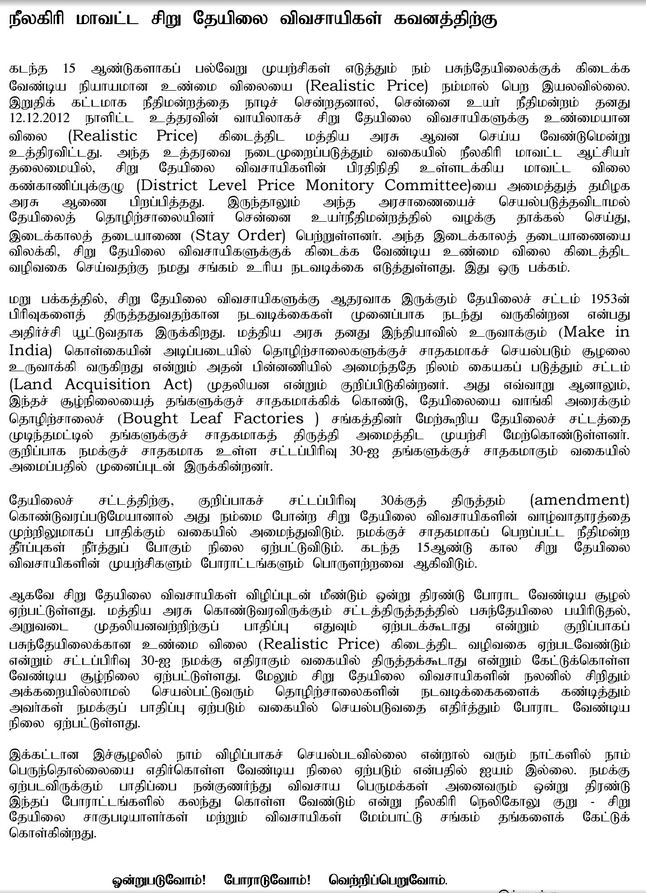
Let us unite to get better price for green leaf TEA

An appeal sent by Dr.Haldorai on behalf of Nellikolu Trust

Tea

Basavaraj of Kalhatti, Kotagiri is no more

Dharmalingam Venugopal [NDC, Kotagiri] informs about the sad demise of Mr.Basavaraj

[26-02-2015]. Just heard the sad news that Basavaraj of Kalhutti, Kotagiri is no more. He was perhaps the last of the Badaga bards who sang for almost all of his 80 plus years. He had  an impressive repertoire and could hold the crowd spell bound for hours, often throughout the night.

100_9666He was a original researcher of Badaga history and took much pains to put down his findings, thoughts and views on record. He was an authority on several Badaga matters and took active part in promoting and preserving Badaga tradition.

He was a great admirer of Rao Bhahadur Bellie Gowder and Ari Gowder and never missed an opportunity to spread their fame and contributions.

He was related and very close to my father A.Dharmalingam often entertaining him with his moving  Badaga songs.

He was featured nicely in the video on Sullivan Memorial.

A long time back, Francis Bacon said that a long life is not good enough; a good life is long enough.  Basava Gowdar lived a long life and a truly good one,regaling the lives of folk who had the good fortune to be associated with him.

While Basava is no more, the memories of his music and his eyes loaded with mischief would remain cherished in our hearts.

May his soul rest in peace.

We join Venugopal in paying our respectful homage to Basava Gowder on behalf Badaga Community as well as on behalf of Rao Bahadur Bellie Gowder, Rao Bahadur Ari Gowder and Mr. H.A.Bhojraj family. – Wg Cdr JP

Paul Hockings, Nilgiris and Badagas

The Nilgiri Documentation Centre honoured Prof Hockings, in absentia, with the The Nilgiris Lifetime Achievement Award 2015 on February 23 when Prof Hockings turned 80 at a function at Lawley Institute, Ooty.

DSC04478Dharmalingam Venugopal presenting the award to Mrs. Shubha Somasundaram, Prof.Hockings’s friend from San Francisco, USA. Others in the photo are Dr.Sundaradevan, first Badaga IAS officer and Prof. Frank Heidemann, Professor of Social and Cultural Anthropology at the University of Munich, a German researcher of/on Badagas and author of ‘AKKA BAKKA’, who had visited me at Coonoor in 2011.

Incidentally, Shubha is the  wife of  Somasundaram who along with his brother Devaraj are probably the only two IITians from Badagas. Both are in the US for long. They are  originally from Porere Hatty, but settled in Keiya Bickatty, near Aravankadu.
For :- Somasundaram/Devaraj – pl send a photo along with a write up about yourselves for being IITians for publication in this website as an inspiration for young Badagas who want to join IITs.
~~~~~~~~~~~~~~~~~~

paul2.jpgIn my opinion, Paul Hockings has been the scholar/researcher whose studies on Badagas  may be considered to be very comprehensive. May not agree with some of his findings especially about the Badaga origin [that Badagas migrated from the Mysore plains] but the wealth of information that he has exposed in his books is greatly applaudable. If I have to choose a single book out of many, without hesitation I would go for Counsel from the Ancients: A Study of Badaga Proverbs, Prayers, Omens and Curses‘. Unfortunately, this book is very expensive but you can access most of the pages  online.

phpro.jpg

In this book, Prof. Paul Hockings, probably the most authentic researcher on and of Badaga, lists more than a thousand Badaga proverbs, 1730 to be precise. He feels that 1730 could be a complete figure containing all the proverbs there are.
Though I find his collection extremely interesting and educative, I do not agree with some of the conclusions he draws on certain proverbs. For example, on the proverb, ‘Odhidhama Niddhana, Oddidhama Erandina’ Prof.Hockings interpretation is quite different to what I feel is the correct meaning. I think ‘a person who spends time learning and ponders (over a problem) is better than the one who runs away (in a hurry) and thus trips over. [Odhidhama – one who has learnt (spent time learning), Niddhana – stops to ponder over[think], Oddidhama – one who runs, Erandina – trips over]. We can hear mothers telling their young children ‘Oda beda , Erandire’ – Donot run, you will trip over (a stone or any obstruction). That is ‘ do not be in a hurry and take a hasty decision’.

Another one is ‘Michidhavaga Morande Kolu Bangara’. In my opinion . the lady who does not listen to any one (Michidha Hemmathi) is bound to land up as a widow (when ‘Morande Kolu – a small stick of morende tree – replaces her jewellery (bangara) during the Ole Kattuva ritual of husband’s death / funeral ceremony). Prof.Hockings feels Mechidhavaga (see the difference between michidhava – one who does not listen- and mechidhava – one who is appreciated by all – even a morende kolu is enough as jewellery. Is it a case of wordplay (pun) by our ancestors?? – Wg Cdr JP’s review

Continue reading

Prof.Paul Hockings – the man who made Badagas known to the world

Prof Paul Hockings is the Professor Emeritus of Anthropology at the University of Illinois, USA. He is also the Adjunct Curator of Anthropology at the Field Museum of Natural History and Editor-in-Chief of ‘Visual Anthropology’.
Prof Hockings has been researching the Nilgiris, particularly the Badagas, since 1962 resulting in a number of authoritative publications including Encyclopaedia of the Nilgiri Hills, So Long a Saga: Badaga Social History, Badaga-English Dictionary, Counsel from the Ancients: A Study of Badaga Proverbs, Prayers, Omens and Curses, Blue Mountains: The Ethnology and Bio-geography of a South Indian Region and Blue Mountains Revisited: Cultural Studies on the Nilgiri Hills.

Prof. Hocking’s massive contribution has paved the way for the Nilgiri studies being classified today as Nilgiriology.

The Nilgiri Documentation Centre will honour Prof Hockings, in absentia, with the The Nilgiris Lifetime Achievement Award 2015 on February 23 when Prof Hockings turns 80.

The function will be at Lawley Institute at 11-30am on February 23 at Ooty.

Dharmalingam Venugopal

[Honorary Director, Nilgiri Documentation Centre]

Happy Birthday – Mrs.Rukmani Bhojraj

194 050 (2)There are many women who have sacrificed everything so that they can devote all the time to look after the well being of family, friends and others. Their selfless sacrifies even under very trying times is an inspiration to many. Their struggle to maintain family dignity comes at a very high sense of responsibility. Mrs.Rukmani Bhojraj is one such Badaga woman.

Daughter of a great Badaga leader from Kundhah Ketchigatty B.K.Bella Gowder and daughter in law of another great Badaga Leader Rao Bahadur Hubbathalai Ari Gowder, she has lived a life full of grit and determination, in-spite of severe physical impediments. She has been a source of strength to all those who have known her.

As this ever friendly lady, steps into her 82nd birthday today, we seek her blessings and wish her many more happy returns of the day!

Seemay and Hattis – 4. Kundhe [Naadu] Seemay

‘Kundhe Seemay’
Also known as ‘Eera Jilla Seemay’

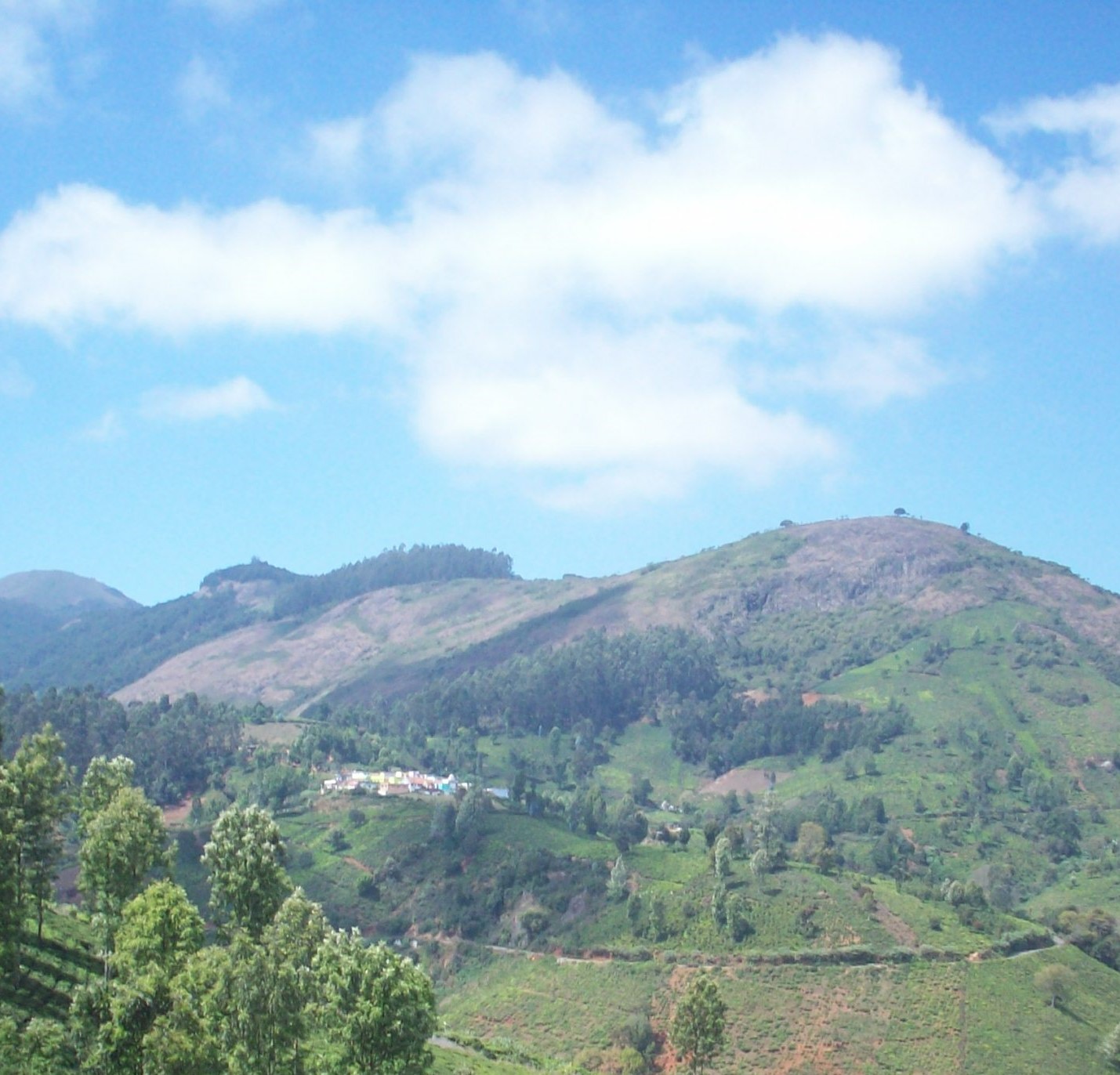
nakku-betta1.jpgNaakku Betta – pix by JP

In an effort to give the exact and correct names of hattis/villages under each of the four SEEMAYS, given below is the list under Kunde [Naadu] Seemay. I would request our friends to verify and vet the list and send corrections to bjaypee@gmail.com or add them as comments to this post – LEAVE A REPLY box given at the bottom.

We may separate the hattis as per Badagas, Odeyas and Thorayyas and group them under ‘OORU’ [a group of hattis form an ooru and many oorus constitute a seemay].

At present the focus is on hattis of Badagas [Gowdas] who can marry Badagas from other seemays. Please note that some hattis like HOSAHATTI appear to be repeated but there may be more than one HOSA Hatti in a seemay.

Kerapaadu (2)

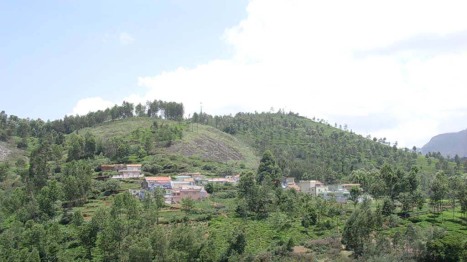
Kerappaadu – Photo by JP

Please also see the page on HATTIS for more and exhaustive info

Attu Mannu
Baigada
Baakore
Bikkatti
Edakkaadu Nadu hatti
Edakkaadu Thale hatti
Emarald
Gai kandi
Gundinaali
Hosa hatti
Kandibikke
Kariamale
Kechigatti
Kei Kundhe
Kerappadu
Kombukorai
Kora Kundhe
Kunjanare
Mani Kallu
Manjooru
Matta Kandi
Mel Kundhe
Mukki Male
Mullegooru
Mulli Male
Nadu hatti
Sundatti
Thooneri
Thorajada

Seemay and Hattis – 3. Mekku Naadu Seemay

‘Mekku Nadu Seemay‘
Also known as ‘ Asala Bisalagiri Seemay ‘

nakku-betta1.jpgNaakku Betta – pix by JP

In an effort to give the exact and correct names of hattis/villages under each of the four SEEMAYS, given below is the list under Mekku Naadu Seemay. I would request our friends to verify and vet the list and send corrections to bjaypee@gmail.com or add them as comments to this post – LEAVE A REPLY box given at the bottom.

We may separate the hattis as per Badagas, Odeyas and Thorayyas and group them under ‘OORU’ [a group of hattis form an ooru and many oorus constitute a seemay].

At present the focus is on hattis of Badagas [Gowdas] who can marry Badagas from other seemays. Please note that some hattis like HOSAHATTI appear to be repeated but there may be more than one HOSA Hatti in a seemay.

Please also see the page on HATTIS for more and exhaustive info

https://badaga.co/wp-content/uploads/2007/06/porere-hatti.jpg
Porere – photo by JP
Aadakore (Thulidale)
Achanakal
Adikaratti
Ane hatti
Angidi hatti
Are hatti
Attu Bayilu
Balakore
Belitho
Bellada
Bembatti
Bengal Matta
Bikol
Bingisa Kallu
Byge mandu
Denadu
Denale
Dhodda Appukodu
Dhoddani
Emakkatti
Godalatti
Haalada
Haallattane
Haraguchi
Hosatti
Hosa Attubayulu
Hulikkal
Hullada
Ithalar
Kallakore
Kammandu
Kanneri
Kariyalbe
Kasole
Kattery
Kekkatti
Ken Kundhe
Kenduva
Ker Kandi
Kerada
Kethore
Ketti Ooru
Kil Hosatti
Kodangatti
Koderi
Kokkalada
Kothi ben
Maasi kandi
Mandhane
Mani hatti
Manja kambe
Meekeru
Mel Hosahatti
Mel Koderi
Melur
Melur Hosatty
Muduguva
Mutti nadu
Mynale
Nadu hatti
Nai hatti
Nunduva
Oor thittu
Oranai
Oranai (Kattery)
Panne bennu
Porore
Porthi
Pudugatti
Sakkalatti
Sogathore
Sora gundu
Thambatti
Thangadu
Theda hatti
Theedatti
Thoodhale
Thooratti
Umar kandi
Yellanalli

Murugesh Halan writes :- ‘Melur Hosahatty is missing. I want to know to if Haruvas and Badagas of Mekkunadu are in brotherly relation. If yes, how are they different?’

Melur Hosahatty added. As far as Haruvas and Gowdas are concerned, in the early 1900s, Badaga community got vertically split into two main factions called Haruva Katchi and Kotha Katchi. One faction was lead by Hubbathalai and the other by Thangaadu. Those days,  funeral expenses were borne by the family of the deceased and NOT by the entire hatti, as prevalent today. Kotha musicians had to be compulsorily called. Since, the funeral ceremonies extended even upto a week, till the ‘KORAMBU kaibathu’, the expenses involved were enormous as the guests from all over the ‘Naakku Betta’ had to be fed and ‘feasted’. Many families of the deceased had to sell their property. Realising that a death in a family is driving it to untold misery, Hubbathalai Bellie Gowder and his son Ari Gowder, who were given the title Rao Bahadur later, brought in the revolutionary reform by which the expenses of the funeral were met by the entire village by means of a ‘tax’ called ‘saavu vari’ and inviting the Kotha Musicians was donw away with. But the leaders of Thangaadu and other mainly ‘Haaruva’ hattis opposed this move. Marriages between these groups stopped.

Fortunately, this difference has gone away. Now, marriages between Haaaruvas and Gowdas, as well as Lingaites and Gowdas sects from different seemays [ in some cases, within the seemay] is common. There have been matrimonial relationships established even between Hubbathalai and Thangaadu. In my opinion, it is high time, we had only three broad groups among Badagas. Namely, Gowdas, Odeyas and Thoraiyas and in the distant future, just BADAGAS. – Wg Cdr JP

Trekking in the ‘Badaga Land”

Premnath Paliath [premandassociates@gmail.com] writes :-
I am from Gudalur though not a Badaga myself. I have been with and known Badagas for a long time. I am an ardent trekker and I have been trekking in the Himalayas and Nepal for quite some time now. Some of the places in the Nilgiris are very similar to Garwal and Kumaon regions of Uttaranchal and eastern parts of Himachal, there is a good scope for wonderful treks here.

And the Badagas are as hospitable as those inhabitants of the Himalayas I really regret for not utilizing the opportunity of trekking while I was a student here at Ooty.

Now I would like to go for treks, ie walk from hutty to hatty along the road used by Badagas those days. I would talk to the old timers and find out the routs used by them years ago and just walk along them making use of the wonderful hospitality of the Badagas.

Anyone interested can join me. I am a lawyer at Gudalur. My cell no is 09487130262. Feb, March, April and May are the right time to do these treks.

So lets celebrate the beauty of the Nilgiris and be with nature and the wonderful Badagas.

Having done a lot of trekking as part of my mountaineering courses [basic course from Himalyan Mountaineering Institute, Darjeeling and advance course from Nehru Institute of Mountaineering, Utter Kashi] in the 1980s I can easily relate to what Premnath says. Those Himalayan hill people, known as Pahadis, are very similar in looks and habits to Badagas.

Some of our hattis still retain the old world charm and with the air being pristine  pure, trekking from hattis to hattis must be a real pleasure.

In good old days, for Badagas the only mode of travel was by foot through the thick jungles, separating the hattis. On arrival at the destination, one of the greetings used to be ‘bettu hathi [ claiming the hills], attu eragi [going down the valleys] bandaya –  you have come?’. It would take hours of walking, so they would carry Kadimittu, drink water from the streams enroute and if in a group chant ‘aathikkodhu – ae aah how’. It was a combination of Eragi Hittu and long walks that kept the Badagas healthy.

I would urge youngsters to join Premnath and explore the past and discover the roots. It will surely be very exciting and educative. _ Wing Commander JP