When you mention ‘Badaga’, the immediate thing that comes to mind, is a small but unique community of people, living in the Nilgiri Hills, popularly known as the Blue Mountains, in South India. Undoubtedly, they are one of the original hill tribes like the Todas, Kothas or Kurumas. But the shear development in many social [and specially educational] fields by the Badagas in the last two hundred years or so, has made many researchers deny the tribal status. They, probably, are still stuck with the mind set that a tribe has to be shy, illiterate, undeveloped and living far away from the main stream population. Badagas do not fit into this groove.
Then, these ‘learned’ people, probably to get their doctorates, coined a new term – PRIMITIVE HILL TRIBES. It suited their purpose of not including Badagas in the PHT of the Nilgiris – Todas, Kothas, Kurumas and Erulas.
But a few of the old and ‘original’ researchers found enough and more in Badagas, ‘in their origin, customs, rites, rituals. life style and language’ to write and record extensively about them. I would give the maximum ‘credit’ to Professor Paul Hockings in this respect. The very fact that he is still writing many books on and about Badagas [his latest book will be published in a few months] shows his interest. – Wg Cdr JP
Badaga TRIBE
|
|||
| This article by Dr.Haldorai expresses his overall views about Badagas | |||

“A tribe, as we find in India is a collection of families or group of families, bearing a common name, which, as a rule does not denote any specific occupation, generally claiming common descent from a mythical or historical ancestor and occasionally from an animal, but in some parts of the country held together rather by the obligations of blood-feud than by the tradition of kinship, usually speaking the same language, and occupying, or claiming to occupy, a definite tract of country. A tribe is not necessarily endogamous” (The Imperial Gazetteer of India vol-1: 308).“The use of the word ‘tribal’ follows South Asian usage, refers to a type of societal organization and does not imply a lack of sophistication or of economic well- being. It usually does imply a certain amount of isolation in the past, if not the present. In this context ‘tribal’ contrasts with ‘caste’ as one of the major organizing principles of South Asian society. The Nilgiri plateau of extreme Western Tamil Nadu was almost totally isolated until the nineteenth century. It developed unique cultural complex of its own with at least four Dravidian languages spoken there. They are Toda, Kota, Badaga and Irula”( McAlpin 1981 :19).1As the Nilgiri hill is the home land for Badagas for a long period, the hill tribe status for these people is obviously natural one. There is no doubt that their history goes back to very early period. Since then they are identified with the Nilgiri hills alone. Their origin is buried among the secrets of the past. Continue reading

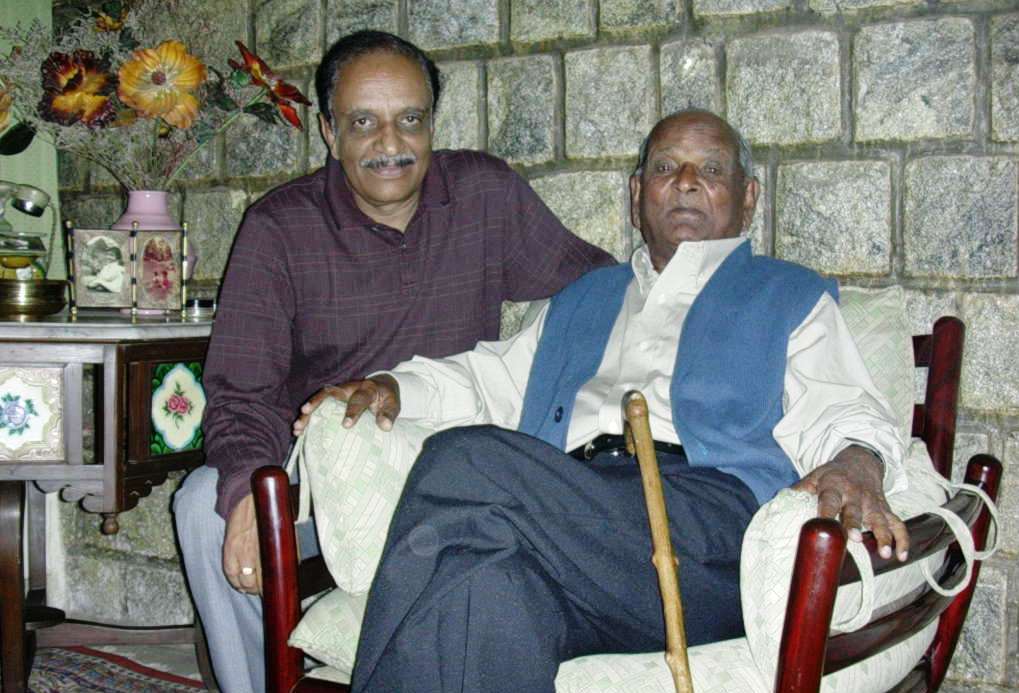
 photo by : Wg Cdr Bellie Jayaprakash






 Mookuthi
  Chinna




 ==
==


![Seemae [See'may] & Morae [Mo'ray] (relationship)](https://i0.wp.com/badaga.wordpress.com/files/2008/11/nakku-betta1.jpg?resize=200%2C200)