Category Archives: badaga

Sowmya – the new singer from Manjoor

Manjoor  Raja [மஞ்சூர் ராசா] is a well wisher of our websites.

He has sent the following Youtube link where his daughter Sowmya’s debut Badaga song is featured. It is a song from singer Bellie raj’s new album “Hiriya Thambate“. The co singer is Thambatty Bala.

http://www.youtube.com/watch?v=S95YauR_OEU&feature=player_embedded”


We wish SOWMYA a wonderful future and hope her melodious voice will find a place along with those gifted with a golden voice.

Marrying a person with no MORAY

dharshani raj  (dharshani.ds@gmail.com) asks

‘I want to know if it is wrong in marrying a person with no moray’ 

This question, though appears to be simple, is an important one since many of us, including the self – appointed GOWDAS in every village or for that matter, many ‘old people like me’ are not clear and sure about this aspect.

There seems to be a ‘raging‘ discussion going on in  FB Badagas Group.

Let me answer dharshani’s question to the best of my knowledge.

What is Moray (relationship)?

In simple terms, Badagas, [being a very small community], have evolved, over the centuries, a system in which marriages are not ‘fixed’ – call it arranged if you want, between certain hattis (villages) since the ‘blood’ relationship  among them is considered to be very ‘close – anna thamma moray’.

How this could have happened is, like, in olden days, one brother deciding to move away from the hatti he was born in to establish a ‘new’ hatti for various reasons. For example, a brother from Hubbathalay could have moved to Eethoray. Hence, the male children of the elder bro X in Hubbathalay would/could not marry the female children of younger brother Y in Eethorai as they are considered brother and sister (being the children of two brothers).

Hence, Hubbathalay hatti has no moray for marriages with Eethoray.

This brings us to the grouping of various hattis into Ooru [communes] and Seemay.

So,where do we start to check about ‘Moray’?

Since, time immemorial, every Badaga belonged to a village, irrespective of his place of residence. For example, Kada [now, Srivasa Ramachandra] and Kangi [Lokeswari Renuka] are the son and daughter of Bhoja  and Laxmi , living in Ooty [this can be, Bangalore, London or Boston in USA]. Since Bhoja is the son of Rama Gowder of ‘Hannu Mora Hatti’ [ or Jakkadha, Dhavani or Ketchigatti for that matter], Kada and Kangi belong to HM Hatti for practical or rather, moray purposes. By the way, in olden days, all Badagas belonging to Gowda [group] were known as Bellie Gowder, Ari Gowder etc.

So all the youngsters of HM Hatti are brothers and sisters. Marrying among themselves is, thus prohibited.

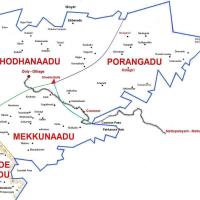
Now, our ancestors, being wise men of yonder, grouped certain hattis into communes called OORU. These hattis need not be very close to each other. The number of hattis forming a ooru need not be of a specific number. The next grouping done by our forefathers is forming a SEEMAY. Hence, a Seemay contains a few Oorus [which in turn has many villages]. And our Muthe Muhappa [the first of the ancestors] divided the Nilgiris into Nakku Betta [Four Mountains/massifs] to where all the Badagas belong to. See the division of Seemays and hattis in my websites here – Hattis, Ooru & Seemay or here

To put simply, a cluster of closely built houses formed a street -thara, [the thatched and later country tiled houses have common walls).

A few tharas formed a hatti with well defined and demarcated areas like ‘Dhodda Manay’ [big house- literally], ‘suthu kallu’ [mostly with a bikka mora (olive tree), gudi [temple],hanay [grass ground] etc.

A few hattis to Ooru. A few oorus to Seemay.

Four seemays namely 1)Thodha Naadu 2)Porangaadu 3)Mekku Naadu 4) Kunde [Naadu],  to NAAKKUBETTA. see Hattis, Ooru & Seemay.
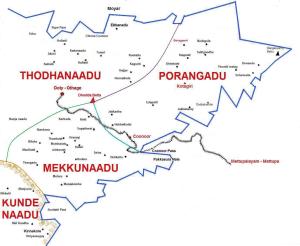
And now to specifics

As far as MORAY for marriages are concerned,

a) A girl/boy cannot marry a boy/girl from the same hatti  to which they both belong to .

b) A girl/boy cannot marry a boy/girl from the same Ooru to which they both belong to.

c) BUT A GIRL/BOY CAN  MARRY A BOY/GIRL FROM THE SAME SEEMAY TO WHICH THEY BOTH BELONG TO.

There is a wrong impression that you cannot marry from the same seemay.

My own example

My father, Bellie gowder, one of the few educated Badagas was born in 1896 in Bearhatti ( the real surprise is that my grandfather Kada Gowder decided to educate my father in St.Michael’s in Coimbatore. In those days, I understand, he had to be taken upto Mettupalayam in a Kattay Bandi [bullock cart]. He got a job in Cordite Factory, Aravankadu near Hubbathalai. He married my mother Kaade (Idy ammal), daughter of Rao Bahadur Bellie Gowder and sister of Rao Bahadur Ari Gowder.

Bearhatti is one of the six hattis belonging to AARUOORU [six villages], Jakkadha [Jagathala] being the ‘head’ village. Hubbathalay is one of the hattis coming under HATHOMBATHU OORU [nineteen villages]. Both these villages belong to PORANGAADU.

After marriage, firstly for convenience as cordite factory is closer to Hubbathalai than Bearhatti and secondly being the youngest daughter of Rao Bahadur Bellie Gowder who was the Naakku Betta Gowda (chief) at that time and as she was only 15 at the time of marriage in 1927, my parents decided to settle down in Hubbathalai.

But my mother being a fiercely ‘PROUD” lady insisted that she would stay only in a new house built a little away from the main Hubbathay hatti. Thus, was born my ‘home’ called ‘DHODDI’ in 1948.

For all practical puposes, we are Nattaru (Guests- literally) of Hubbathalay.

Story does not end here. Though, I was born and brought up in Hubbathalay, I am married to Tara, grand daughter of Rao Bahadur Ari Gowder of Hubbathalay. That is, my mother and wife are from the same hatti.

Please note ; It is very common to see many marriages among boys and girls living in the same village. Living, I said and NOT BELONGING to the same village. But they are perfectly suited to each other and probably known to each other from childhood. May be their marriage is a LOVE marriage.

Exceptions

Incidentally, there are a few marriages solemnised  between the boys and girls belonging to the same Ooru. In one of the cases known to me, a boy from Eethoray is married to a girl from Hubbathalay – both belonging to Haththombathu Ooru. Though, it created some flutter in the beginning, it has been accepted now (due to the fact a rich and politically very influential person is involved??)

Do you know that Kodhumudi is one of the villages which is considered as two separate villages consisting of Mel Kodhumudi and Kiya Kodhumudi and marriages between them is normal?

When you refer to Kinnakorai, in fact it refers to six/seven hattis and marriages do take place among themselves as some hattis in them is consided to be completely made up of Nattarus??

More on Moray


So what happens when a boy belonging to Kavaratti of Thodha Naadu seemay wants to marry a girl from Yedapalli Village of Porangaadu Seemay ?

This appears to be a case of NO MORAY in the sense moray is neutral here and not prohibited. And, in my opinion, there should not be any problem.

Causes for confusion

Originally or rather in the earlier days, marriages took place only within the groups like Gowdas, Lingayats[Lingakattis],Haruvas, Odayas and Thorayas as they formed their own hattis. For example, Odhanatty near Jakkadha is a hatti of Thorayas and it does not come under Aaru Ooru [and hence Porangadu Seemay].

Without going into the details of the unfortunate vertical divide of Badagas, in the early 1900s, where one section was against the compulsory invitation of Kothas [to ‘harakkolu idippudhuga’ – playing music on payment in kind or cash, which ended in huge expenses and debts for the family of the deceased with devastating results. The funeral was not an oneday affair but went on for week and all the ‘guests’ who had come from far and wide, had to be looked after with food and drinks.  The expenses of funerals were not NOT borne by [all houses in] the hatti as is the practice now] for funerals and another insisting on inviting Kothas.

The section of Badagas who were against inviting Kothas was lead by Hubbathalai [Rao Bahadur Bellie Gowder, who introduced many reforms like 1) the funeral expenses would be borne by the whole village 2) education for all Badagas etc] and the other section by Thangaadu.

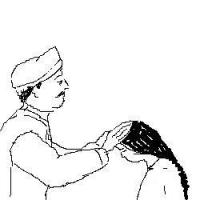
Another cause for this division was the claim of  Thangaadu [Haruva Katchi] led group that when they attend the funeral of Gowda, they would only touch the head [saavu muttodhu], irrespective of the age of the deceased saying that they were the priets. Generally, when a Badaga attends a funeral, as a mark of paying respect to the deceased, the feet or the head is touched depending on whether the dead is elder or younger.

 
I am skipping many more details since this would distract from the topic MORAY which is under discussion.

But these days, marriages among these groups [Gowdas, Haruvas, Lingakattis] have become common. Hubbathalai has marriage relation with Thangaadu or the Lingakatti Hatti of Sakkalatti [Sogathorai] with Eethorai or Bearhatti.
[to be continued]

Sathish Krishnan commented on Marrying a person with no MORAY
‘Thanks for the detailed explanation. I belong to Balacola and I’ve heard elders saying that there is no moray for any marriages within Maekunadu seemay, and Kundey seemay is the best suit for us. But your blog says there is only restriction for marriages within a village or within a ooru (group of villages), and no restriction for marriages within a seemay. It is contradicting and please clarify the same. I will be looking forward for further updates to this blog’

Hello Sathish, Thanks for the comments. First for the contradiction part. I am saying that “no marriages within a hatti and Ooru but yes within a Seemay as long as the Oorus are different. Like 6 Ooru can tie nupital knots with 19 ooru – both being from Porangaadu“. As far as your Hatti Bakkola (Balacoloa?), Mekkunaadu Seemay are concerned, I am NOT in a position to clarify but as far as Kundey Seemay – yes I agree. More in updates soon – Wg Cdr JP

[to be continued]

Aside

from INDIA India’s  homemakers  recruited as hotel chefs Continue reading the main storyAs I finish my lunch at a restaurant in the city-centre, I reach for the dessert that the steward has recommended.A new breed of chefs is taking over hotel … Continue reading

‘CURRENT’ issues…BEWARE !?


Can ELECTRICITY dangerously pass through Flash light of the Digital camera to your body??? Yes it is 100% true..!
 This is a true incidence reported of a boy aged 19, who was studying in 1st year of engineering, who died in Keshvani Hospital, Mumbai. He was admitted in the Hospital as a burned patient. Reason ??????This boy had gone to Amravati (a place located in State of Maharashtra ) on a study tour, on their return they were waiting at the railway station to catch the train. Many of them started taking pictures of their friends using “Mobile Phones” and / or “Digital Camera”. One of them complained that, he was unable to capture the full group of friends in one frame in the Digicam.

This boy moved away to a distance to get the whole group.

He failed to notice that at an angle above his head, 40,000 volts electrical line was passing through.


As soon as he clicked the digital camera? 40,000 volt current passed through the camera flash light to his camera and then from his camera to his fingers & to his body. All this happened within a fraction of a second. His body was half burned. 
They arranged for an ambulance & his burned body was brought to Keshavani Hospital, Mumbai.
For one & half days or so he was conscious & talking. Doctors did not have much hopes as there was a lot of complex issues in his body. He passed away later.

* Please avoid mobile phones on petrol outlets.
 
* Please avoid talking on mobile phones while driving.
 
* Change that “Chalta Hai Yaar Attitude”.
 
* Please avoid talking on mobile phones while kept in charging mode without disconnecting from wall socket.

* Please do not keep mobile phones on your bed while charging and / on wooden furniture. 
* Avoid using mobile phones / Digital cameras near high voltage electrical lines like in railway stations and avoid using flash.
[recd as a fwd email]

Kinnakorai – ‘revisited’

When I received Raghu Prakash‘s  email along with pictures of Bellie Gowder and his gracious wife Sennai Ammal my mind went back to to the memorable visit to Kinnakorai and Hiriyaseegai. Raghu Prakash writes“….pix of Belli gowder (brother of Sarangi Gowder) and his wife.A man with a wealth of knowledge on Badugas, cows and buffalos and farming. I have spent hours talking to him on the history of Kinnakorai and fortunately he loves to talk when I show interest.


Photo shot in 2005. He is over 90 now and the oldest alive in Kinnakorai”.

Thank you Raghu.

Here is the article I had written after my visit

“It has been in my mind for a long time, to visit KINNAKORAY and HIRIYASEEGAY villages.

For the simple reason that they are quite far off from the main towns of Ooty and Coonoor and I was sure that the sheer distance from the maddening crowd would help these hattis to retain the old world charm of ORIGINAL BADAGAS. To add to my curiosity, part of the lands – holas and thottas [agricultural fields and tea estates]- of these villages fall under the jurisdiction of Kerala. That too in the forest areas of the stunning silent valley region.

I wondered,’could it be also a point to prove the theory that Badagas are one of the original inhabitants of the Nilgiris massif as Kinnakorai and Hiriyaseegay are far away from the Mysore plains from which it is generally assumed that Badaga migration started. Imagine, the sheer determination of our ancestors to choose such places to build their villages amidst thick forests that are cut off from the ‘world’ literally.

Some time earlier, Dr.Sudhakar wrote from Dubai to say that Kinnakorai belongs to Porangadu Seemae and not to Kunday Seemae as I had assumed (based on Dr.P.Hockings findings).

Recently a young budding engineer Anand wrote to say the same thing. Kinnakorai is part of Porangadu. I could not wait any longer. Availing an opportunity of a visit to Ketchigatti (Manjoor), and unable to resist the ‘open invitation’ of Anand [whom I have not met so far], I visited Kinnakorai on 9th Jan, 2011 along with my better half who shares my passion for and about Badagas. Kinnakorai is about two hours of journey from Manjoor via Mel Kunday and Thiasolai [is it THAI SOLAI or THIASOLAI?]. By the way Manjoor itself is about 2 hours journey from Hubbathalai (Coonoor).

As Anand had mentioned the climate changes dramatically without any warning. The day we travelled, the winter mist covered the road forcing us to use fog lamps but adding to the mystique and unique experience.

Every minute of the visit was worth it and I feel very happy that I have seen a bit of Badaga heritage and would strongly recommend that every Badaga should visit this wonderful place.

[read the complete article here]

I found this information quite amazing…and educative

Nive (Bearhatty) commented on I found this info

Really this information is much useful to all of us…..
We all just tend to follow what we were taught in our childhood and what all we see in our life from others without knowing reasons and values…. But after reading this I personally feel a peace of mind and meaning of daily rituals and habits…. THANK YOU VERY MUCH.. Please post many article like this in our site…

[ “In Indian Culture why do we” – courtesy and copyright Central Chinamaya Mission Trust” http://www.esamskriti.com/essay-chapters/In-Indian-Culture-why-do-we-1.aspx]

A must read for all – irrespective of religion and region – Wg Cdr JP

1. Why do we light a lamp?

In almost every Indian home a lamp is lit daily before the altar of the Lord. In some houses it is lit at dawn, in some, twice a day – at dawn and dusk – and in a few it is maintained continuously (akhanda deepa). All auspicious functions commence with the lighting of the lamp, which is often maintained right through the occasion.
Light symbolizes knowledge, and darkness, ignorance. The Lord is the “Knowledge Principle” (chaitanya) who is the source, the enlivener and the illuminator of all knowledge. Hence light is worshiped as the Lord himself.
Knowledge removes ignorance just as light removes darkness. Also knowledge is a lasting inner wealth by which all outer achievement can be accomplished. Hence we light the lamp to bow down to knowledge as the greatest of all forms of wealth
Why not light a bulb or tube light? That too would remove darkness. But the traditionaloil lamp has a further spiritual significance. The oil or ghee in the lamp symbolizes our vaasanas or negative tendencies and the wick, the ego. When lit by spiritual knowledge, the vaasanas get slowly exhausted and the ego too finally perishes. The flame of a lamp always burns upwards. Similarly we should acquire such knowledge as to take us towards higher ideals.
Whilst lighting the lamp we thus pray:
Deepajyothi parabrahma
Deepa sarva tamopahaha
Deepena saadhyate saram
Sandhyaa deepo namostutea
I prostrate to the dawn/dusk lamp; whose light is the Knowledge Principle (the Supreme Lord), which removes the darkness of ignorance and by which all can be achieved in life. Continue reading

Dr. Alexei Kochetov on Badaga ‘Baashe’- language

Recently I lamented that ‘original and old’ Badaga language is undergoing drastic changes [for the worse?] due to the influences of other languages as well as our own negligence and ignorance.

In that respect, the following correspondence with Alexi Kochetov has me wondering – are some of these unique words like ‘bae’ and the way we pronounce them, remain the same atleast in the hattis [villages] and more importantly, how can we preserve the originality and uniqueness of our mother tongue?

Dr. Alexei Kochetov who  is an ‘Assistant Professor in the Department of Linguistics at the University of Toronto, specializing in phonetics and phonology (studies of physical and cognitive aspects of speech)‘,  wrote to me recently ”

I came across your blog on the Badaga language – a great resource! I have a question: have you heard any Badagas pronounce the words ‘mouth’, ‘bangle’, and ‘crop’ differently, as Peter Ladefoged’s transcription suggests? (that is, be, bE half-retroflexed, bE fully-retroflexed). As I understand this may be an old-fashioned pronunciation no longer used. I am interested in this as a linguist, and would be curious to hear your opinion. Thanks.

“Thanks for your email. The word ‘be, bay’ etc to mean mouth, bangle,lentil, crop and plaintain[banana]’ is very much in use. I am not clear whether it is as per  Peter Ladefoged’s transcription as I am not a linguist. What I will do is, send you an audio/video recording soon”

Hello JP,

Thank you for your prompt reply! It’s good to hear the words are in use, and it’s nice of you to offer to send me an audio file.
 
I got really interested in Badaga and other Nilgiri languages on my recent trip to Ooty & Coonoor in December [2011], and since then have started reading up on the topic.
 
I asked the question about those words because Badaga has been described as having rather unusual vowels (“half- or full-retroflex”), first noted by M.B. Emeneau in his 1939 article, which you mention on your blog. Peter Ladefoged from UCLA, however, who made recordings of Badaga speech in 1990 and 1992, found that only a few Badaga speakers pronounced these vowels. They did it, for example, in the words for ‘bangle’ and ‘plantain’. Other speakers seemed to say these words exactly the same as the word ‘mouth’. I am attaching a sound file that would hopefully make this clear; it contains the words ‘mouth’, ‘bangle’ and ‘plantain’ pronounced by Mrs. Chellamma Mulley of Kotagiri, as they were originally described by Emeneau. The full recording is available here:  
 
So my question is whether this way of pronouncing the last 2 words sounds familiar to you. Perhaps you have heard this pronunciation from older people or people from other parts of Badaga community? Or can you tell those words apart when you ehar them?
Interestingly, Paul Hockings and Christiane Pilot-Raichoor mention in their Badaga dictionary that they found no evidence of these retroflex vowels in the speech of their consultants. The vowels may have disappeared, perhaps under the influence of Tamil, which would be sad.Looking forward to hearing from you.

A letter from Renuka Girish [Bangalore]

Dear Sir,
I found your site very interesting.  And I am very much interested in learning Badaga language and culture, please do send me the updates of the same. I came to know about Badagas only a few months back from one of my colleague who is from Kotagiri. And would love to see your Hethe Habba, once possible.
Renuka, [a fashion designer settled in Bangalore].
Hello Renuka, Thanks for your comments. There are no books, so far and to my knowledge, to learn Badaga. However, if you go through the many links I have given, including the one on Badaga Language, may be that would help. If you know Kannada, then it is much easier. Hethe Habba was just over. You are most welcome to come and see Hethe Habba which will fall in Dec 2012 or Jan 2013. With best wishes – Wg Cdr JP

Traditions….my foot!

Many Badagas prefer to speak in Tamil/English with other Badagas instead of their mother tongue Badagu/Badaga…see Badaga language.

Supposed to be a ‘traditional’ wedding…  which was conducted by a non Badaga pandit…. a ‘haven-fire place’ with the groom and bride chanting ‘mantras’  [more of lip ‘service’ as prompted by the pandit]…..

More weddings….  with the traditional ‘mandaray- turban’ being given a go by by the groom at the time of tying ‘taali’…[in traditional Badaga weddings the groom is always with a turban at the time of ‘taali kattodhu’ and that is why, a marriageable youngster is mocked/teased with the question “Eaguva mandaray kattiray? – when are to going to ‘wear’ a turban’?]….see Badaga weddings

A funeral..where instead of the mundu -vaisty/dhothi being the dress for the men who do the ‘akki eththodhu’, there are men in disgusting lungis….see Badaga funeral

Youngsters, both male and female, not being aware of how to seek blessings [going up to elders and asking ‘harachu’ with a ‘bent’ head] even at special occasions like weddings….see Badaga Blessings

Most of the Gowdas, let alone the commoners, in many villages, not being ‘clear’ or sure of ‘morai- correct relationship’  for marriages….see Badaga villages

God save those Badagas who are trying to adhere to traditions and save the community from ‘external’ influence!

A site for SENIORS

Seniorindian.com is a must visit website for SENIOR CITIZENS. It contains plenty of information on ‘all’ aspects of life concerning the seniors – retired and aged.

As the website says : The aim of this site is to provide detailed info on all aspects concerning Senior Citizens of India, so that they may lead a healthy and happy life. Planning should begin early (maybe at 40!). Old Age brings some limitations, but being positive and following some simple guidelines can make life richer not just for Seniors, but also for their  family, friends & society.

A visit to the site is worth it. Also visit JVV