In a mood to listen to some fab Badaga Songs [‘My Choice’] as you browse the posts…click on the pix and choose the song in the new window that opens up…
RAJMA, the great ‘GURU’
I have never had the fortune of meeting her so far. Only, the media reports about her receiving an award from the President of India, made me proud being a native of the Nilgiris & a Badaga. And take notice.
If you sit back and think of ONE teacher of our school whose teachings & advise has made us what we are today, we feel so happy and grateful to have studied under her/him. This ‘guru’s’ teachings touch our lives in many ways.
When I wrote about her in my websites, the response from her students and others was huge and I realised ‘HOW ONE PERSON CAN MAKE A DIFFERENCE IN SO MANY LIVES’.
That great person is Mrs.Rajamma from Kethorai Village, Rajma Mam to her students.
Recently when I received the following email from her, appreciating the work on these websites, I felt humbled. I can feel how powerful her words and teachings would have been.
I take the liberty of publishing her letter to put on record my deep gratitude and I am sure she will remain a powerful influence in many more lives.
Dear JP,
Greetings. Hope my mail finds you in good health and cheers. Nice to read a lot of issues about our community in your web site.
“A lot of things go unquestioned..
Several questions go unanswered…
Many words go unsaid..
A number of words go unheard..
Some dreams are buried alive…”
WE CALL IT LIFE.
WHAT LIFE HAS IN STORE FOR US TOMORROW , NO ONE KNOWS.In this mysterious life , a very few people like you leave an ever lasting mark for their life time. You are doing a wonderful job. Keep it up. …
Take care. My best wishes for you will remain always.
With regards,
Rajma
[photo courtesy – The Hindu]

JP adds :
It is said that, “If you educate a boy, you educate an individual but if you educate a girl, you educate an entire family.
Indeed, GIRL POWER IS GREAT POWER
Posted in badaga
BADAGA WORDS AND WRITINGS
BADAGA WORDS AND WRITINGS
Exclusive article by Dr. R.K.Haldorai
Family of languages is known as cognate languages, which means languages descended from common ancestor (origin). Because of the family relation, most of the words are formed in similar construction in cognate languages. Similarity is seen in grammar too.
The renowned Dravidian Etymological Dictionary, compiled by T.Burrow and M.B.Emeneau (available in internet too) gives the similar (cognate) words of Dravidian languages in one group. If we go through that we can notice the similarities of words within the family of languages. On etymological basis it grouped Dravidian words into 4572 entries. In that dictionary, to our dismay only thirteen Badaga words are included. Some twenty years back, I brought this to the notice of one of the editors, M.B.Emeneau. It is apparent that Badaga words are available for most of these entries. It is our ardent duty to collect words for these entries and make available with them. By this way one can find out the common origin of Badaga words. So, linguistically it is correct to uphold the common origin. The innovations and borrowings are to be dealt separately. Innovations are special features and in Badaga’s case the distinct language status is marked with its many such things. Usually language borrows vocabularies, mostly nouns; grammatical borrowing is near nil; verbs are borrowed very rarely.
The influence of neighboring languages on Badaga is to be seen with this background. And it is not right to conclude that a word or feature belongs to a dominant language when it is common in minor and dominant languages.
Basically language is spoken. Written language is nothing but the reflection of speech. Out of seven thousand languages spoken throughout the world only few hundred have scripts. On other hand, we cannot say that all the speakers of a language know its letters, which has written character. Among Dravidian languages only four are having their own scripts and Tulu and Kodagu adopted Kannada scripts. Anyhow script was vogue in Dravidian languages in their proto stage. That letter is called braami or tamizhi, from which letters of Indian languages, including Tamil and Kannada are derived. When we say Badaga is descended from Proto – Dravidian or Proto – South Dravidian, it is obvious that once it had letters. But because of long isolation in the Nilgiri plateau that had forgotten. Anyhow the words like bare (to write, letter, written document), baregaara (writer), bareyagaara (writer of our fate, god) , haNayal bare, nettiya bare (fate, written on ones fore – head), baretoDe (literacy), oodu (read), kallu (to study), ooleyakaara (messenger who brings documents written on palmyra leaf),etc., imply that writing was known to Badagas. Above all Badaga word muniya signifies as noble teacher and this is attested in one of the Badaga ballads. So, it is understood that teaching activities were also there and the word kallusu (make one to study, teach) makes known it.
( I must put on record my deep appreciation and gratitude to Dr.Haldorai for sending articles for publication in our websites. He is one of the original NATIVE researchers of our language and culture. Dr.Haldorai is being very proficient in Tamil also, some times I find some bias in his articles in favour of Tamil when he discusses certain issues. The difference between the articles of Dr.Haldorai and other ‘outsiders’ like Prof.Paul Hockings or M.B.Emeneau is that there is a definite authority and acceptance in what Haldorai says because he is a Badaga and obviously knows what he says. – Wg Cdr JP)
Posted in badaga
What a shame ?!
Badaga is an unique language…which still retains its old world charm. Unfortunately, the absence of a script has resulted in abuse of the language, what with ‘some learned and self proclaimed researchers’ claiming it to be a derivative of Tamil and others of Kannada.
It does not stop here, some ‘highly qualified/educated’ non – Badaga persons go as far as writing articles and books on Badaga language without understanding the basics or the fundamentals of this beautiful language. While we appreciate the interest and initiative shown by non Badagas to learn and write about Badaga, we feel angry when they give totally wrong information. Worse still, they have the audacity to ‘invite readers’ to ‘learn Badaga’. Shocking to say the least.
I came across a book in Tamil [courtesy – Saranavaraj] called “Arivom Badagar Mozhi’ அறிவோம் படகர் மொழி [ பழங்குடியினம் ] by Era.Jayalakshmi – published by Vijaya Pathippagam, Coimbatore.
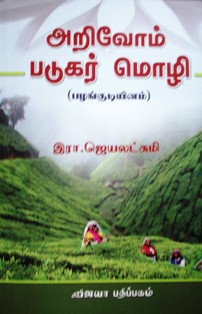
It appears that Jayalakshmi’s only ‘qualification’ to write about Badaga is that she ‘found out’ in ” Badaga people’s spoken language, the greatness of old Tamil” [ தமிழ் ‘படுக’ மக்கள் பேச்சு வழக்கில் தமிழின் தொன்மையை கண்டறிந்தார் ] when she was serving in the Ooty Municipality.
She starts off on a wrong note. In her preface, she claims that all Dravidian Languages are derivatives of Ancient Tamil. “Kannada, Telugu and Malayalam are languages that came out of the ‘blood’ of Tamil – கன்னடமும் களித்தெலுங்கும் கவியின் மலையாளமும் உன் உதிரத்தே உதித்தெழுந்து ஒன்று பல ஆயிடினும்..” she quotes Caldwel.
She goes on to say that like many Dravidian Languages ” BADAHAA – படஹா ” is only a spoken language. Note’ she does not even know that Badaga and Badagu – படக & படுகு are never referred to as Badahaa. In her preface BADAHAA – “படஹா” is mentioned atleast eight times with quotation marks.
Here are some bloomers – deliberate or otherwise :-
In the book, what is your name [உன் பெயர் என்ன?] is given as: –
1.Enna eraru ena இன்ன எசரு என? – what is your name – உன் பெயர் என்ன? (This is the very first sentence in the book).
[It should have been :- Ninna hesaru yena – நின்ன ஹெசரு ஏன?]
2.uralvai esaru ena உறல்வை எசரு என? – what is mother’s name – அம்மாவின் பெயர் என்ன?
[should have been – Awwaiya hesaru yena – அவ்வைய ஹெசரு ஏன?]
3.Enaga paadi ariye – எனக பாடி அறியே – I donot know how to sing – எனக்கு பாட தெரியாது
[should have been – Na kadai hegi ariye – ந கதை ஹேகி அறியே]
There are too many mistakes, all most in every page, to elaborate . In one word this book is PATHETIC.
The author, it appears, has never heard of proof reading or the Badaga words in the book are either meaningless or distorted. The icing on the cake is that she dedicates her book to those ‘researchers of languages -மொழி ஆராய்ச்சி அறிஞர்கள் ‘.
It is high time, R.Lakshmi withdraws this book, consults a Badaga and do a proper proof reading and then dare to publish.
What do you do, laugh or cry??
[My request to Badaga Association in Coimbatore is, please contact/ visit the publishers Vijaya Pathippagam,20, Raja Street, Coimbatore -641001 phoen # 0422-2382614 / 2385614 [email -vijayapathippagam2007gmail.com], since the author’s email or address/contact numbers are not given, and ask them to take corrective steps].
****************
Prabhakar [email ; writerprabhakar@gmail.com] comments :
While the article by the particular author/publication needs to be condemned, I do not quite agree with the contention that Badaga is not a derivative of Tamil or Kannada. Can the administrator of this website speak an entire sentence in Badagu without using a word of Kannada or Tamil??? It is high time that we realized that Badaga is indeed a derivative /mixture of Kannada and Tamil. Realization is enlightenment. Moroever there is no ‘shame’ involved in it. I am a proud Badaga who takes pride in his unique culture and tradition, but am equally aware that my language is a unique mix of two other languages. If someone were to deny it then it would mean that Badaga precedes these two languages. If it has indeed preceded these two languages than it would have definitely had a script. So let us stop romanticising the origins of our language and accept reality.
Hello Prabhakar,
I am surprised and saddened by your conviction and contentions. I am not sure whether you have read my articles/posts/pages on our language. Well, I am convinced that Badaga is a separate language by itself – without a script [like so many other spoken languages]. While there is no denying the fact that Badaga and old (haliya) Kannada resemble a lot and of late there is great Tamil influence. This is probably, due to the fact, we belong to Tamil Nadu and many of us have studied in Tamil medium schools. Why Badaga, without a script, could not have preceded Kannada or Tamil, is not the question, but could it not have co- existed with Sen Tamizh – old Tamil and Haliya Kannada??
I did my schooling in Rao Bahadur Board High School, Hubbathalai where the medium of instruction was Tamil. I love Tamil and can boast, at the cost of modesty, that I was ranked sixth in the entire Tamil Nadu, Manavar Mandram examinations of 1963-64. Hence can read and write Tamil very well. I can’t say the same about Kannada.If you read my articles on Badaga Language, there is a lot of ref to Badaga in the Tamil Epics.
Incidentally Mrs.R.Jaylakshmi says in her book that Badaga is a ‘child’ of Tamil and goes on to quote that ‘Odhu -study’ is the same as in Sen Tamizh – Odhamal orunaalum irrukka vendaam -ஓதாமல் ஒருநாளும் இறுக்க வேண்டாம்’
By the way, in Badaga we say ‘bil kul’ for ‘definitely’ like “bilkul beda – definitely don’t want“. Bilkul is a Sanskrit word. Can we say that Badaga is a derivative of Sanskrit? Ungara and Majjige mean finger ring and butter milk in Telugu and Badaga. Is Badaga a derivative of Telugu?
Why are we still have the mind set to blindly accept what others have mentioned about our language or for that matter, even about our origin that we migrated from Mysore.
I notice that you have mentioned that you are a National award winning Journalist. Like to read your articles and if possible, reproduce them in my websites.
– Wg Cdr JP
Posted in badaga
Sixty plus and Going Strong
(Translated from the original in Chinese)
There are 1000-year old trees in the mountain, but not many 100 year-old people…
At the most, you live until 100 years old (only 1 in 100,000).
If you live until 90, you only have 30 years.
If you live until 80, you only have 20 years.
Because you don’t have many years to live, and you can’t take along things when you go, you don’t have to be too thrifty.
Spend the money that should be spent, enjoy what should be enjoyed, donate what you are able to donate, but don’t leave all to your children or grandchildren, for you don’t want them to become parasites.
Don’t worry about what will happen after you are gone, because when you return to dust, you will feel nothing about praises or criticisms.
Don’t worry too much about your children for children will have their own destiny and find their own way. Don’t be your children’s slave.
Don’t expect too much from your children. Caring children, though caring, would be too busy with their jobs and commitments to render any help.
Uncaring children may fight over your assets even when you are still alive, and wish for your early demise so they can inherit your properties.
Your children take for granted that they are rightful heirs to your wealth; but you have no claims to their money.
60-year old like you, don’t trade in your health for wealth anymore; Because your money may not be able to buy your health.
When to stop making money, and how much is enough (hundred thousand, million, ten million)?
Out of thousand hectares of good farm land, you can only consume three quarts (of rice) daily; out of a thousand of mansions, you only need eight square meters of space to rest at night.
So as long as you have enough food and enough money to spend, that is good enough.
So you should live happily. Every family has its own problems.
Just do not compare with others for fame and social status and see whose children are doing better, etc. but challenge others for happiness, health and longevity…
Don’t worry about things that you can’t change because it does not help, and it may spoil your health.
You have to create your own well-being and find your own happiness; As long as you are in good mood, think about happy things, do happy things daily and have fun in doing, then you will pass your time happily every day.
One day passes, you will lose one day; One day passes with happiness, and then you gain one day.
In good spirit, sickness will cure; in happy spirit, sickness will cure fast; in good and happy spirit; sickness will never come.
With good mood, suitable amount of exercise, always in the sun, variety of foods, reasonable amount of vitamin and mineral intake, hopefully you will live another 20 or 30 years of healthy life.
Above all learn to cherish the GOODNESS around…and FRIENDS…all friends make you feel young and “wanted”…without them you are surely to feel lost!!!
(Please share this with all your friends who are 60 plus and those who will be 60 plus some time soon).
[recd as a fwd email]
Dementia
Exercise for the brain
Below is a very private way to gauge how your memory compares to the last test. Some may think it is too easy but the ones with memory problems may have difficulty. Take the test presented here to determine if you’re losing it or not. The spaces below are so you don’t see the answers until you’ve made your answer.
OK, relax, clear your mind, breathe in, breathe out… and begin.
1. What do you put in a toaster?
Answer :You jumped to the answer thinking, easy, it is toast but the answer is Bread . If you said ‘toast’ ,give up now and do something else..
Try not to hurt yourself. If you said, bread, go to Question 2.
2. Say ‘silk’ five times. Now spell ‘silk..’ What do cows drink?
Answer: Have you seen a cow drinking ? Cows drink water. If you said ‘milk,’ don’t attempt the next question. Your brain is over-stressed and may even overheat.. Content yourself with reading a more appropriate literature such as Auto World. However, if you said ‘water’, proceed to question 3.
3. If a red house is made from red bricks and a blue house is made from blue bricks and a pink house is made from pink bricks and a black house is made from black bricks, what is a green house made from?
Answer: Greenhouses are made from glass. If you said ‘green bricks,’ why are you still reading these??? If you said ‘glass,’ go on to Question 4.
4.It’s twenty years ago, and a plane is flying at 20,000 feet over Germany (If you will recall, Germany at the time was politically divided into West Germany and East Germany ). Anyway, during the flight, two engines fail. The pilot, realizing that the last remaining engine is also failing, decides on a crash landing procedure. Unfortunately the engine fails before he can do so and the plane fatally crashes smack in the middle of ‘no man’s land’ between East Germany ! ! And West Germany … Where would you bury the survivors? East Germany , West Germany , Or no man’s land’?
Answer: You don’t bury ‘survivors’. If you said ANYTHING else, you’re a dunce and you must stop. If you said, ‘You don’t bury survivors’, proceed to the next question.
5. Without using a calculator, here’s the next question – You’re driving a bus from Sydney to Brisbane
In Sydney , 17 people get on the bus.
In Hornsby , 6 people get off the bus and 9 people get on.
In Kempsey , 2 people get off and 4 get on.
In Coffs Harbour , 11 people get off and 16 people get on.
In Byron Bay , 3 people get off and 5 people get on.
In Tweed Heads, 6 people get off and 3 get on.
You then arrive at Brisbane ..
Without scrolling back to review, how old is the bus driver?
Answer: Don’t you remember who was driving the bus??!!
If you pass this along to your friends, pray they do better than you.
Posted in badaga
Magic square…??!!
You must have heard of the great mathematician Ramanujam’s Magic Square given below :
 You add up any row, column, diagonal, or ‘four adjacent squares’, you will get 139.
The beauty is that the first row gives his Date Of Birth – 22 Dec 1887.
Well, inspired by this I made a magic square with my DOB 24 Apr 1948
Where the addition of the four numbers in each row, column, four corners, diagonal or small squares of adjacent numbers add upto 95.

If you look closely on the above two squares, you can realise that you can easily ‘crack this code’ and MAKE A MAGIC SQUARE with your DOB – where the four numbers will add upto a specific number.
Got it ? If you are too lazy to make your own magic square, send your DOB to me, I will make the magic square. You will find my email id elsewhere on this page.
Happy Birthday, mom!
We would come home at Hubbathalai and to your room [nadu roomu -centre room, as we call it]…
Your face would brighten up seeing me, “bandu buttaya- you have come” you would say with a smile, reclining from the bed.

Mrs.Idyamma Bellie Gowder
[2-9-1912—13-7-2011]
“Harachu- bless me” I would say, bowing my head. You would place both your hands on my head and bless me with those beautiful words ” ondu nooru saavira aagili, endhendhu somi ninaga olliya haracha kottu, sogava kottu barali – let one become a hundred thousands..may God give you good health and happiness…”
Then with a faint smile, and holding your hands, I would tell you,”Happy Birthday, mom..endhu ninna huttidha barasha, ardhaya – do you know that today is your birthday ?”
You would act surprised, ” athaya… is it so?…aesu barasha aathu – how many years?… ennu aesu kaala ebbadhu- how many more years to stay?”
We, all your children, grand children and great grand children along with other relatives, would have celebrated your 100th Birthday in grand style.
Mom, you chose to leave us just a year short of a century.
Gone to ‘another’ world but never forgotten.
But wherever you are, we know, your blessings are with us always.
You were and are the inspiration for everything.
We miss you, mom !
Posted in badaga
Traditions kept alive by these brave Badaga ladies
What is extremely gratifying and gives a lot of happiness is see some brave – hearts Badaga ladies wearing traditional Badaga Jewellery. One such lady is Subbi Hethe of Thogalatty [near Kattabettu] with the mookkuthi and kivi chinna [read all about Badaga Jewellery here]. I had the pleasure of meeting her at Honneri a couple of days back..
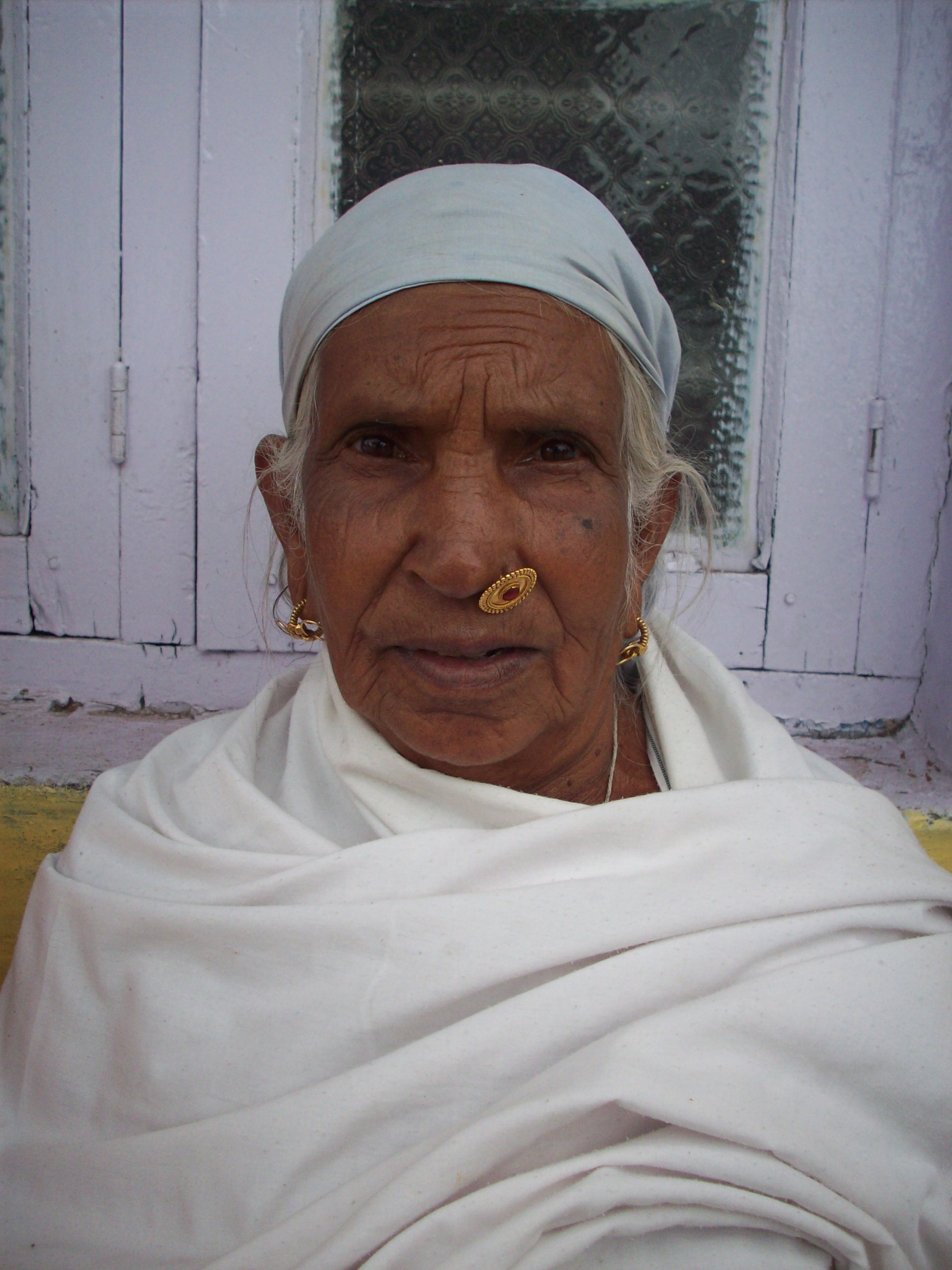

Thank you, Subbi Hethe



 Mookuthi
  Chinna




 ==
==