A BADAGA AND ENGLISH DICTIONARY: GLOSSARY AND GAZETTEER
by Paul Hockings & Christiane Pilot-Raichoor
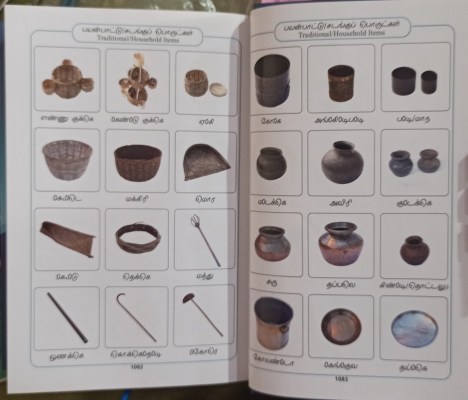
Badaga/Baduga, spoken by an indigenous tribe of the Blue Mountains, the Nilgiris in the Southern India, is an unique Dravidian language. Though wrongly clubbed and considered as part of old/haliya Kannada due to many similarities, it has been proved to be a separate language by itself. Now it figures as an endangered language in the UN list. The Nilgiris, with its many primitive tribes, has been the centre of many researchers and anthropologists for many centuries now. Most prominent among them is, no doubt, Prof. Paul Hockings. His extensive study/research on Badagas during his stay among them in the hills in the 1960s, has resulted in many books and publications which are a great source of information and reference . I found his book on ” Badaga Proverbs – Counsel from the Ancients: A Study of Badaga Proverbs, Prayers, Omens, and Curses“, quoted extensively in the dictionary very interesting and educative. May be there are a couple of glitches here and there but his work is exhaustive, indeed. I am in touch with him and find him to be very friendly and communicative.
Paul Hockings studied anthropology and linguistics at Sydney, Toronto, Chicago, Stanford and California (Berkeley) universities. He was the editor of the Encyclopedia of the Nilgiri Hills (Manohar 2012), as well as author of several other books on the anthropology of that area. The late Christiane Pilot-Raichoor was a linguist with a doctorate (1991) from the University of Paris – Sorbonne, specializing in the Badaga language. She supervised grammar and etymology in the Dictionary.
The latest edition of “A Badaga and English Dictionary” has been published by Manohar, Delhi and is priced at Rs.3995/- for a set of two books (three parts), 1024 pages, and is available from Amazon at Rs.3076/– (23% discount)
This dictionary is a must for any serious student of Badaga Language and a great guide & reference to know about Badagas and the Nilgiris – Wing Commander Bellie Jayaprakash
Prof: Paul Hockings, one of the authors, in an email, informs me that
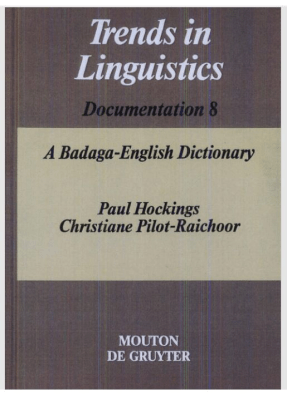
This Dictionary, just released by Manohar Publishers, is a much revised and expanded version of the original Badaga Dictionary, published in Berlin in 1992. The authors for each edition were two anthropological linguists, Paul Hockings and the late Christiane Pilot-Raichoor. Together they have compiled a two-volume dictionary which is without parallel in Dravidian studies. For a start, it is the only dictionary that incorporates a Gazetteer of about 2,000 local placenames, including all Badaga, Toda and Kota villages past and present. Etymologies are given for most entries, linking Badaga words to forms in the Dravidian Etymological Dictionary of T. Burrow and M.B. Emeneau. But a striking innovation here is that Hockings has for the first time shown that in many Dravidian Languages there remain a just a handful of words ultimately derived from Sumerian. This was the first language ever to produce written records, and it spread from Mesopotamia widely across the Western part of the Indian Ocean, some three thousand years ago, reaching as far as Kerala. Thus the Badaga word ūr or ūru (‘head village’) was derived indirectly from the Sumerian uru, ‘town, village, district’, and the Badaga giri (as in Nilgiri) is cognate with the Sumerian giri,meaning a ortress or refuge. Another novel feature of the book is that Hockings has been able to comb old maps in order to list the Badaga names of 220 Toda hamlets, most of which no longer exist. Wherever he discusses any village or hamlet he gives its exact location, cited as being so many kilometres from points in Ooty, Kotagiri, Coonoor or Gudalur. This book opens with a short outline of Badaga cultural history, and an essay discussing the relationship of Badaga with other, neighbouring languages. At the back are ten Appendices, with such useful information as the names, Badaga and scientific, of plants and animals, detailed lists of all villages, names of deities, etc. Also of crucial value is Part 3 of the book, a complete English-Badaga glossary, and for most of the nouns, including all plants, animals and placenames, concise references are given to the extensive literature on the Nilgiri region. This means that if a botanist, for example, even if not particularly interested in the Badaga language, wants some technical information about mango, he or she only has to look up ‘mango’ in this English Glossary, and that will give the comparable Badaga word, the entry for which will include concise references to mango in the botanical literature. In this way the book is more than just a Dictionary, it is a ready-reference book.
A Badaga English Dictionary – 1992 Edition
Counsel from the Ancients: A Study of Badaga Proverbs, Prayers, Omens, and Curses
Prof. Paul Hockings in his email [3/3/2015] had writen :
Dear J.P., It was really very generous of you to devote so much space to my work in your Badaga website. I do appreciate it.
My reply : Thank you Paul for the email. Since I feel that your books, particularly, ‘Counsel from the Ancients: A Study of Badaga Proverbs, Prayers, Omens and Curses‘ must find a place in every Badaga home, I wished that it was easily available and affordable. Thanking you once again for making Badagas known to the world. – Wg Cdr JP
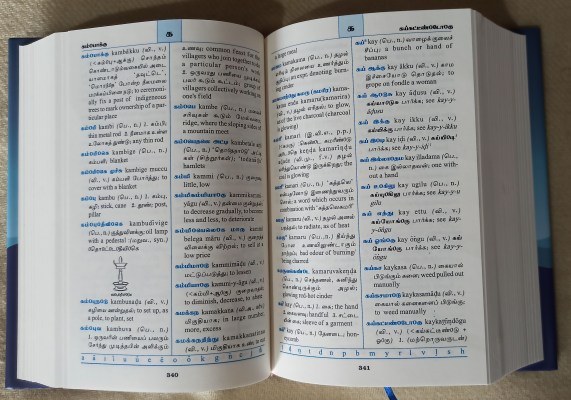
Having gone through this dictionary (priced at Rs.600, purchased from Mr Maathu, who was kind enough to have it delivered to me at Coonoor) and can say without any hesitation that this book must find a place in every Badaga household. – Wing Commander Bellie Jayaprakash
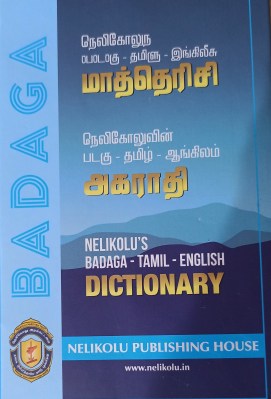
Badaga Maatterisi
(Published by Nelikolu Charitable Trust)
Trilingual Dictionary of the Badaga language by Dr.Haldorai and others
(Dr.Haldorai Writes) The role of the dictionary in language development is significant. A dictionary gives all or most of the words of a language in alphabetical order with meaning. The richness or strength of a language is made up of its words. Thus, a dictionary which contains units of language (words) does fully show the richness or the strength of the language. That is why the Nelikolu Charitable Trust opts a dictionary that is ideal for displaying all of the Badaga language resources. It is said that knowledge of grammar, etymology, linguistic study and compilation of words are the core skills for a dictionary making.
The Nelikolu Charitable Trust has been actively pursuing the dictionary project by setting up a dictionary team which contains persons of these four skills. Our objective is that the new Dictionary, a fully Badaga initiative, would be more comprehensive, user-friendly and accessible even to those with limited or no knowledge of English.
Badagas have long been associated with the Blue Mountains. Thus Badagas’ knowledge related to Blue Mountains is enormous. Therefore, there is no doubt that the Badaga language will be very helpful to know the matters related to the Blue Mountains in full. This Badaga dictionary contains a lot of matters related to Badagas way of life besides news related to the Blue Mountains as well as.
This dictionary is a supplement to school and college textbooks; a repository of words that Badaga singers want; a rare treasury for those who want to know the wonderful nuances of the Badaga language; the crutch of levelling the ever-changing culture; above all, it is the life saving medicine that keeps the Badaga language on life from its present endangering path.
As a result of more than a decade of dedicated work on the Badaga dictionary, it has evolved into a 920 page dictionary volume with over 17,000 main entries and 5000 sub entries. In addition to this 24 pages of preface and 176 pages of appendixes, it became a big volume with 1120 pages.
The main author of the Badaga – Tamil _ English Dictionary is Dr.R.K.HALDORAI who is a founder member of Nelikolu Charitable Trust
(I have had the pleasure of meeting Dr. Haldorai, a few times, a very nice and humble gentleman. A few lines about him. – Wg Cdr JP)
After his schooling from Kil Cowhatty and Nanjanad, he did his graduation (in Tamil) from Govt. Arts College Ooty, did his M.O.L. (Master of Oriental Language, Tamil)- Annamalai University, B.Ed. & M.Ed. – Annamalai University and M.A. (Gandian Thought) – Madurai Kamaraj University, Ph.D. – Madras University.
Born in 1952, Dr.Haldorai, M.A., M.Ed., M.O.L.,Ph.D, a highly educated Badaga, is from Kiya Cowatty (Muthorai) and lives in Tambaram, Chennai . He is married to M.Shanthi, B.Com. (Kunna Hubbathalai) and has a daughter Dr.H.Gayathri, (Siddha Medical Practicenor).
He was a Lecturer in Tamil, Govt. R.C College of commerce, Bangalore (1977 – 1979).And held the post of Special Grammar Compiler, Directorate of Tamil Etymological Dictionary Project, Govt. of Tamilnadu
Dr. Haldorai knows Kannada (speak, read and write), Malayalam and Telugu (read and write). Done Certificate Courses in Hindi & Sanskrit.
Work done on Badaga
Ph.D. in comparative linguistics (Badaga-Tamil Linguistic study)
Editor : mandadamaattu, a quarterly magazine, twenty three issues published(1991 – 1997), on behalf of Badagar Welfare Association, Chennai
Introduced modified Tamil Letters to Badaga, conducted classes to students and others.
Revived the Good old Badaga Calendar system and printed Calendars for the past five years Minorities, New Delhi, thrice representing Badaga
Books Published on Badaga: Thirteen (9 in Tamil, 4 in English)
Badagumozhi Palamozhigal (Badaga Proverbs) (Tamil & English meanings), 2003
Hethe Deyvam( Mother goddess of the Badagas) (Tamil), 2004
Badagu oru diravida mozhi (Badaga a Dravidian Language) (Tamil), 2006
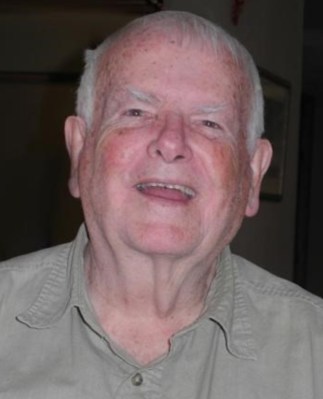
William (Bill) Allister Noble, affectionately known as Sandy, 89, of Albuquerque, NM passed away peacefully in his sleep on December 31, 2021.
Bill was born on April 20, 1932, in Nagercoil, Tamil Nadu, India during the British Raj. He was the youngest of four children born to Dr. William Alexander Noble and Etna Dodd Noble. His father was a Salvation Army missionary doctor who ran the Catherine Booth Hospital in Nagercoil from 1921 to 1960. Bill’s family lived on the grounds of the hospital which were always bustling with patients, their families, and hospital staff. He and his brother attended Breeks, a boys boarding school in Ootacamund, nestled in the highland forest adjacent to botanical gardens. It was there that he developed a deep love for nature and for the area’s indigenous tribes like Badagas, Todas, Kothas & Kurumas; specifically, the Toda tribe who had a hamlet next to his school.
At 18 he left India for the United States where he earned a BA and MA in Geography from the University of Georgia in Athens. While married to Louisa Booth he completed his PhD in Cultural Geography/Anthropology from Louisiana State University in 1968. He spent his career working as a professor at the University of Missouri, Columbia. He retired in 1996 and moved to Bend, to be near family.
Bill had incredible curiosity, a passion for research, and a love of nature photography and all inhabitants of the natural world. He considered India his spiritual home and focused his academic research on India and the Toda. He published widely and collaborated often. His areas of expertise included Toda architecture, temporal changes in grasslands, early agriculture, Hindu temples, Nilgiri geology, centered courtyards, peasant dwellings, knives, prehistoric ruins, tribal settlement patterns, and the evolution of the Toda from nomadic buffalo herders to farmers. He photographed “Sati” memorials across India, a Hindu practice in which a widow sacrifices herself on her husband’s funeral pyre. In the United States, he published articles on bristlecone pines, tobacco barns in Missouri, and an Antebellum plantation in Georgia. He dedicated time to researching impatiens that occur on the coasts of both India and Africa to further support the idea of continental drift, and the long-range, high-altitude migrations of certain bird species.
When his daughters were young, he took advantage of his summers off to take them on two six-week camping trips across the American Southwest. Other adventures with him included trips to India, China, and the Galapagos. He was the parent who arrived with his sleeping bag and a list of esoteric adventures to occupy the month ahead. They were always chasing down a rare flower, migrating birds, or an endemic mammal – sometimes with no luck. He could sleep anywhere and made friends wherever he went. He was our greatest fan and lifelong cheerleader. His daughters are grateful that he moved to Albuquerque to be part of their lives for the past decade.
Bill is preceded in death by his sister Dorothy Floyd of Atlanta, GA, his brother John Noble of Bend, OR, and Charlie Noble who died in childhood. He is survived by his daughters Catherine Noble (Nick Nuccio) and Jennifer Noble, two grandchildren, Sophie Nuccio and Max Noble, five nephews, and a niece.
His daughters add : We wish to thank his numerous caretakers for their tireless loving care and friendships.
We plan to fulfill his wish to scatter his ashes on Mukurthi peak in South India in 2023.
A celebration of his life will be held in Albuquerque, on June 11th. Contact his daughters for details.
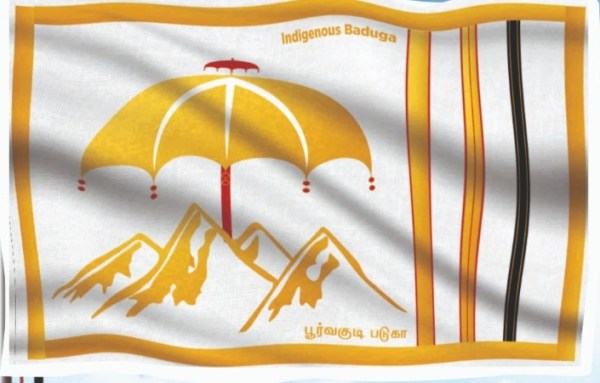
Badaga Flag has been designed & developed by Ganesh Ramalingam, in line with the culture and customs of Badagas.
(Badaga Day is celebrated on 15th May every year)
Ganesh Ramalingam has not only taken the complete initiative to get Scheduled Tribe status for Badagas but also doing a lot to the community, in consultation with elders, spread around the Nakku Betta.
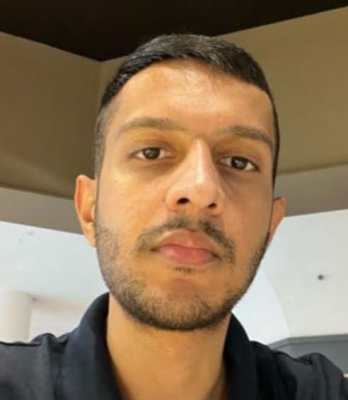
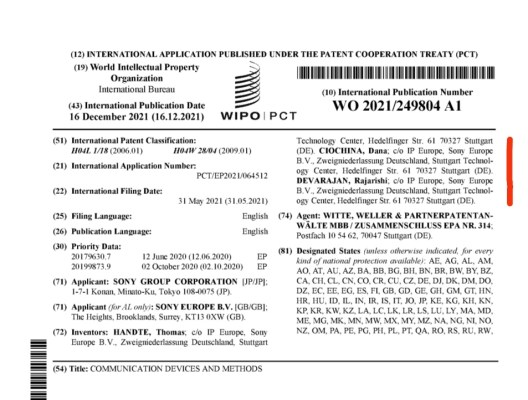
Rajarishi Devarajan is Grand Son of Erstwhile Nilgiri Teacher’s Guild President – Late, Retired High School HM – JB Mathan (aka JBM). and Son of M. Devarajan ( Kil Kundah Village) and Nalini (Kotagiri)
Through All India Engineering Entrance Exam he entered NIT Trichy to do B-Tech in ECE -. After working at LG Electronics -Banglore with Short stint in South Korea on deputation – he resigned his Job to give GRE & TOEFL Exam and Scored 323 / 340 marks..
Subsequently he joined Heidelberg University Germany for his Masters.
He did his thesis in wireless Technology, for Sony Europe and his work was recognized by Sony Europe for filing patent rights.
In 2021 the patent is accepted for evaluation and subsequenty approved.
It is quite possible that he is the youngest Badaga to get Patent in Europe for Wireless Technology..
Rajarishi Devarajan is also known as Joghee in memory of his Great Grand Father, Pokka Joghee Ayya a person known for his honesty and local judgements. Rajarishi is a guitarist also.
[All photos are by Bellie Jayaprakash and copyrighted]
~~~~~~~~~~~~~~~~~~~~~~~~~~~~~~~~~~~~
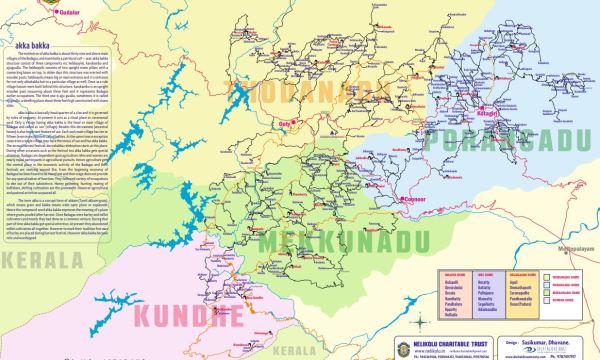
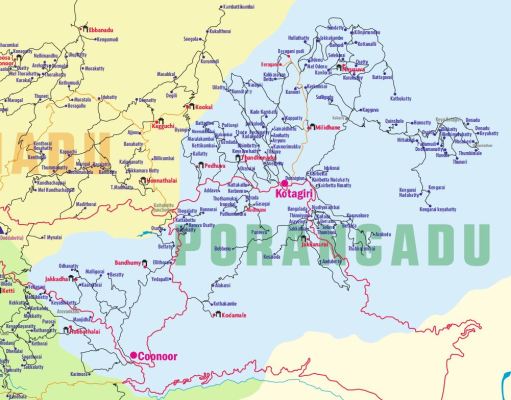
Map Courtesy – Nellikolu Charitable Trust
~~~~~~~~~~~~~~~~~~~~~~~~
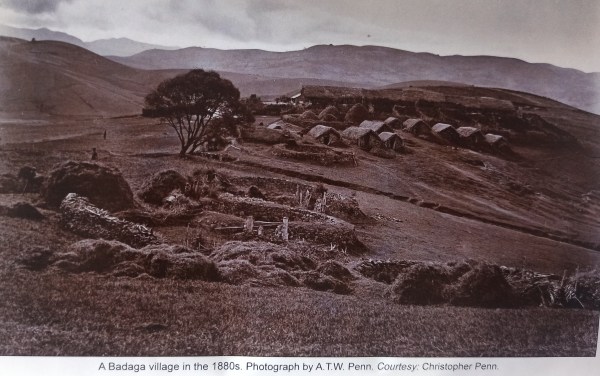
Badagas, generally, refer to their village or hamlet as ‘ HATTI ‘ spread around ‘Nakku Betta’ (the Nigiris). Nakku Betta literally means four (Nakku) Mountains (betta) though there are many hills around which the villages are located. It appears that initially when the Badagas established their hamlets, they took two very important factors into consideration. Being very environment conscious, they chose a) direction – always or to a very great extent facing the east [ ‘Hothu (sun) uttua (rising) pakka (side)’] and b) water souce – near a stream (halla) or spring (huttu neeru).Every hatti had a ‘suthugallu’ (sacred triangular shaped stone) at the base of a ‘bikka mara’ (tree) around which important meetings (Kootu) took place. For the most sacred of all Badaga festivals ‘Hethai Habba’ – always held on a monday (sovara), the collection of money (Hana kattodu) took place at the suthugallu in an elaborate ceremony on the preceding friday (belli). Let me write about Hethai Habba in a separate article.
The houses of each village were laid out in rows, each row facing the east. The houses had common walls (Gode mane) possibly as a measure of security. Every house had exactly the same configuration of Bayilu (entrance), Nadu mane (central-living/dining room ),Oge mane (inner room) where cooking also takes place (kitchen) with a large beskatti (basket) above the hearth where drying takes place, Pillay (bathroom) and Ereh (a separate room adjacent to the bayilu). Of course, there was an attic on top of beskatti( kitchen having a hearth) the entry to which is from the nadumane. Again, we will discuss about a typical badaga house separately.
A cluster of villages, which need not be close to each other, is called a ‘Seemae’.
Though, so much is written and spoken about Badagas, it is a matter of great regret and concern that still the “EXACT” number of Badaga hattis is not known. The total number varies from 300 to 400. Though Rao Bahadur H.B. Ari Gowder is known to have sent his collegue HAIKA MATHI [literaly meaning horse man] Joghee Gowder of Bygemandu, in 1940s and 1950s to all the villages to know about the problems of Badagas, unfortunately there are no written records traceable.
Prof. Paul Hockings may be one of the earliest to mention the number and names of the hattis in his books.
In a laudable effort, Mr. K.H.Madha Gowder who edited “NAKKU BETTA” magazine, had attempted to record all the hattis in one of its issues in late 1970s. I take this opportunity to list the villages as mentioned in ‘Nakku Betta’ hoping any omission/ incorrect mention will be brought to our notice so that the same can be included.
I have preferred to use the names as known to Badagas. For example, Jakkada for Jagathala or Manjidha for Manjithala or Pedduva for Pethala
I. ‘ Thodha Naadu Seemae ‘
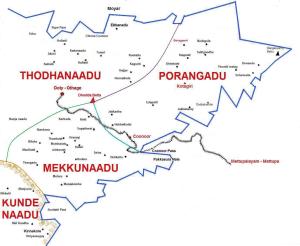
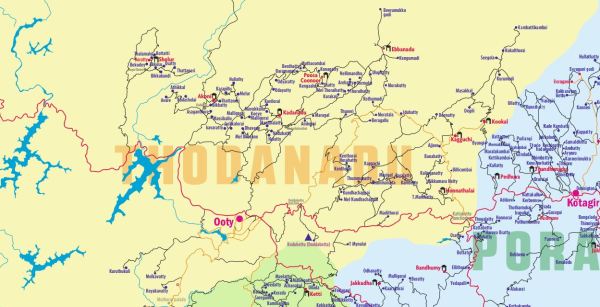
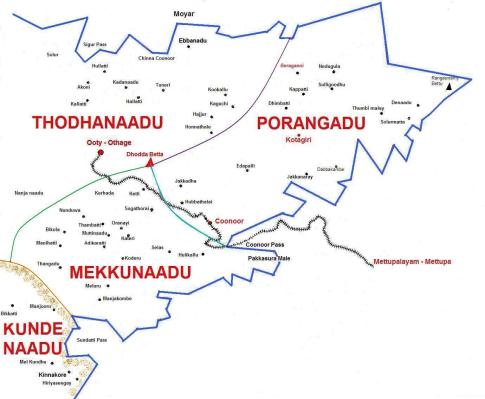
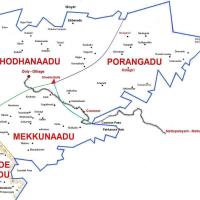
(Supposed to be our “Dodda Ooru”. Also known as ‘Raja Padagiri Seemae’) The boundaries are from Solur to Kookkal Thore
Map Courtesy _ NelliKolu Trust
~~~~~~~~~~~~~~~~~~~~
1. Kada naadu 2. Kei Kauhatti 3. Baralatti 4. Kuntha Chappai {correct name given by KK Bellie} 5. Edu hatti 6. Kodu mudi 7. Thore hatti 8. Hanni Kore 9. Kavilorai 10. Kavaratti 11. Kara pillu 12. Kallatti 13. Soluru [Sholur] 14. Thalai male 15. Kengal 16. Bara mannu 17. Kengamudi [Kenguvamudi?]18. Ajjoor 19. Thatha benu 20. Kurumbedi 21. Alattane 22. Masickal 23. Davane 24. Mynale 25. Moregallu 26. Kendore 27. Beragallu 28. Ullupatti 29. Hosa hatti 30.Batta kore 31. Mavu kallu 32. Malli gore 33. Thatneri 34. Panju mora 35. Bikke Kandi 36. Bekkodu 37. Kokkulu 38. Bendatti 39. Osa hatti 40. Bana hatti 41. Honnadale 42. Thegili 43. Omeyaratti 44. Jakkalorai 45. Madithore 46. Thummanada 47. Kappachi 48. Muguttuva 49. Nelli Mandu 50. Karakkallu 51. Nanja nadu 52. Ode hatti 53. Melur 54. Akoni 55. Kada sole 56. Hosa hatti 57. Poose kunnur 58. Konagatti 59. Ebbanad [Ebbu nadu?] 60. Kagguchi 61. Kalingana hatti 62. Kookal 63. Seegola 64. Aalatti 65. Mel Kau hatti 66. Kambatti 67. Thummanatti 68. Billi kambai 69. Thooneri 70. Ooru malai 71. Mara kallu 72. Kuruthu kuli 73. Hullathi 74. Bikkatti 75. Athi kallu 76. Thattaneri (Repeat?) 77. Osa hatti (repeat?) 78. Motha kambe 79. Moragutti 80. Jeenatti 81. Bikke mora hatti 82. Uyilatti 83.Kookal Thore 84. Melatti 85. Nadu hatti 86.Thambatti 87. Asoganthorai
(What I have mentioned as repeat – may be there are two [H]Osa hattis ?)
Hello sir, Iam S.Suresh(Kalhatty), i want to bring to yourattention that in the list of our hatties my hatty Masickal is missing, I dont know whether you misspelt it in Thothanad semae hatty number 22, If its misspelt please try to change it or if you have left it consider my humble request to add my hatty in it.. Also you have not mentioned Asoganthorai, add these two hatties in the list…- Thank you, Suresh – Wg Cdr JP
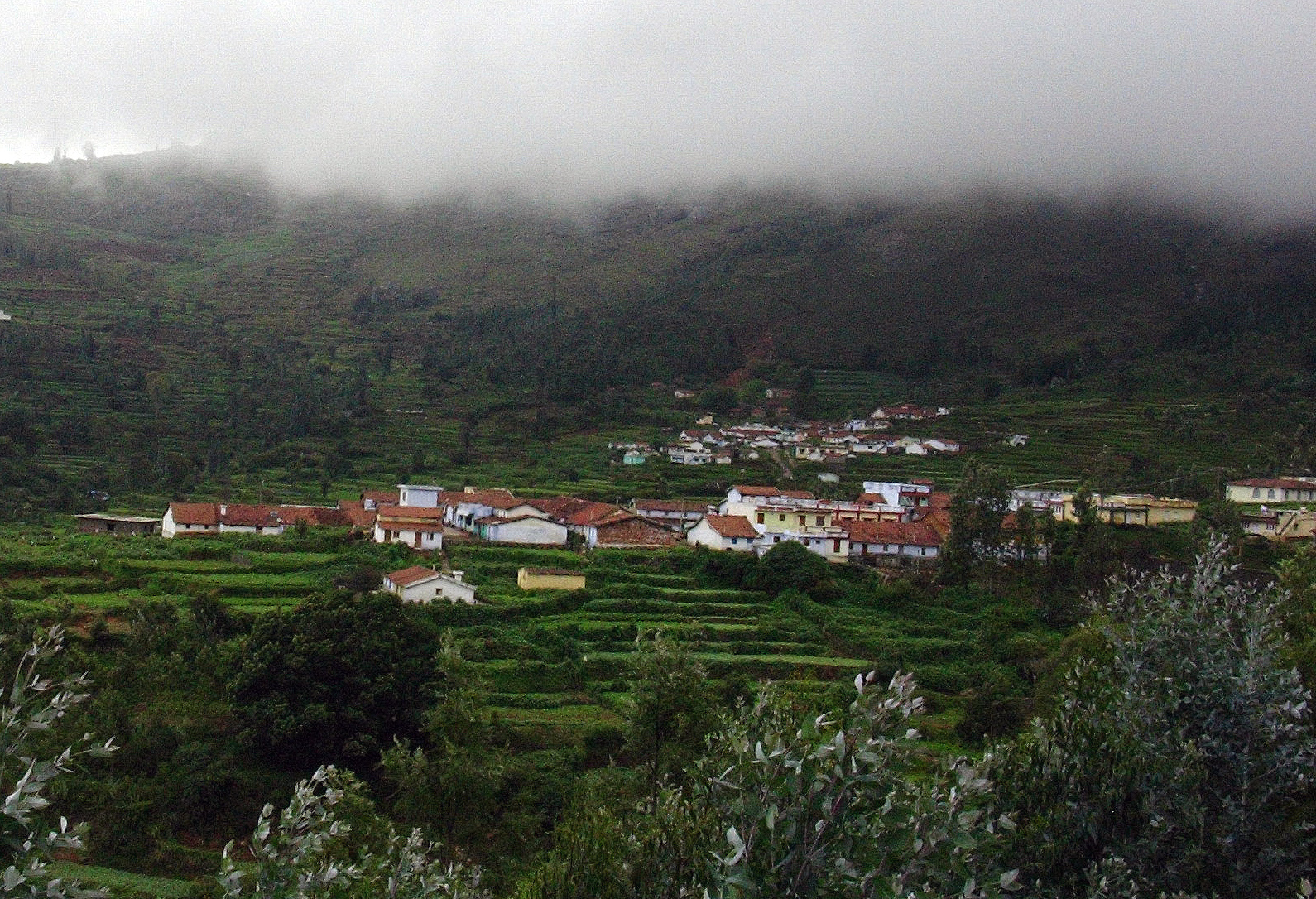
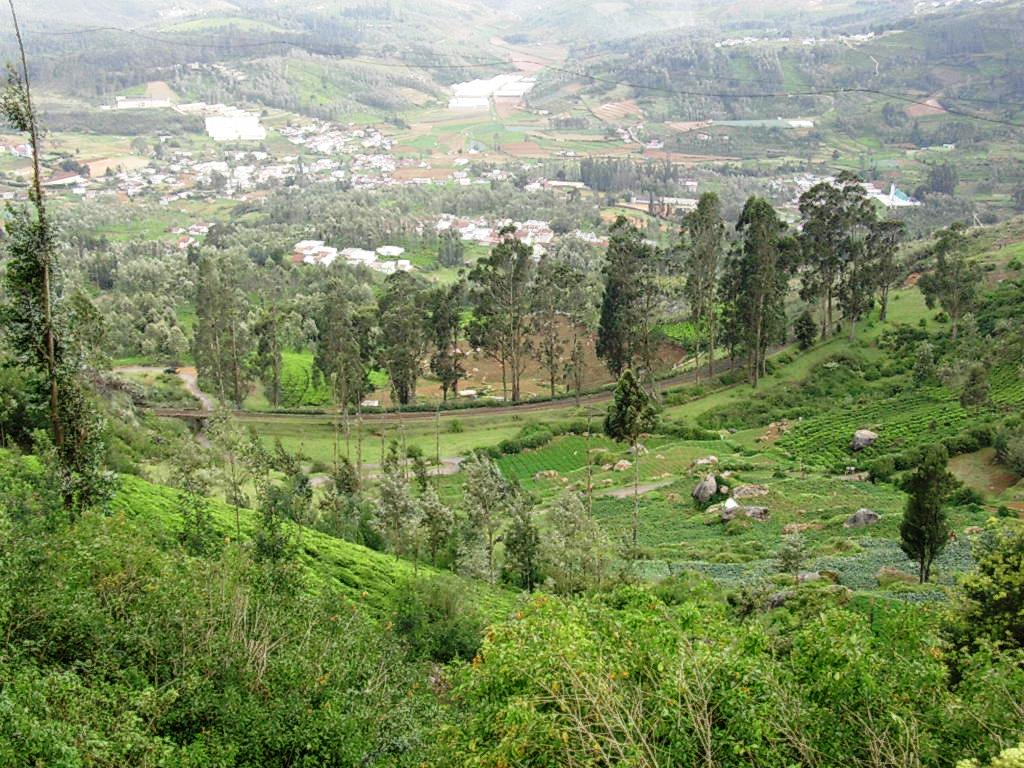
Badaga Villages with a cover of mist – seen from Akoni
II. Porangaadu Seemay
Also known as ” Aaila Baila Seeme ” ( Porangadu 19 Ooru ). From ‘Hubbathalai‘ to ‘Hulivare‘ constitute the boundaries
Map Courtesy – Nellikolu Trust
~~~~~~~~~~~~~
(Peria) Hubbathalai (Hatti)
Mel Bikkatti
Kil Bikkatti
II. Porangaadu Seemay
1. Thatha Nadu 2. Ora sole 3. Gundada 4. Pudiyangi 5. Marle Kambe 6. Batta Kore 7. Arakkambe 8. Mel Ane hatti 9. Kil Ane hatti 10. Dhimbatti 11. Kada kodu 12. Sippili kambe 13. Kanneri mookku 14. Ali Ooru [Hayoor?]15. Are hatti 16. Samil Dittu [Thanks to Bellie Sundaram Krishnamoorthy for giving the correct name] 17. Jakkalode 18. Kade kambatti 19. Kappatti 20. Kanneri 21. Nara giri 22. kunni hatti 23. Beraganni 24. Sundatti 25. Selakkore 26. Ker bettu 27. Betlada 28. Bendatti 29. Meedenu 30. Ker kambe 31. Lilli hatti 32. Bamudi 33. Neduguva 34. Bandime 35. Kodamale 36. Pedduva 37. Baiyangi 38. Kallatti 39. Hakkeru 40. Yeda palli 41. Eethore 42. Bettatti 43. Osatti 44. Katta bettu 45. Hubbathale Ooru 46.Honnore 47. Attave 48. Natta kallu 49. Kerbennu 50. Kathigatti 51. Eruppu kallu 52. Pudu mandu 53. Thotha mokke 54. Keraiyada 55. Jakkanare 56. Sakkatha 57. Kesalada 58. Aravenu 59. Thumbooru 60. Kallada 61. Bangalada 62. Thinni ooru 63. (H)Onnatti 64. Thooneri 65. Sulli goodu 66. Edukkore 67. Kengare 68. Hullathatti 69. Kottuvana hatti 70. Mel Odenu 71. Kil Odenu 72. Banni ooru 73. Bebbenu 74. Konavakore 75. Kakkul 76. Dhabba kambe 77. Thogalatti 78. Denadu 79. Ane ode 80. Thalore 81. Yettkallu 82. Odeyaru hatti 83. Mudia kambe 84. Selave 85. Kurukkathi 86. Kavilore 87. Selakore 88. Kottanalli 89. Thumbi male 90. Jakka kombe 91. Avvur 92. Bellada 93. Osatti (repeat?) 94. Embimora hatti 95. Bikkatti 96. Bagumudi 97. Dhodda mane hatti 98. Kagakkuthore 99. Koon sole 100. Jakkada 101.Odanatti 102.Bearatti 103. Malliore 104. Kakakore 105. Kil Bikkatti 106. Mel Bikkatti 107. Hubbathale Hatti 108. Kari mora 109. Kechigatti 110. Nadu hatti 111. Bettatti (repeat?) 112. Manjida ( recently added ) 113. Hayoor [Bellie Sundaram Krishnamoorthy feels this is same as 14.Ali Ooru – I fully agree. Hayoor or [H]Ali Ooru mean the same – Old Village] 114.Kinnakore, Heriasigay, Hosahatti, Ummattipadige Melur, Bikkatti
III. ‘ Mekku Nadu Seemae ‘
Also known as ‘ Asala Bisalagiri Seemay ‘ and (Meekunadu Seeme 9 Ooru).
Limits from Ketti to Keeyur
“Halattanai to which i belong to is the head hatti (oor) for keeyur haru hatti which includes denadu, mainalay, kothiben, masikandi, bengal and kokkalada inturn the keeyur comes under mekku nadu seemae (info from Dr.Bellukutty Sudhakar)”.Thanks to Dennadu Raman Bhojan (Bhoju) there is this interesting bit of news about DENAADU. Though it belongs to MEKKUNAADU SEEMAY, it forms a group of six villages called KIGOORU- KEEYUR (Kiloor). Denaadu people do not, usually, marry from the 33 + 6 [kigooru] villages of Mekkunaadu. Most of the marriages are from/to KUNDHAY SEEMAY, though of late, marriages have taken place from Villages belonging to PORANGAADU SEEMAY – like for example, Jakkadha (Jaghathala) of Aarooru (Jakkadha, Bearhatty, Karakorai, Mel Bikkatti, Kiya Bikkatti, Manjidha) group
Nice to see Bingichagallu and Baigada were incorporate in the hattis list . …But Hosa attubayulu is still missing . Please add in the list.. Ganesan Lingan.
IV. ‘ Kundhe Seemae ‘
Also known as ‘ Eera Jilla Seeme ‘ [Kinnakorai Ooru removed from Kundhe seemae to Porangadu Seemae]
Osatti 2. Bikkatti 3. Mel Kundhe 6. Attu Mannu 7. Mulli Male 8. Nadu hatti 9. Kechigatti 10. Kerabadu 11. Kariamale 12. Kandibikke 13. Manjooru 14. Mani Kallu 15. Kil Kundhe 16. Thooneri 17. Matta Kandi 18. Bakore 19. Mullegooru 20. Osa hatti 21. Bikkatti 22. Kunjanare 23. Gundinaali 24. Mukki Male 25. Gai kandi 26. Edakkadu Thale hatti 27. Edakkadu Nadu hatti 28. Sundatti 29. Baigada (added – based on Rajaram Ari’s (Yedakadu) input)
Added : 1. Kora Kundhe 2. Emarald (thanks to rajunandha 3. Hayoor (which is next to Kannerimukku in Kotagiri (thanks to mithun matha dharmaraj 4. Thorajada 5. Kombukorai (thanks to N Bellie 6. Thambatti added to ‘Thodha Naadu Seeme’ (thanks to Jagadeesh) This is Ganesan Lingan from Porthy Village Mekku Nadu seeme. “I just gone thru the Badagas website to know our hatties and seeme’s, I saw all the hattis and seems in one place and really enjoyed reading each and every hattis. I would say this is definitely Great effort! And really appreciable”. I just wanted to you know that Emerald is not a badaga village( as per my knowledge) and fully occupied by other communities except one or two badgas having provisional stores and houses along with that, So I request you the remove the Emerald from our hatti list. And also I found Osa Attu Bayilu missing from Meeku nadu. There are two Attu Bayilu one is Palliya (old) Attu bayliu and other one Osa attu Bayliu. Also Bigada missing from Thodha nadu Seeme (not sure about seeme).This village spotted near Ithalar… This is a beautiful very tiny village located in center of the tea estates.
As elaborated in the page on Badaga Hattis [villages], still there seems to be no conclusive evidence about how the ancestors made the divisions [geographical and social] about their villages. Simply put, in ancient times, a few houses (among brothers and cousins) formed a HATTI and then a cluster of villages, though based not only on the geographical locations, formed a OORU. Obviously, all the people from the hattis forming the Ooru were/are considered as brothers and sisters – and hence no marriages among these hattis were considered. Then, many Oorus formed a a SEEMAY or NAADU.
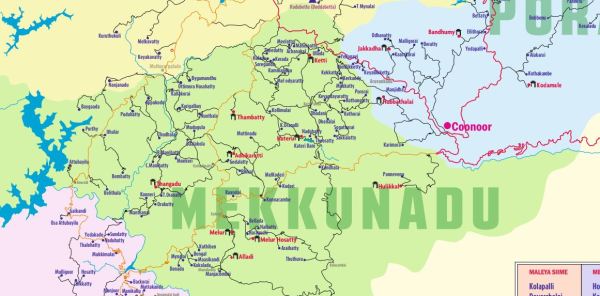
And, FOUR Seemays or Naadus form NAKKU BETTA – representing the complete Badaga population in the Nilgiri hills. Though, only three Naadus /Seemays namely, Thodhanaadu, Mekkunaadu and Porangaadu have the Dhodda Betta peak as the apex and common point of these three seemays, KUNDHEY SEEMAY, at the southern eastern end, is very much a separate and important seemay. See the map.
The confusion comes when we realise that some Thodha, Kotha and Kuruma villages/Oorus were also included into the broader periphery of Naadu/Seemay. The probable reasons for this inclusion could be the close association of Badagas with these tribes considered as the original inhabitants of the Nilgiris along with Badagas. Oorus forming Porangaadu Seemay ;Hubbathalai -[1.Dhodda Hubbathalai 2.Kunna Hubbathalai] Jakkadha – [1.Jakkadha 2.Kaarakorai 3.Bearatti 4.Mel Bikkatti 5.Kiya Bikkatti 6.Manjitha 7.Malligorai 8.Honnamudi 9.Odhanatti]Jakkanarai -[1.Jakkanarai Melkeri,2. J – Oorkeri, 3.J – Kiyakeri, 4. J – Thoria keri, 5.Thumboor ,6.Thinniyur, 7.Mudiakambai, 8.Bangalada, 9.Kallada, 10.Selavai, 11.Bettatti. 12.Naduhatti, 13.Arabettu, 14.Aravenu, 15.Aravenu Kettikeri] Thandhanaadu – [1.Thandhanaadu – Hayahatti, 2.T – Hosahatti, 3.Horasolai, 4.H- Honnodai, 5.Nattakkal, 6.Gundada, 7.Pudiyangi, 8.Maralakambai, 9.Meenikambai, 10.Battagorai (Gundada), 11.Arakambai, 12.Mel Anaihatti, 13.Kil Anaihatti, 14.Dhimbatti, 15.Kadakodu, 16.Thalorai, 17.Kannerimukku, 18.Haliyur, 19.Samilthittu, 20.Araihatti, 21.Ketchigatti, 22.Jakkalodai, 23.Kunnihittu, 24.Naragiri, 25.Kambatti, 26.Kappatti, 27.Kanneri, 28.Bergani, 29.Hullatti, 30.Jakkakambai, 31.Mel Oanay, 32.Kil Odanay, 33.Sundatti, 34.Kilinjimandhu, 35.Kavilorai, 36.Kotanalli, 37.Selakorai, 38.Bendatti, 39.Keirbetta -Hayatti 40. K- Kiyahatti, 41.K- Naduhatti, 42.K-Hosahatti, 43.Betalada]Meedhenu – [1.Meedhenu, 2.Kaikambai, 3.Battagorai, 4.Konavakkarai]Bandimay – [1.Bandimay]Niruguva -[1.Neduguva, 2.N – Hosatti, 3.Kurukutti]Peddhuva – [1.Peddhuva, 2.Kallatti, 3.Byangi, 4.Haddavalai, 5.Honnorai, 6.Thogalhatti, 7.Kattabettu, 8.Naduhatti, 9.Eethorai, 10.Bettahatti, 11.Yedapalli, 12.Hawkeru, 13.Gasugui, 14.Irruppukal, 15.Thothamokke, 16.Kerada, 17.Kerben, 18.Pudhumandu, 19.Hosahatti (Kattabettu), 20.Beben, 21.panneer]SakkadhaBebbaynuBaamudiKengarayDhenaaduKodamalaiDhoddamanay HattiKodanaadu Mandhu [Thodhas]Melay KokkalKiya KokkalKadinamala [Kurumas]Oorus under MekkunaaduKiya Ooru – HalattanayMelaga ooru – MelurThambattiKettiThangaaduAdhikarattiKatteryKollimalai (Kothas)Oorus under Thodhanaadu SeemayThooday GuiKadanaaduEbbanaaduSolurKagguchiHonnadhalaiKookkalThrichigadiPoosay CoonoorSolur Kokkal
Oorus under Kundhey Seemay
[I have spoken to village elders at Kinnakorai and Hiriyaseegay during my recent visit to these villages and they insisit that Kinnakorai belongs to Prangaadu Seemay – Wg Cdr JP]
Mele Kundhey
Kiya Kundhey
Hiriyaseegay
Kinnakorai [?]
Kundhey Kotagiri
The village names are given as pronounced by Badagas
[sources- ‘Badaga Samudhayam’ by Sivaji Raman, a well informed author and researcher from Jakkanaarai and ‘Akka Bakka’ by Prof. Frank Heidemann]
Indrani Radhakrishnan is a multi talented Badaga woman. I had written about her earlier aslo. A speaker on many forums like schools, Rotary and Innerwheel , she has attended a few seminars and conferences. Her journey on writing started way back in 8th std itself. Since then she has been writing articles poems and letters to editor – both in English and Tamil.
She has won many awards and has also received an honorary Doctorate in Heritage and culture. She has won two international awards – World Peace achiever Award and Universal Children s Day Award in 2021 from Phillipines SPMUDA organization.
She is the first in Badaga history to win international awards. She has recently published a book ” The Lost legacy of the Nilgiris” which is the first book of its kind in Nilgiris history.
In his book, THE GOLDEN BOUGH – A STUDY IN MAGIC AND RELIGION (1922) Sir James George Fraser (1854 – 1941) mentioned the following :-
Among the Badagas of the Neilgherry Hills in Southern India, when a death has taken place, the sins of the deceased are laid upon a buffalo calf.For this purpose the people gather round the corpse and carry it outside of the village. There an elder of the tribe, standing at the head of the corpse, recites or chants [known as - "KARU HARUCHODU"] a long list of sins such as any Badaga may commit, and the people repeat the last word of each line after him.
The more I listen to the song 'Kappu Uttileyu', the more fascinated I become. All the 12 Badaga months starting with Koodalu [given in Capital Letters] are beautifully integrated within the song.
Bugiri Music Academy presents Videos/Songs to bring about mindset change to Badagas
Hethegu Dhukkaththa - by Porthy SJ Mani
A great song that describes the evil practice among a few Badagas who despise other Badagas, known as Nattaru, settling in a village which is not native to them but probably have married from that same hatti (Vilage). Great lyrics, haunting music and a video with mainly Thooratti Village people in the cast.
Sholur G Raman is one of the greatest Badaga singers. Gifted with a golden voice, he composes his own songs and adds a lot of punch to the lyrics. His dance number " Mele Kerioge" is the hottest song for atta in any Badaga Function. A great singer and a simplton, music is in blood and has done a a yeoman service to spread Badaga songs far and wide,
Badaga dance is all about grace and style. It is a wonderful sight when a group of ladies dance together. During the funeral, the ladies of the parental village [hatti] of the deceased woman, dance going around the cot [kattalu] to the music provided by the 'host' hatti musicians.
English Translation of the above poem by Bellie Jayaprakash
My Mother
Even when I was down with poverty and sat at the front court yard,
Even when the near and dear ones despised and deserted,
My mother who gave birth, cared for and brought me up,
Did not blame me and did not reject me- her son, as bad
Even when I toiled as a Cooli with a bent back,
Even when I sat down with my looks dulled and dirty,
Even when I wore patched up old clothes,
My mother never said that I was down ; never rejected me as poor!
Even when I entered the stables and cleaned the dung,
Even when I sat on the rock and tendered the cows,
Even when I lifted loads to earn so as to suppress the hunger,
My mother never found any fault ; never scolded me as ignorant.
Dhoddaru Shloka
Some Badaga Proverbs [Dhoddaru Shloka]
~~~~~~~~~~~~~~~
1.Akka Ghandana koda dhukka hegile, Makka maria buttu baa ennana (When
sadness is shared with elder sister’s husband, his advise is to
come to him) 2. Aandama ellade Haandi Beya, Ullama ellade Gulla
beya 3. Kiviga elladadu kombuga aeththaga 4. Guttige [Kuttige?]
bathavu arai aaga beda, kunna thammanu mella aaga beda 5. Kumbala
kaaya [Kumbakkeya] saaki handiga kottenge (Growing pumpkins only to feed wild boar) 6. Gumboonda Mola edda enge [like a hare jumping out of the bush -element of surprise] 6a.Eragi holaga mola hugga enge [ like a rabbit getting into a wheat field -destruction by deceit] 7. Sadiga madi elle 8. Saththu biththa kaaye 9.Saththaduga hinde etha holae eana? (After death, how does it matter where you go?) 10.Saththa Koyee, baththa mukkirava ? (Can a dead hen feed on grains?) 11. Gollaru mada kattida enge 12.
Ghandu gundu, hennu helavu 13. Ghandu kulidu ketta, Hennu thirigi [hisithu] ketta (The boy wasted his life by idling/lazying around
(sitting), the girl wasted her life by smiling (turning around) at strangers 14. Ghanda thoorile, kandamanu thoorina [when the
husband neglects, everybody follows] 15. Ghanda ebbane buddi elle,
buddi bappane ghanda elle (Wisdom did not come when husband was alive, when wisdom came husband was not there) 16. Gana ellade
sande aaga, sangadhi ellade daari sameya (Evening does not end without gossip, way does not end without some news) 17. Koyigu
kothigu maake (Like a hen and a cat [always fighting]) 18.Koy(iy)a Kaethaa maasu arappadhu (Do you ask the hen [being
killed for dinner] for grinding the chilli paste?) 19. Kona neeruga baggiravo, neeru konaga baggiravo [Will the bull bend to
drink water, or, water bends for the bull? -Implying
impossibility] 20. Kothi aatta, eliga prana sangada (The antics of a cat are matters of death to a rat) 21. Kothi kaala baase
denge (Like the cat licking its leg) 22. Savi kanda kothi attalu hathidenege 23. Koduva cooli nodu, kathuva olaya nodu [keep a watch at the wages being paid (and hence get work done) and keep a watch at the burning embers in the kitchen] 24.Kodalia kaavu, kolava kedu maadira 25. Kotta hennu nela arige 26.Kotta saalava kaeyade ketta, bithida holava nodade ketta (Suffering
by not asking the loan to be returned, nor looking after the planted[with seeds] fields) 27. Kai yoge kannaadiya beethindu neerunamoga nodidha enge (looking for the reflection of the face on thewater when there is a mirror in the hand) 28. Kai eelu aaga guddili masiya [the implement not bend as per the shape of bones in the hand] 29. Kaiga bandadu bega elle (What came to the hand did not reach the mouth) 30. Ketta arasa buda beda mikka
kannava eda beda 31. Kulidhu athamaga kulidhu avvu, niddhu athamaga niddhu avvu (Cry sitting with the one who cried sitting
with you, cry standing with the one who cried standing - pay in the same coin- –
proper and equal reciprocation 32. Kuradaga hagalu ena er uena (How does it matter whether it is day or night for a blind
man?) 33. Sandhe jaamana meiyu, saaku hoththu bandha nattan uhoga (The evening rain and the guest who had come with a hessian
cloth[bag] covering will not go easily) 34. Sappodu saare, Haagottudoora 35. Chiikkavanaalayu Sivana buddi (Even though he is veryyoung, has lot of wisdom like Lord Siva) 36. Ollitha ethi hollava
thallu, olagodho ellava gellu (Take only the good leaving behind the bad and win all in this world) 37. Hallana neeru hattaleyu
baavi neeru hechu 38. Thaaya palichileyu neera pallicha beda (Even
if you [have to] show scorn to mother, never do it to water [the
source of life]) 39. Kasa aaleyu rusi maadi thinnu (Even if it
is rubbish, eat it after making it tasty) 40. Natta maneye
hattaleyu, ghanda mane hesara ethu 41. Kicha muttile attira (If
you touch the fire, it will burn you) 42. Hottiya kitcha beethale
kettara 43. Aaru kaasuna sambuva aaleyu, aranmaneya gelacha
maadu 44. Adhista mooru p(b)aala, harakke aaru paala 45. Kitcha
thindama karia Hedana (One who eats fire, excretes charcoal) 46.
Nanga belli holladale thattana koda horatta ena 47. Ghandana
ollithundhu undia dhottadhu ekka beda 48. Maneya nududhu mandhaga
hogu 49. Maathu hetchi mane ketta, bithu hetchi hola ketta 50.
Aadindu holae maathu, agadundu holae mannu [Agadhale mannu, Nudidhale
maathu] 51. Hanja theedhara(theegira) maathu niddara 52.
Thandeya koddamana paadhava hidi 53. Thindhu santhosha aappadhuna,
nodi santhosha aagu 54. Avvaiya halladha nodile magava nodudhuga
mane enaga 55. Huttone anna thamma, hoppane dhayada kaara 56.
Sandhe aappile endhu hoga beda, baaga aappile endhu era (oraga)
beda 57. Kathu potti, hethu baradi 58. Ethu elladhamaga edha
elle, makka elladhamaga mane elle 59. Nangaga bandhale allu
thundhu, Ooruga bandale opedha kai 60. Hasanooru haala
kudipadhuna, Neelagiri neera kudhi 61. Moladha kanna neera, bettai
kara aradhaneya 62. Hadadhe endhu hatta maada beda, kette endhu
kaeda thora beda 63. kette endhu kaeda thora beda, baddendhu bava
thora beda 64. Sikkanuna badakku batta baiyilu 65. Niri
chikkira, hari chikka 66. Huttu daridharaga kottu dhandodhu
daara 67. Thale thatty nela nodi nade 68. Aandama illade aandi
bethadava, ullama illadhe gulla bedharava 69. Hitta andhu kondu,
battaya nidhu kondu 70. Balla beethu baddiga hoga beda 71.
Arasana makkaga hurikallu muthu 72. Aeye pyla moyae nodu 73.
Anai koodi halla, theni koodi batha 74. Thitta thevara otha
beda 75. Anna thammana agala maada beda 76. Thaaya maatha kethu
nodadhey nyaya hadadheya, thandhya maatha kethu nodadhey handhi
hadadheya 77. Madi buddu maaruga sedhara, hennu buddu nattaga
sedara (Madi buddale maaruga, ele buddale meduga) Added :- 78.
Badagava makka huttu , Badegega Athu AAgha Beda 79. Hothu Banda
Kathiya , Ooruna ebba Kathe othara 80. Badavaga Badukku Bandale,
Thinguva Beesiluna Kode Hidithana 81.Bendhamana Hunna, Nondhama
Ariyakku 82.Usara Kotta Kothi , Nosala Nakkira 83. Thalaiyamana
Maathu, Mundhuga Uppu – Hinduga Bella 84.Appana Maathu,
Aneya Bala 85. Bae Aadileyu Bae ga Kedu, Seegi Aadile yu Bae ga
Kedu [A word play-pun- on Bae which means both the mouth and crop
[vellamme] 86. Mundhileyu Mookku Hagga, Hindileyu Kaal
Kanni 87.Akka Ellade Natto, Avare Ellade Uttavo
On your Mobile
Now you can access our website www.badaga.co on your smart phone.
Remember to access many multi media posts like Badaga Songs and Dance.
The beauty about Badaga community is not only the unique customs specific to the community but the steadfast belief with which atleast some of them are followed by Badagas. One of them is the loud chanting of ‘Athikkodhu – EAY AH HOW – on certain but specific occasions. It is said that in earlier days [hundreds of years back], when the Badaga villages [hattis] were separated by thick jungle forests , 'athikkindu Hoppadhu ' - traversing the forest with loud athikkodhu chant - kept the wild animals away.
Three occasions, when this loud chanting takes place, come to mind immediately,
1)During “Hethay Habba’ – both when from every village the devotees go to Hethay temples at Beragani and Peddhuva [as well as when the Hethay deity from Hethai Gudi is taken to ‘Madi Halla -river’ for change into new dress once a year].Also, and whenever a hatti temple deity is taken on procession during habbas in hattis],
2) During weddings when the bride and groom are brought to the ‘Madhuvay Mane – wedding house' and the newly weds are taken to the temple and
3) On funerals when the widow is brought for ‘olay Kattodhu’ and the ‘akki eththuva ‘ procession starts from the ‘dhodda Mane’ to ‘saavu hanay ‘ where the corpse/body is kept before being taken for burial.
This loud ‘chanting /cry’ is made from the bottom of the stomach by a few leading the procession and repeated by the rest following them.
I have given the ‘live’ recordings of this unique chanting (recorded during a wedding [the band playing in the background] at Thambatty
That is a lot of hits for a website [weblog] on BADAGA that is focused on a small community of the Blue Mountains - the Nilgiris, in the southern part of India. Is it due to...
the urge to know the unknown about ourselves....
to sift the truth from fiction....the satisfaction that we have a very unique history.....the mystery about the mistaken migration.....the traditions that are still steadfastly followed.....the great language that has survived for centuries without a script...
The simple fact that this site's motto of 'Proud to be a Badaga ; Proud to be an Indian' has become an accepted norm...
You all, my dear friends, have made me bow my head in gratitude.
Proud to be an Indian and proud to be a Badaga, indeed.
Hope to say - 'thanks a million' soon...
Wg Cdr Bellie Jayaprakash, is the 'All-in-One' of this site. He started this site as a hobby but now, it has become an obsession. This website crossed the milestone of 100,000 visitors on 8-3-2010, 150,000 visitors on 20-4-2011, 200,000 visitors on 6-4-2012 , 250,000 on 22-1-2013, 300,000 hits on 6-1-2014, 350,000 on 6-1-15 and 400,000 on 13 -11-2015550000 hits on 1 Jan 2018. Feel humbled but proud
Once in a way, we get to hear a song which instantly registers both in mind and heart. The golden voice you hear in this saavu [funeral] song is, beyond any doubt, excellent and haunting.
Thomas Chandy (thomaschandy@gmail.com) writes:-
"This is my first visit to this site and was surprised to know how ignorant I have been about the Badaga community. All that I have read makes me hang my head in shame for I have been growing up in the Nilgiris, among the Badagas and I was so ignorant about their origin,culture and so on. This write up is very informative and useful and may the Badaga community grow and spread through the whole world and prosper".
"Thank you Thomas. I am humbled at your kind words. May I hope that the Badagas will live up to your hopes, and thank you once again on behalf of the Badaga community – Wg Cdr JP"
Learn Badaga
” Ollenge iddiya ? - How are you ?”
‘Suddi saddha ella olliththa ? (Roughly) Hope everything is ok ‘
1. Are you a Badaga ? - Nee ondu Badagana?
Yes, I am a Badaga - Ha, Na ondu Badaga
2. What is your name ? - Ninna hesaru aena ?
My name is .... Enna hesaru .....
3. Which is your village ? - Ninna Hatti edhu ?[3a. Amme / Thamma, nee ai hatti ? - Girl/ Boy, which is your village?]
My village is Bearhatti - Enna Hatti bandu Bearhatti
4. Whose son/daughter are you ? - Nee dara maathi / hennu ?
This is the the first time I am visiting this site.... It took 5 hours to go through this site, you have done a fantastic job. Its just like a bible for our next generation. Thanks for your commitment!
Badaga
From the heart
Do you feel very strongly about any issue concerning Badaga Community? Have the urge to pour your heart out ? Feel free to express yourself without any inhibition and send them tobjaypee@gmail.com
~~~~~~~~~~~~~~~~~~~~~~~
Save the TIGER
Tiger is HULI in Badaga Lanuage
Read any Indian Newspaper
Read any Indian Newspaper. [ In all Indian Languages]
CLICK HERE
------------------------
Bhuvaneshwari R writes :- This website is one of the best I have seen. Didn’t think I would find so much detail about our culture.
The history of origin of Badagas is quite fascinating. Photos are also really great.
Really good to see someone do an effort to spread awareness.Thank you…
~~~~~~~~~~~~~~
Learn Badaga
Welcome, one and all!, Baarivi, Ollengay Iddhara?
Ninna hesuru aena?- what is your name?,
Nee Ae hatti? - which is your village?,
Appana hesuru? - Father's name?],
Maduvey aai buttava?- [Are you] married?,
Ganda,Elliya gelcha gheedhana?- where is [your] husband working?,
Here's a question that was posed to the Dalai Lama:
"What thing about humanity surprises you the most?"
His answer is : "MAN - Because he sacrifices his health in order to make money. Then he sacrifices his money to recuperate his health. And then he is so anxious about the future that he doesn't enjoy the present,
And as a result he doesn't live in the present or the future. And he lives as if he's never going to die and then he dies having never really lived".
Once in a way, we get to hear a song which instantly registers both in mind and heart. The golden voice you hear in this saavu [funeral] song is, beyond any doubt, excellent and haunting.
Dedicated to my mother Mrs.Idyammal Bellie Gowder [1912-2011] who gave everything to me
That is a lot of hits for a website [weblog] on BABADAGA that is focused on a small community of the Blue Mountains - the Nilgiris, in the sosouthern part of India. Is it due to...
the urge to know the unknown about ourselves....
to sift the truth from fiction....the satisfaction that we have a very unique history.....the mystery about the mistaken migration.....the traditions that are still steadfastly followed.....the great language that has survived for centuries without a script...
The simple fact that this site's motto of 'Proud to be a Badaga ; Proud to be an InIndian' has become an accepted norm...
You all, my dear friends, have made me bow my head in gratitude.
Proud to be an Indian and proud to be a Badaga, indeed.
Hope to say - 'thanks a million' soon...
Wg Cdr Bellie Jayaprakash, is the 'All-in-One' of this site. He says that he started this site as a hobby but now it has become an obsession.This website crossed the milestone of 100,000 visitors on 8-3-2010, 150,000 visitors on 20-4-2011, 200,000 visitors on 6-4-2012 , 250,000 on 22-1-2013, 300,000 hits on 6-1-2014, 350,000 on 6-1-15 and 400,000 on 13 -11-2015550000 hits on 1 Jan 2018.600000 hits on Sep 2018 Feel humbled but proud

















 Mookuthi
  Chinna




 ==
==






 Badagas of the Blue Mountains