Category Archives: badaga

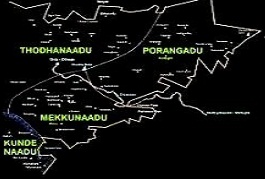
Seemay and Hattis – 4. Kundhe [Naadu] Seemay

‘Kundhe Seemay’
Also known as ‘Eera Jilla Seemay’

nakku-betta1.jpgNaakku Betta – pix by JP

In an effort to give the exact and correct names of hattis/villages under each of the four SEEMAYS, given below is the list under Kunde [Naadu] Seemay. I would request our friends to verify and vet the list and send corrections to bjaypee@gmail.com or add them as comments to this post – LEAVE A REPLY box given at the bottom.

We may separate the hattis as per Badagas, Odeyas and Thorayyas and group them under ‘OORU’ [a group of hattis form an ooru and many oorus constitute a seemay].

At present the focus is on hattis of Badagas [Gowdas] who can marry Badagas from other seemays. Please note that some hattis like HOSAHATTI appear to be repeated but there may be more than one HOSA Hatti in a seemay.

Kerapaadu (2)

Kerappaadu – Photo by JP

Please also see the page on HATTIS for more and exhaustive info

Attu Mannu
Baigada
Baakore
Bikkatti
Edakkaadu Nadu hatti
Edakkaadu Thale hatti
Emarald
Gai kandi
Gundinaali
Hosa hatti
Kandibikke
Kariamale
Kechigatti
Kei Kundhe
Kerappadu
Kombukorai
Kora Kundhe
Kunjanare
Mani Kallu
Manjooru
Matta Kandi
Mel Kundhe
Mukki Male
Mullegooru
Mulli Male
Nadu hatti
Sundatti
Thooneri
Thorajada

Seemay and Hattis – 3. Mekku Naadu Seemay

‘Mekku Nadu Seemay‘
Also known as ‘ Asala Bisalagiri Seemay ‘

nakku-betta1.jpgNaakku Betta – pix by JP

In an effort to give the exact and correct names of hattis/villages under each of the four SEEMAYS, given below is the list under Mekku Naadu Seemay. I would request our friends to verify and vet the list and send corrections to bjaypee@gmail.com or add them as comments to this post – LEAVE A REPLY box given at the bottom.

We may separate the hattis as per Badagas, Odeyas and Thorayyas and group them under ‘OORU’ [a group of hattis form an ooru and many oorus constitute a seemay].

At present the focus is on hattis of Badagas [Gowdas] who can marry Badagas from other seemays. Please note that some hattis like HOSAHATTI appear to be repeated but there may be more than one HOSA Hatti in a seemay.

Please also see the page on HATTIS for more and exhaustive info

https://badaga.co/wp-content/uploads/2007/06/porere-hatti.jpg
Porere – photo by JP
Aadakore (Thulidale)
Achanakal
Adikaratti
Ane hatti
Angidi hatti
Are hatti
Attu Bayilu
Balakore
Belitho
Bellada
Bembatti
Bengal Matta
Bikol
Bingisa Kallu
Byge mandu
Denadu
Denale
Dhodda Appukodu
Dhoddani
Emakkatti
Godalatti
Haalada
Haallattane
Haraguchi
Hosatti
Hosa Attubayulu
Hulikkal
Hullada
Ithalar
Kallakore
Kammandu
Kanneri
Kariyalbe
Kasole
Kattery
Kekkatti
Ken Kundhe
Kenduva
Ker Kandi
Kerada
Kethore
Ketti Ooru
Kil Hosatti
Kodangatti
Koderi
Kokkalada
Kothi ben
Maasi kandi
Mandhane
Mani hatti
Manja kambe
Meekeru
Mel Hosahatti
Mel Koderi
Melur
Melur Hosatty
Muduguva
Mutti nadu
Mynale
Nadu hatti
Nai hatti
Nunduva
Oor thittu
Oranai
Oranai (Kattery)
Panne bennu
Porore
Porthi
Pudugatti
Sakkalatti
Sogathore
Sora gundu
Thambatti
Thangadu
Theda hatti
Theedatti
Thoodhale
Thooratti
Umar kandi
Yellanalli

Murugesh Halan writes :- ‘Melur Hosahatty is missing. I want to know to if Haruvas and Badagas of Mekkunadu are in brotherly relation. If yes, how are they different?’

Melur Hosahatty added. As far as Haruvas and Gowdas are concerned, in the early 1900s, Badaga community got vertically split into two main factions called Haruva Katchi and Kotha Katchi. One faction was lead by Hubbathalai and the other by Thangaadu. Those days,  funeral expenses were borne by the family of the deceased and NOT by the entire hatti, as prevalent today. Kotha musicians had to be compulsorily called. Since, the funeral ceremonies extended even upto a week, till the ‘KORAMBU kaibathu’, the expenses involved were enormous as the guests from all over the ‘Naakku Betta’ had to be fed and ‘feasted’. Many families of the deceased had to sell their property. Realising that a death in a family is driving it to untold misery, Hubbathalai Bellie Gowder and his son Ari Gowder, who were given the title Rao Bahadur later, brought in the revolutionary reform by which the expenses of the funeral were met by the entire village by means of a ‘tax’ called ‘saavu vari’ and inviting the Kotha Musicians was donw away with. But the leaders of Thangaadu and other mainly ‘Haaruva’ hattis opposed this move. Marriages between these groups stopped.

Fortunately, this difference has gone away. Now, marriages between Haaaruvas and Gowdas, as well as Lingaites and Gowdas sects from different seemays [ in some cases, within the seemay] is common. There have been matrimonial relationships established even between Hubbathalai and Thangaadu. In my opinion, it is high time, we had only three broad groups among Badagas. Namely, Gowdas, Odeyas and Thoraiyas and in the distant future, just BADAGAS. – Wg Cdr JP

Trekking in the ‘Badaga Land”

Premnath Paliath [premandassociates@gmail.com] writes :-
I am from Gudalur though not a Badaga myself. I have been with and known Badagas for a long time. I am an ardent trekker and I have been trekking in the Himalayas and Nepal for quite some time now. Some of the places in the Nilgiris are very similar to Garwal and Kumaon regions of Uttaranchal and eastern parts of Himachal, there is a good scope for wonderful treks here.

And the Badagas are as hospitable as those inhabitants of the Himalayas I really regret for not utilizing the opportunity of trekking while I was a student here at Ooty.

Now I would like to go for treks, ie walk from hutty to hatty along the road used by Badagas those days. I would talk to the old timers and find out the routs used by them years ago and just walk along them making use of the wonderful hospitality of the Badagas.

Anyone interested can join me. I am a lawyer at Gudalur. My cell no is 09487130262. Feb, March, April and May are the right time to do these treks.

So lets celebrate the beauty of the Nilgiris and be with nature and the wonderful Badagas.

Having done a lot of trekking as part of my mountaineering courses [basic course from Himalyan Mountaineering Institute, Darjeeling and advance course from Nehru Institute of Mountaineering, Utter Kashi] in the 1980s I can easily relate to what Premnath says. Those Himalayan hill people, known as Pahadis, are very similar in looks and habits to Badagas.

Some of our hattis still retain the old world charm and with the air being pristine  pure, trekking from hattis to hattis must be a real pleasure.

In good old days, for Badagas the only mode of travel was by foot through the thick jungles, separating the hattis. On arrival at the destination, one of the greetings used to be ‘bettu hathi [ claiming the hills], attu eragi [going down the valleys] bandaya –  you have come?’. It would take hours of walking, so they would carry Kadimittu, drink water from the streams enroute and if in a group chant ‘aathikkodhu – ae aah how’. It was a combination of Eragi Hittu and long walks that kept the Badagas healthy.

I would urge youngsters to join Premnath and explore the past and discover the roots. It will surely be very exciting and educative. _ Wing Commander JP

Learn Badaga

[Reproduced from the page Learn Badaga – ]

Badaga Language

A couple of days back, I received the following email from a young mother [name withheld] who wrote to say :

Dear Sir,   It gave immense pleasure for me to visit your website. I was always amazed to know about the community and the culture.

I am a Non Badaga and married last Dec to a Badaga from ………..

And Recently on the ….. of this month I gave birth to a baby. My husband and my in laws want me to learn Badaga  as I have to talk to the baby in Badaga for her to pick up the language.

Please help me learn the language by sending me some day to day conversations .

Thanks in Advance. Best Regards.

My reply :-
Thanks a lot for your email. I am delighted to learn that you find my website[s] interesting and informative.
I have given a few ‘lessons’ about LEARN BADAGA in my websites/blogs. ….
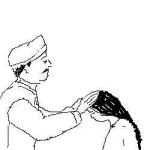
When you meet any elder, especially your in-laws and hubby’s grand parents, bow your head and say, ‘Kumbidichivi – meaning bless me. They are expected to touch your head and say, “Badhukku” – long live. You will find that any elder Badaga will be thrilled with this gesture as many do not follow this wonderful custom anymore.
badaga-blessing1
sketch by JP
As a new mother, for about 40 days after delivering a baby, you are a ‘baththya hemmathi’ with some diet and other restrictions.
 “Hosa koosuga, ondhu muthu kodu’ – give the new born baby a kiss.

—————————-

The following sentences are meant to address elders with respect.

[Like in Tamil – instead of Nee it is Neengal, or in Hindi – Thum and Aap when we talk to an elder. In Badaga – Nee and Ninga]

1.How are You – Ollenge [ஒள்ளெங்கெ] idhara?2.How is your health? – Ninga Sogava idhara / odambu ollenge hadadhaiya?

3.How is the weather? – Seemey ethey hadadhey?

4.what did you eat for breakfast/lunch/dinner. – Orakkadhu [morning] / Hagalu [afternoon] / santhu [evening], aena hittu thindhi?

5.Would you like to have some tea? – Josee Tea kudithaariya ?

6. (Girl/Boy) Baby is doing good. –  [kandu/hennu] Koosu ollenge idharey

7.(Girl/Boy) Baby is naughty. – [Kandu/Hennu] Koosu appara kurumbu

8.We are coming tomorrow. – Enga naayiga banna’ne’yo

The following have been taken from my earlier posts.

Let us learn Badaga

” Ollenge iddiya ? – How are you?”

‘Suddi saddha ella olliththa ? – (Roughly) ‘How is everything?‘

1. Are you a Badaga ? – Nee ondu Badagana?

2. Yes, I am a Badaga – Ha, Na ondu Badaga

3. What is your name ? – Ninna hesaru aena?

4. My name is Bhoja – Enna hesaru Bhoja

5. Which is your village ? – Ninna Hatti edu?

[5a. Amme / Thamma, nee ai hatti ? – Girl/ Boy, which is your village?]

6. My village is Bearhatti – Enna Hatti bandu Bearhatti

7. Whose son/daughter are you ? – Nee dara maathi / hennu?

8. I am Mela thara (top street) Joghi Gowder’s son / daughter – Na Mela thara Joghi gowdaru maathi / hennu

~~~~~~~~~~~~~~~~~~~~~~~~~~~~~~~

Numbers in Badugu /Badaga

1. Ondu (One) 11. Hannondu (Eleven)

2. Eradu (Two) 12. Hanneradu (Twelve)

3. Mooru (Three) 13. Hadimooru (Thirteen)

4. Naakku (Four) 14. Hadanaakku (Fourteen)

5. Iidu (Five) 15. Hadanaidu (Fifteen)

6. Aaru (Six) 16. Hadanaaru (Sixteen)

7. eizhu (Seven) 17. Hadarizhu (Seventeen)

8. Eattu (Eight) 18. Hadarettu (Eighteen)

9. Ombathu ( Nine) 19. Hathombathu (Nineteen)

10. Hathu (Ten) 20. Eipathu (Twenty)

30. Moovathu (Thirty) 40. Nalavathu (Forty)

50. Iivathu (Fifty) 60. Aravathu (Sixty)

70. Elavathu (Seventy) 80. Embathu ( Eighty)

90. Thombathu (Ninrty) 100. Nooru (Hundred)

Days In Badugu/Badaga

1. Aadivaara (Sunday)

2. Sovaara (Monday)

3. Mangavaara ( Tuesday)

4. Bodavaara (Wednesday)

5. Chikkavaara (Thursday)

6. Bellie (Friday)

7. Sani (Saturday)

Months In Badugu/Badaga

It is said that Badaga month usually, starts on every 10th of the English month. Like for example the first Badaga month Koodalu  starts on 10th January.

1. Koodalu (Jan)

2. Aalaani (Feb)

3. Nallaani (Mar)

4. Aani ( Apr)

5. Aadire (May)

6.Aadi (Peraadi) (Jun)

7.Aavaani (Jul)

8.Perattadi (Aug)

9. Dodda Deevige (Sep)

10. Kiru Deevige (Oct)

11. Thai (Nov)

12. Hemmaatti (Dec)

Pleasantly surprised to hear all the Badaga Months being mentioned in this song called ‘Kappu Huttileyu’ . See the widget on the right and click to listen to this great dance number

**************************************

Hindu-Arabic numeral Badaga and pronunciation
1 ஒந்து   (Ondu)
2 எரடு (Eradu)
3 மூறு (Mooru)
4 நாக்கு  (Naaakkuu)
5 ஐது (aidhu)
6 ஆறு (aaru))
7 எழ்ழு (ézhu)
8 எட்டு (ettu)
9 ஒம்பத்து  (Ompathu)

Certain peculiarities of Badaga .

Haalu [haa – as in hospital and lu – as in Zulu] means milk

Hallu [ ha- as hurt and llu – as in loo] means tooth [teeth]. note – there is no plural term.
Haasu – spread [the bedding], Haasike – bedding
Hasu – hunger

Maana – Pride, Mana – heart

Kaanu – see, Kannu – eye[s] (example – Doctor-a Kaanu, kanna pathi hegina – See the Doctor, he will tell about the eyes]

~~~~~~~~~~~~~~~~~~~~~

Peculiar Words

There are some words in Badaga that are truly peculiar. for example:

1. GIJI GIJI ( as in Give & Jinx) – Confusion , mess up / disorderly

GIJI GIJI maada beda – Don’t create confusion

Room aekka ethe GIJI GIJI (ya) hadadhe ? – Why is this room in such a mess?

2. MURUKKU(LU) (Mu ru ku) – Foul mood / mild anger

Amme Ekka maathaduvadu elle ? – Why is sister not talking?

Ava murukkindu endhave – She is in a foul mood

3. BADAYI (Ba daa ee ) – Show Off (proud)

Appara badayee maadiya – She shows off a lot

~~~~~~~~~~~~~~~~~~~~~~~~~~~~~~~~~~

Birds (Hakkilu)

  1. Haddu (Eagle)
  2. Kakke (Crow)
  3. Soray (Dove)
  4. Kili (Parrot)
  5. Emme Hakkilu
  6. Bikkola
  7. Karia(n)chitta (Black bird)
  8. Gubbachi (Sparrow)
  9. Mayilu (Peacock)
  10. Koi (Poultry hen/cock)
  11. Kaadu Koi (Wild hen)
  12. Baathu(koi) – Duck

Mari (chic) –{Koi Mari – chic(ken)}

Also for calf [for eg) Nei mari – puppy dog]

Animals

  1. Aanay (Elephant)
  2. Kaade -Kaadu Emme – (Bison)
  3. Ottaga (Camel)
  4. Kudire (Horse)
  5. Kaththe (Donkey)
  6. Dana (Cow)
  7. Emme (Buffalo)
  8. Yethu (Bull)
  9. Karu (Calf)
  10. Huli (Tiger)
  11. Singa (Lion)
  12. Siruthe (Panther)
  13. Karadi (Bear)
  14. Maanu (Deer)
  15. Pulli Maanu (Spotted Dear)
  16. Kadamay (Sambar)
  17. Handi (Black Pig)
  18. Kaadandi – kaadu handi – (Wild Pig)
  19. Mullandi – Mullu Handi – (Porcupine)
  20. Seeme Handi (White Pig)
  21. Koda, Korangu (Monkey)
  22. Mola (Rabbit)
  23. Nari (Fox)
  24. Nei (Dog)
  25. Koththi (Cat)
  26. Eli (Rat)
  27. Aame (Turtle)
  28. Nalli (Crab)
  29. Halli (
  30. Haavu (Snake)
  31. Kappe (Frog)
  32. Meenu (Fish)

Insects

  1. Hoo (general for insect)
  2. Nona (Fly)
  3. Selandhi (Spider)
  4. Kunni (Bee)
  5. Eruppu (Ant)
  6. Kosu (Mosquito)
  7. Bendu (Moth/Butterfly)

Anatomy

  1. Mande (Head) – also refers to Hair though there is specific word – Orama
  2. Heddakku (Back of the skull) – usually Badagas have a long heddakku as they donot use cradles. The reason for not using cradles for babies is a story by itself. It is due to the fact that when they left Mysore to escape from the King (Thipu Sultan ?) in the night in a hurry, they had forgotten the baby which was sleeping in the cradle,each thinking that the other person wiould pick up the child.
  3. Moole (Brain)
  4. Nethi (Forehead)
  5. Kenni (Cheeks)
  6. Kannu [eye(s)]
  7. Kivi (Ear)
  8. Mookku (Nose)
  9. Bae (Mouth)
  10. Thudi (lip)
  11. Hallu (Teeth)
  12. Naalenge (Tongue)
  13. Dhaade ( Chin)
  14. Thonde (Throat)
  15. Gaththu (Neck)
  16. Maaru – Nenju – (chest)
  17. Mole (Breast)
  18. Hiththalu – Bennu – (Shoulder)
  19. Kai (Hands)
  20. Mutti (Elbow – also for knee)
  21. Beralu (Fingers)
  22. Hebbatte – Katte (beralu) – [Thumb]
  23. Ugilu (Nails)
  24. Hotte (Stomach)
  25. Mollu Kudi (Naval)
  26. Nadu (Hip)
  27. Pitti (Buttocks)
  28. Thode (Thigh)
  29. Monakkaalu (Knee)
  30. Kaalu (Leg)
  31. Midi (Heel)
  32. Angalu (Foot)

COLOURS (BANNA)

  • 1.Kappu – Black
  • 2.BeLLay – White
  • 3. Keppu (Kechay) – Red
  • 4. Pachchay – Green
  • 5. Neela – Blue
  • 6. Arichina (Manja) – Yellow

Also see http://badaga-language.blogspot.in/

Seemay and Hattis – 2. Porangaadu Seemay

nakku-betta1.jpgNaakku Betta – pix by JP

In an effort to give the exact and correct names of hattis/villages under each of the four SEEMAYS, given below is the list under Porangaadu seemay. I would request our friends to verify and vet the list and send corrections to bjaypee@gmail.com or add them as comments to this post – LEAVE A REPLY box given at the bottom.

We may separate the hattis as per Badagas, Odeyas and Thorayyas and group them under ‘OORU’ [a group of hattis form an ooru and many oorus constitute a seemay].

At present the focus is on hattis of Badagas [Gowdas] who can marry Badagas from other seemays. Please note that some hattis like HOSAHATTI appear to be repeated but there may be more than one HOSA Hatti in a seemay.

Please also see the page on HATTIS for more and exhaustive info

hubbathalai.JPGHubbathalai Hatti – Photo by JP
“Porangaadu Seemay”
Ane ode
Arakkambe
Aravenu
Are hatti
Attave
Avvur
Bagumudi
Baiyangi
Bamudi
Bandime
Bangalada
Banni ooru
Batta Kore
Bearatti
Bebbenu
Bellada
Bendatti
Beraganni
Betlada
Bettatti
Bettatti (repeat?)
Bikkatti
Bikkatti
Denadu
Dhabba kambe
Dhimbatti
Dhodda mane hatti
Edukkore
Eethore
Eruppu kallu
Gundada
Hakkeru
Hayoor [Ali Ooru]
Heriasigay,
Honnore
Hora sole
Hosahatti,
Hosatti (repeat?)
Hubbathale Hatti
Hubbathale Ooru
Hullathatti
Imbi mora hatti
Jakka kombe
Jakkada
Jakkalode
Jakkanare
Kada kodu
Kade kambatti
Kagakkuthore
Kakakore
Kakkul
Kallada
Kallatti
Kanneri
Kanneri mookku
Kappatti
Kari mora
Kathigatti
Katta bettu
Kavilore
Kei Odenu
Kengare
Ker bettu
Ker kambe
Keraiyada
Kerbennu
Kesalada
Ketchigatti
Kil Ane hatti
Kil Bikkatti
Kinnakore,
Kodamale
Konavakore
Koon sole
Kottanalli
Kottuvana hatti
kunni hatti
Kurukkathi
Lilli hatti
Malliore
Manjidha
Marle Kambe
Meedenu
Mel Ane hatti
Mel Bikkatti
Mel Odenu
Melur,
Mudia kambe
Nadu hatti
Nara giri
Natta kallu
Neduguva
Odanatti
Odeyaru hatti
Onnatti (Honnatti?)
Pedduva
Pudiyangi
Pudu mandu
Sakkatha
Samil Dittu
Selakkore
Selakore
Selave
Sippili kambe
Sulli goodu
Sundatti
Thalore
Thantha Naadu
Thinni ooru
Thogalatti
Thooneri
Thotha mokke
Thumbi male
Thumbooru
Ummattipadige
Yeda palli
Yettakallu [?]

Seemay and Hattis

nakku-betta1.jpg In an effort to give the exact and correct names of hattis/villages under each of the four SEEMAYS, given below is the list of all hattis under the four Seemays.

The names are given, to the extent possible, as pronounced by Badagas and not as ‘badly twisted’ by others. Like – the original name of Eethoray being called Elithorai.

There may be some omissions/additions/corrections required.

I would request all friends to verify and vet the list and send corrections to bjaypee@gmail.com or add them as comments to this post – LEAVE A REPLY box given at the bottom.

We may separate the hattis as per Badagas, Odeyas and Thorayyas and group them under ‘OORU’ [a group of hattis form an ooru and many oorus constitute a seemay]. At present the focus is on hattis of Badagas [Gowdas] who can marry Badagas from other seemays.

Now, marriages between Gowdas with Haaruvas,  Lingaites, Kanakkas etc sects from different seemays [ in some cases, within the seemay] are common. In my opinion, it is high time, we had only three broad groups among Badagas. Namely, Gowdas[including the other sects mentioned above], Odeyas and Thoraiyas and in the distant future, just BADAGAS.

Please note that some hattis like HOSAHATTI appear to be repeated but there may be more than one HOSA Hatti in a seemay.

Please also see the page on HATTIS for more and exhaustive info.

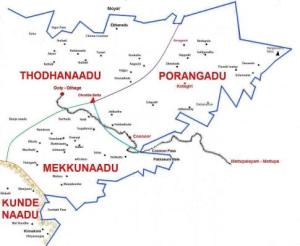
1.’Thodha Naadu Seemaythodhanadseemegudi (Supposed to be our “Dodda Ooru”. Also known as ‘Raja Padagiri Seemae’. The boundaries are from Solur to Kookkal Thore. The names given as known and pronounced by Badagas)

Oorus under Thodhanaadu Seemay : Thooday Gui, Kadanaadu, Ebbanaadu, Solur, Kagguchi, Honnadhalai, Kookkal,  Poosay Coonoor, Thrichigadi [??}, Solur Kokkal [??]- these appear to be Kotha settlements.

Ajjoor
Akoni
Alattane
Asoganthorai
Athi kallu
Bana hatti
Bara mannu
Baralatti
Batta kore
Bekkodu
Bendatti
Beragallu
Bikkatti
Bikke Kandi
Bikke mora hatti
Billi kambai
Dhavane
Ebbunaadu
Edu hatti
Haalatti
Hanni Kore
Honnadale
Hosa hatti
Hosa hatti [Repeat? – or are there more than one Hosahatti?]
Hullathi
Jakkalorai
Jeenatti
Kada Naadu
Kada sole
Kagguchi
Kalingana hatti
Kallatti
Kambatti
Kappachi
Kara pillu
Karakkallu
Kavaratti
Kavilorai
Kei Kau hatti
Kendore
Kengal
Kengamudi [Kenguvamudi?]
Kodhu mudi
Kokkulu
Konagatti
Kookal Thore
Kookal
Kundha Chappai
Kurumbedi
Kuruthu kuli
Madithore
Malli gore
Mara kallu
Masickal
Mavu kallu
Mel Kau hatti
Melatti
Melur
Moragutti
Moregallu
Motha kambe
Muguttuva
Mynale
Nadu hatti
Nanjanaadu
Nelli Mandu
Ode hatti
Omeyaratti
Ooru malai
Panju mora
Poose kunnur
Seegola
Soluru [Sholur]
Thalai male
Thambatti
Thatha benu
Thatneri
Thattaneri
Thegili
Thooneri
Thore hatti
Thummanada
Thummanatti
Ullupatti
Uyilatti
————————————-
2.’Porangaadu Seemay’
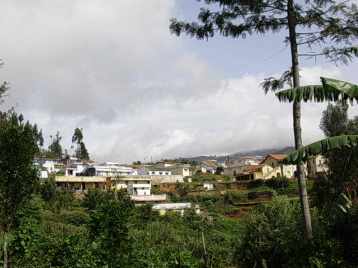
hubbathalai.JPGHubbathalai Hatti – Photo by JP
“Porangaadu Seemay”
Ane ode
Arakkambe
Aravenu
Are hatti
Attave
Avvur
Bagumudi
Baiyangi
Bamudi
Bandime
Bangalada
Banni ooru
Batta Kore
Bearatti
Bebbenu
Bellada
Bendatti
Beraganni
Betlada
Bettatti
Bettatti (repeat?)
Bikkatti
Bikkatti
Denadu
Dhabba kambe
Dhimbatti
Dhodda mane hatti
Edukkore
Eethore
Eruppu kallu
Gundada
Hakkeru
Hayoor [Ali Ooru]
Heriasigay,
Honnore
Hora sole
Hosahatti,
Hosatti (repeat?)
Hubbathale Hatti
Hubbathale Ooru
Hullathatti
Imbi mora hatti
Jakka kombe
Jakkada
Jakkalode
Jakkanare
Kada kodu
Kade kambatti
Kagakkuthore
Kakakore
Kakkul
Kallada
Kallatti
Kanneri
Kanneri mookku
Kappatti
Kari mora
Kathigatti
Katta bettu
Kavilore
Kei Odenu
Kengare
Ker bettu
Ker kambe
Keraiyada
Kerbennu
Kesalada
Ketchigatti
Kil Ane hatti
Kil Bikkatti
Kinnakore,
Kodamale
Konavakore
Koon sole
Kottanalli
Kottuvana hatti
kunni hatti
Kurukkathi
Lilli hatti
Malliore
Manjidha
Marle Kambe
Meedenu
Mel Ane hatti
Mel Bikkatti
Mel Odenu
Melur,
Mudia kambe
Nadu hatti
Nara giri
Natta kallu
Neduguva
Odanatti
Odeyaru hatti
Onnatti (Honnatti?)
Pedduva
Pudiyangi
Pudu mandu
Sakkatha
Samil Dittu
Selakkore
Selakore
Selave
Sippili kambe
Sulli goodu
Sundatti
Thalore
Thantha Naadu
Thinni ooru
Thogalatti
Thooneri
Thotha mokke
Thumbi male
Thumbooru
Ummattipadige
Yeda palli
Yettakallu [?]
————————————-
3.’Mekku Naadu Seemay’

‘Mekku Naadu Seemay‘
Also known as ‘Asala Bisalagiri Seemay’

Please also see the page on HATTIS for more and exhaustive info
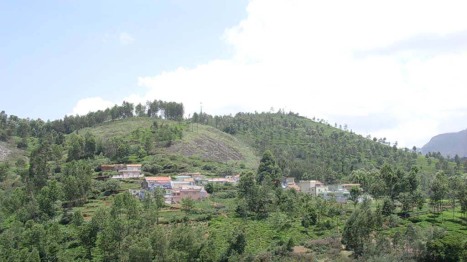
https://badaga.co/wp-content/uploads/2007/06/porere-hatti.jpg
Porere – photo by JP
Aadakore (Thulidale)
Achanakal
Adikaratti
Ane hatti
Angidi hatti
Are hatti
Attu Bayilu
Balakore
Belitho
Bellada
Bembatti
Bengal Matta
Bikol
Bingisa Kallu
Byge mandu
Denadu
Denale
Dhodda Appukodu
Dhoddani
Emakkatti
Godalatti
Haalada
Haallattane
Haraguchi
Hosatti
Hosa Attubayulu
Hulikkal
Hullada
Ithalar
Kallakore
Kammandu
Kanneri
Kariyalbe
Kasole
Kattery
Kekkatti
Ken Kundhe
Kenduva
Ker Kandi
Kerada
Kethore
Ketti Ooru
Kil Hosatti
Kodangatti
Koderi
Kokkalada
Kothi ben
Maasi kandi
Mandhane
Mani hatti
Manja kambe
Meekeru
Mel Hosahatti
Mel Koderi
Melur
Melur Hosatty
Muduguva
Mutti nadu
Mynale
Nadu hatti
Nai hatti
Nunduva
Oor thittu
Oranai
Oranai (Kattery)
Panne bennu
Porore
Porthi
Pudugatti
Sakkalatti
Sogathore
Sora gundu
Thambatti
Thangadu
Theda hatti
Theedatti
Thoodhale
Thooratti
Umar kandi
Yellanalli

Murugesh Halan writes :- ‘Melur Hosahatty is missing. I want to know to if Haruvas and Badagas of Mekkunadu are in brotherly relation. If yes, how are they different?’Melur Hosahatty added. As far as Haruvas and Gowdas are concerned, in the early 1900s, Badaga community got vertically split into two main factions called Haruva Katchi and Kotha Katchi. One faction was lead by Hubbathalai and the other by Thangaadu. Those days, funeral expenses were borne by the family of the deceased and NOT by the entire hatti, as prevalent today. Kotha musicians had to be compulsorily called. Since, the funeral ceremonies extended even upto a week, till the ‘KORAMBU kaibathu’, the expenses involved were enormous as the guests from all over the ‘Naakku Betta’ had to be fed and ‘feasted’. Many families of the deceased had to sell their property. Realising that a death in a family is driving it to untold misery, Hubbathalai Bellie Gowder and his son Ari Gowder, who were given the title Rao Bahadur later, brought in the revolutionary reform by which the expenses of the funeral were met by the entire village by means of a ‘tax’ called ‘saavu vari’ and inviting the Kotha Musicians was donw away with. But the leaders of Thangaadu and other mainly ‘Haaruva’ hattis opposed this move. Marriages between these groups stopped.

Fortunately, this difference has gone away. Now, marriages between Haaruvas and Gowdas, as well as Lingaites and Gowdas sects from different seemays [ in some cases, within the seemay] is common. There have been matrimonial relationships established even between Hubbathalai and Thangaadu. In my opinion, it is high time, we had only three broad groups among Badagas. Namely, Gowdas, Odeyas and Thoraiyas and in the distant future, just BADAGAS. – Wg Cdr JP

————————————-
4.’Kundhay [Naadu] Seemay’
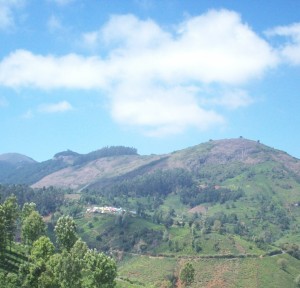
 

Kerapaadu (2)

Kerappaadu – Photo by JP

Please also see the page on HATTIS for more and exhaustive info

Attu Mannu
Baigada
Baakore
Bikkatti
Edakkaadu Nadu hatti
Edakkaadu Thale hatti
Emarald
Gai kandi
Gundinaali
Hosa hatti
Kandibikke
Kariamale
Kechigatti
Kei Kundhe
Kerappadu
Kombukorai
Kora Kundhe
Kunjanare
Mani Kallu
Manjooru
Matta Kandi
Mel Kundhe
Mukki Male
Mullegooru
Mulli Male
Nadu hatti
Sundatti
Thooneri
Thorajada
————————————-

badaga-bg.jpg

Badaga Jewellery

Ravindran Jevanah(ravindranj62@gmail.com) writes to ask :-
Ravindran Jevanah's profile photoComing to Jewellery, apart from Chinna, Mookuthi, Belli Ungara, I would like to know about the ‘Cheripenigai and the other broad Belli Bangle which the ladies wear on the lower arms. The Cheripenigai is of two or three designs nowadays we do not see any. Can we have a picture of these if possible?
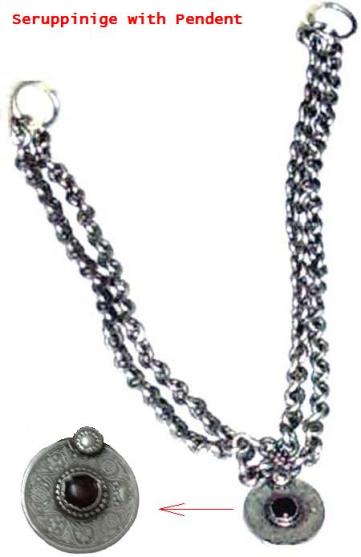
Please see  Badaga Jewellery and the links given
Seripinige

https://badaga.co/wp-content/uploads/2007/04/kundha-037.jpg

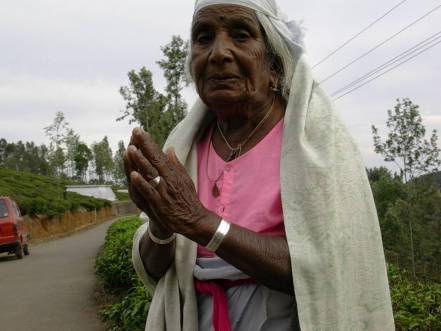
The gold or silver bangle or rather bracelet around the wrist is known as ‘ KADAGA ‘ or ‘ CHIPPU BAE ‘ and the thick flat armlet just above the elbow is ‘BAE’.

When I took this picture of late Kothiben Hatti Laxmi ‘Karuppi’ Hethai on 09-04-07 and mentioned that the photo had come out well, she mentioned with a great sense of humour, ‘ potto olange bandu ena maaduva, utti enbudhu tha kappu edhaga’ – So what can we do if the photo has come out well, but from birth [I am]  black [colour]’

Thank you Kothiben Karuppi Hethe, it was wonderful meeting you !

– Wg Cdr JP

Nanga Naakku Betta – Neelagiri (Nilgiris)

Today is a clear day with bright sunlight in the hills. The hills, I am referring to is the Nilgiris, my native place. Every time I drive ‘into’ the hills, either from Mysore via Bandipur and Kallatti Ghats or from Mettupalayam via Kotagiri Aravenu and Haakeri or from Karamadai via Mulli and Geddai [Kundah], my heart is filled with happiness and joy. Such beauty is bestowed on these blue hills by the Almighty. Probably, the Nature wants to show off or should I say, show case its glorious exterior in a truly grand fashion.

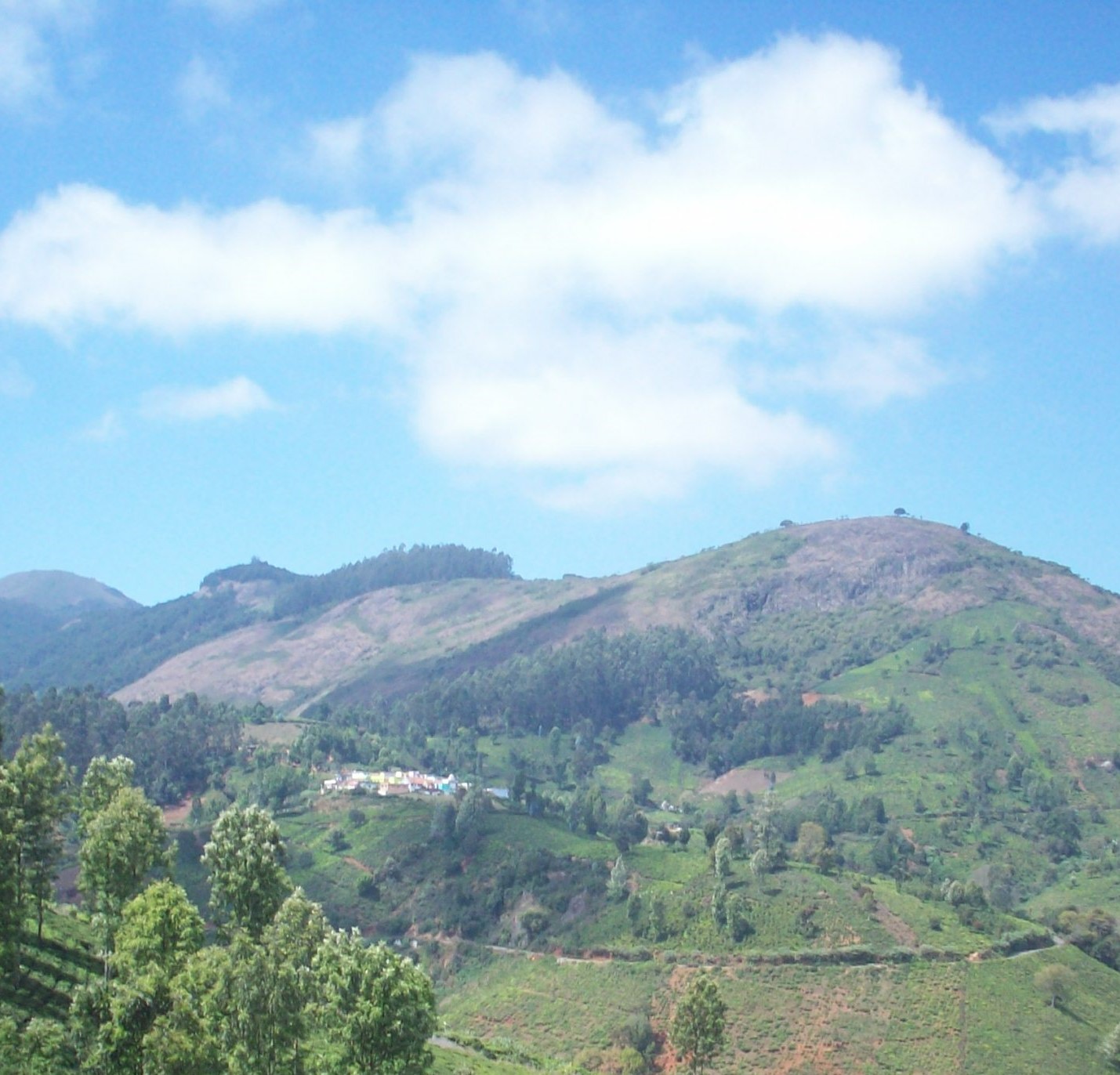
The Nilgiris – Neela [Blue] Giris [Hills] – literally ‘The blue mountains’ is popularly known to Badagas as ‘Naakku Betta’ – though Naakku Betta means Four Mountains, in fact it refers to all the mountains, hills and hillocks spread around the Nigiri range.

Badaga Villages, called Hattis, are spread far and wide in these hills. These hattis exists ONLY in these hills. In short, there can be no Badagas without the Nilgiris and no Nilgiris [history] without Badagas. Every Badaga, where ever he/she may be, can always trace the roots to some hatti/town in the beautiful blue mountains.  

Blessed are the Badagas. Yes, indeed!

Here are some pix taken by Wg Cdr Bellie Jayaprakash

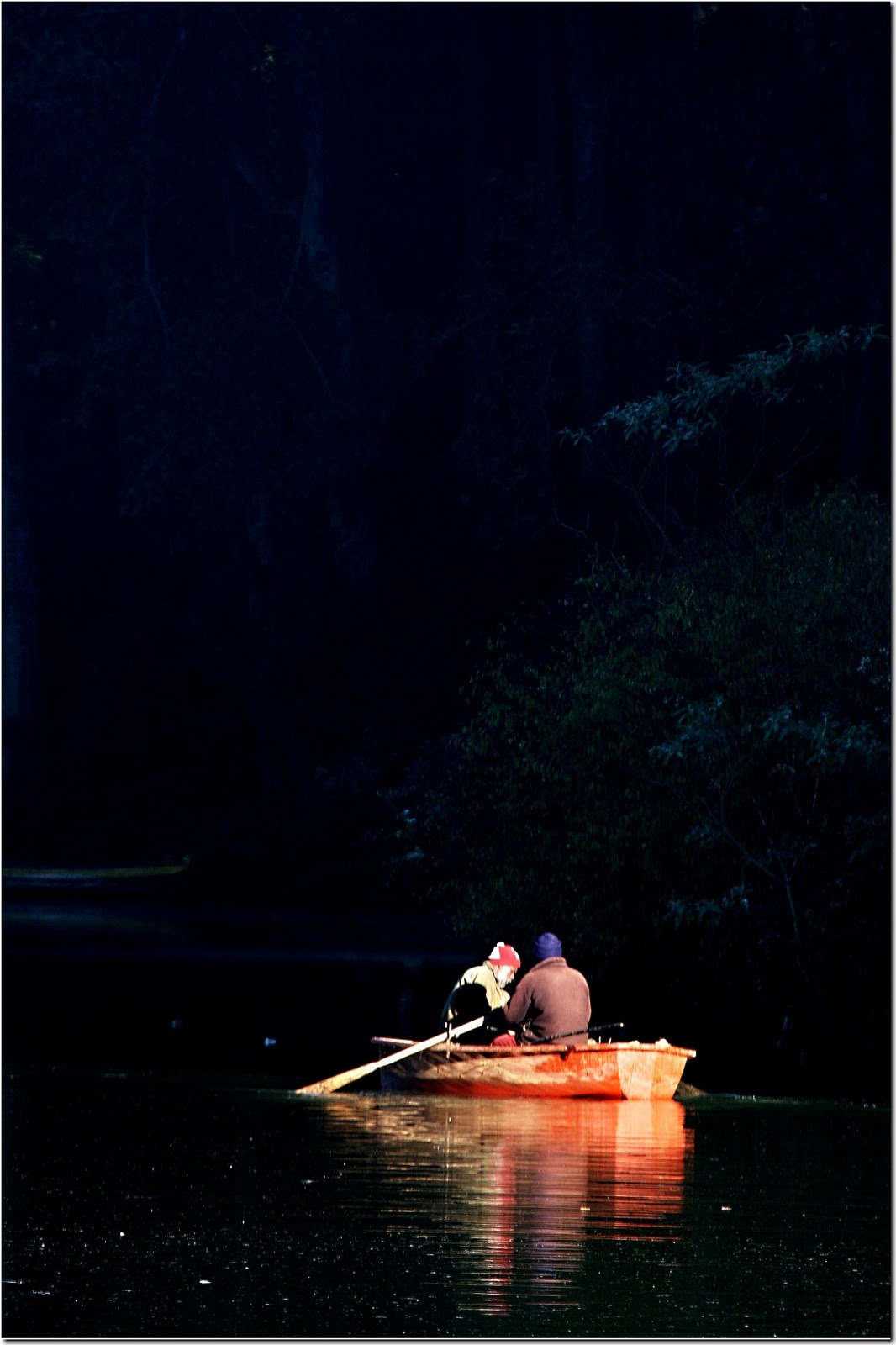
The surreal


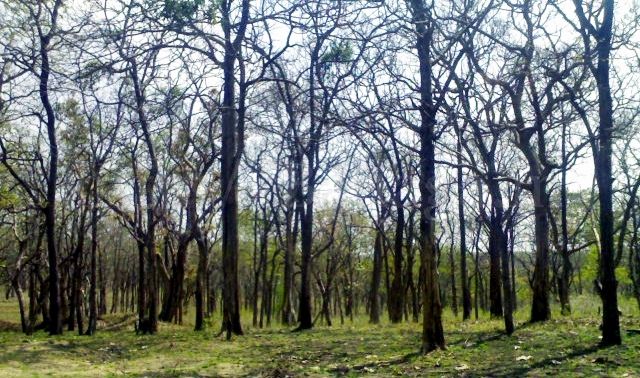
Mudumalai Forest

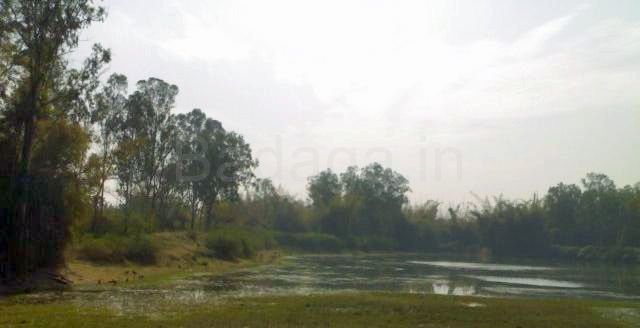
Mudumalai

So, to say the least, all of us, the natives of the Nilgiris, have a stake in the ‘well being’ of our district and save it from the mindless destruction of its beauty and eco system. Hence, we must lend our supporting hands to any one who has taken to ‘DO SOMETHING’. Be it, Mª Teresa Llop Navarro (from Spain) who has started a NGO – “Es Purna” to help out the poor especially in the field of girl-child education in the Nilgiris, the NDC of Venugopal Dharmalingam or the bunch of youngsters lead by Prabhu Purnan who have created ‘WOW Nilgiris – now, has the mankind seen any place better then this?’.

‘Wow, the Nilgiris’

What strikes one at the first glance of their web sites is the most beautiful pictures of the Nilgiris. Though born and brought up in this ‘nature’s gift’, some of the pics made me wonder whether they are really taken here.

As ‘WOW Nilgiris’ describes, ‘ Mak’ing YOU wonder if these places do exist in Nilgiris, an out and out “off the regular” escapades, taking you in to the world of sholas, grasslands, thickets and breathtaking vistas to chase the clouds, sight the unique Nilgiri Thar and Martens squirrels’.

Congratulations to Prabhu Purnan and his friends. I understand Deepak Bhojraj, a Badaga, is another gifted photoghapher, and an article on him appears in ‘TheLOCAL’, [Dec, 2009 issue] a monthly published from Aravankadu.

https://badaga.co/wp-content/uploads/2015/02/3bd72-banner4.jpg

Photos  by Prabhu Purnan (copyright)
On my request to reproduce some of their pictures, Purnan has kindly sent me his consent and writes > hello mr JP. i am in fact following your blog keenly. its my pleasure to be profiled in your blog, the very purpose of this blog is to send across the messages to folks around. yep you can use any of the fotos you want and let me know if you need any specific fotos from here as well. another thing myself and deepak bhojraj are good friends he keeps telling me that your blog is really informative but cultured a small suggestion thats it you can mail deepak on more about it. With warm Regards, Prabhu Purnan D
Visit their websites where you will not only find some extraordinary photos but also a wealth of information on the beautiful Blue Mountains. I am sure that they will make you say ‘WoW’.
 http://wownilgiris.blogspot.com , http://purnanprabhu.googlepages.com

[This post is reproduced)

Badagaru Hittu

A taste of the hills – K. JESHI [The Hindu – ]

There is unusual fare at The Taj Vivanta as its Badaga Chef prepares a traditional Badaga feast for you The Badaga platter Wholeseome and packed with nutrients Photo: S. Siva Saravanan

The Badaga platter Wholeseome and packed with nutrients  (Photo: S.Siva Saravanan – The Hindu)

It’s a combo of bathalu, sandege, and uppukorai that introduces us to the traditional Badaga fare at Vivanta by Taj Surya. Bathalu is crispy sun dried potatoes, sandege is the tangy onion and garlic chutney that we dip into, and uppukorai is steamed and salted beans. That’s starters for you and they score high on taste. It gets better with a cup of hot rasam or maasu neeru, as the Badagas call it. The Badaga farmers are known for their mixed farming of millets, barley, wheat, and commercial vegetables including potato, carrots and cabbage, and hence the food they eat often uses seasonal and locally grown vegetables.

Continue reading

Badagas at the cross roads

Three main factors were high lighted in the last post – Badagas at the cross roads, about the need to change with changing times. One of them is the problem of ‘outside’ marriages and the root causes. ‘Moray’ being one of them.

 Our friend Sivakumar.B (Muckimalai) writes:Sivakumar B's profile photo If we want to remove the restrictions levied by elders, convincing ourselves that they are outdated, then all the customs including blessing, karu haruchodhu, chanting, etc, may  also get removed as outdated.   I think customs and systems are the sovereignty of a community. These are NOT Regulations/Constitution/Law which we can amend from time to time at our will and wish.
Within `Seemay’ means brotherhood (one blood).So, marriage within the `Seemay” will lead to lot of complications. Removal of `moray’ will not be the solution for ‘outside’ marriages. Running to outside is Sick/Crazy and I think it will continue even if `moray’ is removed.

திருடனாய் பார்த்து  திருந்தாவிட்டால்  திருட்டை  ஒழிக்க முடியாது.

Though, I can understand the strong feelings of Sivakumar, some clarifications are called for. Moray, in my opinion, is a very scientifically significant restriction brought in by our Muthappas/Hethappas. This restriction has avoided a lot of health problems associated with ‘in breeding’ and may be one of the reasons for a better health prevailing among Badagas as compared to other native tribes of the Nilgiris.

But, it is mistaken by many that marriages do not take place among people belonging to the same ‘seemay’. Let us elaborate.

https://badaga.co/wp-content/uploads/2008/11/nakku-betta1.jpg?w=486&h=300&h=300

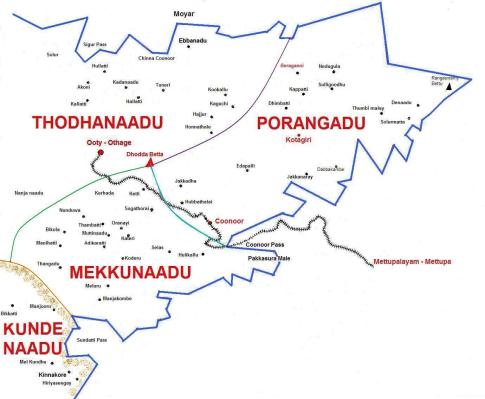
A typical Badaga Village [hatti] consists of houses of brothers [both blood brothers and cousins]. Their chiildren are ‘anna thammaru and akka thangairu – brothers and sisters’. So, the ‘moray’ restriction is very much required as otherwise, one will land up in literally marrying a ‘sister’. Many hattis, not necessarily congruent or geographically adjacent, form a OORU. Many Oorus form the Seemay. The number of villages/hattis in one ooru to another differs. Marriages between OORUS within the same Seemay is very much possible and is in vogue. Like for example,  in Porangaadu Seemay which has many oorus, HATHTHOMBATTU OORU [19 villages] and AARU OORU [6 villages] have marriage relationship. See the page on Hattis for more information.

[to be continued]