Can you spot the grass hopper?
Click on the image for enlargement 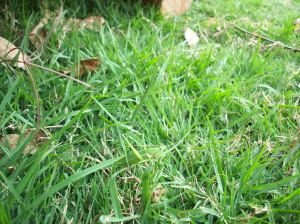
photo by JP

Click on the image for enlargement
photo by JP
Vidya Vivek writes :

I am a self-taught artist. Recently I had a concept in mind and for that I wanted authentic pictures of Baduga women in traditional jewellery. Your website came handy and I made my painting. I thank you and look up to you for all that you do for our community. …
I have attached my painting (RadhaKrishna in our traditional attire) along with this mail.

Hello Vidya, Thank you very much for your email. I have seen your FB page Facebook.com/Easelscope as well as your website and must say that your paintings are very impressive. Painting being my hobby, though I have not done many in the recent past, I can understand the passion and pride in being a painter.
Wishing you the very best.
Wg.Cdr. JP
Posted in badaga
The beauty about Badaga community is not only the unique customs specific to the community but the steadfast belief with which atleast some of them are followed by Badagas with fervour. One of them is the loud chanting of ‘Athikkodhu – LOUDLY saying of EAY AH HOW – on certain but specific occasions. It is said that in earlier days [hundred of years back], when the Badaga villages [hattis] were separated by thick jungle forests , ‘athikkindu Hoppadhu ‘ – traversing the forest with loud athikkodhu chant – kept the wild animals away.
Three occasions come to mind immediately,
1) During “Hethay Habba’ – both when from every village the devotees go to Hethay temples at Beragani and Peddhuva as well as when the Hethay deity is taken to ‘Madi Halla -river’ for change into new dress once a year [and also whenever a hatti temple deity is taken on procession during habbas in hattis],
2) During weddings when the bride and groom are brought to the ‘Madhuvay Mane – wedding house,and the newly weds are taken to the temple and
3) On funerals when the widow is brought for ‘olay Kattodhu’ and the ‘akki eththuva ‘ procession starts from the ‘dhodda Mane’ to ‘saavu hanay ‘ where the corpse/body is kept before being taken for burial.
This loud ‘chanting /cry’ is made from the bottom of the stomach by a few leading the procession and repeated by the rest following them.
I have given the ‘live’ recordings of this unique chanting (recorded during a wedding [the band playing in the background] at Thambatty
and
at a funeral at Kundhey Ketchigatty)
Posted in badaga
 sketch by JP
2. Ollitha Aethi, Hollava Thalli, Olagodho Ellava Geddu Ba
[Leave all that is bad, take all that is good , come back winning all/everything in this world]
3. Enna maathi / hennu, , sangatta salippu elladhe ollenge iru, paddipperi mundhuga hesarethi baa, hoppa dhari, Bappa Dhari yo, edinjillu elladhe ollange agili, Nee olagava hedithu ba !
[ Oh my son/daughter, let you live well without any disease or discomfort, let you become famous and may education take you forward, wherever you go, let there be no interruptions or hindrances and may you come back safely. May you rule [lead] the nation (with your wisdom)]!
Full text :
ondhu, ompaththu aagali, ondhu, saavira aagali,
harachchava kodali, sogava kodali, baNda hechchali, badhukku hechchali, bE hechchali, haalu hechchali, haNNu hechchali,
manE katti, maaru kattili, ondhu manE, saavira manE aagali,
beNNE bettu aagali, thuppa theppa aagali, hulla muttilE hoo aagali, kalla muttilE kaai aagali, honna muttilE sinna aagali,
bettadhudhu bandhalEyu, beraluga adangali, attudhadhu bandhalEyu, aangai adangali,
Kattidhadhu karEyali, biththidhadhu bEyali,
aanaiya balava kodali, ariyaa siriyaa kodali, budhdhi bevarava kodali,
uri hOgi, siri barali, siri sippaaththi agali,
HOppa edE, bappa edE ellaa, oLLiththE barali,
nooru thumbi, naadu jaradhu, dheera pooraNa aagi, OLLiththa Eththi, Hollava ThaLLi, olagodho ellaava Gedhdhu, sangatta salippu illaadhe, hoppa dhaari, Bappa Dhaari yo, edinjilu iLLaadhe, padippEri mundhuga hesareththi,
kumbE kudi haradha engE, angaalu muLLu muriyaadhE, kO endhu korachchi, bO endhu bokki, ManE thumba makka hutti, gOttu thumba sosE kondu,
paava pariya nOdi, olagadha hesaru eththi badhukki baa
மனே கட்டி, மாரு கட்டிலி, ஒந்து மனே, சாவிர மனே ஆகலி,
பெண்ணே பெட்டு ஆகலி, துப்ப தெப்ப ஆகலி, ஹுல்ல முட்டிலே ஹூ ஆகலி, கல்ல முட்டிலே காய் ஆகலி, ஹொன்ன முட்டிலே சின்ன ஆகலி,
பெட்டதுது பந்தலேயு, பெரலுக அடங்கலி, அட்டுதது பந்தலேயு, ஆங்கை அடங்கலி,
கட்டிதது கரேயலி, பித்திதது பேயலி,
ஆனைய பலவ கொடலி, அரியா சிரியா கொடலி, புத்தி பெவரவ கொடலி,
உரி ஹோகி, சிரி பரலி, சிரி சிப்பாத்தி அகலி,
ஹோப்ப எடே, பப்ப எடே எல்லா, ஒள்ளித்தே பரலி,
நூரு தும்பி, நாடு ஜரது, தீர பூரண ஆகி, ஓள்ளித்த ஏத்தி, ஹொல்லவ தள்ளி, ஒலகொதொ எல்லாவ கெத்து, சங்கட்ட சலிப்பு இல்லாதெ, ஹொப்ப தாரி, பப்ப தாரி யொ, எடிஞ்சிலு இல்லாதெ, படிப்பேரி முந்துக ஹெசரெத்தி,
கும்பே குடி ஹரத எங்கே, அங்காலு முள்ளு முரியாதே, கோ எந்து கொரச்சி, போ எந்து பொக்கி, மனே தும்ப மக்க ஹுட்டி, கோட்டு தும்ப சொசே கொண்டு,
பாவ பரிய நோடி, ஒலகத ஹெசரு எத்தி பதுக்கி பா
English Translation
Let prosperity/good deeds increase nine folds, [ondhu – one, ombaththu – nine, aagali – happen] Let a prosperity increase a thousand times, [saavira – thousand]
Let good helath and happiness be bestowed [haracha – health, soga – happiness, kodali – given] Let the cattle wealth / livestock (number of buffalows and cows) increase [banda – cattle] Let wealth increase [badhukku – wealth] Let the (sown) crops increase [bay – crops) Let the milk (yield) inncrease [haalu – milk] Let the fruits increase [hannu – fruits]
May you build (your own) a house [manay – house, katti – build] May you get married [maaru katti – marriage] Let one house become a thousand [may your family increase]
Let the butter [yield] grow to a mountain, [bennay – butter, bettu – mountain] Let ghei (clarified butter) made become large like a well [thuppa – ghei, theppa – well] Let grass turn to flowers and stones to fruits when touched [Hullu – grass,muttilay – touched, hoo – flower, kallu – stone , kaai – unripe fruit] Let iron turn to gold [Honna – iron, sinna – gold] Even if trouble comes in huge amount like a mountain, let it be contained in a finger [betta – mountain, bandalay – coming, beralu – finger, adangali – contained] Even if trouble comes like a deep valley, let it be contained in the palm (fist)
Let the tied cow give milk, [kattidhadhu – tied, karayali -milking] Let whatever is sown ,grow well [biththidhadhu – sown, bayyali – grow well]
Let the strengh of Elephant be bestowed (on you) [Aanay – elephant, bala – strengh] Let a lot of happiness be given, [siri – happiness] May you become intelligent and wise [budhdi – intelligence, bevara – wisdom]
Let jealousy vanish and happiness prevail [uri – jealousy /envy] Let happiness increase manyfold [sippathi – manyfold]
Let only good things happen wherever you go and come [Hoppa – going, bappa – coming, eday – place, olliththu – goodness]
Let you live to be a full hundred with lots of wisdom so as to make others wonder(envious) [nooru – hundred, thumbi – full/filled, naadu – nation/others, jaradu – envious, Deera – wisdom, poorana – complete /lots, aagi – become] Take only the good and leave behind the bad [olliththu – good,eththi – take, holla’va – bad, thalli – leave behind] May you win all in this world [olaga – world, ellava – all, geddhu – win] without any worries and problems, [sangatta – worries, salippu – problems/hesitation] Let there be no hinderance on your ways [dhaari – path /way, edinjallu – hinderance] Let you come up in life with wisdom given by education [paddippu – education, mundhuga – coming forward]
Like a pumpkin plant that grows and spreads [kumba kudi – pumpkin plant, haradu – spread] Let not thorns stop your steps [Aangaal – foot, mullu – thorn, muriyadhay – embed (in the sole)
Let your name and fame spread wide and far and called by all and overflow [korachi – calling, bokki – overflow] Let your home be filled with children [makka – children, hutti – born] and let there be many daughters in law [gottu – corner, thumba – full,sosay – daughter in law]
May you look after your dear and near ones [pava paria – near and dear ones] Earn a great name in this world [hesaru – name, eththi – earn]
And live with PROSPERITY
(sources :My mother B.Idyammal , Appukodu Lakshmi Ammal, Balasubramaiam’s ‘Paame’, Sivaji Raman’s ‘Badaga Samudhaayam’ and my own interaction with Badaga elders)
:::::::::::::::::::::::::::::
:::::::::::::::::::::::::::::::::::::::::::::::::::::::::::::::::::::::::::::::::::::
[click here to see plenty of photos and read the complete article]
Badagas, especially the women, have some exotic and unique jewellery that they wear on their person.

It was a chance but a wonderful meeting with Mrs.Gangamma, aged 78 years, daughter of Karibajja Kari Gowder of Pedduva Kallatti who was associated with Rao Bahadur Ari Gowder (‘Ari Gowda koottuda maathu adile, Koodi ebba ella bae muchindu unnippa ortara endu appa hegina’, she remembers ] and wife of late Kari Gowder of Kerben Village (Kotagiri) who passed away about 40 years back, at Mettupalayam in Feb,2007.
She was wearing traditional Badaga Jewllery – ‘Mookkuthi [nose ring] & Chinna [ear ring]’ which made me ponder and wonder about Badaga Jewellery and offered me the opportunity to take her snaps with these unique ornaments.
[PS: Deeply regret to record that Mrs.Gangamma Hethe passed away recently-JP]
click here to see plenty of photos and read the complete article about the wonderful ‘world’ of BADAGA Bangara – Jewellery
Posted in badaga
2nd September,2013

Idyammal Bellie Gowder
Mom, you would have been 102 years today and we would have celebrated your birthday in style.
Your children and grand children would have called from all over the world to wish you Happy Birthday – a daughter from Kundey Kettchigatti, another daughter from Chennai/Madras, grand son from South Africa, a grand daughter from England, another grandson from Bangalore, another grand daughter from New Delhi….. and from many other places
Your sons and daughters in law would be celebrating the day with you along with a Birthday Cake brought in by another grand daughter from Coonoor and her son/your great grandson would have bowed his head and said,’Somee hethey, harachu’. You would hold him and blessed him as you would have blessed us all, ‘Somee, harachava kottu, sogava kottu , hoppa edey bappa edey ella olliththay aagali’ / Oh Almighty, give them health and happiness and , let there be only good things wherever they go‘.
You would have in typical style said with a smile ” ennu aesu kalaththa ebbadhu – how long you want me to live?“
And, suddenly one night, you chose to leave us WITHOUT REALLY SAYING ‘Hoyittu Bannu – good bye!’
You were everything for us in all those glorious 99 years and 10 months when you were ‘here’. Your blessings still guard and guide us in all our endevours.
We miss you , Mom
Elle idhale’yu engava harachu
[Bless us all from wherever you are]
 Idyammal Bellie Gowder |
|
| Born | September 02, 1912 Hubbathalai, The Nilgiris |
|---|---|
| Died | July 13, 2011 (aged 99 years 10 months) |
| Parents | Rao Bahadue HJ Bellie Gowder and Nanji Hethe |
| Sister of | Rao Bahadur HB Ari Gowder |
| Spouse | B.K.Bellie Gowder [Bearhatti] |
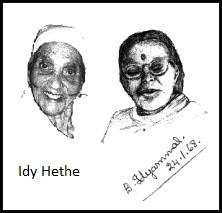
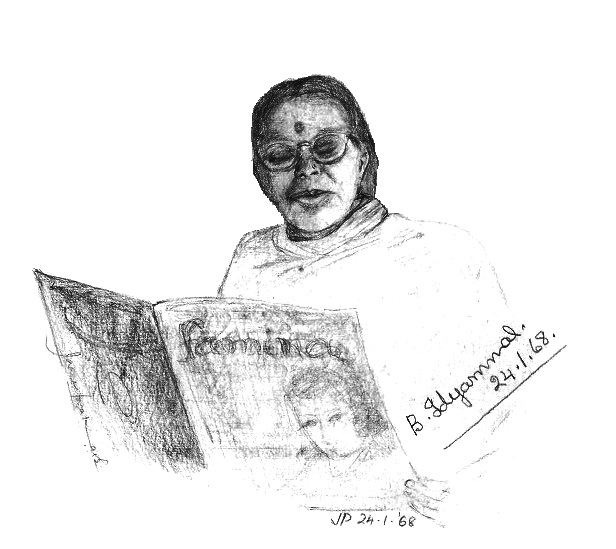
[A pencil sketch of Mom by JP in 1968 while she was reading an issue of Femina ]
Posted in badaga
Dr. Prakash Krishnan from Bangalore writes :-
DO WE KNOW THIS ?
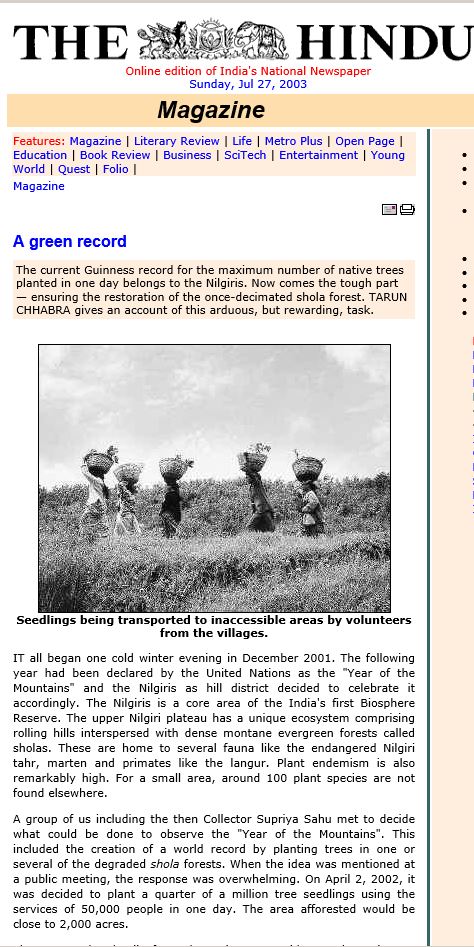
Once “A Guinness World record” for the “maximum number of native trees planted in one day” belongs to the KURUTHUKULLI village, Nilgiris.
On the day of June 23, 2002, 300 participants, planted 42,182 trees in just one day.
Kindly refer the link: http://hindu.com/thehindu/mag/2003/07/27/stories/2003072700420500.htm
Posted in badaga
Prof.Paul Hockings writes :-
I am pleased to tell you that “So Long a Saga”, my latest book on the Badagas of South India, has just been published in New Delhi by Manohar.
We may or may not agree with the views of Prof.Paul Hockings about Badagas but I am sure that this book (pages 406 ,price Rs.1295/-) will add to our knowledge about our community.. – Wg Cdr JP

I have written about the Badagas who have made us all very proud with their achievements. Rajamma of Kethorai, a teacher par excellence, is among the top on the list. The constant flow of emails/comments we get from her students proves just one thing – that she is a great person and has had very positive effects on all those who had come across her. She has been an inspiration to many but modestly states ” I know my achievement are not really great, if I could inspire at least a few in my life, that would be my achievement”
Do not fail to watch 30 mts programme about her produced by MALA MANYAN a renowned documentary film producer on the tamil TV Channel “THANDHI” on 24th august at 4.30 pm.
Update : This interesting programme was aired on 24-8-2013
Rajma, we are really proud of you!
Posted in badaga
Some time back, Ms.Shalini Nandakumar had suggested that we give the ‘good old Badaga lullabies, ballads etc’. She wrote “How about “ondhu ondhu avarai” and “oten tan toovay “….Sorry if I’m wrong with the spelling.
I would like to teach my daughter our Baduga rhymes, So pls kindly post Baduga rhymes also.And any baduga lullaby will be the best thing to know-“
Here is a ‘folk somg’ sent by Dr.Haldorai :
குணிக்கி
ஓ குணிக்கி ஓ மிணிக்கி
அக்கிலு காப்ப கூச அள்ள ஒத்தூண்0டு ஓத்து
நிந்ந அவ்வெ கள்ளெ0க ஏ0கிலெ கண்ண நீர ஆக்கிய
நிந்ந அப்ப கள்ளா0க ஏ0கிலெ குத்தண சீலெய முச்சிந
0த0புளு 0த0புளு தோட்ட சண்0டாமிளிய நோட்ட
ராணிய கூட்டீண்0டு ஓட்ட
Kuṇikki
ō kuṇikki ō miṇikki
akkilu kāppa kūsa haḷḷa oththūṇdu hōththu
ninna avve kaḷḷega ēgile kaṇṇa nīra hākkiya
ninna appa kaḷḷāga ēgile kuttaṇa seeleya muchchina
doubḷu doubḷu thōṭṭa sandāmaḷliya nōṭṭa
rāṇiya kūṭṭīṇdu ōṭṭa
The version we used to know :
Oh Chinnakki, Oh Ponnakki,
(Oh Chinnakki, Oh Ponnakki)
Hakkilu Kaapa Koosa, Halla eththindu hothu,
(The flood water [due to heavy rains] has taken away the boy who was keeping a watch on the birds [damaging the crops]
Thanna awwayya saare hegilay, mandaiya maara sachiya,
(When you tell his mother, she grieves by beating her head and chest)
Ammaiya saare hegilay, kanna neera haakkiya,
(When you tell his little sister, she keeps weeping)
Thanna appana saare hegilay, kutthana seelaiya arachina
(when you tell his father, he looks out for the bordered white sheet [typical Badaga shawl] used for covering the deceased)
Here is another ‘song – nursery rhyme’ –
Chappatay Chappatay saga maalay,
Kombu Koludha jen(u) hadadhe,
Erolu ethiba era mookki,
Kodalee ethiba kore mooki….
Kattu kuttu maadi kappalikke
[this is sung when feeding the baby and when the last line is finishing, the ‘food’ would be put in the child’s mouth]
Posted in badaga

Now you can access our website www.badaga.co on your smart phone.
Remember to access many multi media posts like Badaga Songs and Dance.
 Enjoy! Your feedback is most welcome!!

What we know about Badaga, both language and people, is less than what we DO NOT KNOW ABOUT THEM

my mother, Mrs.Idyammal Bellie Gowder,

my uncle Rao Bahadur HB Ari Gowder and

my grand parents Rao Bahadur HJ Bellie Gowder and Nanji Ammal
Barivi, Nodivi, Oridivi, Odhivi !
Now you can access our website www.badaga.co on your smart phone.
Remember to access many multi media posts like Badaga Songs and Dance.
Enjoy! Your feedback is most welcome!!
 | Mahesh Joghee Gowder on Proud of you DEVA HENNU ! |
 | Supriya Subramani on Tribal Status of the Bada… |
 | inventive71d7cc920c on Seemae [See’may] & M… |
| Riya on Seemae [See’may] & M… |
 | sekaran on History of Beragani Hethe |
 | Krish on Marriages between hattis from… |
 | Joghee Raman on Ari Gowda – 132nd Birth… |
 | Must Visit to know a… on © Copyright |
 | Gokul Gowder on Lt. Meera, First Badaga Lady N… |
 | Elisabeth Jensen on Nice to see these ladies with… |
 | Meghna on Learn Badaga |
 | Gokul on Seemae [See’may] & M… |
| Mahesh Joghee Gowder on Indrani Radhakrishnan at Cambr… |
 | freemortally2a5fac29… on Hethey Habba at Hubbathal… |
 Proud to be an Indian : Proud to be a Badaga
~~~~~~~~~~~~
This website is Designed, developed and maintained by Wing Commander Bellie Jayaprakash ~~~~~~~~ |
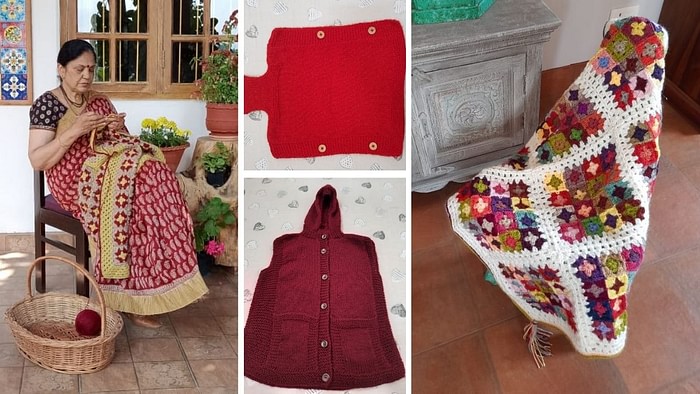
Tara's Creations
Namaskara – Greetings [Namasthe – Vanakkam],
Ollengay Iddhaya? – How are you?,
Ninna Hesaru A’ena? – What is your name?,
Maduvay aagi buttava? – Are you married?,
Nee a’ hattigha koodidhe? – You are married to [the boy/girl from] which village?,
Appara Santhosha – Thank you very much.
Aakkaday – That side,
Eekkaday – This side,
Horasu – Outside,
Baa – Come,
Bannay – [I] will come,
HOnay – Will go,
Hadadha’ya – Is it there?
KaaNay – Missing
>>
More than 1028,000 visitors
################################

::::::::::::::::::::::::::::::::::::::::::::::::::::::::::::::::::::::::
Aakkaday - That side, Eekkaday - This side, Horasu - Outside, Baa - Come, Bannay - [I] will come, HOnay - Will go, Hadadha'ya - Is it there? KaaNay - Missing
<><><><><><>><><>><><>
More than 1026,000+ visitors
################################
:::::::::::::::::::::::::::::::::::::::::::::::::::::::::::::::::::::::::::::::::::::
Now you can access our website www.badaga.co on your smart phone.
Remember to access many multi media posts like Badaga Songs and Dance.
Enjoy! Your feedback is most welcome!!
 In Badaga, MOON is ‘THINGUVA’, Full Moon is “HUNNAWAY” & New Moon is “MUTTU”
☂ ☂☂☂☂☂ ☂
|
|
Do you feel very strongly about any issue concerning Badaga Community? Have the urge to pour your heart out ? Feel free to express yourself without any inhibition and send them to bjaypee@gmail.com


Tiger is HULI in Badaga Lanuage

Here's a question that was posed to the Dalai Lama:
"What thing about humanity surprises you the most?"
His answer is : "MAN - Because he sacrifices his health in order to make money. Then he sacrifices his money to recuperate his health. And then he is so anxious about the future that he doesn't enjoy the present,
And as a result he doesn't live in the present or the future. And he lives as if he's never going to die and then he dies having never really lived".
Donate Your Eyes
 ==
==



![Seemae [See'may] & Morae [Mo'ray] (relationship)](https://i0.wp.com/badaga.wordpress.com/files/2008/11/nakku-betta1.jpg?resize=200%2C200)




 Mookuthi
  Chinna