727,000 + and counting….
that is the number of hits for this Badaga website
But for you, it would not have been possible
A Big Thank You
A Big Thank You
Posted in badaga

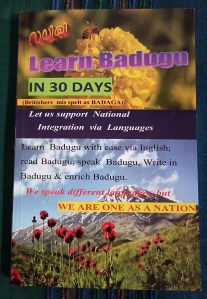
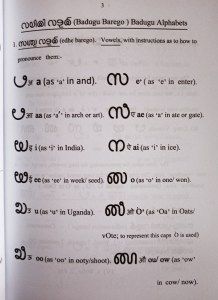
Yogesh Raj of Kadasolai, who has invented a script for Badugu/Badaga language, after nearly fifty years of hardwork, with lot of passion and a single minded dedication, has brought out an excellent book, ” Learn Badugu in 30 days ” (with English). In this book, he has also explained about how to learn and write in the Badaga Script he has invented. Yogesh prefers to say Badugu rather than Badaga


Divided into six Parts, this book contains 162 pages.
Part I explains about the how to write Badugu alphabets, vowels, consonants etc
Part II deals with Words, Nouns, verbs etc and names of seasons, months, fruits, animals etc
Part III contains words related to offices etc and basic Grammar – Let us learn Grammar
Part IV deals with various day to day conversations in offices, market as well as Grammar -2.
Part V has more Grammar lessons and long sentences
Part VI is on letter writing (in Badugu)
The book also contains about 500 Badaga words with English equivalents, a sort of dictionary at the end.
This book meets the urgent and important need of a script for the Unique Badaga language.
Recently Yogesh had taken a delegation to celebrate International Mother (Tongue) Language Day with a demand to include about 40 languages in the 8th Schedule of our Constitution. Many activists, spread across the country of many languages like BADAGA, Bhojpuri, Kosali, Rajasthani, Kodava, Magahi, Angika etc. The programme was organised by Campaign for Language Equality and Rights (CLEAR), a pan India Organisation representing language activists.
This book “Learn Badugu in 30 days” is available in some select book stores/shops in Ooty, Coonoor and Kotagiri. Price Rs.105. Pages 162.
Published by Bukka Malla Publications, Veerapandi, Coimbatore- 19
Contact : Yogesh R (yogeshr23@gmail.com – 8903471808)
********************************************
We are happy to make this book available to all friends and visitors to this website at a special price of Rs.80/-
( Courier/postal charges extra where applicable).
Contact :
bjaypee@gmail.com or send sms to 8637677373
Wing Commander Bellie Jayaprakash –
Posted in badaga
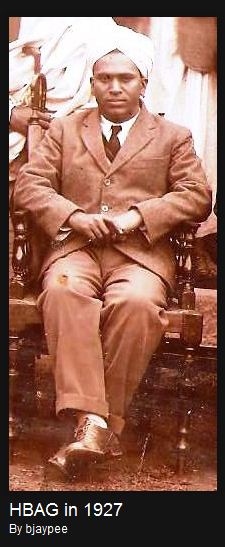
Today, 4th December, is Rao Bahadur H B Ari Gowder‘s 126th birth anniversary.
A great Badaga, a great Indian who did so much to the society
We pay tributes and remember him with reverence
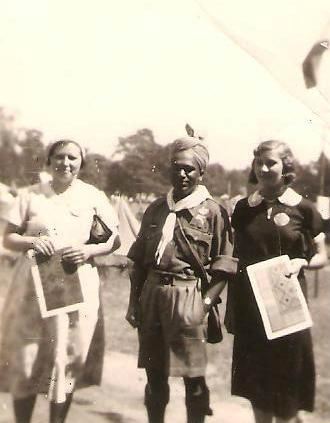
Rao Bahadur H.B.Ari Gowder, the first Badaga graduate, first Badaga M.L.C & M.L.A for a long time who had brought many reforms in/to Badaga Community including ‘prohibition’ (no alcohol – kudi) to Nilgiris in British days itself. Ari Gowder lead the Indian contigent (yes, “INDIAN CONTIGENT) to World Scouts Jumboree held in Europe in the 1930s.
Being a great philanthrophist he had done a lot for the betterment of Badagas. He was the one who established Nilgiri Co-Op Marketting Society at Ooty, to save the small farmers-especially Badagas- from the exploits of middlemen & traders at Mandis in Mettupalayam. He was the President of NCMS for more than 30 years, till his death and NCMS was considered one of the best co-op societies in India during his days. His statue has been erected in the NCMS compound in appreciation of his great work.
Since he donated the land, the road in front of Mambalam Railway Station in Chennai (Madras) is named after him (known as Arya Gowder Street). Both were held in great esteem and considered as the ‘ Uncrowned King ‘ of Nakku Betta by Badagas.


It has been some time earlier that I had written about Rajamma, a Badaga from Kethorai Village. Though, she has been highly recognised, on a personal level, she has not been treated fairly by Badagas, specially from her own village. Some over indulgent and misinformed gentlemen. She has been excommunicated and not allowed to enter her village.
Her ‘crime‘, marrying a non Badaga some 30 years ago, with whom she hardly lived for a year and got legal separation. Instead of feeling proud about a daughter who has been presented with so many awards as a teacher and social activist, her village people have not been kind to her. They may not be aware that what they have done, preventing her from coming to the village, has caused so much pain to this lady who brought up a son as a single mom.
She is a source of inspiration to women folk.
For her efforts and in recognition an USA university has conferred a doctorate to her. Read her inspiring story below. – Wg.Cdr.JP

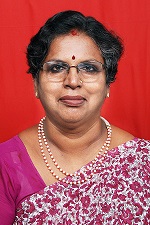
Dr.Rajamma ( Dean & Educational Consultant. SSAV, CBSE School, Thirumudivakkam ) writes to say :
It is a reward for my 40 years journey. I owe this to my Parents who had given me education, Kendriya Vidyalaya, the great organization where I served for 28 years, the NGOs which gave me a platform to do my social work and the thousands of my students whom had traveled with me in my journey of 40 years.
Tribute to Rajamma from her son Prithvi
There was a dreamy eyed girl who ran to school every morning with tattered clothes, but with big ambitions. When the world around her refused to see how bright she was, she shone even brighter, engulfing all the darkness around her. She climbed mountains nobody ever dreamt of and fought battles she never imagined. In the end, she had the last laugh. This is the story of my Amma who was denied the right to education, but now has an honorary doctorate for her excellence in the field of education and social service.
Your journey, fight for dignity in a society where women were undervalued, and still are, just for being women, has inspired generations of both women and men. Your humility and thirst for knowledge has earned you so many awards that there is no space to keep mine anymore.
You lived your dreams of earning your PhD vicariously through me at first, but look at you now, shining like a pole star.
Thank you for being a purple hibiscus in a world of ordinary red hibiscus. Thank you for being the feminist icon we all need.
—————————————————-
Santhosh Kumar JB has sent the info and the link in ‘The Hindu’ and we have great pleasure in sharing the same with all Badagas.
It was not before the age of 15 that she was first taught the English alphabet. Now, 35 years later, she is a successful teacher in the same subject and is getting ready to leave for New Delhi to receive the Dr.Radhakrishnan Best Teacher Award from President Pratibha Devisingh Patil.
The fact that R.Rajammal is the first generation learner from her family may not be uncommon. But that she belongs to the Badagar community from remote Kethorai Village of Kethi Village Panchayat in Nilgiris District and has come thus far is an inspiring story. People travelling on the famous Nilgiri Mountain Railway might have noticed the Kethi railway station, Coonoor and Udhagamandalam. Her native village Kethorai is a good five-kilometre trek from there.
Ms. Rajammal teaches English and Science to primary students at Kendriya Vidyalaya (II) at Madambakkam near Tambaram. Recognising her rise from modest backgrounds, her contribution to teaching and the Guides movement, the Ministry of Human Resource Development selected her for the prestigious award.
“I am the eldest among five children. I still remember the hardwork of my parents who toiled through the day in tea plantations and small farms raising vegetables,” Ms. Rajammal recalled her childhood days at Kethorai. Five decades back, education in remote hilly areas was scarce but Rajammal made the best of it, excelling in academics till high school.
Being a first generation learner did come in the way but having imbibed the quality of sheer hard work from her parents M.Ramachandran and R.Saraswathi, she never gave up. “We used to walk eight kilometers to high school and back home. It was not before class nine that we were first taught the English alphabet,” Ms. Rajammal said.
As those were the days of college education immediately after S.S.L.C., they had very little time to master English and when she joined Providence College, Coonoor, she found it even more difficult in the initial days. However, with the help of her teachers and classmates, she finished her B.Sc in Botany in high grades and came to Chennai, where she managed to get the job as a teacher at St. Michael’s Academy in Adyar.
Deputation to Moscow
Seven years later, she joined the Kendriya Vidyalaya. After a nation-wide test, she was selected to go on a three-year deputation to Moscow where she served the KV school there. A compere for programmes at INS Rajali in Arakkonam and also during passing out parades of Central Industrial Security Force establishments, Ms. Rajammal has earned popularity for her motivational speeches and also for her work among the underprivileged sections involving school students.
Her association with welfare homes for the senior citizens, destitute women and children had its origins in her childhood. “I visit my native village at least six times a year and spend a long time during the summer vacation. I insist on the importance of education and encourage young girls never to give up till they succeed in life,” Ms. Rajammal said.
Actively involved in the Girl Guides movement, Ms. Rajammal has received the NCERT Award in 2003 for Innovative Teaching Practices in Environmental Studies and the Kendriya Vidyalaya Sanghatan Incentive Award in 2008.
She wants to be a role model for rural women, especially among her Badagar community. Ever indebted to the Kendriya Vidyalaya Sanghatan for the exposure that she has received, she said that she would be only too glad to serve KVS even after her retirement.
K. Manikandan
Posted in badaga
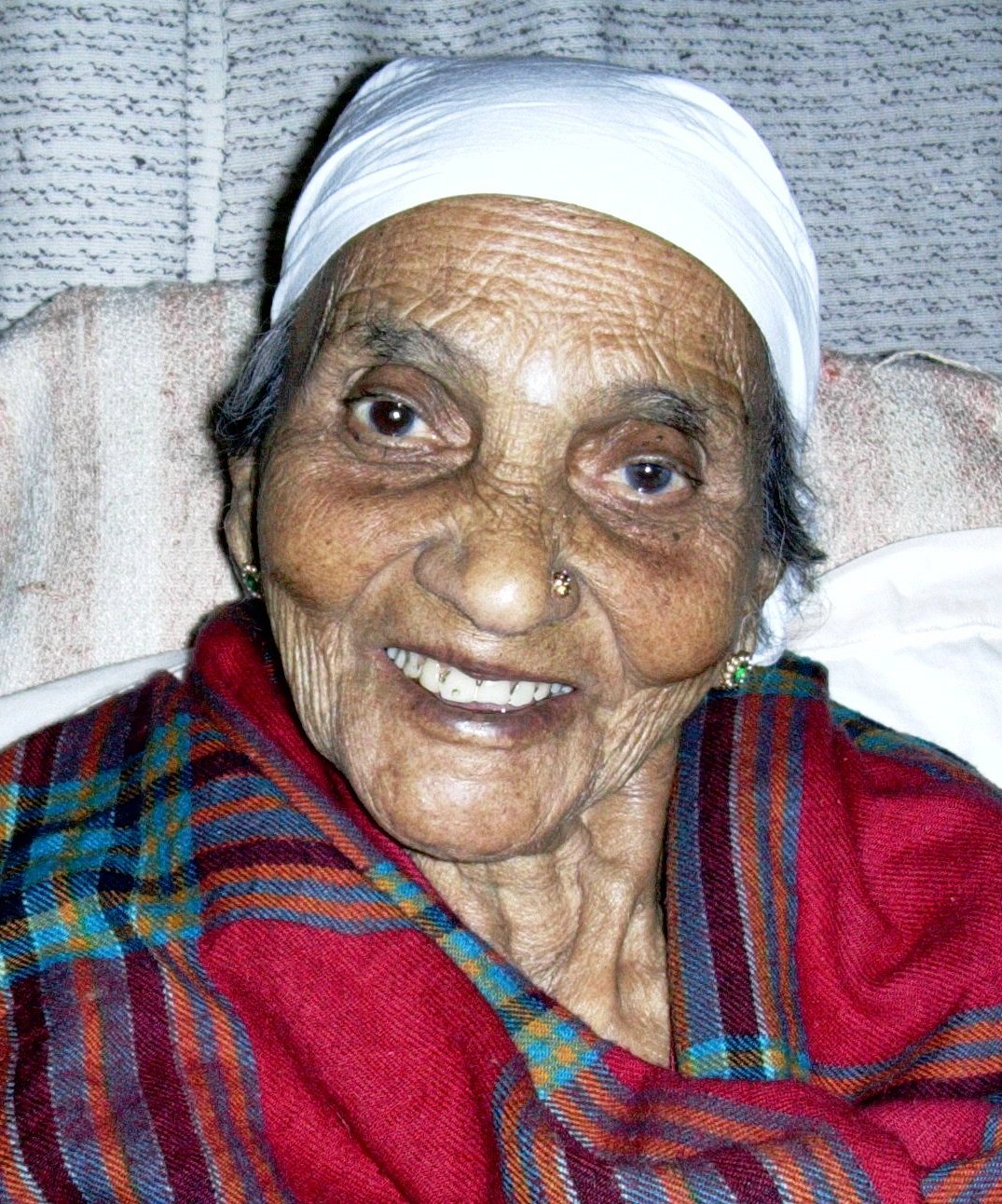
Remembering mother on her 107th Birth Day
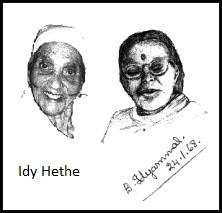
Idyammal Bellie Gowder
You were everything for us in all those glorious 99 years and 10 months when you were ‘here’.
As we were preparing to celebrate the ‘century’, you chose to leave this earth just a couple of months earlier…seven years ago.
How time flies!
Elle idhale’yu engava harachu
[Bless us all from where ever you are]
![]() Idyammal Bellie Gowder |
|
| Born | September 02, 1912 Hubbathalai, The Nilgiris |
|---|---|
| Died | July 13, 2011 (aged 99 years 10 months) |
| Parents | Rao Bahadue HJ Bellie Gowder and Nanji Hethe |
| Sister of | Rao Bahadur HB Ari Gowder |
| Spouse | B.K.Bellie Gowder [Bearhatti] |
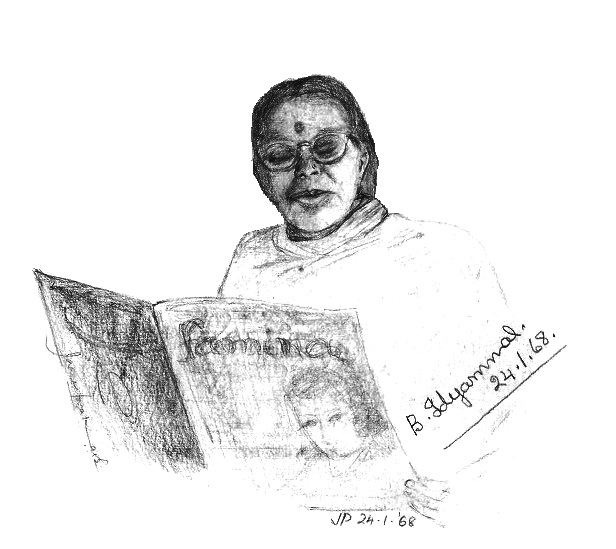
[Autographed pencil sketch of Mom by JP in 1968 while she was reading an issue of Femina ]
“I know my mother looks much older than what she is but those wrinkles have the charm of their own. They indicate the signs of her great endurance; and the hard life she has to lead through to bring her children to lead a life that is respected and regarded by others” – JP (24-1-68)
Dear Hands
[Grace Noll Crowell]
My mother’s hands were beautiful,
They are not always smooth and white
They were so busy making dull
And lusterless things clean and bright.
They reached so often to caress
A hurt child crying in the night
They moved as quick as fluttering birds
Among the cups and spoons at tea
They did a thousand lovely things
And did them all so graciously
There is no way to sum them up
The countless things she did for us.
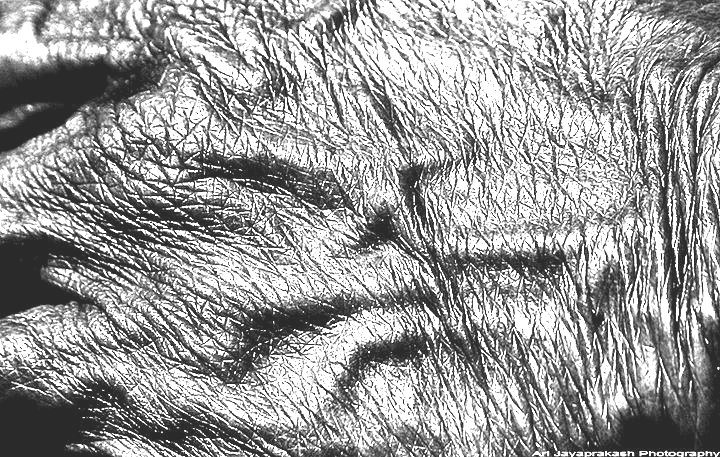
[photo of Idy Hethe’s hand by her grandson Abhi Ari -2010]
Hubbathalai N SIVAN, Founder President of NSFT writes to Tea Board
We, the ailing Nilgiris Small Tea Growers, submit this letter for kind consideration and necessary actions immediately.

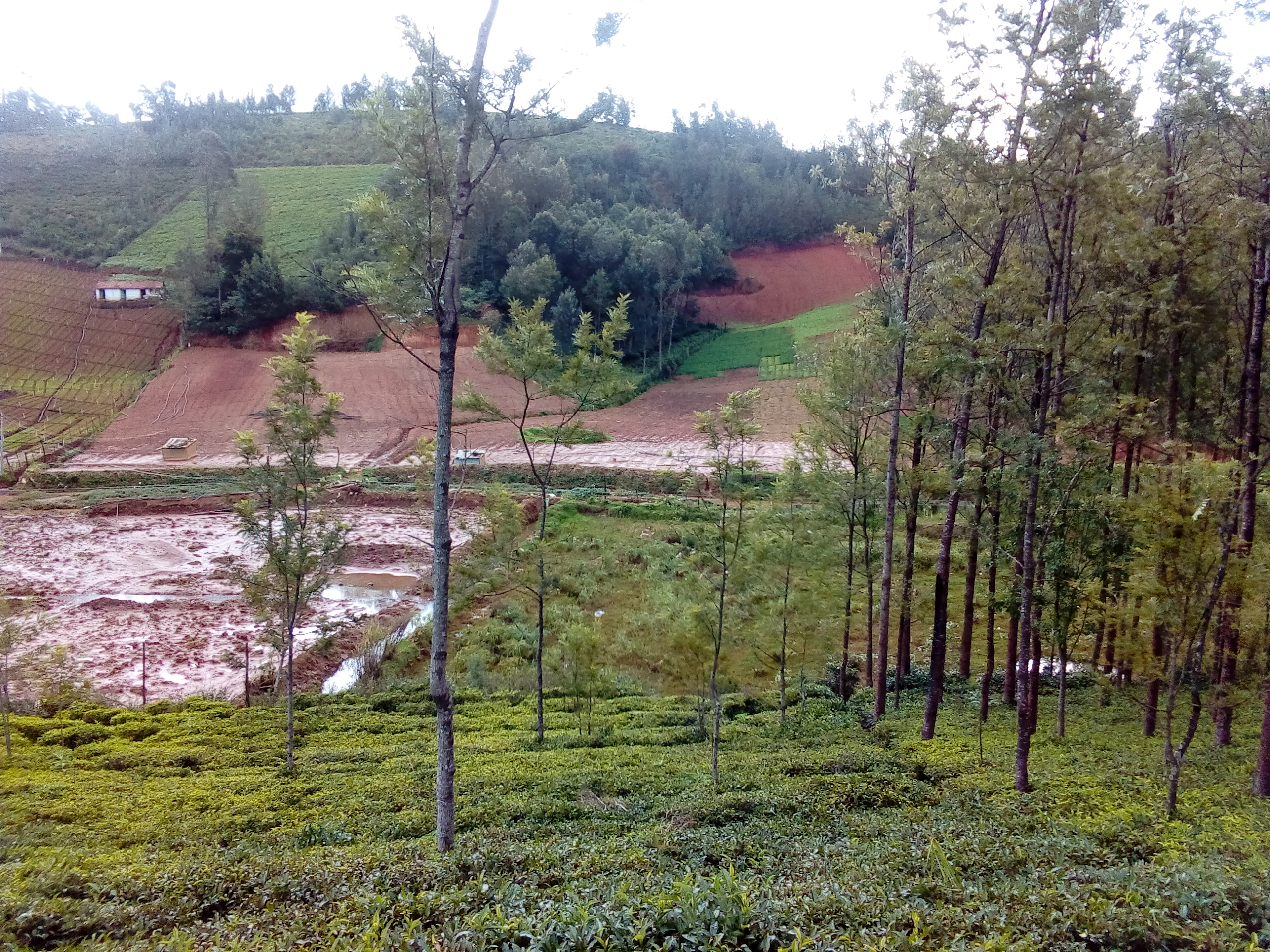
As you are aware, The Nilgiris District has been under severe Drought since November, 2018 due to heavy frost till February, 2019 and extended Summer till July, 2019 without normal monsoons and rainfall. The entire standing Tea Crops had completely dried up and affected by many diseases, particularly, the red mite attacks. Around 40000 acres of tea gardens of Nilgiris Small Tea Growers had crop loss around 35-40% during this period.
More over, the recent Ghost Rains of August, 2019 measuring approximately 3000mm+ (three years total rainfall of Nilgiris-rained I one week) had completely taken fertile soils of small farmers’ tea gardens from their fields, thereby making most of their tea gardens barren and non- productive. The Nilgiris Small Tea Growers are in severe distress and direction–less now.
More over, many Small Tea Growers had already left /sold their tea gardens and migrated to other places in search of their livelihoods. It should not be followed by the remaining Nilgiris Small Tea Growers. Hence, we request Tea Board to intervene in this matter immediately and help The Nilgiris Small Tea Growers for their Sustainable Development and Inclusive Growth through their small holding Tea gardens.
Hence, we kindly request you to look into this, and sanction appropriate crop compensations to the Nilgiris Small Tea Growers on war footing basis and save Nilgiris Tea Economy for its Sustainability.
Posted in badaga
(This post was originally written in 2008. Now the script developed by Kadasolai Yogesh is widely followed)
BADAGA SCRIPT – BADAGA BARAE
It has always been felt that for a language to survive, it should have its own script. It cannot remain only as a spoken language for long. But of course, the script need not be peculiar and specific one pertaining to that particular language.
So too is the necessity of a script for Badaga. Many have attempted to achieve this objective with various degrees of success. But unfortunately, to my knowledge, no records exists, if any. I am no expert on phonetics or languages or much less innovating an unique script. But the urge to have a separate script has convinced me that it is very much possible to ‘ADOPT’ an existing script and ‘ADAPT’ it to Badaga language.
Three scripts come to mind straight away – Tamil, English and Kannada.Tamil – because a majority of us know how to speak and write due to the simple fact that we belong to Tamil Nadu, English – since most of us choose to learn as well as put our children in English medium schools and Kannada – due to the fact that Badaga is more akin to Kannada than any other language [though I firmly beleive that Badaga is a separate language on its own merit and not a dialect of Kannada].
But when trying to choose a script for Badaga, Kannada script is ruled out for the basic reason that most of us do not know the language or familiar with the script and no scope to learn it in our schools in the Nilgiris. Hence the choice between Tamil and English. Badaga ,like many other Indian languages, has very definitive and distinctive sounds/words [I do not know the exact English equivalent] that distinguishes one word from another. Even a small change in pronunciation could result in an entirely different meaning in Badaga. For example,a subtle change in context of the word ‘BAE [bay]’ could mean mouth, bangle, lentil, crop etc. Bella [jaggery] or BeLLa [ a male name] are two entirely different things. So are ‘kallu – stone’ and ‘KaLLu – a drink’. So, what could or should be the choice?
In Tamil script we cannot differentiate ‘K’ from ‘G’ or ‘T’ from ‘D’. This makes a huge impact when Badaga words are written in Tamil script. ‘Gaasu – potato’ is totally different from ‘Kaasu – coin, remove’. Or ‘Ettu – eight’ and ‘Eddu – getup’. Another drawback could be the absence of ‘Ha’ in classical Tamil. On the other hand, in English, we cannot clearly bring out the difference of ‘na’ from ‘Na’ [anna – food, aNNa- elder brother] or ‘halli – lizard’ from ‘haLLi – name, village’. ‘Kalla – a male name’ sounds the same as ‘ kaLLa – a thief.
Yes, it is indeed a little tricky to choose between Tamil and English. But, taking into consideration the younger generation who are going to be the future hope and the irrefutable fact that they are all more familiar with English than Tamil, the choice is English. Keeping in mind the successful adaptation of English script for Malay language (Malaysia) I would plump in for English. With a few minor modifications to overcome the grey areas mentioned above, English script can be easily used in Badaga.
Remember Devanagiri (Hindi) is the script for Nepali. The ‘minor’ modifications that can be undertaken to overcome the drawbacks I referred above could be by using an extra ‘a’ – thus milk can be written as ‘haalu’; ‘dhadi – stick’ can be different from ‘dhaadi – beard’. So on and so forth. We may use ‘capital’ letters to differentiate between ‘bella and beLLa’ as I have done above.What if a complete sentence is in capital letters ? – We may use ‘bold’ letters or underline the words to give the emphasis. Innovative use of – ‘ – [apostrophe] can bring out the difference between “soppu – green ” and “so’ppu – soap” or “kodi – flag” and “ko’di – crore”.
It is said that Indians [read Badagas] will reject 50% of anything without even hearing it, another 50% without understanding it; and if ‘anything is left behind they reject it just for the sake of rejecting it. Like what is happening in many hattis with ‘young gowdas’ ruling the roost.
BUT, ALL YOU TRUE BADAGAS – LET US START SOMEWHERE TO HAVE A SCRIPT FOR OUR LANGUAGE. IMPROVEMENTS AND INNOVATIONS CAN FALLOW. IF MICROSOFT CAN ACCEPT BADAGA AS AN UNIQUE LANGUAGE , THERE MUST BE SOMETHING . SARI THAANE?
<><><><><><><><><><><><><><><><><><><><>><><><><><><><><><><>
For numbers in more than 5000 languages go to zompist.com
Another Interesting Link -> Badaga language Totally Explained
!!!!!!!!!!!!!!!!!!!!!!!!!!!!!!!!!!!!!!!!!!!!!!!!!!!!!!!!!!!!!!!!!!!!!!!!!!!!!!!!!!!!!!!!!!!!!!!!
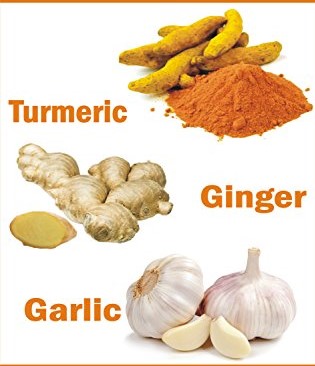
BELLE BENGUVE – GARLIC [in whatever language you say, is always good for health – though may not be for “LOVE”]
(The unicode entry tool was developed by the Linguist List. To obtain it for use in other web pages click here)
See for more details : http://archive.phonetics.ucla.edu/Language/BFQ/bfq_word-list_1992_03.html
Research on Badaga
I found this interesting article – research by Prof: Peter Ladefoged in the net. Is it not fascinating that so much research has been done on our language ?
![]()
Peter Ladefoged Languages index

Badaga is a Southern Dravidian Language (Tamil-Kannada branch) spoken by approximately 250,000 people in the Nilgiris hills in Southern India. There are several dialects, only the most conservative having the complete set of contrasts illustrated here.
>Badaga has five vowels /i e a o u/ , all of which can be contrastively half and fully retroflexed.
Half retroflexed vowels are indicated by the diacritic for rhotocity :[a~], fully retroflexed vowels with a subscript dot [a]

This is how Prof: P Hockings depicts the Badaga Words in English script
Some more thoughts on adopting English script for Badaga
Picking up from what Prof.Paul Hockings has mentioned – rather the unicode[?] used – in the example shown here from his book Counsel from the Ancients: Study of Badoga Proverbs, Prayers, Omens and Curses (page 54. Outline of Badaga Language – 2.1.2 Vowel Contrasts ) , I am suggesting a simple and straight forward work around.

The words ‘to stand’ & ‘paddy’ are written as ‘nillu & nellu’ . No problems with that.
But ‘whistling’ & ‘to cook’ are written as ‘bi:su & be:su’ . My suggestion is use ‘beesu & baesu’ as they are pronounced.
(FootBall is FUTBAL and Photo is Foto in some languages that go by the pronounciation and thus making it easy).
‘To wander’ ‘suttu’ is used. But to me ‘suttu’ sounds more like ‘to burn’ . I would suggest ‘suthu’ for wandering. [ ‘SUTHUGAL or SUTHUKAL’ sounds familiar, is it not?]. Same thing for ‘property’ – ‘sothu’ ‘ instead of ‘sottu’ which sounds more like ‘sottu’ – ‘drop’ .
To blow ‘oodu’ – udu’ sounds and looks better than ‘u:du’ and ‘odhu’ instead of ‘o:du’ which to a novice like me is ‘run’ or ’tile’ – ‘odu’ .
‘To shine’ – it could be ‘michu’ instead of ‘miccu and ‘muchu’ instead of ‘muccu’ for covering. ‘Muccu’ sounds or looks more like ‘mukku’ – to gobble or swallow .
‘hennu’ [ ‘girl’ ] could be written as ‘heNNu’ [girl] and ‘hannu’ as ‘haNNu’ to bring out the emphasis on ‘N’.
‘nadu’ for ‘middle’ or plant is OK but for ‘country’ it could be ‘ naadu ‘ than ‘na:du’ .
Similarly, my suggestion : – for ‘now’ – ‘ ‘eega’ , ‘bamboo’ – ‘oede’ , ‘village’ – ‘ooru’ ‘
The main and only creteria should be the ease of use and understanding and yes, without the use of , what I would like to term as, ‘dots’ and ‘quotes’.
(I would like to repeat that I am no expert on languages and no intention is implied to hurt the purists and followers of UNICODE etc]
:::::::::::::::::::::::::::::::::::::
:::::::::::::::::::::::::::::::::::::::::::::::::::::::::::::::::::::::::::::::::::::
::::::::::::::::::::::::::::::::::::::::::::::::::::::
Posted in badaga
For the Badaga community to preserve its cultural heritage, a large share of credit should be given to its women folk. Though, like any other community in our country, enough importance has not been accorded to the hard working Badaga women, it will not be out of place to say that inspite of hurdles and hardships, some of the Badaga ladies have broken out of the shackles and achieved a lot in many fields.

Sabitha Bojan, (Head – P&D – TN, at SMART Training Resources), is one such highly talented lady. Her poems, mainly in Tamil, are a treat to read (in FB). Recently her book “Neelamalai Pookari...” was released at Coimbatore by the Tamil Nadu minister.


Sabitha, we are proud of you!
GONE BUT NOT FORGOTTEN
Eight Death Anniversary (13-7-2019)
Idyammal Bellie Gowder
You were everything for us in all those glorious 99 years and 10 months when you were ‘here’.
As we were preparing to celebrate the ‘century’, you chose to leave this earth just a couple of months earlier…seven years ago.
How time flies!
Elle idhale’yu engava harachu
[Bless us all from where ever you are]
![]() Idyammal Bellie Gowder |
|
| Born | September 02, 1912 Hubbathalai, The Nilgiris |
|---|---|
| Died | July 13, 2011 (aged 99 years 10 months) |
| Parents | Rao Bahadue HJ Bellie Gowder and Nanji Hethe |
| Sister of | Rao Bahadur HB Ari Gowder |
| Spouse | B.K.Bellie Gowder [Bearhatti] |
[Autographed pencil sketch of Mom by JP in 1968 while she was reading an issue of Femina ]
“I know my mother looks much older than what she is but those wrinkles have the charm of their own. They indicate the signs of her great endurance; and the hard life she has to lead through to bring her children to lead a life that is respected and regarded by others” – JP 24-1-68
Dear Hands
[Grace Noll Crowell]
My mother’s hands were beautiful,
They are not always smooth and white
They were so busy making dull
And lusterless things clean and bright.
They reached so often to caress
A hurt child crying in the night
They moved as quick as fluttering birds
Among the cups and spoons at tea
They did a thousand lovely things
And did them all so graciously
There is no way to sum them up
The countless things she did for us.
[photo of Idy Hethe’s hand by her grandson Abhi Ari -2010]
Posted in badaga
Let us learn Badaga – the unique language of Badagas of the Blue Mountains
” Ollenge iddiya ? – How are you ?”
‘Suddi saddha ella olliththa ? – (Roughly) ‘ How is everything ? ‘
1. Are you a Badaga ? – Nee ondu Badagana?
2. Yes, I am a Badaga – Ha, Na ondu Badaga
3. What is your name ? – Ninna hesaru aena ?
4. My name is Bhoja – Enna hesaru Bhoja
5. Which is your village ? – Ninna Hatti edu ?
[5a. Amme / Thamma, nee ai hatti ? – Girl/ Boy, which is your village?]
6. My village is Bearhatti – Enna Hatti bandu Bearhatti
7. Whose son/daughter are you ? – Nee dara maathi / hennu ?
8. I am Mela thara (top street) Joghi Gowder’s son / daughter – Na Mela thara Joghi gowdaru maathi / hennu
~~~~~~~~~~~~~~~~~~~~~~~~~~~~~~~
Numbers in Badugu /Badaga
1. Ondu (One)
2. Eradu (Two)
3. Mooru (Three)
4. Naakku (Four)
5. Iidu (Five)
6. Aaru (Six)
7. eizhu (Seven)
8. Eattu (Eight)
9. Ombathu ( Nine)
10. Hathu (Ten)
11. Hannondu (Eleven)
12. Hanneradu (Twelve)
13. Hadimooru (Thirteen)
14. Hadanaakku (Fourteen)
15. Hadanaidu (Fifteen)
16. Hadanaaru (Sixteen)
17. Hadarizhu (Seventeen)
18. Hadarettu (Eighteen)
19. Hathombathu (Nineteen)
20. Eipathu (Twenty)
30. Moovathu (Thirty)
40. Nalavathu (Forty)
50. Iivathu (Fifty)
60. Aravathu (Sixty)
70. Elavathu (Seventy)
80. Embathu ( Eighty)
90. Thombathu (Ninrty)
100. Nooru (Hundred)
Days In Badugu/Badaga
1. Aadivaara (Sunday)
2. Sovaara (Monday)
3. Mangavaara ( Tuesday)
4. Bodavaara (Wednesday)
5. Chikkavaara (Thursday)
6. Bellie (Friday)
7. Sani (Saturday)
Months In Badugu/Badaga
It is said that Badaga month usually, starts on every 10th of the English month. Like for example the first Badaga month Koodalu starts on 10th January.
1. Koodalu (Jan)
2. Aalaani (Feb)
3. Nallaani (Mar)
4. Aani ( Apr)
5. Aadire (May)
6.Aadi (Peraadi) (Jun)
7.Aavaani (Jul)
8.Perattadi (Aug)
9. Dodda Deevige (Sep)
10. Kiru Deevige (Oct)
11. Thai (Nov)
12. Hemmaatti (Dec)
Pleasantly surprised to hear all the Badaga Months being mentioned in this song called ‘Kappu Huttileyu’ . Listen to this great dance number and other Badaga songs here
**************************************
| Hindu-Arabic numeral | Badaga and pronunciation | |
|---|---|---|
| 1 | ஒந்து (Ondu) | |
| 2 | எரடு (Eradu) | |
| 3 | மூறு (Mooru) | |
| 4 | நாக்கு (Naakku) | |
| 5 | ஐது (aidhu) | |
| 6 | ஆறு (aaru)) | |
| 7 | எழ்ழு (ézhu) | |
| 8 | எட்டு (ettu) | |
| 9 | ஒம்பத்து (Ompathu) |
Certain peculiarities of Badaga .
Hallu [ ha- as hurt and llu – as in loo] means tooth [teeth]. note – there is no plural term.Haasu – spread [the bedding], Haasike – beddingHasu – hunger
Maana – Pride, Mana – heartKaanu – see, Kannu – eye[s] (example – Doctor-a Kaanu, kanna pathi hegina – See the Doctor, he will tell about the eyes]
~~~~~~~~~~~~~~~~~~~~~
Peculiar Words
There are some words in Badaga that are truly peculiar. for example :
1. GIJI GIJI ( as in Give & Jinx) – Confusion , mess up / disorderly
GIJI GIJI maada beda – Don’t create confusion
Room aekka ethe GIJI GIJI (ya) hadadhe ? – Why is this room in such a mess?
2. MURUKKU(LU) (Mu ru ku) – Foul mood / mild anger
Amme Ekka maathaduvadu elle ? – Why is sister not talking ?
Ava murukkindu endhave – She is in a foul mood
3. BADAYI (Ba daa ee ) – Show Off (proud)
Appara badayi maadiya – She shows off a lot
~~~~~~~~~~~~~~~~~~~~~~~~~~~~~~~~~~
Birds (Hakkilu)
Mari (chic) –{Koi Mari – chic(ken)}
Also for calf [ for eg) Nei mari – puppy dog]
COLOURS (BANNA)
1.Kappu – Black
2.BeLLay – White
3. Keppu (Kechay) – Red
4. Pachchay – Green
5. Neela – Blue 6. Arichina (Manja) – Yellow
Also see http://badaga-language.blogspot.in/
Badaga or Badagu, is a ‘classic‘ and independent language spoken by Badagas of the Blue Mountains or the Nilgiri hills, in north -west Tamil Nadu, bordering Karnataka and Kerala.
Though it is unique by itself, it can be said to be akin to Halaiya (old) Kannada more than any Dravidian language. But due to the geo – political reasons, it is being identified more with Tamil.
Unfortunately, some ‘over enthusiastic scholars’ and a few elders have been trying to eliminate the sound ‘ha -ஹ ‘ (which is an integral part of the Badaga language and) replace it with ‘ah- அ ‘ with some unacceptable justification that these letters (as well as letter like Ja ஜ, Sa ஸ, Sha ஷ ) do not form part of pure/classical Tamil though they are very much in day to day usage.
Let me elaborate and justify why ha and other letters, like ஜ, ஸ, ஷ etc should remain as core letters/sounds in Badaga.
A Badaga village is known as Hatti (ஹட்டி) and not as அட்டி.
Our deity/ Goddess is Hethe – ஹெத்தே and not Athe எத்தே
Some day to day words starting with ha
Haalu – ஹாலு – milk
Habba – ஹப்பா – festival
Hannu – ஹண்ணு – fruit
Haavu – ஹாவு – snake
Jana ஜன – people
Janni ஜன்னி – cold
Jav’voni – Young
Jakkadha – ஜக்கத – the famous hatti (village)
Hasu ஹஸு – hunger
Haasu ஹாஸு – spread
Hethe nangava Harichali – ஹெத்தே நங்கவ ஹரிச்சலி
Let Hethe bless us !