Category Archives: badaga

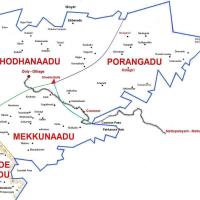
Badaga Villages [Hattis]

A matter of concern is that we still do not have accurate information about our hattis.

Like, the geographical/location of the village, the number of households, in a hatti – how many Nattaru, the marriage relations with other hattis etc. Even in our page on Hattis / villages, I have tried to give details known/available.

The good news is that Prof.Paul Hockings and Christiane Pilot-Raichoor are in the process of updating  their book/encyclopedia  A Badaga – English Dictionary in which they have not only given the names of Badaga Hamlets [hattis] but elaborated them with lot of information.

Prof.Paul Hockings writes :
Dear J.P.,
     ….. you will be pleased to hear that C. Pilot-Raichoor and I have agreed to work on a new revised and expanded edition of the Badaga dictionary.
     But there is one thing you might be able to help me with. As you will recall the older Dictionary (most unusually) inlcuded all the Badaga place names, especially villages. These however are rather out-of-date, and I am wondering whether through your Badaga network you could help me by getting new figures for the number of Badaga households in each hamlet. (If there are Tamil  houses there too, these should not be counted.)
For example:
Hubbatale np. Ubatalai, Ubbadalai, Oopathalay, Oopathullay, Vubathalai, Vubadale, Hubbathala, name of a hamlet 3.5 km. NW of Coonoor; head village of Hubbatale commune (and also of Hubbathala Panchayat, with a 1991 population of 10,383; Kasturi, Belli and Maduve/Hattara kulas; in existence before 1812, and now classified as a town); ….. ‹ hubbe+tale, ‘hill forest indigo+headland’)  DEDR 4229, 3103
   As you can see, I give all the variant spellings in past literature, and my estimate of the size in 1972. The 1991 population could also be updated, of course. What I would like is for you to ask your contacts to give you an accurate count of the number of households in the villages they know well. I attach a checklist of all the Badaga hamlets, so you could just add the data onto that when it comes in.  Your help, as always, would be much appreciated.   Best wishes, –    Paul
My reply :-

Dear Paul,

Thanks a lot for your email. I am delighted to learn that, along with C. Pilot-Raichoor, you are working on a revised and expanded edition of Badaga Dictionary. Indeed a great news.
 
Frankly, it is a shame for a Badaga like me to say that in this age and time, we are not in a position to say exactly how many Badaga villages are there. The confusion is compounded to know that a group of Thoreyas do not consider themselves as main stream Badagas as they have managed to classify themselves as OBC – and not as BC – Backward community under which Badagas are grouped and recognised by the Govt.
 

Samples from A Badaga English Dictionary

BADAGA HAMLETS
Biligiri Rangan Hills/Me:l si:me

Aṭṭapa:ḍi
Oḍamaṇḍe
Osaṭṭi/Hosaṭṭi/Hosahaṭṭi
O:ḍemandu
Ko:ṭa:ḍa/Ko:ṭe ha:ḍa
De:vanatta
Puṇaju:ru
Maṇuhaṭṭi
Ma:vaḷḷa
Ma:vuhaṭṭi
Me:l Ma:vaḷḷa
Si:gaṭṭi

……

Hubbatale commune:
Karimorahaṭṭi
Cinna Hubbatale = Hubbatale
Me:laṭṭi
Hubbatale Ki:yaṭṭi (has akka
bakka)

As far as I know [About Hubbathalai Commune], Karimorahatti is NOT part of Hubbathale Commune.
When you mention Hubbathalai, generally it is taken to mean the Melatti, we ‘locals’, residents of this hamlet simply call it HATTI.
It is also called Peria Hubbathalai. Peria in Tamil means big/elder.
Hubbathali Kiyatti is called OORU and is also known as Chinna Hubbathali. Chinna means small/younger. Many, including the residents, are not aware that it had/has akka bakka.
As is believed, a hatti with a akka bakka is considered older but in case of Hubbathali, it is slightly vague.
Incidentally, in the main festival of Ram Navami of Hubbathali Melhatti, the deities are FIRST taken to Kiyatti before the same is taken to every house. Devaru Eth’tho’dhu. May be that gives an indication that Hubbathalai Kiyatti is where it all began though latter, the importance has shifted to Melatti due to Rao Bahadur Bellie Gowder and his son Ari Gowder.

I have some rare photos of these hattis, including the visit of Governor of Madras to Hubbathali.

By the way, many from both Hubbathale hattis have married from/to Karimora hatti.
I request all friends to give whatever info they have on their hattis/villages.
A big thank you in advance.
See the Badaga Hamlets as given by Prof.Paul Hockings  here ->  Badaga villages 
See the list of Hattis/Oorus compiled by Wing Commander Bellie Jayaprakash me here – >


Yeomen service to the society

R.Venkataraman (arewe1946@gmail.com)

comments about our website http://www.badaga.co

‘All the efforts you had taken have started giving fruits. Yeomen service not only to this society, but the outsider also starts knowing about Badagas & their culture’

Thank you very much for your comments. It is highly encouraging words like yours that give the motivation to do more.
The surprising fact is that many aspects of daily life and times of Badagas in the good old days of hundred of years back still remain to be unearthed and properly documented.
I have no hesitation to accept the fact that Badagas are one of the original and indigenous  tribes of the Nilgiri hills.
French researcher on Badaga Christiane Pilot Raichoor says with authority that Badaga language is not a derivative/dialect of Kannada recently. Many Badagas are not even aware of this fact.
– Wg Cdr JP

Vote for Venugopal

Vote for Ooty Nomination  

Public Meeting Notice & Invitation

Monday, April 25, 2016 at 4-00pm, Independence Park,
Near Old ATC Theatre, Ooty

E 140

Dharmalingam Venugopal

Independent Candidate


My dear Voters of Ooty,

I will be filing my nomination for the Ooty constituency on Monday,  April 25, 2016. Last two months I have been going around the entire constituency carrying the message of ‘Vote for Ooty’.  The response has been both heart rending (at the utter neglect of Ooty and surroundings) and heartwarming (at the support for my humble effort to rally the local people to stem this unbearable rot).

I have made bold to contest the coming elections not for any pleasure but out of pain. By doing this I have only given expression to the urge that has been simmering in the hearts of most citizens of Ooty and Ooty constituency.

Mere intentions cannot bring about a change. Everyone must be prepared to play his or part. Intentions become movements when the first few dare to come out into the open to endorse the righteousness of the intentions.

I appeal to the young and old, men and women, rich and poor,  farmers and traders, professionals, hoteliers, tourism operators and everyone to come to the Public Meeting at 4- 00 pm at Independence Park (near old ATC Theatre) on Monday the 25th of April,2016.  Your small gesture to be with us on that day will matter a lot to the future of OOty.

I shall announce  the Ooty Manifesto at the meeting. All participants are welcome to speak at the meeting to add, amend or improve the manifesto.

The crying need of this country, especially our state Tamil Nadu, is for some honest, upright and uncorrupt independent persons to get elected to the state assemblies. Since these individuals will have no constraints of a political party and hence  are not expected to keep their mouths closed both inside and outside these ‘law making institutions’, we can hope to hear the voice for development.

Venugopal is a man of courage and conviction.  The very fact that he has taken the bold step of contesting the forth coming elections on his own , speaks volumes about his commitment.

I whole heartedly support his candidature and appeal to all voters of Ooty constituency to work, vote and elect Dharmalingam VENUGOPAL as THE M.L.A.

Wing Commander Bellie Jayaprakash  (www.badaga.co)


Assembly Elections – TN

Have been following the election scenario in our Nilgiris District with interest and concern. More concern than interest, in fact.

 With these m.ks [pun intended] – so called munnetra kazhagams, our blessed state, once proudly called Madras Presidence, has turned all of us into corrupt disgusting, spineless, feet licking weirdos.
 
Unfortunately, with their money and muzzle power, they have made this state such  a corrupt one where self respecting, service minded people may find it extremely difficult to get elected as independent individuals in the elections.
 
With Badagas, so thoroughly divided on party lines, we can safely assume that there will not be any unity among the community. [YBA is a ‘living’ example of how personal interests can suffocate social services]
 
Wg Cdr JP
Dharmalingam Venugopal writes :

Arise! Awake!! Young Badaga Association
I venture to make the following representation on the basis of five qualifications:
1) I am a Badaga of 60 plus years

Continue reading

Badagas & the ST status

Dear Mr Bellie Jayaprakash,
 
This is Pratiksha Ramkumar here from the Times of India, Coimbatore. I am doing a story on why Badagas feel they need the ST status……
 
— First, why do you believe that Badagas deserve the ST status and all the benefits that come with it? Do you not believe that the Badaga community is way ahead in terms of access to education, healthcare and amenities compared to other tribes like Kothas and Irulas?
— Todas have the ST status, how do you believe this has helped the community retain their unique culture and move forward economically?
— Do you know any examples of reasonably affluent Badaga community members who flourished in the tea glory years but today has to find alternate livelihoods and careers because the tea industry is not doing well enough now?
— Can you give me any examples which portray a real need for the ST status for the Badaga community?
Your questions on ST status for Badaga were as I anticipated.
I would like to answer from a different but broader perspective.
Should there be ‘reservation’ in our country at all in terms of access to education, healthcare and basic amenities? Yes, only to the poorest and most deserving who have no means to access the above. Not based on caste, community, region or religion.
But, as long as ‘vote bank politics’ plays the prominent role in our country, ‘reservation’ is a ‘revered’ word and cannot be wished away. Dalits and tribals are considered to be permanently poor and looking ‘after them’ is politically correct.
Who are Badagas and what is their origin?
Badagas, contrary to ‘thrust [their views] down the throat’ researchers who claim that ALL Badagas are migrants from the Mysore plains based ONLY on the name Badaga [one of the meanings of it being North], I firmly believe that we are one of the ORIGINAL hill tribes of the Nilgiris like the Todas, Kothas and Kurum(b)as and irulas.
Badagas have been living in the Nilgiris [Naakku Betta – four mountains] for many, many centuries. Their origin, like that of Todas, Kothas or Kurumas, is still a mystery. With very distinct customs, culture and traditions, not to forget the language, what we know about Badagas is far less than what we do not know.
Many, even among the Badagas, feel that calling ourselves as Tribal is demeaning. I equate these people with those who considered it below dignity to call themselves as Indians a few years back. I am a proud Indian and a proud Badaga. Both are ‘accidents’ of birth. Happy ones, at that.
Now, why do we need the status of ST? Is it only for the economic benefits that come with it?
If you compare with other tribes like Todas, Kothas and Kurumas in the Nilgiris, Badagas are far ahead in almost all the social factors. About two hundred years ago, all the hill  tribes of the Nilgiris, were, more or or less on the same ‘plane’. The drastic changes have occurred only in the last hundred odd years when education was given the top priority by this community and girl child was given importance, even if it was not an equal one.
Even poor and daily wage earning Badagas ensure, at least a majority of them, that their wards get educated that too in an English medium school.
The ST status is required not to compare/compete with other tribes but to get the best of education in prime institutes like IITs. Basically being intelligent, Badagas can easily get admissions with some ‘push’, available to ‘STs’. Same would be true for clearing the UPSC examinations. Had there been this ST status granted earlier, there could have been a dozen or so Badaga IAS officers by now.
Secondly, Nilgiris is the only place which Badagas can claim to be their native place. The Nilgiris (district) has only one parliamentary constituency and alas, that one is RESERVED. Meaning Badagas cannot contest as long as this ‘reservation’ remains. Effectively putting a stop to the political ambition of the natives of the land. ST status eliminates this anomaly.
With the tea leaf prices crashing to all time low, Badagas have lost the main source of their economic independence. Added to this is the difficulties in farming or growing vegetables and other cash crops due to the ‘free roaming’ Bisons, elusive wild boars and destructive monkeys. With no industries worth the name located in the Nilgiris, educated Badaga Youth has to seek jobs in the plains. I know of many Badagas who have sold their small land holdings and settled in the plains.
Not that all the Badagas are in highly paid jobs. Many work on daily wage basis. Even in the plains like Coimbatore or Tripur, many work as servers in hotels or as Nurses/aayas in hospitals.
So, ST status helps economically too.
Todas may not have fully benefited with the ST status economically, basically due to the fact that, majority of the community has been addicted to the liquor. The free flow of ‘daaru/drinks’ is the biggest curse for the mountain people. Unfortunately, the State Government has chosen to turn a blind eye and a generation has been destroyed. Though, Badagas too are ‘very liberal‘ with liquor, luckily there are many ‘teetotalers’ as a balancing factor.
ST status, in my opinion, will help the Badagas economically, educationally and politically and will definitely help in preserving the traditions and culture, the most noteworthy being the famous Badaga hospitality.
Wing Commander Bellie Jayaprakash

Hethe Poems

cropped-fromthe-halla.jpg

Benign Goddess ‘Maasi Hethe’

by
Dr.R.K.Haldorai,
(haldoraitamil@gmail.com)

haldorai


1. Beacon-light

We have all come here with pure mind Let us sing in praise of Hethe
We are presented clothes, water and food
Hethai is reputed for Her magnanimity
She is the foremost among noble women
She is the beacon light of our race.

2. Glory

Glory to You, Oh ‘Maasi Hethe’
We are singing Your praise
To unburden our ego
Your zeal towards Your devotees
Is so well renounced
Your glory defies our comprehension
Glory to You Oh ‘Maasi Hethe’

3. Contentment

When we sing the glory of Maasi Hethe
We shall not indulge in gossip
Nor perform actions which are taboo
Of alms and gifts, we shall give liberally
We shall follow the path of a life
Of contentment and happiness
We sing the glory of Maasi Hethe

Continue reading

New Era Badaga Songs, ‘Hatti Koosu’

I have always been saying that what we know about Badaga is much less than what we DO NOT know about Badaga, both people and language. That is true of not only the past but the present too.

I have come across this catchy Badaga song, ‘HOLAYYA’  on the youtube, which the singer cum producer PRANESH RAGUNATH describes as a new era Badaga song. This is part of the album “HATTI KOOSU”.

H koosu

Hatti Koosu – means a village boy and the song Holayya gives a subtle but necessary social message to a Badaga girl, ‘why you should marry a Badaga boy’.

The title ‘Holayya’ is misunderstood by some. Holayya simply means an outsider and was freely used by Badagas in earlier days. Though now, a politically correct word like ‘naadu jena’ is used more often.

For a Badaga, there are only two types of people. Either a Badaga [native] or a Holayya [outsider – that included everybody from a brahim to a dalit]. The word is definitely not meant to be racist. It just identifies a Badaga from others.

Listen to this modern, or rather New Era Badaga song here.


Badaga Proverbs

Badaga Proverbs

baddu Proverbs

Click here for more

Women’s Day

Badagas of the blue mountains in The Nilgiris of Southern India,  99% Hindus, worship the female deity HETHAI/HETHEY [pronounced as heth’thay] as their main goddess.. Hethey literally means grandmother. But the ones revered as Goddess’ are all young and referred as MAYADHA KANNI (mysterious woman).

Though every Badaga village called hatti,  has one or more than one Hindu temple, there are ONLY three main HETHEY temples, located in Beraganni, Peddhuva and Jakkadha, all in the Porangadhu Seemay  (Badaga hattis are divided into four seemays in  The Nilgiris, called Naakku(four) Betta (mountains). Beraganni and Pedduva Hetheys are sisters. There are , of course, a few more Hethey temples in other seemays like in Ketti.

Due to an unwritten restriction and age old tradition, no new Hethey temples can be built in any hatti. The week long festival celebrated as Hethey Habba that falls in December/January once a year, is the biggest one.

But, unfortunately, the Hethey temples and the associated festivals have many restrictions for women – MAINLY FOR WOMEN.

I have asked many well meaning and devoted [to Hethey] Badagas ‘why these restrictions have been imposed on women’ but could not get any convincing answers.

There is a raging debate going on about entry of women into Iyappa Temple in Sabari Malai [Kerala].

Societies are changing  and equal rights to women cannot be denied or delayed.

On this women’s day, let us pray to goddess Hethey and hope that the restrictions imposed be removed.

There cannot be any bar in/on FAITH!


Badagas of the Blue Mountains

Welcome to this site which is all about the

Badagas of the Blue Mountains

[gigya src=”http://www.pageplugins.com/generators/winter_card/christmascard.swf” FlashVars=”l1=Baarivi, &l2=Ohdhivi, &l3=Nodivi, &l4= Ohridivi, &xx=150&yy=25&dom=http://www.badaga.co/” quality=”high” wmode=”transparent” width=”320″ height=”320″ ]

‘Baarivi, Odhivi, Nodivi & Ohridivi’ in Badaga means ‘Come, Read, See & Listen’

1.Badaga Origin [What we DO NOT know about Badagas is more than what we know about them. Such is the mystery of Badaga Origin. Read the complete article here]

2.Badaga Language [“It appears that there are none who know ‘PURE’ Badaga. This is not due to lack of words in Badaga. Lot of Badaga words have been forgotten [due to the influence of Tamil and English] and hence become extinct”.]

3.Badaga Names [What is in a name, a rose smells the same by any other name” so said a great poet. But is it so ? In the context of preserving the culture of a community, the names given to both persons and places can play a very crucial part.]

4.Badaga Songs [Music and Badagas are inseparable. Be it the ever green dance (aatta) numbers, the sad savu (funeral) songs or the beautiful ballads…sky is the limit. For some nice Badaga songs click here

5. Badaga Villages – Hattis [Badagas, generally, refer to their village or hamlet as ‘ HATTI ‘ spread around ‘Nakku Betta’ (the Nigiris). Nakku Betta literaly means four (Nakku) Mountains (betta) though there are many hills around which the villages are located]

6. Hethay Amma History [Hethay Amma is the deity of all Badagas. Hethai Habba is always on the first MONDAY (SOVARA), the most sacred day of Badagas, after the full moon (paurnami – HUNNAWAY ) that falls in (Tamil) Margazhi month, that is the 9th day after eight days of ‘Kolu’]

7.Badaga Jewellery [The main ornaments are the nose ring called ‘ MOOKUTHI ‘ and the ear ring known as ‘CHINNA’ . Chinna , literaly means gold but usually refers to ear rings. The type shown above is worn both by men and women. Of course, the ‘ BELLI UNGARA ‘ [silver finger ring] has a special place in Badaga tradition and considered to have medicinal / health benefits]

8.Badaga Wedding [Badaga customs and traditions are known for their simplicity, adaptibility and practicality. In this respect a Badaga wedding follows a set of simple rules that has been almost the same over the centuries. But for a minor change here and there, it has been almost the same in all the villages spread across the Nakku Betta or the Nilgiri Hills]

9.Badaga Funeral [Ever since I became aware of the verses of ‘Karu Harachodhu’, I felt how nice it would be if these beautiful words could be given in English [ both in script and as translation] so that the present day youngsters could understand one of the most important and significant part (prayer) of Badaga funeral rites]

10.All about Ari Gowder [Rao Bahadur H.B.Ari Gowder, the first Badaga graduate, first Badaga M.L.C & M.L.A for a long time who had brought many reforms in/to Badaga Community including ‘prohibition’ (no alcohol – kudi to Nilgiris in British days itself. Ari Gowder lead the Indian contigent (yes, “INDIAN CONTIGENT) to World Scouts Jumboree held in Europe in the 1930s]

11.First Badaga It will be very interesting [I hope as well as informative & motivating] to list all those BADAGAS who were / are the ’FIRST’in any field.Where I am not sure, I have put a question mark, so that someone may supply the correct or corrected info

12. Rare Photos [..The title says it all ..]

13. Badaga Day [May 15th is celebrated as Badaga day, every year. Many may not be aware that this has been done from 1993 onwards. The Porangadu Seeme (Mainly Kotagiri Area) has been celebrating this day as ‘Ari Gowder Day’ also, in honour of Rao Bahadur H B Ari Gowder…]

14.Badaga Poems [One of the enchanting aspects of Badaga Language is its disarming simplicity. But though the sentences are swathed in sweetness of simple words, it can contain deep expressions of emotions conveyed in the proper usage of rhymes [holla – alla] or pair words [huttu – nattu] apart from other attributes]

15.Badaga Elders [There are a few elderly Badagas spread among our Hattis and Cities who are so well informed about us. May be due to their age or the personal interest and individual atrributes, they know about our origin, customs, culture or anything connected and concerning Badagas. It is a shear blessing to meet them.]

16. Badaga Recipes [Badagas usually grow vegetables in their small patch(es) of land called ‘HOLA’ (see photo) for their regular use apart from other commercial crops like potato, cabbage, carrot and cauliflower etc. These would also include many varities of beans, peas, greens, corn etc]

17.Badaga Proverbs [One of the fascinating and interesting aspect of Badaga [both people & language] is the free use of delightful but deep meaning proverbs called “ DODDARU SHLOKA”. When you engage an elderly Badaga into any conversation, you are sure to hear a lot of these proverbs thrown in to make / emphasis a point]

18.Badaga Calendar [Badaga month should start on the 10th of an English month as far as possible and also to ensure that the number of days in a month is either 30 or 31 days. Since Badagas consider ‘Sovara’ (Monday) as the most auspicious and ‘holy’ day, they have attached a lot of importance to that day]

19.Badaga Script It has always been felt that for a language to survive, it should have its own script. It cannot remain only as a spoken language for long. But of course, the script need not be peculiar and specific one pertaining to that particular language. So too is the necessity of a script for Badaga. Many have attempted to achieve this objective with various degrees of success. But unfortunately, to my knowledge, no records exist. I am no expert on phonetics or languages or much less innovating an unique script. But the urge to have a separate script has convinced me that it is very much possible to ‘ADOPT’ an existing script and ‘ADAPT’ it to Badaga language.

20. Badaga Poetry

21. General

~~~~~~~~~~~~~~~~~~~

******************