Category Archives: badaga

Gone but not forgotten

You were everything for us for all those glorious 99 years and 10 months.

When we were preparing to celebrate the ‘century’, you chose to leave this earth just a couple of months earlier ….. to bless us all from the heaven far above.

Elle idhale’yu engava harachu

[Bless us all from where ever you are]

First Death Anniversary (13-7-2012)


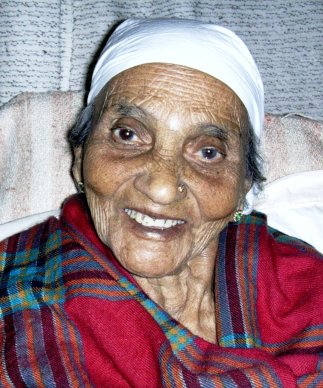
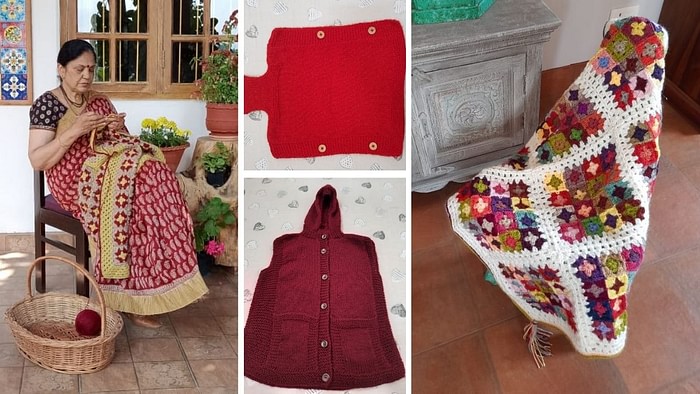
Idyammal Bellie Gowder
Born September 05, 1912
Hubbathalai, The Nilgiris
Died July 13, 2011 (aged 99)
Parents Rao Bahadue HJ Bellie Gowder and Nanji Hethe
Sister of Rao Bahadur HB Ari Gowder
Spouse B.K.Bellie Gowder [Bearhatti]


MOM 5.jpg

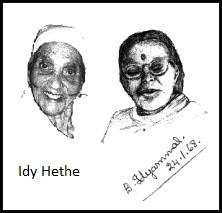
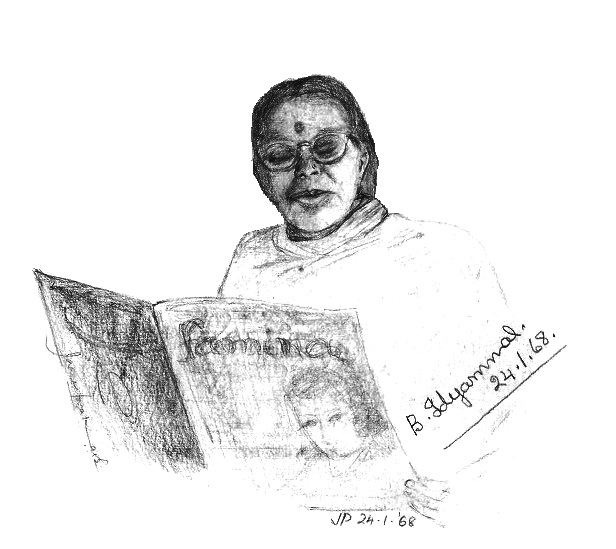
[Autographed pencil sketch of Mom by JP in 1964 while she was reading Femina ]

“I know my mother looks much older than what she is but those wrinkles have the charm of their own. They indicate the signs of her great endurance; and the hard life she has to lead through to bring her children to lead a life that is respected and regarded by others” – JP 24-1-68

Dear Hands

[Grace Noll Crowell]

My mother’s hands were beautiful,
They are not always smooth and white
They were so busy making dull
And lusterless things clean and bright.

They reached so often to caress
A hurt child crying in the night
They moved as quick as fluttering birds
Among the cups and spoons at tea

They did a thousand lovely things
And did them all so graciously
There is no way to sum them up
The countless things she did for us.

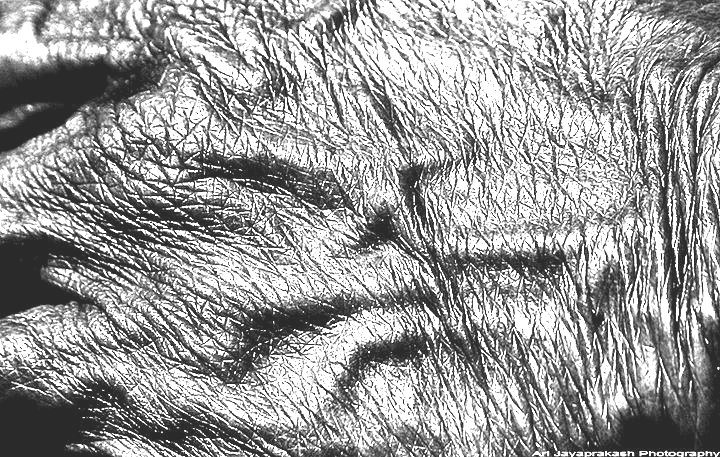
[photo of  Idy Hethe’s hand by her grandson Abhi Ari -2010]
This slideshow requires JavaScript.

Burning Issues

Kumar’s [vina.vinasa@gmail.com]  comments in the page https://badaga.wordpress.com/burning-issues/

First regarding Karthick, I wil better say go ahead with your idea. Compatibility is a big issue with all the communities. If you are sure that you have good understanding with the girl, nothing should bother you. Marriage is the biggest burning issue in badagas. As youngsters are well educated and have more exposure, its common to fall in love with another community person. 10 to 20 is the growth period and 20 to 30 is the fertile period in a human life. But today there are lot of 30 plus badaga girls and boys yet to get married. Just think what will happen to all in another 5 to 10 years?.. Marriage is an important aspect in a person’s life, without marriage life never gets fulfilled, but at the same time it should not happen for namesake and run around for divorce. I am not against our culture, it has to be preserved, but not at the cost of our life. As someone quoted, did we forget badaga after learning english??

To our respected elders and the chairpersons of YBA, its time for you people to think hard and do some reforms in our society regarding marriages and functionality in our community. India is reeling under recession in financial terms and our community is reeling under marriage recession. Politics has intruded all the villages and has affected us badly, forget about who rules the country and think about how to solve the issues in our community. I dont know how many of you know about the arrest of 200 plus people from our community in Tirupur, I dont want to discuss in detail. Elders please think in a practical manner, LIVE AND LET OTHERS LIVE.

FOOD FOR THOUGHT:

Its good to see many from our community work in IT and R&D fields, but for the people in our villages, mother nature has given us abundance of opportunities in our own place. Cost of labor, fertilizer price, and el nino has affected agriculture and tea farming very badly. Let us be smart, try alternate crops like jatropha curcus or croton, these are cash crops used to extract biodiesel. i learnt that an acre can produce 3000 ltrs of biodiesel per year and cost of 1 liter is 34. It is grown extensively in Nagaland and Burma, so i think it should adapt our climate condition (any agri experts, pls share your thought). Dairy farming is another option for us. Than working in places like Tirupur and get lured by others for money, its better to try some alternative crops in our own place.

Badagas who make us proud

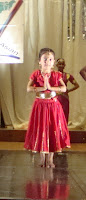
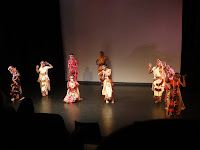
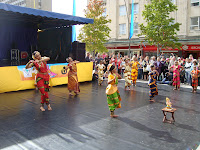
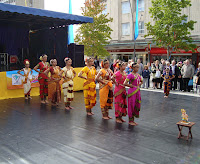
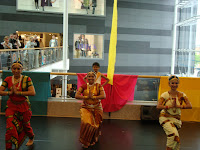
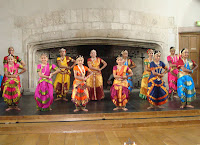
The World at Your Feet is a celebration of the richness and variety of  [U.K] Plymouth’s history and its role in relation to migration to other parts of the world.

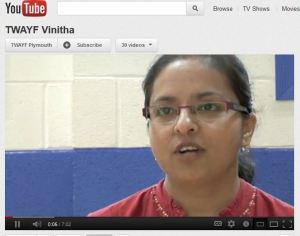
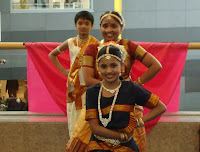
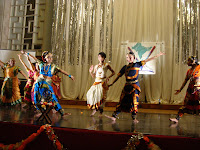
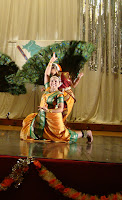
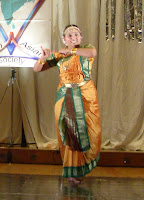
“An interview with Vinitha Rajkumar the owner and founder of Rhythm Indian school of dance, Giving us information about her migration story and the part she plays in The World At Your Feet project here in Plymouth”.

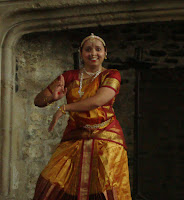
Wg.Cdr JP adds :Vinitha Rajkumar, a Badaga, is married to Dr.Rajkumar Krishnan (Naihatty), daughter of (late) Mrs.Menaka (Hubbathalai) and Dr.K.M.Raju (Kerkandi,Kekkatti) and grand daughter of Mrs.Idyammal Bellie Gowder, sister of Dr.Vivek Raju (South Africa) and Vinod Raju (Coonoor) and also my niece.

http://www.youtube.com/watch?v=gLXPTCmyVwE

We are proud of you Vinitha!

[SLIDESHOW]


Rao Bahadur HB Ari Gowda – 41st death anniversary

Rao Bahadur HB Ari Gowder

Bowing our heads in silent reverence for all that he had done to our community…
so that we can hold our heads high !

hbag-with-turban-edited.jpg

[December 4, 1893 – June 28, 1971]

Rao Bahadur H.B.Ari Gowder, the first Badaga graduate, first Badaga M.L.C & M.L.A for a long time who had brought many reforms in/to Badaga Community including ‘prohibition’ (no alcohol – kudi) to Nilgiris in British days itself as alcoholism was playing havos with the tribals [as it is doing with the populace of the Nilgiris now].

Ari Gowder lead the Indian contingent (yes, “INDIAN CONTINGENT) to World Scouts Jumbore held in Europe in the 1930s.

Being a great philanthropist he had done a lot for the betterment of Badagas. He was the one who established Nilgiri Co-Op Marketing Society at Ooty, to save the small farmers-especially Badagas- from the exploits of middlemen & traders at Mandis in Mettupalayam. He was the President of NCMS for more than 30 years, till his death and NCMS was considered one of the best co-op societies in India during his days. His statue has been erected in the NCMS compound in appreciation of his great work.

The bridge constructed in 1939 at Kakkanalla, Masinagudi linking  Tamil Nadu state  with Karnataka state was named Ari Gowder Bridge.

Since he donated the land, the road in front of Mambalam Railway Station in Chennai (Madras) is named after him (known as Arya Gowder Street).

Ari Gowder was held in great esteem and considered as the ‘ Uncrowned King – Nakku Bettaga Raja‘  by Badagas.

The Hindu, 29th June,2012

Badagas pay homage to Ari Gowder

D. Radhakrishnan

He was instrumental in establishingNilgiris Cooperative Marketing Society

For many Badagas, all roads in this hill station led to the Nilgiris Cooperative Marketing Society (NCMS) off the Government Botanical Garden Road here on Thursday.

The beeline was made to garland a bust of H.B. Ari Gowder which adorns the threshold of the multi-purpose hall of the society.

The occasion was the death anniversary of Gowder. Adverted to as the uncrowned king of the Badagas, Gowder was born on 4th December 1893. He died on June 28 1971.

Speaking to The Hindu, senior members of the community recalled that he was a well-known philanthropist, who walked tall not only among the Badagas but also others. He was instrumental in the NCMS coming into being in the 1930s to keep at bay middlemen and unscrupulous traders in the plains.

For over three decades, he was its president and for long it was considered as one of the best of its kind. In recognition of his significant contribution, his bust was unveiled on May 25, 1987.

Gowder, who hailed from Hubbathalai village, near Aruvankadu, was a widely acknowledged leader of the community who had done a lot to lift the Badagas socially and economically.

While a bridge constructed in 1939 linking the Nilgiris with Karnataka is named after Gowder, a road near the Mambalam railway station in Chennai also bears his name.

As the first Badaga graduate, MLC and MLA, Gowder had introduced a number of reforms among the people, including abstention from alcohol. Among those who paid homage to the late leader were representatives of various Badaga associations, political leaders and employees of the NCMS.

from wikipedia

H. B. Ari Gowder

Continue reading

IDENTIFICATION OF BADAGA

IDENTIFICATION OF BADAGA
Dr.R.K.Haldorai,
[haldoraitamil@gmail.com     9444503414 ]

                 The word Badaga at the outset reflects the Badaga language speaker. The speaker’s loyalty and solidarity are intrinsically involved in it. It expresses a historically transmitted perception by which the Badaga speech community develops itself. The cultural elaboration of the word seems to be unassailable.

Badaga signifies the speech community and the participant membership of an individual. In another sense, there is a very close link between the word and the homeland, the Nilgiri District. Often it is used as a synonym to the nativity. It is used in accordance with inclination of its people with the homeland. Presumably, there is something more to being a Badaga than simply living in the Nilgiri District. Not all living in the Nilgiri district are Badaga speakers. But clearly the word reflects not only the nativity but also the linguistic identity. This applies in equal measure to the inner and outer identities.

With the ethnic entity, the Badaga speech community depends on fundamental unity, shared culture, shared values, shared ideals and shared attitudes, which are reflected in the shared language. The word Badaga embraces the inheritance of cultural landscapes. It is a cultural laden symbol. This is a very sensitive index of the Badaga culture. The meanings of self and other are involved in it. It reflects traditional self image with an emphasis on linguistic and native sensibility. Both are inseparable to the people of the Nilgiri District who have the credit of Badaga inheritance. So it is an attachment to their home land and language, and they feel pride in it. It is by which outsiders identify them.

As for as Badaga studies concern we have to deduce more from language information about historical contacts, social structure, religious beliefs and practices, folklore and so on. To our dismay the language part was not analyzed properly by scholars and its importance was not understood by the native speakers for a long period. However during the closing decades of the twentieth century two scholars, one from Annamalai University (Dr.R.Balakrishnan) and another from French (Dr.Christiane Pilot Raichoor) had done extensive study on Badaga and analyzed its distinctive characters. Through that they established its independent language status. Following them I analyzed Badaga language and described its independent language status with more such details.

I am in total agreement with Dr.Haldorai. We have not given due importance to Dr.C.P.Raichoor and may be to Dr.R.Balakrishnan. Dr.Raichoor is the co – author of Badaga – English Dictionary along with Prof.Paul Hockings.

The more I go through Dr.Haldorai’s books, especially on Badaga Language, it is clear that he has put in a lot of efforts. I feel we should encourage his efforts by buying his books. – Wg Cdr JP

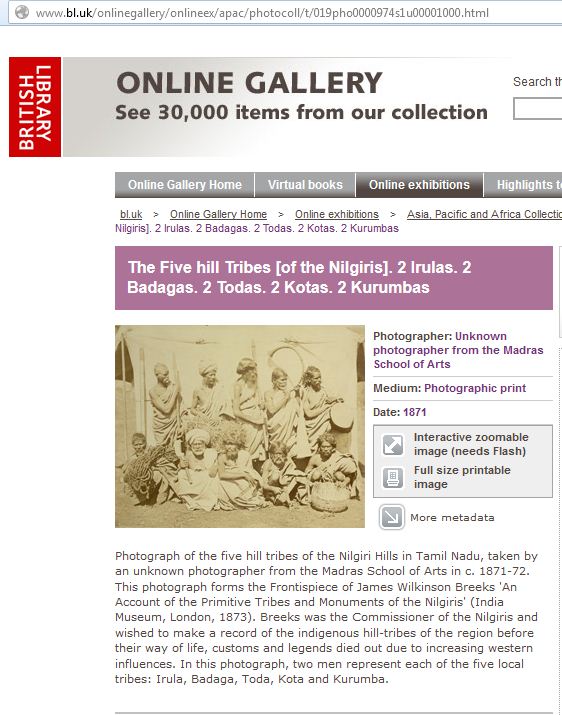
A pic [of British Library – online gallary] can tell a thousand stories

Image

The information that accompanies the pix in this website reads as

“Photograph of the five hill tribes of the Nilgiri Hills in Tamil Nadu, taken by an unknown photographer from the Madras School of Arts in c. 1871-72. This photograph forms the Frontispiece of James Wilkinson Breeks ‘An Account of the Primitive Tribes and Monuments of the Nilgiris’ (India Museum, London, 1873). Breeks was the Commissioner of the Nilgiris and wished to make a record of the indigenous hill-tribes of the region before their way of life, customs and legends died out due to increasing western influences. In this photograph, two men represent each of the five local tribes: Irula, Badaga, Toda, Kota and Kurumba”.

Proud to be a ‘Nilgirian’

Yes, we are proud to be Indians and proud to be Badagas.
Should we be not proud of being “NILGIRIANS” – as we belong to the beautiful blue mountains, the Nature Blessed Naakku Bettas?
The preservation of the eco system and environment of the Nilgiris is as much our duty and responsibility as every Indian’s.
In that respect, hats off to the initiatives and efforts of One Earth Foundation lead by Raminder Chowdhary.

Dr.Haldorai, a Badaga who has authored many books on Badaga


In our eagerness to know about ourselves [Badagas], many times, we highlight the work done by other researchers from abroad and tend to forget our own Badaga scholars who have done a lot on EVERY THING BADAGA.

One such scholar is Dr.Haldorai from Kiya Cowhatty. Though I have heard about him, I could not get to read any one of his books [there are many in English and Tamil] till recently. Saravana Raju of Karimora, a gifted and talented youngster with great many original ideas,got me many of his books.

Though I have had a cursory glance at his books, I am yet to make a detailed study. But one thing I am sure about. We may or may not  agree with all his views and interpretations but definitely, cannot ignore them.

He has been kind enough to respond to my emails and sent me a few exclusive articles and I have great pleasure in putting them up [uncensored] in this page. Yes, I feel he deserves a page for himself.

I will be adding more info in future.

Take a look on Dr.R.K.HALDORAI M.O.L., M.Ed., M.A., Ph.D, here

WHY ARE WE “KILLING” OUR LANGUAGE?

One of the charms and beauty of our language is ‘HA‘ as different from ‘A/AA‘.

It is Hethe(y) and not Athe(y)/Ethe(y).

Like, the correct way to say is :- Hatti [village], Haalu [milk], HaLLa [river] etc. But I am disgusted and disappointed to hear the above words being mentioned as ‘Atti, aalu,aLLa‘.

In one of the latest releases of the ballad Beradha Bellie – ‘Kaakay haadhara– is sung as Kakkay aadhara‘. Disappointing.

By the way, in many words, the meaning completely changes when you substitute HA with AA. For example, Haalu – milk becomes ANGER[Irritation] when AALU is used.

Harachu – bless, Arachu – Find, Haday – lie down, aday – close

Ignorance may be a bliss but not an EXCUSE.

Also see :- http://badaga-language.blogspot.in/

An email from Emerald Bhojan Hariharan

I have come to know about Emerald Bhojan Hariharan from the posts in badaga.com. I consider him to be a forward thinking Badaga with nothing but the welfare of Badagas in his mind.

It was indeed a pleasure to receive the following email from him. He had sent these comments on what I had written

Since the 1981 census Badagas are not shown as a separate community but have been clubbed with ‘Kannada Speaking groups’. This, to say the least, is – atrocious. Badaga is a separate and unique community with rich language and ‘richer’ rituals, customs and traditions.


Now is the chance for us to proudly say that we are Badagas (Badagar) and our mother tongue is Badaga ( Badagu). The other important issue about sub sect :- our history has quite a few instances where we, as a community, divided ourselves into Odaya,Haruva, Badaga, Lingayat [Lingakatti],Kanakka, Adikari,Thoraya etc and created a lot of bad blood. (I am surprised, though, to learn that Thorayas are given the MBC classification while Badagas come under BC) let all those who speak Badaga (Badagu) be considered as Badagas (Badagar).

What is highlighted by him is a matter of great importance and need our urgent attention.


Dear Anna,

It is my pleasure to leave a short message on your website, which I consider as a yeoman service you are rendering the society in General and the Badaga Community in particular. Kudos and three Cheers to you. May you live long and continue your good work.

It came as a rude shock to me when I came to understand that there are 40+ Thoreya hatties in the Nilgiris and marriages happen only between Thoreyas although they no way differ from mainstream Badagas in any way, be it language, lifestyle, dressing, rituals or customs. Give it to my ignorance or broad mindedness, I always thought there was only one Badaga community and sub-sects were an integral part of it but none was superior or inferior to any.

Once I went deep into it, I came to understand the filth and false prophecies that went into creating this rift. It became unbearable and indigestible for me just to know that how a progressive community like the Badagas could have a prejudiced mindset over their own brothers, the Thoreyas. The same applies to the rift between Hodeya and other subsects as well.

I strongly feel the need for a unification of mindsets in each of us to bring in equality and justice across all sub sects, thus bringing all of us under one single umbrella called the Badaga Community. This will enable us hold our heads high and walk with pride.

On behalf of Manihatty Mahalingiah and Beragini Hethaiamma,

Truly Yours,

Emerald Bhojan Hariharan.