Ari of KURU CHRONICLES, we are proud of you!

[Article published in THE HINDU, Bangalore Metro Plus 18 July 2013]

Ari Jayaprakash is the great grandson of Rao Bahadur HB Ari Gowder and grandson of Mrs.Idyammal Bellie Gowder
Abhi

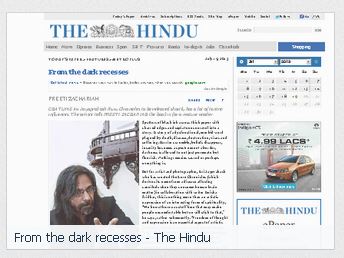
VISUAL EFFECTS, TO CONCEPT ARTIST TO ILLUSTRATOR AND EVEN AN ILLUSTRATOR And now Kuru Chronicles, says Ari
Ari Jayaprakash Kuru Chronicles to be released shortly has a lot of tantric influences. The artiste tells Preeti Zachariah the book is for a mature reader

Spatters of black ink across thick paper with charred edges and sepia tones unravel into a story. A story of a dysfunctional, morbid word plagued by death, disease, destruction, vices and suffering. Barriers crumble, beliefs disappear, insanity becomes a spectrum not a border, darkness is allowed to not just permeate but flourish. Nothing remains sacred or perhaps everything is.

But for artist and photographer, Ari Jayprakash who has created the Kuru Chronicles (which derives its name from a disease affecting cannibals when they consume human brain matter) in collaboration with writer Anisha Sridhar, this is nothing more than an artistic expression of an interesting form of spirituality, “We knew there was stuff here that may make people uncomfortable but we will stick to that,” he says, rather vehemently. “Freedom of thought and expression is an essential aspect of artistic evolution and we have restricted ourselves too long.” He believes however, that this is changing for the better, “People are beginning to push boundaries. I think India will produce a lot of interesting art, music, dance and theatre over the next few years,” he adds.

His own artwork (he refers to it as Kuru art) certainly not just pushes boundaries but tramples all over them, leaving the viewer too enthralled to even notice that they existed in the first place. “Kuru uses black ink done mainly with a calligraphy pen. At the end of the execution the pictures are burnt. The burning was done as an offering to the fire God and also because it gives it an old rustic sort of look and an interesting shading.”

Ari, a self-taught artist has dabbled in various forms of visual art as long as he remembers, “I have done different things in my career. I’ve done visual effects, worked as a concept artist and even an illustrator. I do a lot of photography and was a photographer for sometime in Boston and New York,” he says adding that his tryst with photography helped him in Kuru art. “A lot of the photographs got translated into drawing. I do a lot of digital manipulation; it gives photographs an abstract, surreal feel.”

Talking about the origin of Kuru, he says, “It all began December 2010. I was watching a documentary on Kuru on TV and met a few aghoris at the Ganga Sagar mela later that year and then I read Svobodha’s Aghora. One thing lead to another and what happened was the chapter names came up one night. I had no idea what were in the chapters and what it was going to be about. I didn’t know it would be called the Kuru chronicles. But obviously these things were at the back of my head subconsciously and seven drawings of abstract faces came out one night in Calcutta. I don’t know who they were but I know it had to fit into the story somewhere.”

It was a friend who ran a festival at Bombay who invited him to display his work there, “People liked what they saw and over time I developed more art work. Over a couple of years a substantial amount of work came out, around 800 pages — four books, 26 chapters.”

The story, which is set mostly in a dystopian version of Calcutta follows the lives of five characters —Dakini, Sen, Kala Hari, Shivali and Devika, “Kuru begins with the five of them and also kind of ends with them,” says Ari adding that Kuru spans a 17-year period. “They are all in their late teens when it begins. Dakini is the protagonist of the Kuru Chronicles and this is more or less her journey and evolution. There is complete disintegration all around her and she basically needs to keep it all together. ”

The book is certainly not for the faint-hearted however, “It is for a mature reader. All the philosophy is from the left hand path. It has a lot of tantric influences and magic. The Rig Veda was another big influence. A lot of dark themes are touched upon — cannibalism, rape, graphic sexuality, violence, modern-day issues like police brutality, attitudes and reflection on capitalism and communism,” says Ari, adding that, “Kuru is totally a work of fiction. It is dedicated to the Gods, the city of Calcutta, to Ma Durga — all of that. It takes from the scriptures and borrows from the Vedas but its modern day tale.”

In addition to the Vedas, “There is an Aghori influence and also influences from the Kalki Purana, Upanishads. I also read a book called Aghora: At the Left Hand of God by Robert E. Svoboda. I went out there; got to know more about the aghoris, spoke to some of them. There is also a lot of modern influence — varies from Pink Floyd to Michael Haneke to Lars von Trier and Takashi Miike, Japanese anime, heavy metal music,” he says.

The book, which is self-published, is slated to be released at the New York comicon later this year and Ari hopes to translate it into different languages and also attempt a psychedelic coloured Japanese version, “I have travelled to festivals all over the country with my art. I must say, people have been very supportive.”

He has recently come out with the Kuru circus — a haunting, ethereal track that seeks to explore the sound scape of the Kuru Chronicles and is also looking at a cinematic translation of Kuru.

It certainly seems that for Ari, there is no looking back. “Working on this project has over times changed my own ideas and Kuru is at some level definitely an expression of my own spiritual leanings. I am not the same person who I was when I started the book.”

  Photos: Sreenivasa Murthy V.

link – > Continued from Page 1

Continued from Page 1

Ari, a self-taught artist has dabbled in various forms of visual art as long as he remembers, “I have done different things in my career. I’ve done visual effects, worked as a concept artist and even an illustrator. I do a lot of photography and was a photographer for sometime in Boston and New York,” he says adding that his tryst with photography helped him in Kuru art. “A lot of the photographs got translated into drawing. I do a lot of digital manipulation; it gives photographs an abstract, surreal feel.”

Talking about the origin of Kuru, he says, “It all began December 2010. I was watching a documentary on Kuru on TV and met a few aghoris at the Ganga Sagar mela later that year and then I read Svobodha’s Aghora . One thing lead to another and what happened was the chapter names came up one night. I had no idea what were in the chapters and what it was going to be about. I didn’t know it would be called the Kuru chronicles. But obviously these things were at the back of my head subconsciously and seven drawings of abstract faces came out one night in Calcutta. I don’t know who they were but I know it had to fit into the story somewhere.”

It was a friend who ran a festival at Bombay who invited him to display his work there, “People liked what they saw and over time I developed more art work. Over a couple of years a substantial amount of work came out, around 800 pages — four books, 26 chapters.”

The story, which is set mostly in a dystopian version of Calcutta follows the lives of five characters —Dakini, Sen, Kala Hari, Shivali and Devika, “Kuru begins with the five of them and also kind of ends with them,” says Ari adding that Kuru spans a 17-year period. “They are all in their late teens when it begins. Dakini is the protagonist of the Kuru Chronicles and this is more or less her journey and evolution. There is complete disintegration all around her and she basically needs to keep it all together. ”

The book is certainly not for the faint-hearted however, “It is for a mature reader. All the philosophy is from the left hand path. It has a lot of tantric influences and magic. The Rig Veda was another big influence. A lot of dark themes are touched upon — cannibalism, rape, graphic sexuality, violence, modern-day issues like police brutality, attitudes and reflection on capitalism and communism,” says Ari, adding that, “Kuru is totally a work of fiction. It is dedicated to the Gods, the city of Calcutta, to Ma Durga — all of that. It takes from the scriptures and borrows from the Vedas but its modern day tale.”

In addition to the Vedas, “There is an Aghori influence and also influences from the Kalki Purana, Upanishads. I also read a book called Aghora: At the Left Hand of God by Robert E. Svoboda. I went out there; got to know more about the aghoris, spoke to some of them. There is also a lot of modern influence — varies from Pink Floyd to Michael Haneke to Lars von Trier and Takashi Miike, Japanese anime, heavy metal music,” he says.

The book, which is self-published, is slated to be released at the New York comicon later this year and Ari hopes to translate it into different languages and also attempt a psychedelic coloured Japanese version, “I have travelled to festivals all over the country with my art. I must say, people have been very supportive.”

He has recently come out with the Kuru circus — a haunting, ethereal track that seeks to explore the sound scape of the Kuru Chronicles and is also looking at a cinematic translation of Kuru.

It certainly seems that for Ari, there is no looking back. “Working on this project has over times changed my own ideas and Kuru is at some level definitely an expression of my own spiritual leanings. I am not the same person who I was when I started the book.”

You are always in our thoughts !

GONE BUT NOT FORGOTTEN

Second Death Anniversary (13-7-2013)

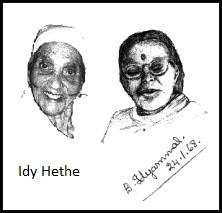
Idyammal Bellie Gowder

You were everything for us in all those glorious 99 years and 10 months when you were ‘here’.

As we were preparing to celebrate the ‘century’, you chose to leave this earth just a couple of months earlier…two years  ago.

How time flies!

Elle idhale’yu engava harachu

[Bless us all from where ever you are]

MOM 5.jpg
Idyammal Bellie Gowder
Born September 02, 1912
Hubbathalai, The Nilgiris
Died July 13, 2011 (aged 99 years 10 months)
Parents Rao Bahadue HJ Bellie Gowder and Nanji Hethe
Sister of Rao Bahadur HB Ari Gowder
Spouse B.K.Bellie Gowder [Bearhatti]


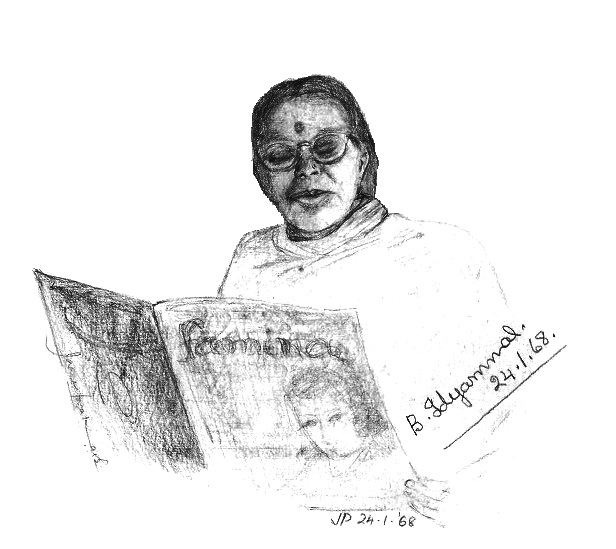
[Autographed pencil sketch of Mom by JP in 1968 while she was reading an issue of Femina ]

“I know my mother looks much older than what she is but those wrinkles have the charm of their own. They indicate the signs of her great endurance; and the hard life she has to lead through to bring her children to lead a life that is respected and regarded by others” – JP 24-1-68

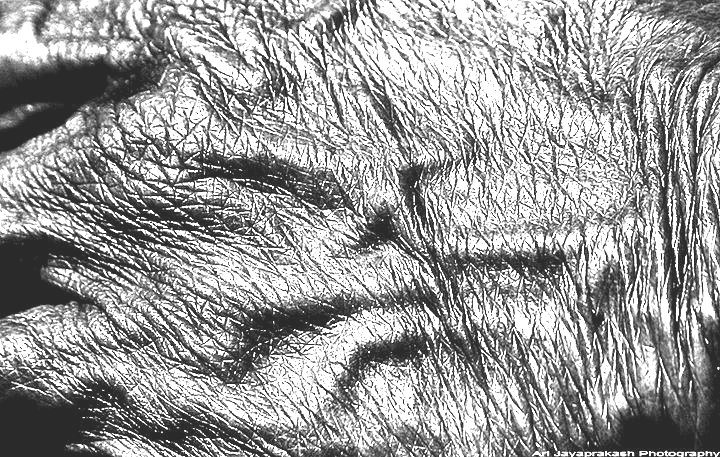
Dear Hands

[Grace Noll Crowell]

My mother’s hands were beautiful,
They are not always smooth and white
They were so busy making dull
And lusterless things clean and bright.

They reached so often to caress
A hurt child crying in the night
They moved as quick as fluttering birds
Among the cups and spoons at tea

They did a thousand lovely things
And did them all so graciously
There is no way to sum them up
The countless things she did for us.

[photo of Idy Hethe’s hand by her grandson Abhi Ari -2010]

By educating a girl, we can educate an entire community!

As a matter of principle, we do not endorse or give info about appeals for donations for the simple reason that we are not in a position to verify and check the genuineness or otherwise of these appeals.
But, an exception is made in the appeal made by Hariharan Emerald Bhojan [though I have never met him]  since I believe that he is doing something really good.
I strongly believe that ‘education‘ can be a very effective panacea for all evils’

Wg Cdr JP

Dear Friends,

Here is an appeal…

Our recent trip to Mel Seemey on 9th & 10th Dec 2012 was very fruitful and was an occasion to introspect on the message of life. God has given everybody a job to fulfill before he takes us away. Some of us realise it, some of us don’t. But, it is never too late to question ourselves and our existence on earth.

At BMS, all our core members have joined together with a single agenda, an agenda to improve the lives of the most poorer and deserving section of our Community since we all are Hethappa Makka, the children of our Ayya & Hetthe. Helping our own people firstly gives us a sense of fulfillment and a purpose to live.

On those lines, we have identified 5 deserving candidates who come from varied backgrounds.

1) N.Sukanya, Female, 21, Married, 2 Children, Daily wages Labourer, Mel Seemey Hosahatty, completed +2 with 732 marks. She is interested in being a staff nurse.

2) N.Roja, Female, 19, Married, 1 Child, Daily wages Labourer, Mel Seemey Hosahatty, completed 10th with 397 marks. She is interested in pursuing a diploma in Engineering.

3) K.Vijayalakshmi, Female, 18 Yrs, single, working in a textile mill as a daily wages labourer, Mel Seemey Hosahatty, completed 10th with 326 marks. She is interested in joining +2 or pursue diploma in Engineering.

4) K.Nandagopal, Male, 19 Yrs, single, studying 2nd Yr B.Sc Comp.Sci at Stahyamangalam, Mel Seemey Hosahatty, sold his government given laptop to fund his 1st year fees. The 2nd year fees is in question, banks are unwilling to give loans due to agricultural defaults earlier, dad is planning to sell 1 acre of his land if he can’t get through any reliable source of funds.

5) A.Ashok, Male, 19 Yrs, single, working as a waiter in a restaurant, Punajanur Badaga Village in Karnataka, passed 10th std with 274 marks. He would like to join a course in catering.

BMS is determined to fund all their studies and bring a change in their lives. We have started a fund, details given below, for funding the same.

MEL SEEME GIRLS EDUCATION FUND
Bank: CORPORATION BANK, ERODE
A/c No: 005400101020463
IFSC: CORP0000054
SWIFT CODE: CORPINBB

We request all members to donate liberally for the well being of our own brothers and sisters at Mel Seemey.

Nanga Hetthappana punniya nanga ellagoo serali, aaru seemeyu singara hagali!

Team BMS.

Celebrating a Century!

A century is always a time for celebration in any field, specially so when it relates to age.

Having lost my mother at the age of 99 years and 10 months, I know how it feels to have a dear and near one to reach that ‘land mark’.

Wishing a long life to B.Mani Hatti Sivama Hethai’, we bow our heads and  seek her blessings,

 “Hethey, Engava Harachu

Photo and info courtesy – Hariharan Emerald Bhojan in FB
You are already a blessed man JP anna. Im sure...
Hariharan Emerald Bhojan
You are already a blessed man JP anna. Im sure my Hethai’s blessings are with you, no doubt. She is the one who told me tales of your beloved uncle and the undisputed hero of Badugaru, H.B.Ari Gowder. Old is gold !

Badaga Mahajana Sangha – we are proud of you!

I had heard from by late brother Nanja about 50 years back, about ‘ a group of Badagas living in Chamarajnagar in a few “hattis” around Hasanoor, my curiosity to learn more about them kept growing. He had mentioned about the the Badagas there selling their milk products through the bus drivers/conductors.

That is the time I realised the true meaning of the proverb ‘Hasanoor haala gudippadhuna, Neelagiria neera gudiipadhu mel – Better to drink the water in Nilgiris than the milk in Hasaroor’. [The different interpretations of this proverb will be discussed in a future post]

Since, we travel to Bangalore from Nilgiris quite often till a couple of years back, we decided that we must take the Sathyamangalam – Nanjangud – Mysore- Bangalore route just to visit Hasanoor to learn first hand about the Badagas of Hasanoor and other nearby villages- hattis. So we undertook the journey a few years back in my ‘ever faithful’ Maruti van but could not reach Hasanoor as the road was under major repairs and it was too risky in my 1986 model van.

However, we did meet one Dhona, a Badaga at the junction of Hasanoor junction and I had written a post on that.

Though there was bits and pieces of information about these Badagas, as part and at the same time different from the main stream ‘Badagas of the Blue Mountains – Nakku Betta, it was only after reading Emerald Bhojan Hari’s detailed narratives mainly in ‘Badaga Mahajan Sangha’ and other forums, I learnt a great deal about these ‘forgotten’ kith and kin of ours. The wealth of information about these ‘countrycousins’ in MEL SEEMAY posted in Badaga Mahajana Sangha FB page is quite a lot. There are plenty of beautiful pictures posted by Raghu Joghee and others.

BMS has not just stopped with sharing the information but have taken the initiative of educating some of those deserving girls and boys belonging to Mel Seemay hattis; Hari and his friends in BMS, have donated liberally and adopted these villages. The great strides taken by this bunch of youngsters and their truly laudable initiatives and efforts are indeed both motivating and ‘educative’.

BMS – Badaga Mahajana Sangha – has not stopped with mere words, but shown what true Badaga Hospitality really means.

For all those who form the backbone of BMS, we are proud of you.

Lingan Krishnan, a Badaga who is an inspiration to all of us

Update :1st Anniversar​y of my baby N.G.O celebrated on the 14th June, 2013

There are a few exceptional Badagas whose entrepreneurship and talents  can  take them to places anywhere in this globe. They succeed in whatever field they choose to go ahead with sheer hardwork and dedication.

These Badagas are, an inspiration to all of us.

Lingan Krishnan  [I have never met him so far] is one such person. I was quite surprised but very happy to see his email to me in which he had mentioned that he is a practising lawyer In the Bombay High Court. Wow, a Badaga high court lawyer in Mumbai, was my first thought. Surprise did not end there when I learnt that he is also an ex-fauji. He has started a Trust that can  be of immense help to Badagas.

Thank you L. Krishna. You make us proud!

Email from  Lingan Krishnan [lingan.krishnan@gmail.com], a Lawyer in Mumbai High Court

Hello Sir,

I belong to Adigaratty Village and was  born on 10 May,1946. I do not recollect my father’s face since  he breathed his last  when I was 8 years old. My mother, a poor soul, brought us  up (one elder brother and two younger sisters) and she too passed away  this year ie on 26th April, 2012. Every year, Theer Festival used to be celebrated in our village in a grand way, which continues even today. My mother used to compel me to attend the same but never I was able to do so.

About 20 years back, one day while discussing about the festivals, Mom was bit up set for  my not visiting the Hatty at least  once  a year, and requested me to at least contribute the Theer Festival expenses fixed by our village Gowdars every year.That particular day I decided to keep her wishes alive and promised her that I would  contribute for the festival not only for one year but till my mother’s last breath.

As per my mother’s wishes, my little contribution towards the festival has been going on for the last twenty years and now. My Mom is no more now, hence I decided to continue my contribution till my death. While going through your web site I felt my mother was sitting with me and forcing me to do something for the common needy people.. Thanks for the unforgettable memories flashed back in my mind while going through the wonderful initiations and inspirations exposed vide your web site.

With regards to my education and experiences.   have done M.A and LLB. Had put in 15 years service in the Army, In the Regiment of Artillery.  Joined  as Manager Administration in Lupin Laboratory and left Lupin after 13 Years of service to take up  the responsibilities of a GM with Cybertech Systems and Software Ltd through which I could visit US for six times.  I retired from Cybertech in the year 2007 after rendering 12 years of service and then started practicing Law.

In Bombay, we started Bombay Badaga Association in the year 1990 and I was the President for 7years. Under  my command, we conducted quite a number of Tours and Picnics beside various programmes.  We released a Souvenir in the year 1995, and the interesting things to be  noted here is that, our Souvenir had the messages of celebrities of Politics, Cricket, Films, Police Big Vigs and even Gazal Singers.

This combination  was my personal test and I had taken a month holiday from my job  to meet all those famous people ultimately with the aim of releasing an excellent Souvenir. Subsequently, the Souvenir got appreciated by Badaga Associations of Chennai, Balgalore, Coimbatore, Erode an many more individual personalities of our Baduga community.

Some how due to various exigencies of services, my service to the community  could not  go further.  Now, after 15 years of interval, my mind again started revolving round the Social Welfare Activities and as such I got a Trust named    SENIOR CITIZEN WELFARE ASSOCIATION,THANE (WEST) registered,  under which, I have plans to help the aged people in various grounds.  Further details on this will follow.

Based on this NGO I want to do some favours to the Badagas  staying abroad. Any thing required from Bombay like, transportation
facilities, escorting relatives, children and even sight seeing
arrangements can also be arranged by my NGO at Bombay. Any investment part in Moumbai or educational activities including placement etc can be arranged if any one needs it.

The support extended from our N.G.O is listed below.
  We plan to assist seniors in the following areas:

 1.       Supporting and escorting the seniors during exigency
2.       Medical  assistance through NGO doctors
3.       Creating opportunities for the Seniors to engage themselves
4.       Classes for Yoga and Meditation
5.       Providing hygienic food at reasonable rates
6.       Financial assistance to the seniors
7.       Assisting in legal matters
8.       Anything related to real estate
9.       Arranging Mumbai Darshan/ Visit to Essel world

The extension of our NGO is to support the needy youth (will be executed at the later stage)

1.   Public speaking / Language classes
2.   Hostel facility for working class (ladies and gents separately)
3. conducting coaching clases for appearing in the IAS/IPS/Service selection boards.

I really need your suggestions and guidance in this regards.

Regards
L.Krishnan

stageDSC_0006
Dear Sir,
 Greetings, I am glad to inform you that our NGO has done a year and is deeply penetrating into the hearts of people, this appreciation we could learn from our first anniversary celebration, an event conducted on the 14th June 2013 and also we could feel the love towards our NGO on this day when Mumbai was flooded with rain waters a lot of fellow citizens and bureaucrats turned out to the event and blessed the occasion.
I would like to share with you a few moments from the event, its limited due to gmail limitations, pretty soon we shall be ready with our website and facebook page, will be glad to share more pictures then.
Regards
Adv L.Krishnan


Kethorai Rajma comments :

My salutations to Shri.Lingan Krishnanji.The goodness of Badagas is a known fact. People like Krishnanji are exceptionally good and unique. A Lawyer from the Badaga community at Mumbai High court is a matter of great pride for all of us. His work is indeed commendable. Hats off…!


Dr ARK Pillai

Hearty congratulations to Adv Lingan Krishnan Ji. I came to know of your excellent services to people through Mdm Kethorai Rajma, who is also a renowned member of the Badaga community(President of India Awardee) I had the opportunity to visit Badaga villages, courtesy Mdm Rajma and our Foundation IDF could set up some IDF Bal Gurukuls and Women’s Empowerment Programmes in Hattis. I thank Badaga community members for their excellent hospitality and goodness. Details about our work can be had from Kethorai Rajma.

Hearty congratulations again to you, Sir,Dr ARK Pillai

Dear Raima and LK,
We are very proud of both of you.
Rajma, I am acutely aware that I must write a long email to you. I am forwarding the comments sent by Dr.Pillai
With warm regards,
JP

Rao Bahadur HB Ari Gowder – 42nd death anniversary

To-Day,28 June 2013 is the 42nd death anniversary of the greatest Badaga Leader H.B.Ari Gowder.

We pay our humble homage 

Ari Gowder2

Ari Gauda
From the book ” A BADAGA – ENGLISH DICTIONARY ” by Prof.Paul Hockings and Christiane Pilot-Raichoor

For more pictures and to read ‘All about Ari Gowder’, go here   or here

English: A view of the Legislative Assembly of...

The story of Ariya Gowda

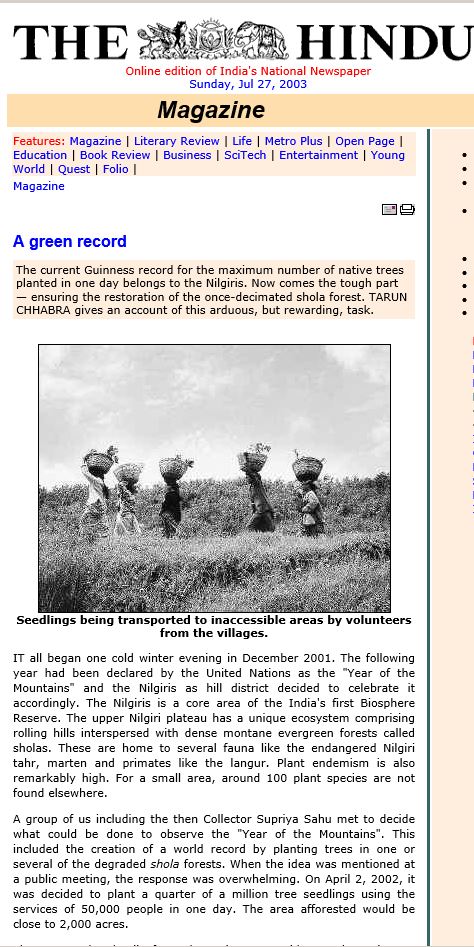
by Sriram V [The Hindu – Chennai, May 1, 2012]

Ari Gowder was President of the Backward Classes League and leaned towards the Justice Party

The chances of anyone travelling down Ariya Gowda Road in West Mambalam, and stopping to wonder about the identity of the man who gave the thoroughfare its name, are slim. For when you are on Ariya Gowda Road, you are focused on getting out of the road alive, given its traffic.

He was not Ariya Gowda. He was HB Ari Gowder, a great visionary and leader of the Badaga community of the Nilgiris. And his life, as gleaned from various sources, including a 1935 Who’s Who and the internet, makes for interesting reading.

Rao Bahadur Hubbathalai J Bellie Gowder, made his fortune in laying the tracks of the Nilgiri Mountain Railway, which was completed in 1908. His wealth made him a leading member of his community, and his clansmen came to him for advice on several issues. Bellie Gowder founded a free school in his native village, Hubbathalai, an institution that still functions. He passed away in 1935.

Bellie Gowder’s son, Ari, was born in 1893. His father ensured that he was educated in the modern sense and he graduated from Madras Christian College. Though he was to consider himself a contractor and a planter, it was in politics and social uplift that Ari Gowder was to make a mark. In 1923, he became the first Badaga to be elected to the Madras Legislative Council of which he was a member until 1934. In the 1940s, he was elected to the Madras Legislative Assembly. When the Rajaji government introduced Prohibition in 1937, he led the challenge of enforcing it in the Nilgiris, of which area he was also the first non-official to become District Board President. Ari Gowder was also active in the Scouts Movement. Another contribution of his was the establishment of the Nilgiris Cooperative Marketing Society, which eliminated the stranglehold middlemen had over the simple mountain people. He was also a Director of the Badaga Land Mortgage Bank.

While the sympathies of most of his community lay with the Congress, Ari Gowder, given that he was President of the Backward Classes League, leaned more towards the Justice Party, which was active till the 1930s. That probably explains the road in Mambalam being named after him. Neighbouring Theyagaroya Nagar or T Nagar, developed in the 1920s when the Justice Party was in power and most of the roads, parks and streets there are named after its leaders. Legend also has it that a large chunk of land adjoining the Mambalam Railway Station was his, which he donated for developmental work. Like his father, Ari Gowder too received the title of Rao Bahadur from the British Government, in 1943.

In 1946, Ari Gowder was defeated in the Assembly elections. But in 1952 he contested successfully as an independent. He was to remain an independent for the rest of his career. He passed away in 1971.

How did Ari Gowder Road morph into Ariya Gowda Road? And should it not be just Ari Road?

The Hindu : Cities / Chennai : The story of Ariya Gowda.

Badaga, the language

Dear Wing-Commander,
 I was looking through your website (lots of fascinating stuff!) and noticed there is still discussion of a script for Badaga, an idea that has been around amongst Badagas for at least 70 years to my knowledge. Of course I am in no position to dictate anything on this topic, though I can point out that in “Counsel from the Ancients” and the “Badaga-English Dictionary” we have found a phonetically accurate way to write the language. In the days before computers I always thought it important that people should be able to write Badaga on a regular qwerty typewriter, and printers could easily print from such text too.
But I did want to bring up a word of caution. The Caucasus Mountains, which are an awful long way from the Nilgiris, have dozens of local languages. When this area was in the USSR Stalin and his chief linguistic adviser encouraged people in that region to develop scripts for each of their many different languages. The end result was that, very quickly, it became difficult to communicate with one’s ethnic neighbours now that their language could no longer easily be read by everyone. End result: they had to adopt Russian to talk and write to each other — which was the long-term plan anyway, we think. As for Badaga, the Kannada script reflects it fairly accurately, and the Tamil script less so. QWERTY is the third option which we have been able to use quite successfully. Perhaps three options is enough.
 My new book, “So Long a Saga: Four Centuries of Badaga History”, should be out in a couple of months, and I will let you know details. It is just over 400 pp. long, and has already been priced by the publisher, Manohar, at Rs. 1295. (The “Badaga-English Dictionary”, by the way, was so costly because all the production, including typesetting, was done by union workers in Berlin.)
Best wishes,
Paul Hockings

Dear Professor,

It is always a pleasure and honour to receive emails from you. It is gratifying to note that you, whom I consider to be the ‘original’ researcher on and of Badaga, visit my website. Thank you for mentioning that you find in the website lots of fascinating stuff.

I am in agreement with you about Badaga Script. Unless we follow the principle of KISS – Keep It Simple, Stupid/Sweety – we are bound to create confusion.

Saddest part is that Badaga is slowly but surely losing out its originality with too much of Tamil and English getting mixed up in everyday conversation.

I am, along with plenty of your ‘fans’, looking forward to the publication of your new book “So Long a Saga: Four Centuries of Badaga History” . How I wish that “The Badaga-English Dictionary” is available at an affordable price for I am convinced that it deserves to be in every Badaga household.

With warm regards,

JP

Congratulations

imggallery

K.R.Arjunan [photo from Dinamalar]

Ketti R Arjunan has been selected by the Tamil Nadu ruling party AIADMK  to be one of the candidates for the Rajya Sabha.

Will he be the First Badaga to become a M.P (Rajya Sabha)?

Congratulations to Arjunan.

General Election for Badagas

Read in the news papers about the announcement of General Body Meeting on 21-07-2013 of the Young Badaga Association and elect NEW office bearers. This General Body Meeting is being held after many years, in fact many decades, instead of being an annual affair.

Hope this Young Badaga Association will elect really new apolitical, young and dynamic Badagas instead of the same old elders who claim to be ‘forever young’.

By the way, why can’t we have a great and grand meeting of all Badagas, spread all over the world, on the same day to elect a NAKKU BETTA GOWDA [leader] in a truly 100% democratic way like in a general election?

Is it not high time?

Deepak from Nanjanadu asks :

At my age I am not very well aware of the BADAGA GENERAL BODY or the politics.After the scrutiny of our website I am in a doubt whether such a mass election is possible.If so then who will undertake such an enormous election.Well if happened, I will be very glad for such happening.

Hello Deepak, good questions. There are two issues involved here.

One is about YBA – Young Badagas Association that was formed some 50 odd years back with a few hundred members and now, as per THE HINDU, there are about 3800 members. It was started with some very good intentions aimed at improving and enlarging awareness of ALL Badagas and for better interaction with other communities. YBA successfully obtained land at a prime place at Ooty, next to Breeks School, Charring Cross and built a hall with a a few shops. This hall is being rented out for marriages and other functions.

As is the case with most of our affairs, politics crept into running the association; many factions emerged and there were/are serious allegations of financial irregularities. Annual General Body Meetings [AGM] were not held and it became a ‘personal fiefdom’ of some persons with affiliation to a particular political party. Over a period of time, it resulted in many factional fights and took some ugly turns and police had to intervene. The recent one being as late as 24-5-2013. Truly shameful.

The million dollar question is – who is the governing body of YBA now? In the absence of AGMs, can some people elected decades ago, claim to be the true representatives of Badagas in general and YBA in particular and hold on to the chairs for ever?

In that respect, I welcome the announcement of the much delayed meeting to be held in July. Only hope is that, this meeting will be held in cordial atmosphere and elections held in a democratic way.

Again the doubt is, whether there is a proper record of the members? If so, YBA should come out with a list in the open – news papers or online in a website.

Since, YBA does not seem to have a website of its own, I can publish the list of members in my websites like http://www.badaga.co, http://www.badaga.in etc. if it is sent.

Lastly, what is the criteria for becoming a member of YBA and its rules and regulations?

The second issue involves in conducting a sort of General Election for choosing a Nakku Betta Leader – will write about that in detail soon.