Kinnakorai – ‘revisited’

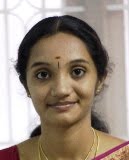
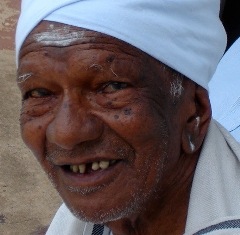
When I received Raghu Prakash‘s  email along with pictures of Bellie Gowder and his gracious wife Sennai Ammal my mind went back to to the memorable visit to Kinnakorai and Hiriyaseegai. Raghu Prakash writes“….pix of Belli gowder (brother of Sarangi Gowder) and his wife.A man with a wealth of knowledge on Badugas, cows and buffalos and farming. I have spent hours talking to him on the history of Kinnakorai and fortunately he loves to talk when I show interest.


Photo shot in 2005. He is over 90 now and the oldest alive in Kinnakorai”.

Thank you Raghu.

Here is the article I had written after my visit

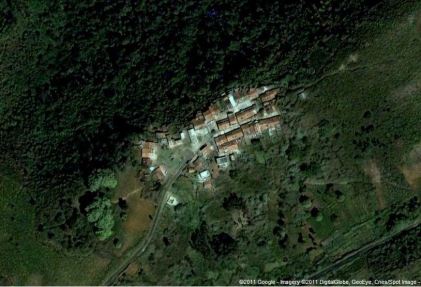
“It has been in my mind for a long time, to visit KINNAKORAY and HIRIYASEEGAY villages.

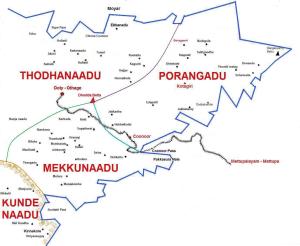
For the simple reason that they are quite far off from the main towns of Ooty and Coonoor and I was sure that the sheer distance from the maddening crowd would help these hattis to retain the old world charm of ORIGINAL BADAGAS. To add to my curiosity, part of the lands – holas and thottas [agricultural fields and tea estates]- of these villages fall under the jurisdiction of Kerala. That too in the forest areas of the stunning silent valley region.

I wondered,’could it be also a point to prove the theory that Badagas are one of the original inhabitants of the Nilgiris massif as Kinnakorai and Hiriyaseegay are far away from the Mysore plains from which it is generally assumed that Badaga migration started. Imagine, the sheer determination of our ancestors to choose such places to build their villages amidst thick forests that are cut off from the ‘world’ literally.

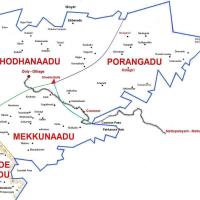
Some time earlier, Dr.Sudhakar wrote from Dubai to say that Kinnakorai belongs to Porangadu Seemae and not to Kunday Seemae as I had assumed (based on Dr.P.Hockings findings).

Recently a young budding engineer Anand wrote to say the same thing. Kinnakorai is part of Porangadu. I could not wait any longer. Availing an opportunity of a visit to Ketchigatti (Manjoor), and unable to resist the ‘open invitation’ of Anand [whom I have not met so far], I visited Kinnakorai on 9th Jan, 2011 along with my better half who shares my passion for and about Badagas. Kinnakorai is about two hours of journey from Manjoor via Mel Kunday and Thiasolai [is it THAI SOLAI or THIASOLAI?]. By the way Manjoor itself is about 2 hours journey from Hubbathalai (Coonoor).

As Anand had mentioned the climate changes dramatically without any warning. The day we travelled, the winter mist covered the road forcing us to use fog lamps but adding to the mystique and unique experience.

Every minute of the visit was worth it and I feel very happy that I have seen a bit of Badaga heritage and would strongly recommend that every Badaga should visit this wonderful place.

[read the complete article here]

I found this information quite amazing…and educative

Nive (Bearhatty) commented on I found this info

Really this information is much useful to all of us…..
We all just tend to follow what we were taught in our childhood and what all we see in our life from others without knowing reasons and values…. But after reading this I personally feel a peace of mind and meaning of daily rituals and habits…. THANK YOU VERY MUCH.. Please post many article like this in our site…

[ “In Indian Culture why do we” – courtesy and copyright Central Chinamaya Mission Trust” http://www.esamskriti.com/essay-chapters/In-Indian-Culture-why-do-we-1.aspx]

A must read for all – irrespective of religion and region – Wg Cdr JP

1. Why do we light a lamp?

In almost every Indian home a lamp is lit daily before the altar of the Lord. In some houses it is lit at dawn, in some, twice a day – at dawn and dusk – and in a few it is maintained continuously (akhanda deepa). All auspicious functions commence with the lighting of the lamp, which is often maintained right through the occasion.
Light symbolizes knowledge, and darkness, ignorance. The Lord is the “Knowledge Principle” (chaitanya) who is the source, the enlivener and the illuminator of all knowledge. Hence light is worshiped as the Lord himself.
Knowledge removes ignorance just as light removes darkness. Also knowledge is a lasting inner wealth by which all outer achievement can be accomplished. Hence we light the lamp to bow down to knowledge as the greatest of all forms of wealth
Why not light a bulb or tube light? That too would remove darkness. But the traditionaloil lamp has a further spiritual significance. The oil or ghee in the lamp symbolizes our vaasanas or negative tendencies and the wick, the ego. When lit by spiritual knowledge, the vaasanas get slowly exhausted and the ego too finally perishes. The flame of a lamp always burns upwards. Similarly we should acquire such knowledge as to take us towards higher ideals.
Whilst lighting the lamp we thus pray:
Deepajyothi parabrahma
Deepa sarva tamopahaha
Deepena saadhyate saram
Sandhyaa deepo namostutea
I prostrate to the dawn/dusk lamp; whose light is the Knowledge Principle (the Supreme Lord), which removes the darkness of ignorance and by which all can be achieved in life. Continue reading

Dr. Alexei Kochetov on Badaga ‘Baashe’- language

Recently I lamented that ‘original and old’ Badaga language is undergoing drastic changes [for the worse?] due to the influences of other languages as well as our own negligence and ignorance.

In that respect, the following correspondence with Alexi Kochetov has me wondering – are some of these unique words like ‘bae’ and the way we pronounce them, remain the same atleast in the hattis [villages] and more importantly, how can we preserve the originality and uniqueness of our mother tongue?

Dr. Alexei Kochetov who  is an ‘Assistant Professor in the Department of Linguistics at the University of Toronto, specializing in phonetics and phonology (studies of physical and cognitive aspects of speech)‘,  wrote to me recently ”

I came across your blog on the Badaga language – a great resource! I have a question: have you heard any Badagas pronounce the words ‘mouth’, ‘bangle’, and ‘crop’ differently, as Peter Ladefoged’s transcription suggests? (that is, be, bE half-retroflexed, bE fully-retroflexed). As I understand this may be an old-fashioned pronunciation no longer used. I am interested in this as a linguist, and would be curious to hear your opinion. Thanks.

“Thanks for your email. The word ‘be, bay’ etc to mean mouth, bangle,lentil, crop and plaintain[banana]’ is very much in use. I am not clear whether it is as per  Peter Ladefoged’s transcription as I am not a linguist. What I will do is, send you an audio/video recording soon”

Hello JP,

Thank you for your prompt reply! It’s good to hear the words are in use, and it’s nice of you to offer to send me an audio file.
 
I got really interested in Badaga and other Nilgiri languages on my recent trip to Ooty & Coonoor in December [2011], and since then have started reading up on the topic.
 
I asked the question about those words because Badaga has been described as having rather unusual vowels (“half- or full-retroflex”), first noted by M.B. Emeneau in his 1939 article, which you mention on your blog. Peter Ladefoged from UCLA, however, who made recordings of Badaga speech in 1990 and 1992, found that only a few Badaga speakers pronounced these vowels. They did it, for example, in the words for ‘bangle’ and ‘plantain’. Other speakers seemed to say these words exactly the same as the word ‘mouth’. I am attaching a sound file that would hopefully make this clear; it contains the words ‘mouth’, ‘bangle’ and ‘plantain’ pronounced by Mrs. Chellamma Mulley of Kotagiri, as they were originally described by Emeneau. The full recording is available here:  
 
So my question is whether this way of pronouncing the last 2 words sounds familiar to you. Perhaps you have heard this pronunciation from older people or people from other parts of Badaga community? Or can you tell those words apart when you ehar them?
Interestingly, Paul Hockings and Christiane Pilot-Raichoor mention in their Badaga dictionary that they found no evidence of these retroflex vowels in the speech of their consultants. The vowels may have disappeared, perhaps under the influence of Tamil, which would be sad.Looking forward to hearing from you.

A letter from Renuka Girish [Bangalore]

Dear Sir,
I found your site very interesting.  And I am very much interested in learning Badaga language and culture, please do send me the updates of the same. I came to know about Badagas only a few months back from one of my colleague who is from Kotagiri. And would love to see your Hethe Habba, once possible.
Renuka, [a fashion designer settled in Bangalore].
Hello Renuka, Thanks for your comments. There are no books, so far and to my knowledge, to learn Badaga. However, if you go through the many links I have given, including the one on Badaga Language, may be that would help. If you know Kannada, then it is much easier. Hethe Habba was just over. You are most welcome to come and see Hethe Habba which will fall in Dec 2012 or Jan 2013. With best wishes – Wg Cdr JP

Traditions….my foot!

Many Badagas prefer to speak in Tamil/English with other Badagas instead of their mother tongue Badagu/Badaga…see Badaga language.

Supposed to be a ‘traditional’ wedding…  which was conducted by a non Badaga pandit…. a ‘haven-fire place’ with the groom and bride chanting ‘mantras’  [more of lip ‘service’ as prompted by the pandit]…..

More weddings….  with the traditional ‘mandaray- turban’ being given a go by by the groom at the time of tying ‘taali’…[in traditional Badaga weddings the groom is always with a turban at the time of ‘taali kattodhu’ and that is why, a marriageable youngster is mocked/teased with the question “Eaguva mandaray kattiray? – when are to going to ‘wear’ a turban’?]….see Badaga weddings

A funeral..where instead of the mundu -vaisty/dhothi being the dress for the men who do the ‘akki eththodhu’, there are men in disgusting lungis….see Badaga funeral

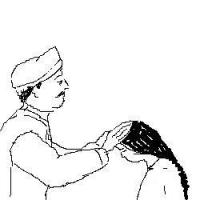
Youngsters, both male and female, not being aware of how to seek blessings [going up to elders and asking ‘harachu’ with a ‘bent’ head] even at special occasions like weddings….see Badaga Blessings

Most of the Gowdas, let alone the commoners, in many villages, not being ‘clear’ or sure of ‘morai- correct relationship’  for marriages….see Badaga villages

God save those Badagas who are trying to adhere to traditions and save the community from ‘external’ influence!

A site for SENIORS

Seniorindian.com is a must visit website for SENIOR CITIZENS. It contains plenty of information on ‘all’ aspects of life concerning the seniors – retired and aged.

As the website says : The aim of this site is to provide detailed info on all aspects concerning Senior Citizens of India, so that they may lead a healthy and happy life. Planning should begin early (maybe at 40!). Old Age brings some limitations, but being positive and following some simple guidelines can make life richer not just for Seniors, but also for their  family, friends & society.

A visit to the site is worth it. Also visit JVV


[Visit badaga.me or badaga for better multimedia experience]

Badaga Origin

[Dear JP,You have given only some information regarding the origin , why not a full background of our origin. – Balasubramaniam (balasb1234@yahoo.com) ]

Many mistakenly claim that Badaga Origin is nothing but Badaga migration from Mysore  [now in Karnataka state] about 300 years ago, during Tipu’s time only because of  the name Badaga (meaning northerner). It is very debatable.
Unfortunately many Badagas have believed it in the absence of any convincing and conclusive evidence to the contrary. But the latest revelations and links about the language, especially from the epics and writings during the Tamil Sangam period tell a totally different story (see below).
I am firmly of the view that our history is much older- may be a thousand years or more older – and my initial ‘research’ confirms that.

There is a lot written about the migration from Mysore theory by many anthropologists, researchers  and others. For obvious reasons, most of them are/were ‘outsiders’ – like the early European missionaries and British. The one person who has done a lot to highlight about Badagas, in 1960s, Prof.Paul Hockings has chosen to go along with his predecessors in concluding that since Badaga means north[ner], they have migrated from southern  Mysore  during Tipu Sultan’s rule over Mysore to avoid being forcibly converted to Islam. Also sited in support of migration is the resemblance/similarity of Badaga (language) to Haleya [old] Kannada.

But, B.Balasubramaniam, a highly educated Badaga, [who has done extensive research before writing his book “ Paamé ” – The history and culture of the Badagas of the Nilgiris ] feels that Badagas migrated from Southern Karnataka [then Mysore State] about 700 years back, much before Tipu’s time, around 1311 AD during the plundering raid of Malik Kafir.

Though I am in agreement with Bala that Badaga migration, if at all, took place much earlier then Tipu’s time in late 1700s, I am firmly of the view that “It is possible that Badagas have lived in the Nilgiris for thousands(?) of years like the Thodas [Thodhamaru ] or Kothas [Kotharu]. Migration theory is an attempt by historians and anthropologists to explain away a ‘historical puzzle’. Based on the name ‘Badaga’ or on the so called ‘legends‘ that are open to many interpretations or on the basis of similarity of Badaga [language] with haliya-old Kannada, can we conclude that Badagas migrated from Southern Mysore?

When there is no definite evidence about the origin of Todhas or Kothas, how can we presume that they predated Badagas as natives of the Nilgiris?

I am sure the mystery of migration is far from over. If you look at the issue as of ‘definitive migration’ then you try to guess about the dates but what happens if we believe that Badagas have always been there in the Nilgiris much before or along with Todhas or Kothas? Uncomfortable questions that are very interesting and worth digging deeper into.


But given the diversity but the highly commendable unity and uniformity with minor changes in their customs, Badaga Migration, in all probability, has taken place even within the Nilgiris Hills reverently called ‘Naakku Betta’ by the Badagas.


What we DO NOT know about Badagas is more than what we know about them. Such is the mystery of Badaga Origin.[Read the complete article with what the Tamil epics mention about Badagas that may give a glimpse of  Badaga Origin here]

Balamagil Thirige Ebbadu (Wake up turning to your right Side)

Sofia Joghee from Singapore writes :

Our general practice to wake up turning right side has been instructed to us since our babyhood I should say. This is meant to be good. I am not sure if all of us know the real purpose and why this is good. So, I would like to share with you.

Body has 3 Major Nadis – Ida, Pingala and Sushumna

As long Ida and Pingala can be in balance, we can distress and be less egoistic when we encounter people at work or home. Also, if balanced, Sushumna will tend to raise our Kundalini energy. Well, effects of Raising kundalini are huge, beyond someone can imagine. So, let’s restrict our discussion to the technique to get this working.

Ida is cooling like the moon. It has to be active when the sun rises, to keep our body cool.

So, in the morning, before we wake up, lie down on our right side for 10 min and wake up with a small prayer to God for positive things to happen for that day. This will help activate our Ida Nadi, and hence we are ready to start our day.

Pingala is heat like the Sun. It has to be active when the sun sets, to keep our body warm.

So, in the evening, just after the sunsets, as the temperature comes down, we can lie on our left side for 10 min and wake up with a small prayer to heal our stress that we had gone through for that day and have a peaceful evening. This will help activate our pingala Nadi, and hence we are ready to keep ourself active even after a stressful day.

There are many other techniques to do this. But laying down on left side and right side will be the easiest for anyone to do.

So, we have been following our ancestors but  never were instructed of its inner meaning.

(http://sofiajoghee.wordpress.com/)

A great Badaga Writer

There is a great Badaga writer whose articles and poems have appeared in many magazines and newspapers all over the world. Her dramas/plays have been aired on BBC. She has written a couple of novels. Unfortunately, in my opinion, her talents and true caliber have not been fully understood and appreciated.

Indu K Mallah
(Photo by bellie jayaprakash)

Ms.Indu K Mallah’s poem ‘Song of the Hill People ‘ written many years ago, reflects the agony of these ‘betta’ people even today…

(((((O)))))

 
calf
[photo from the net]

:::::::::::::::::::

SCAPE GOAT
Yesterday, you were a care-free calf
Tugging teasingly at your mother’s teats.
And gamboling gaily
In an abandon of joy.
Today, you are weighted with garlands, mantras, and the
collective sins of the community.
The pujari extols the benefits of ‘karu puja’.
He compares your eyes to Surya and Chandra.Your ears to Usha and Pratyusha,
Your body to the abode of Mahalakshmi, Saraswati and Raudri,
Your horns to Sri Devi and Bhu Devi,’
Your nose to Vaishnavi,
Your forehead to Maheswari,Your feet to the four Vedas
And your teats to Dharmam, Jnanam, Aishwaryam and Vairagyam
(Righteousness, Knowledge, Auspiciousness and Detachment)

But…………..no one notices the tears in your eyes.They feed you with rice and sambar, deceit and betrayal,

And wonder that you turn your head away distastefully.
They smear you with kum-kum and manjal,
Chandan and ceremony,
They pay obeisance and lip-service,
They offer incense and incantations,
Oblations and silver coins;
They tie an angavastram, a length of silk
Or noose?
Around your innocent neck;
They deify you and prostrate themselves
In front of your bewildered body.
No one notices your head heavily touching the ground,
Under all these trappings.
What can I do to ease your burden?
I reach out, and try to wipe out that hunted look in your eyes,
And you tremble at my touch.
The puja over,
They rush to restaurants;
Serving their favourite dishes.
The atmosphere rife with irony
And orders for chilled beer and brandy
Mutton biriyani and chilli chicken,
Interspersed with sounds of
“Punya puja and prayaschittam.”
They gorge themselves with food, drink, and self-delusion,
Until they are bloated with complacency and self-righteousness
Before they return to their old ways of
Slothfulness, and sinfulness,
Superstition and self-indulgence, Until the time comes around
To find another scape-goat.

||||||||||||||||||||||||||

A WOMAN’S TEARS(Hengada Kannaneeru)

A daughter’s tears will water the fields,

And wither all the crops,
And cause a famine in the land,
Or so the legend goes. A sister’s sobs will swell the stream
And turn it into a river of blood,
Which will wipe the entire village out,
Or so the folk-tale says.A mother’s heart-break will pace the road
That leads to the ancestral home,
With splinters of her broken heart,
And the men who tread on them
Will be turned to stone,
Or so the elders say.A woman’s curse will turn cows to snakes
And blight the prosperity of the place,
For when the ‘Lakshmi’ of a place is destroyed,
What else can survive?
`
Daughter, sister, mother, woman,
Hurt her he who dares.
“Hennogiri mannogiri” *
The spirit of Hethai still reigns supreme in this land,
And the wheel of Sathyam will turn
Full circle.* – A Badaga woman’s curse will cause the soil to become barren (Since the Badagas have mainly been an agricultural people, this is the worst curse that can befall them).Hethai is the most important deity of the Badagas.

:::::::::::::::::::

SONG OF THE HILL-PEOPLE

What myth informs you
That your god is greater than ours?
Which fairy tale tells you
That your god is the only one?
Which god gave you the right to brain-wash our vulnerable, guileless people
With a brush dipped in guilt?
And who gave you the right to maul our culture?
You justify your self and say
That religion is different from culture,
But one is the warp, and the other, the weft of the fabric of our credo,
Which has the texture of the trees,
The flow of the mountain – stream
The scent of the earth,
The melody of bird-song,
And is in tune with the music of the cosmos.
It is the age-old story of exploitation,
And it will take ages for us to recover from the wounds
You have inflicted on our souls
In the name of saving them.
But you have reckoned without
Our God of Satyam
We will wait——
Tomorrow is time enough for your expiatation.

  [In the ‘Song Of The Hill People‘, Ms.Indu K Mallah has beautifully brought out the mindless and meaningless (religious) conversion of hill people especially, Badagas. What used to be an unforgivable act a couple of decades ago, has become a routine affair now.

I am yet to meet a ‘converted’ Badaga who could give me atleast one convincing reason for the change. I know of many Badagas who say ‘I am a proud HINDU and have no problems in praying/ keeping pictures of other religious deities also in my puja room’. Hats off to them!! Badagas have been a very closely knit community. Let not”religion” divide them.]

[The  poems of Indu K Mallah are from the net.]

In UNITY lies our STRENGTH

The following have been taken [cut and pasted from – Facebook – Badaga Group] and reproduced below as I consider the ‘conversion game’ played by the  ‘newly converted Christian Clan’ needs to be analysed and nipped in the ‘bud’ as the situation after what happened in B.Manihatti is very serious.

Bellie Jayaprakash         6:57pm Jan 11
Our hearts bleed for the ‘brave hearts’ of B.Manihatti people.The first conversion of Badagas to Christianity took place in 1854 when some German missionaries mislead a couple of Badagas in Ketti (Santhoor) with the lure of monetary compensation and false promise of ‘education’ for the children. The seeds of disharmony among these peace loving and innocent people who believed in unity and community living (all the hatti people acted as one) were sown.

Unfortunately, the biggest curse of our people is the disunity combined with jealousy, that is all pervasive. The so called leaders of the community found shelter in politics and corruption with the active support of ‘self appointed Gowdas’ who could be ‘purchased’. The saddest point is that we do not have a selfless Nakku Betta leader after Rao Bahadur Ari Gowder [who passed away in 1971] who can galvanise our people with true leadership qualities.

This is Hethe Habba time. The ALL Mighty Mother Goddess Hethe has saved us from many a disaster. SHE will save us this time also.

Let us be united. In UNITY lies our STRENGTH.

Sathish Krishnan            7:02pm Jan 11
IN UNITY LIES OUR STRENGTH !!! I second you Sir.
Padmanabhan Ramachandran
Padmanabhan Ramachandran        7:50pm Jan 11

It is fair to say, there were excellent community leaders till the 1970s. Along with the father-son duo Bellie Gowder and Ari Gowder, there were also stalwarts like Bygamund Haika-mathi Joghee Gowder, Achanakal M Malka Gowder, and much before all of them there was Thuneri headman Padharaja III. Later there were several leaders who were freedom-fighters and selfless servants of Badaga Community.

Unfortunately, although unintentional, all the reforms that the early leaders carried out for the Badagas, resulted in Badagas abandoning their age-old occupation of agriculture and cattle and pursuing greener pastures in urban and faraway places. Resulting in a dearth of leaders amongst our community in our homeland. What we are left with is a bunch of selfish crooks in the garb of leaders.

Education certainly was essential but education should have been only complementary and for the enhancement of our own way of life. Like how Shiv Khera says, ‘successful people dont do different things, they do things differently’.

Nagulan Joghee        8:02pm Jan 11
We feel and share your concern JP.. The leadership vacuum is a very big issue.. there is politics everywhere and in everything.. fuelled by unmatched egotism… still hope some good sense prevail and unity will emerge.. let us all try for that.. I heard that the arrested people were released today on conditional bail ( they must stay in Ooty) and they are all staying in ooty ( in one rented place) and plan to continue till the next hearing with hopes.. Collective voice is the need of the hour…

To add to @[1485064168:2048:Bellie...Prawin RamBhojan       8:19pm Jan 12

To add to Bellie Jayaprakash from the archives of TOI

Christian missionary efforts at conversion under the guise of social work do not take place in places, say, like the Brahmin-dominated ward of Mylapore in Chennai. They are conducted in poor, illiterate and innocent tribal areas and in remote jungles far from the prying eyes of authority. Now a reaction seems to have set in. Writing in The Statesman (March 12, 1999), Mr B P Saha made the point that “growing enlightenment has been provoking them (tribals) to dislike conversion and look askance at the foreign missionaries, the so-called benefactors”.

Attempts at conversion should be considered a mortal assault on local cultures and should be totally banned. Conversions are forbidden by law in China. Here we take a lenient view of conversion and Christian bodies have been taking advantage of the Hindu sense of tolerance. According to Mr Jon Stock, New Delhi correspondent of the British paper The Daily Telegraph, “put simply, the Indian subcontinent has become the principal target for a wide range of western Christian missions which are determined to spread the gospel to India’s ‘unreached’ people before the year 2000”.

Writing in The Spectator, Mr Stock says: “There is little doubt that the current communal tension in India would not be serious if foreign-funded missionaries had been content with giving Indians the choice of Christianity and left it at that.”

According to Mr Stock, “hundreds of thousands of dollars are being channelled into India through well-organised, America-based evangelical missions”, the meticulously researched ethnographic data they are compiling on the region ensuring that funds are being directed “with military precision to the right area, even to specific pin codes in remote tribal districts”.

Mr Stock quoted a statement from a Colorado-based Group of World- wide Christian Missions calling itself AD 2000 and Beyond as saying: ” ‘Flashes of light’ seen all around the North India-Hindu belt, particularly among the tribal groups, are encouraging us to believe that the Sum of Righteousness is indeed ready to rise upon these unreached peoples.”