Badagas & ‘the’ ST Status
I had written the following post in way back in 2016 – Wg Cdr Bellie Jayaprakash
Who are Badagas and what is their origin?
Badagas have been living in the Nilgiris [Naakku Betta – four mountains] for many, many centuries. Their origin, like that of Todas, Kothas or Kurumas, is still a mystery. With very distinct customs, culture and traditions, not to forget the language, what we know about Badagas is far less than what we do not know. But there is absolutely no doubt that, in my mind, that we are an indigenous tribe of the Nilgiris
Many, even among the Badagas, feel that calling ourselves as Tribal is demeaning. I equate these people with those who considered it below dignity to call themselves as Indians. I am a proud Indian and a proud Badaga. Both are ‘accidents’ of birth. Happy ones, at that.
Now, why do we need the status of ST? Is it only for the economic benefits that come with it?
If you compare with other tribes like Todas, Kothas and Kurumas in the Nilgiris, Badagas are far ahead in almost all the social factors. About two hundred years ago, all the hill tribes of the Nilgiris, were, more or or less on the same ‘plane’. The drastic changes have occurred only in the last hundred odd years when education was given the top priority by this community and girl child was given importance, even if it was not an equal one.
Even poor and daily wage earning Badagas ensure, at least a majority of them, that their wards get educated that too in an English medium school.
The ST status is required not to compare/compete with other tribes but to get the best of education in prime institutes like IITs. Basically being intelligent, Badagas can easily get admissions with some ‘push’, available to ‘STs’. Same would be true for clearing the UPSC examinations. Had there been this ST status granted earlier, there could have been a dozen or so Badaga IAS officers by now.
Secondly, Nilgiris is the only place which Badagas can claim to be their native place. The Nilgiris (district) has only one parliamentary constituency and alas, that one is RESERVED. Meaning Badagas cannot contest as long as this ‘reservation’ remains. Effectively putting a stop to the political ambition of the natives of the land. ST status eliminates this anomaly.
With the tea leaf prices crashing to all time low, Badagas have lost the main source of their economic independence. Added to this is the difficulties in farming or growing vegetables and other cash crops due to the ‘free roaming’ Bisons, elusive wild boars and destructive monkeys. With no industries worth the name located in the Nilgiris, educated Badaga Youth has to seek jobs in the plains. I know of many Badagas who have sold their small land holdings and settled in the plains.
Not that all the Badagas are in highly paid jobs. Many work on daily wage basis. Even in the plains like Coimbatore or Tripur, many work as servers in hotels or as Nurses/aayas in hospitals.
So, ST status helps economically too.
Todas may not have fully benefited with the ST status economically, basically due to the fact that, majority of the community has been addicted to the liquor. The free flow of ‘daaru/drinks’ is the biggest curse for the mountain people. Unfortunately, the State Government has chosen to turn a blind eye and a generation has been destroyed. Though, Badagas too are ‘very liberal‘ with liquor, luckily there are many ‘teetotalers’ as a balancing factor.
ST status, in my opinion, will help the Badagas economically, educationally and politically and will definitely help in preserving the traditions and culture, the most noteworthy being the famous Badaga hospitality.
***********************************
There are a few devoted and dedicated Badagas who share the view that their Community should come under ST – Scheduled Tribe for many reasons.
They have carried out a relentless campaign to achieve the same. Lead by the energetic Prof.Kulla Gowder, for whom age is just a number.
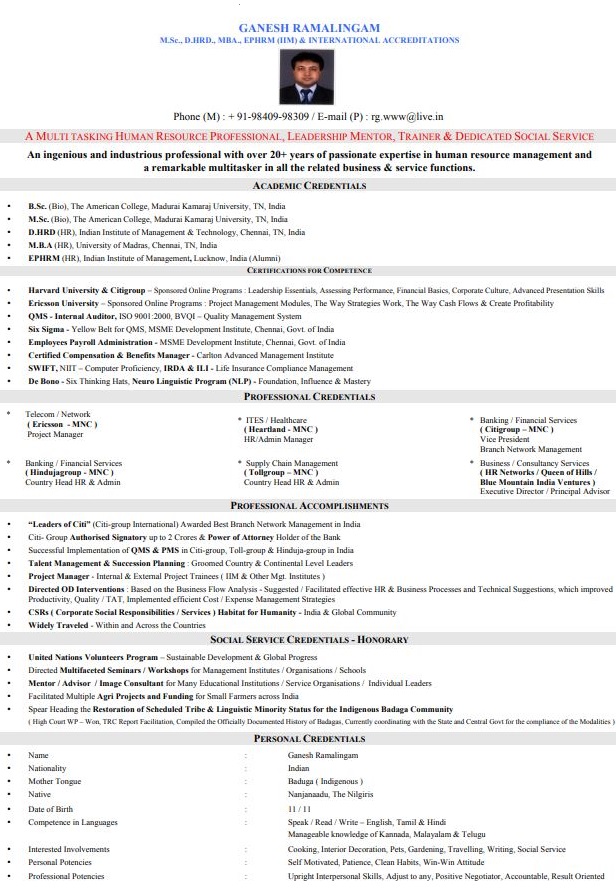
Now, this group BADAGAS FOR ST is being guided by the future hope of Badagas Ganesh Ramalingam
A delegation of seven Badagas belonging to this great movement recently visited New Delhi to press the case for ST status for Badagas and met concerned Ministery officials cum Sign off Authorities – The Registrar General of India, Tribal Secretary of India, National Commission for Schduled Tribes.
I thank Ganesh Ramalingam for sending the following Status Report.


~~~~~~~~~~~~~~~~~~~~~~~~~~~
Badagas ST Status – A Brief of the Journey till now

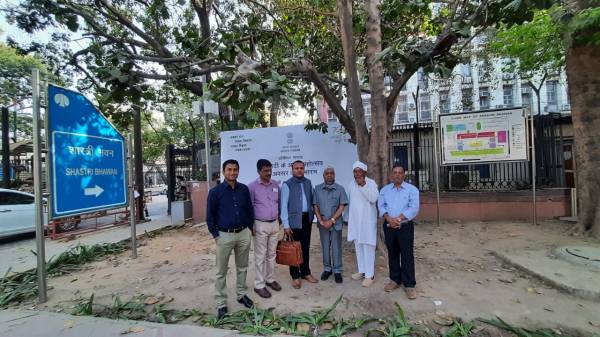


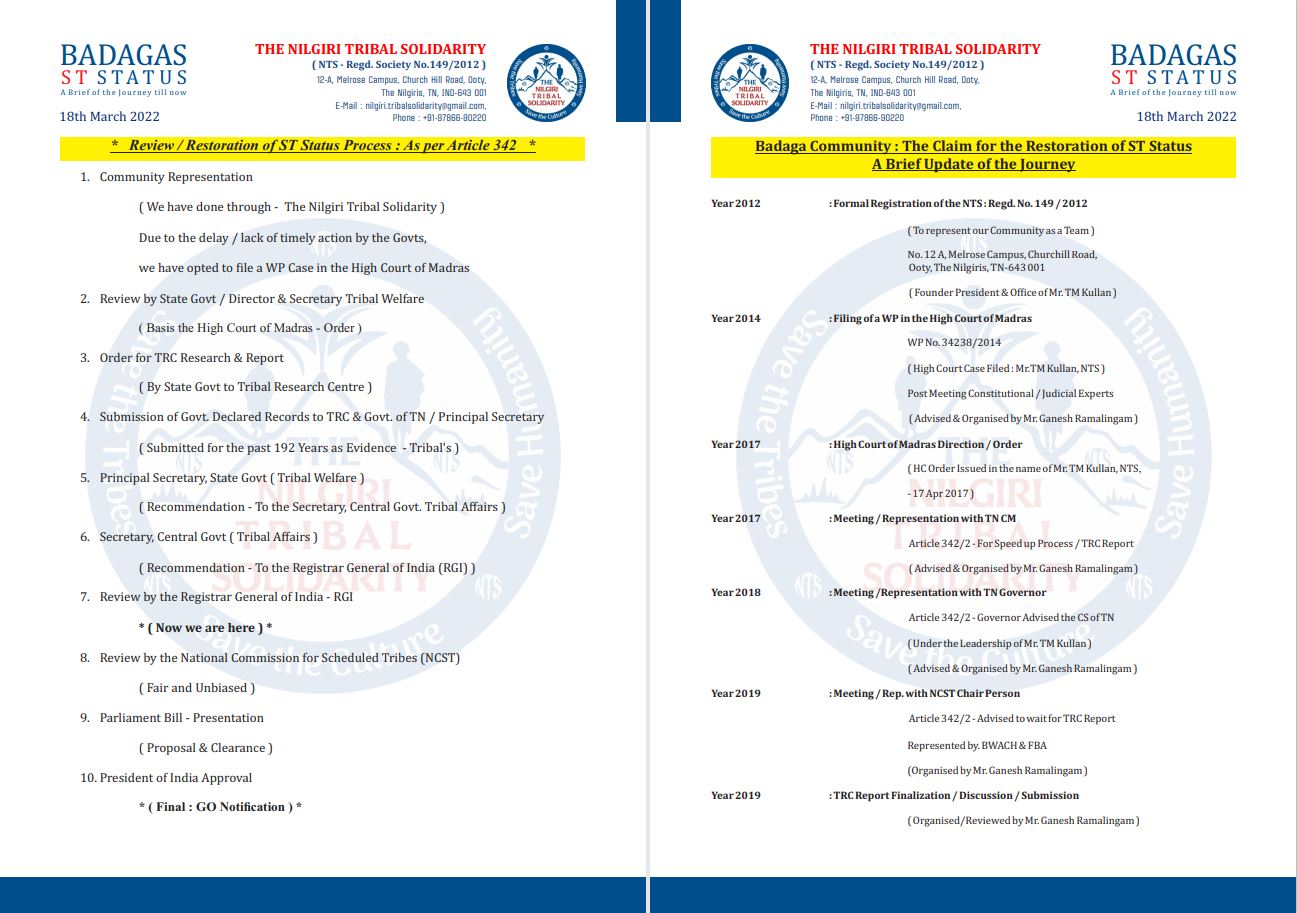
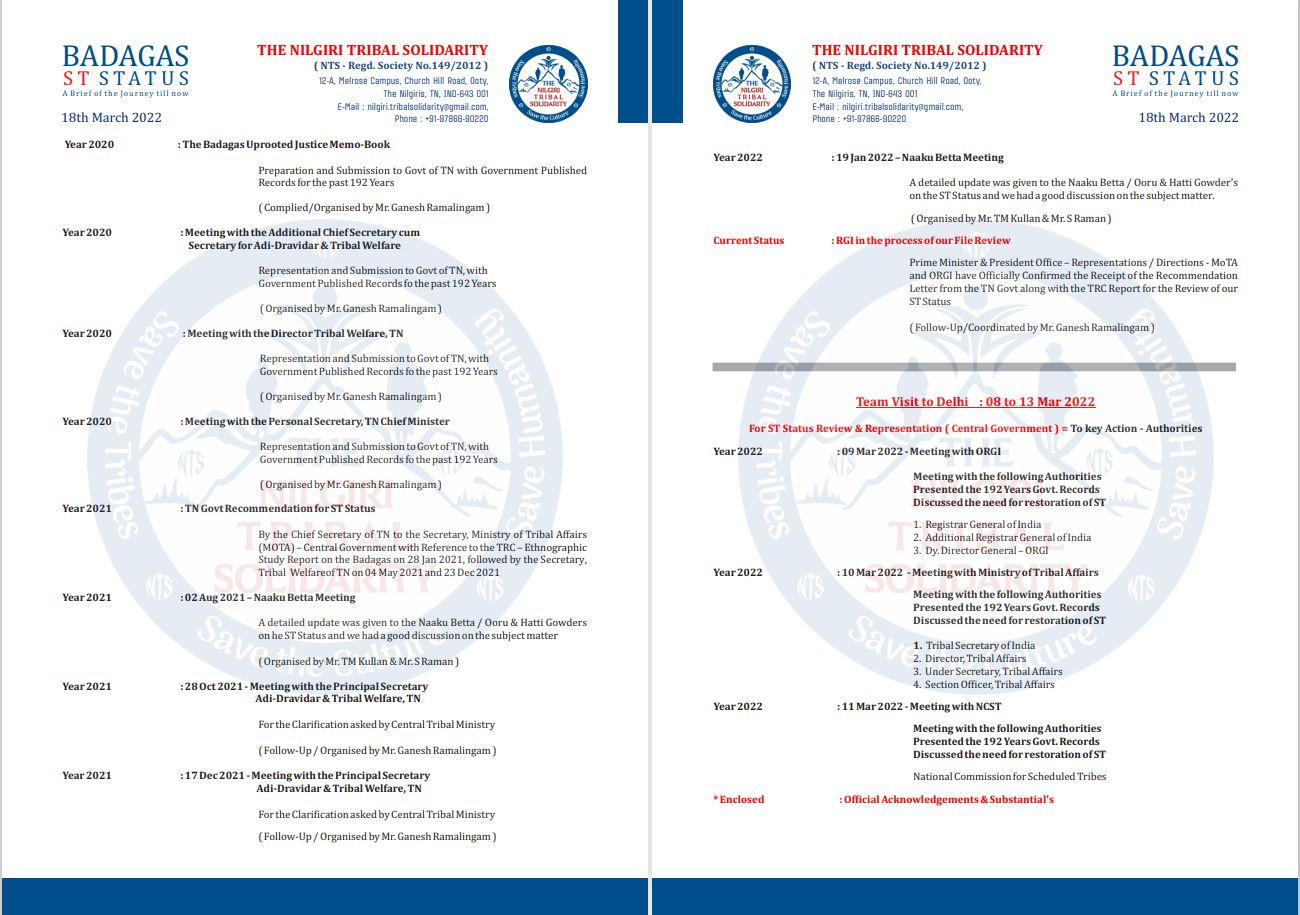
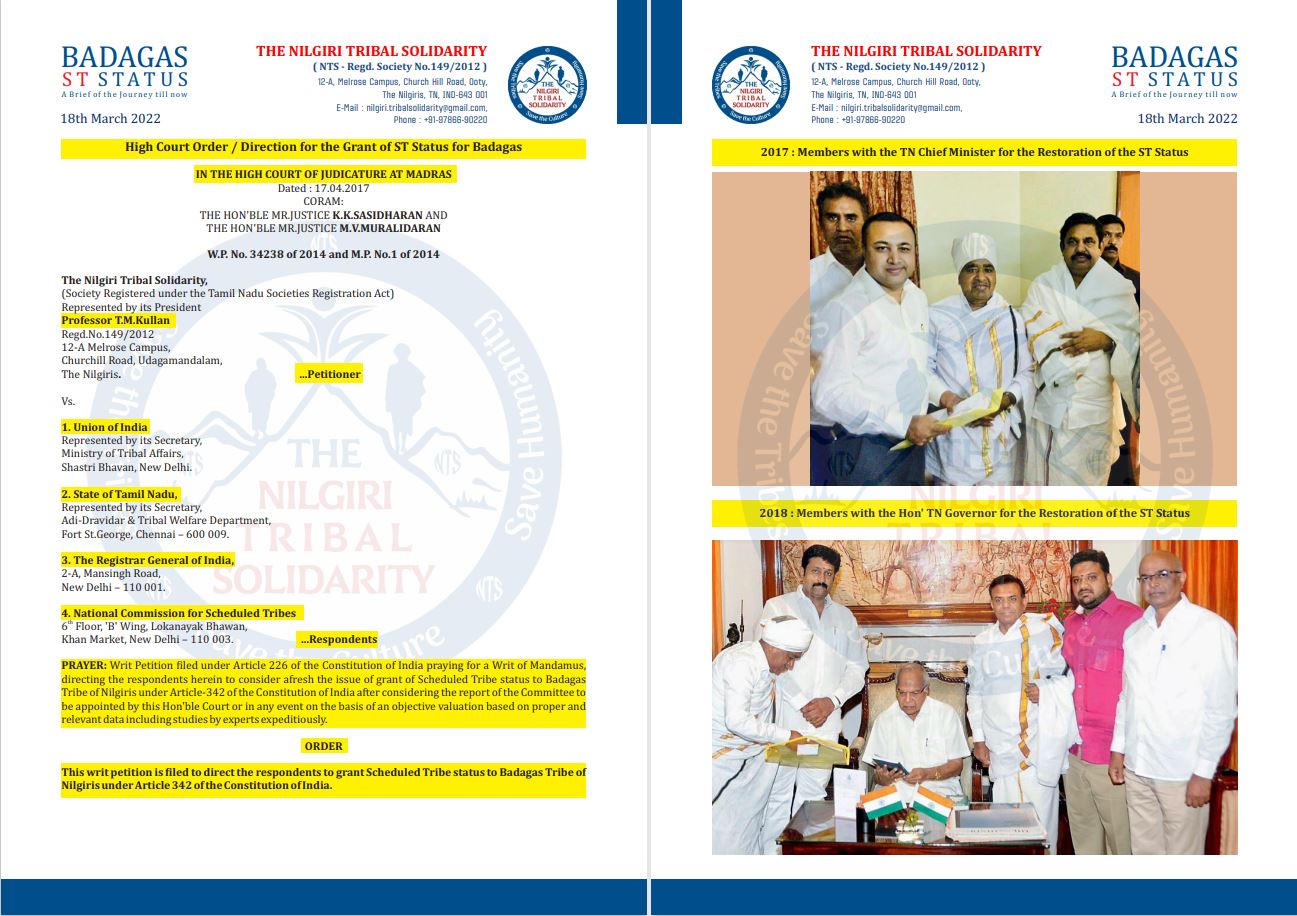
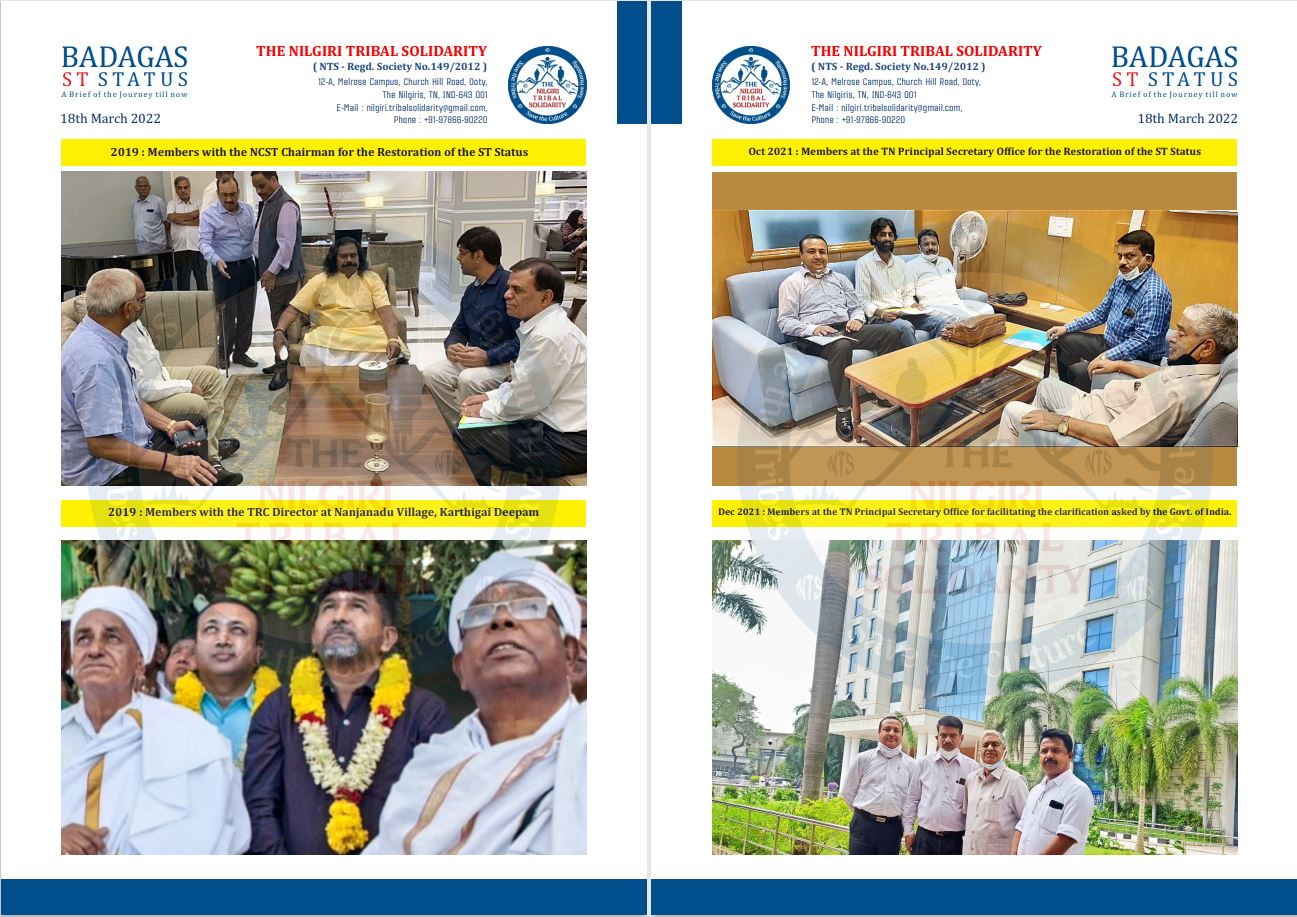
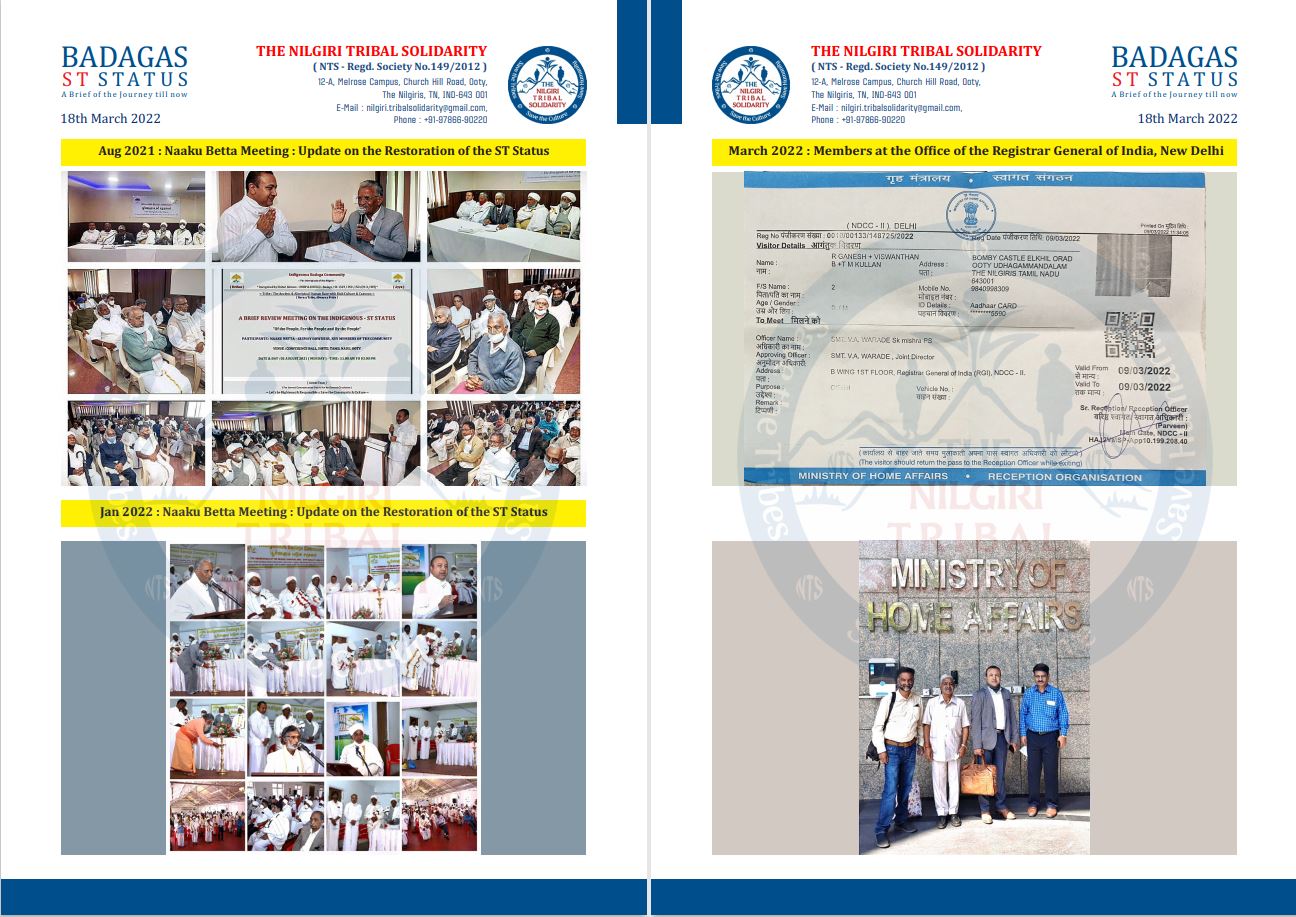
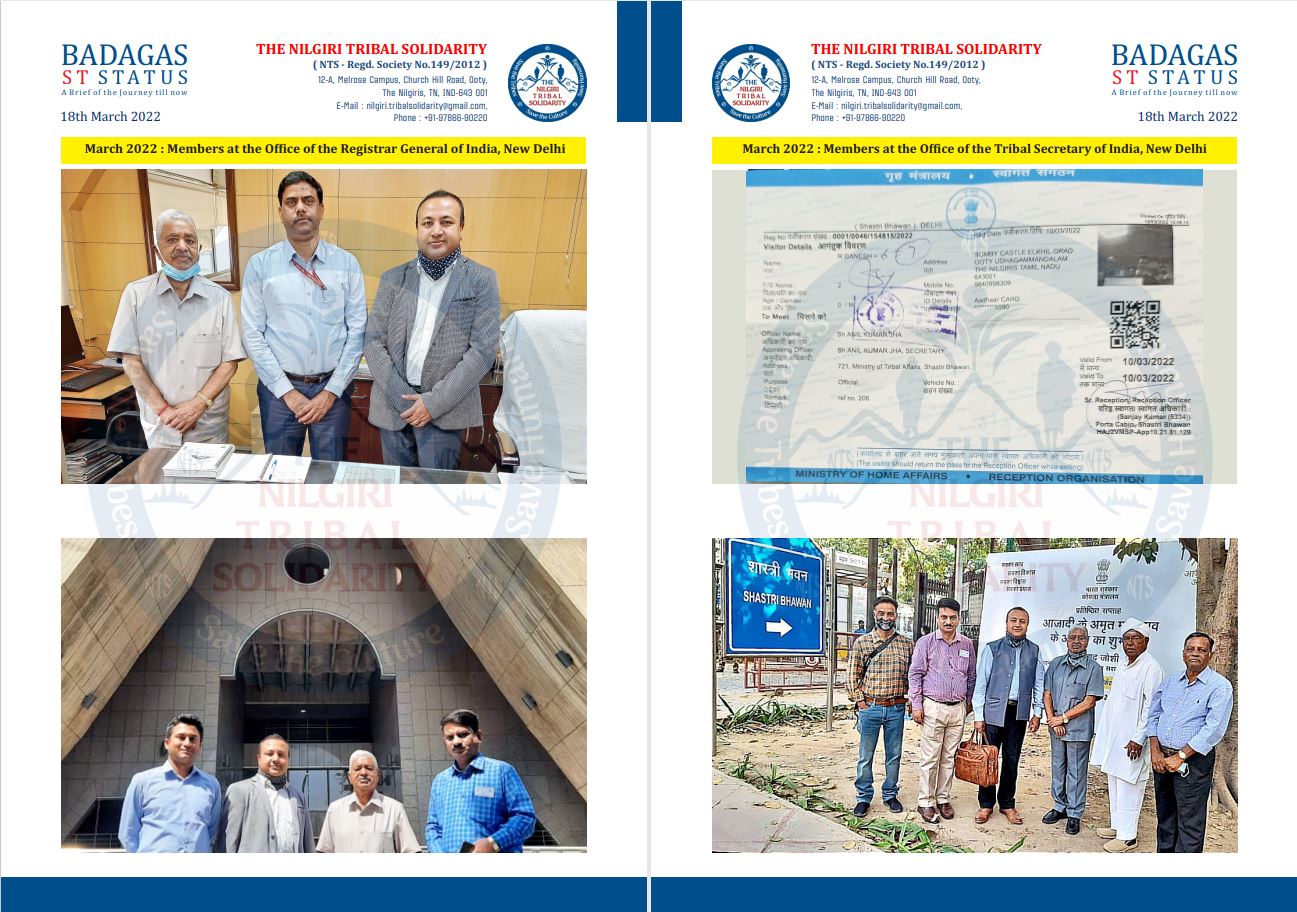
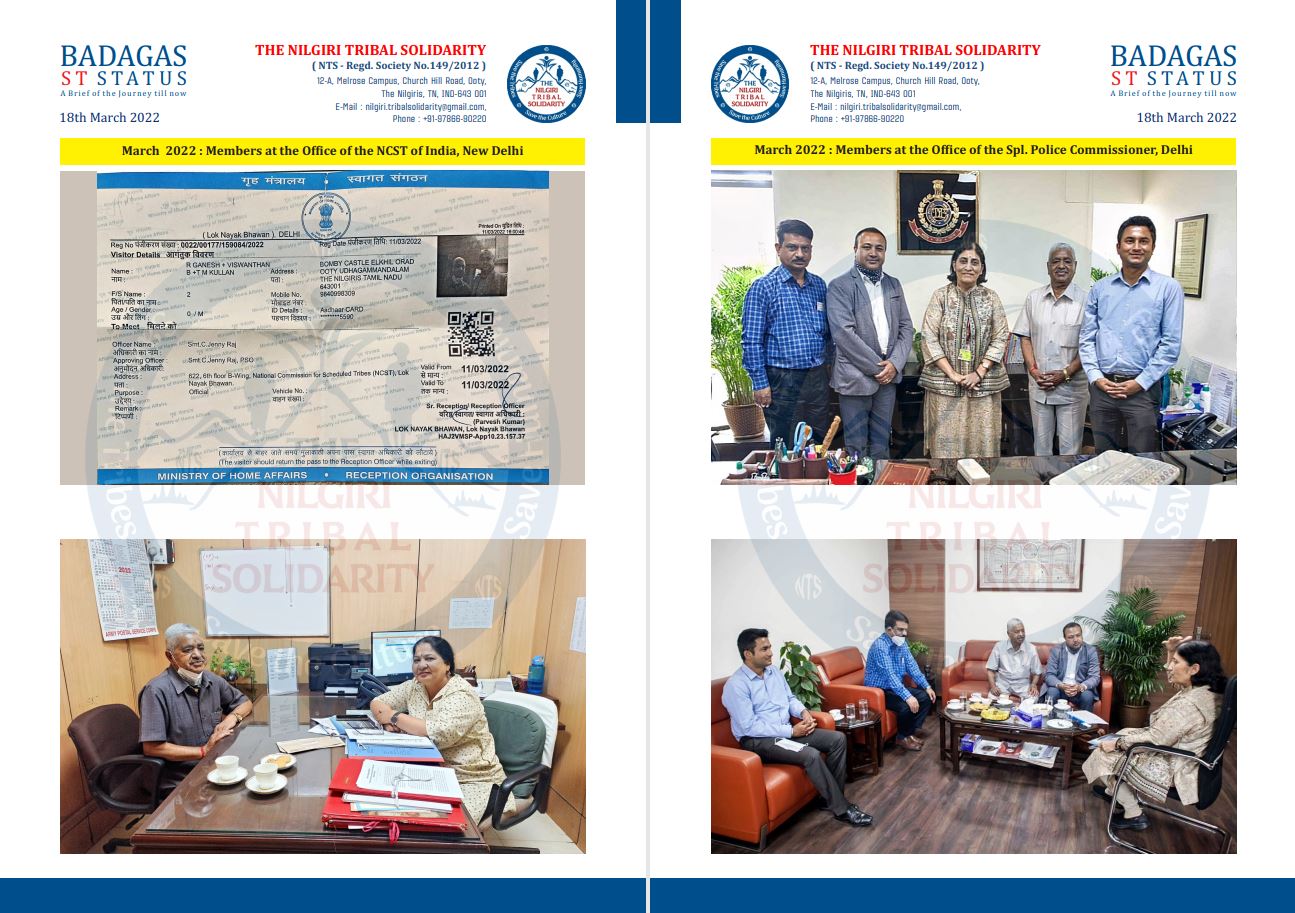

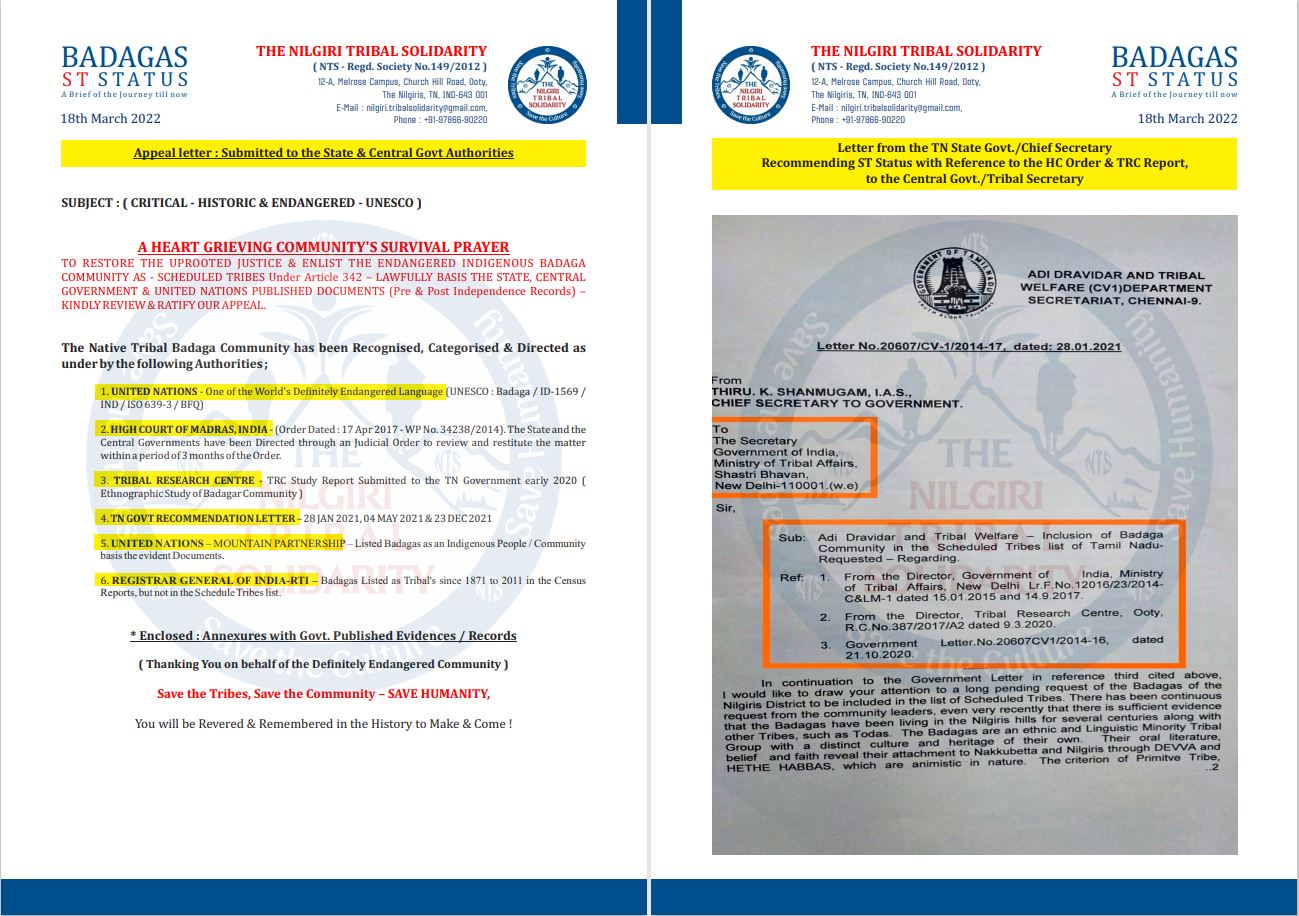
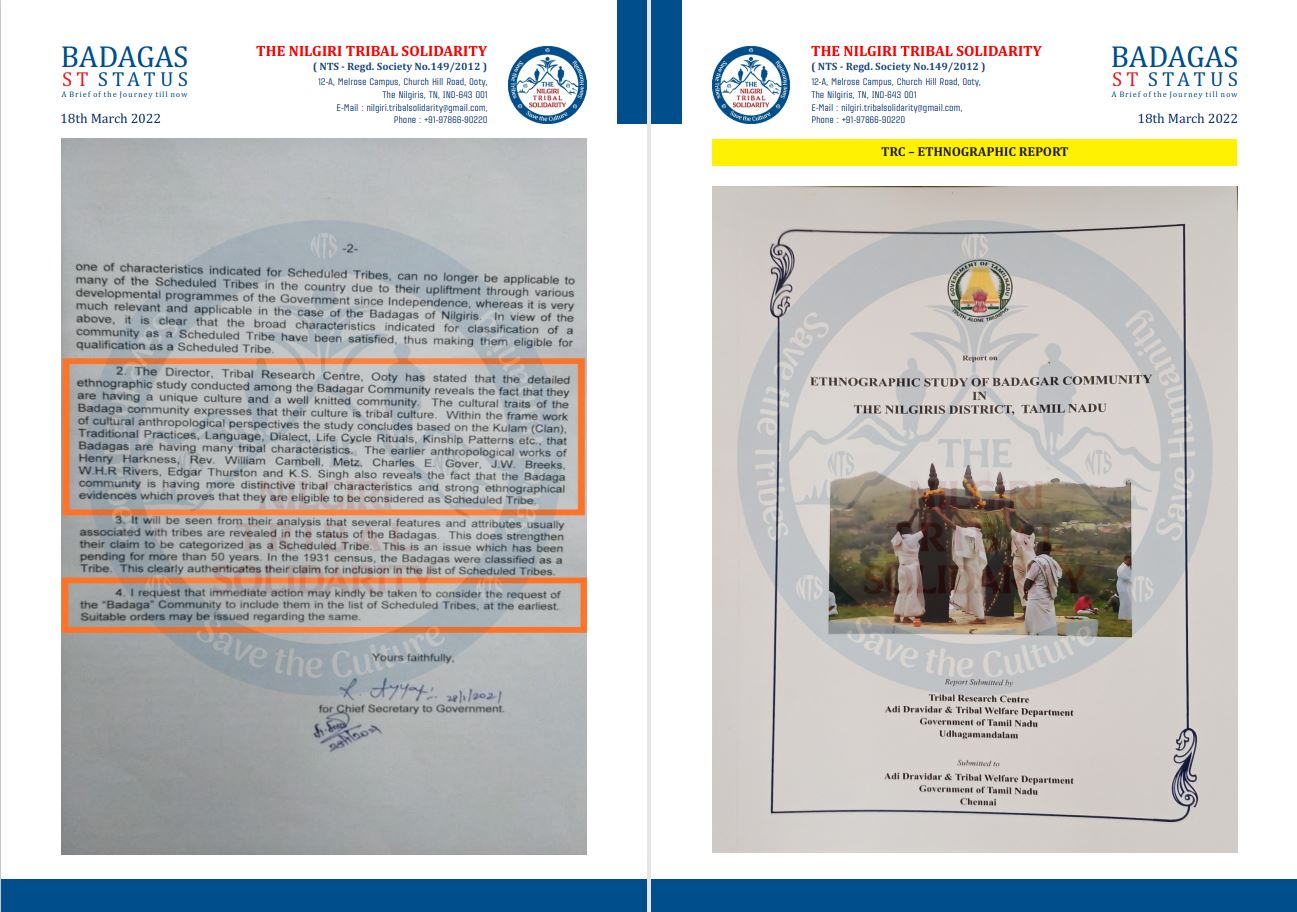

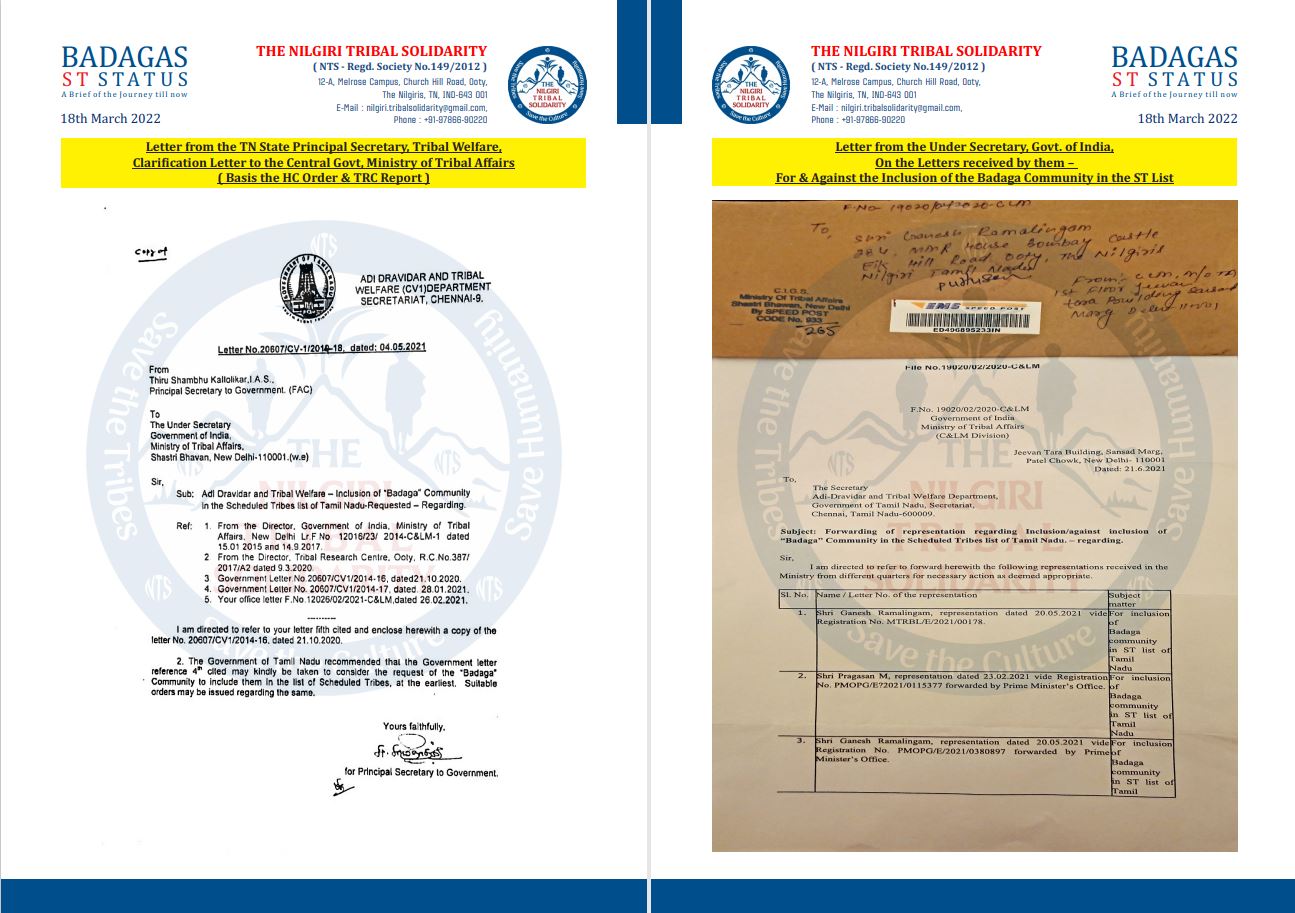
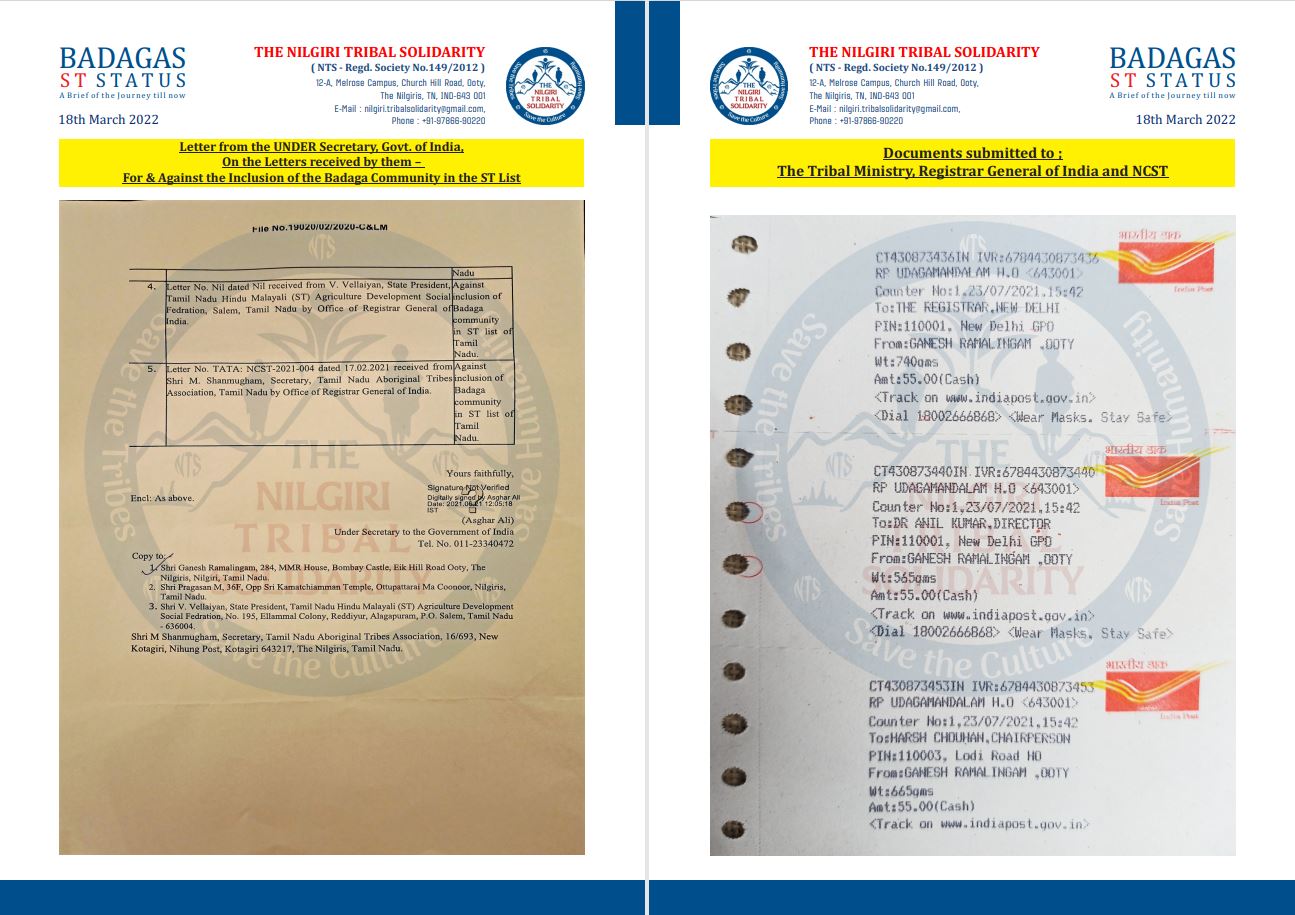

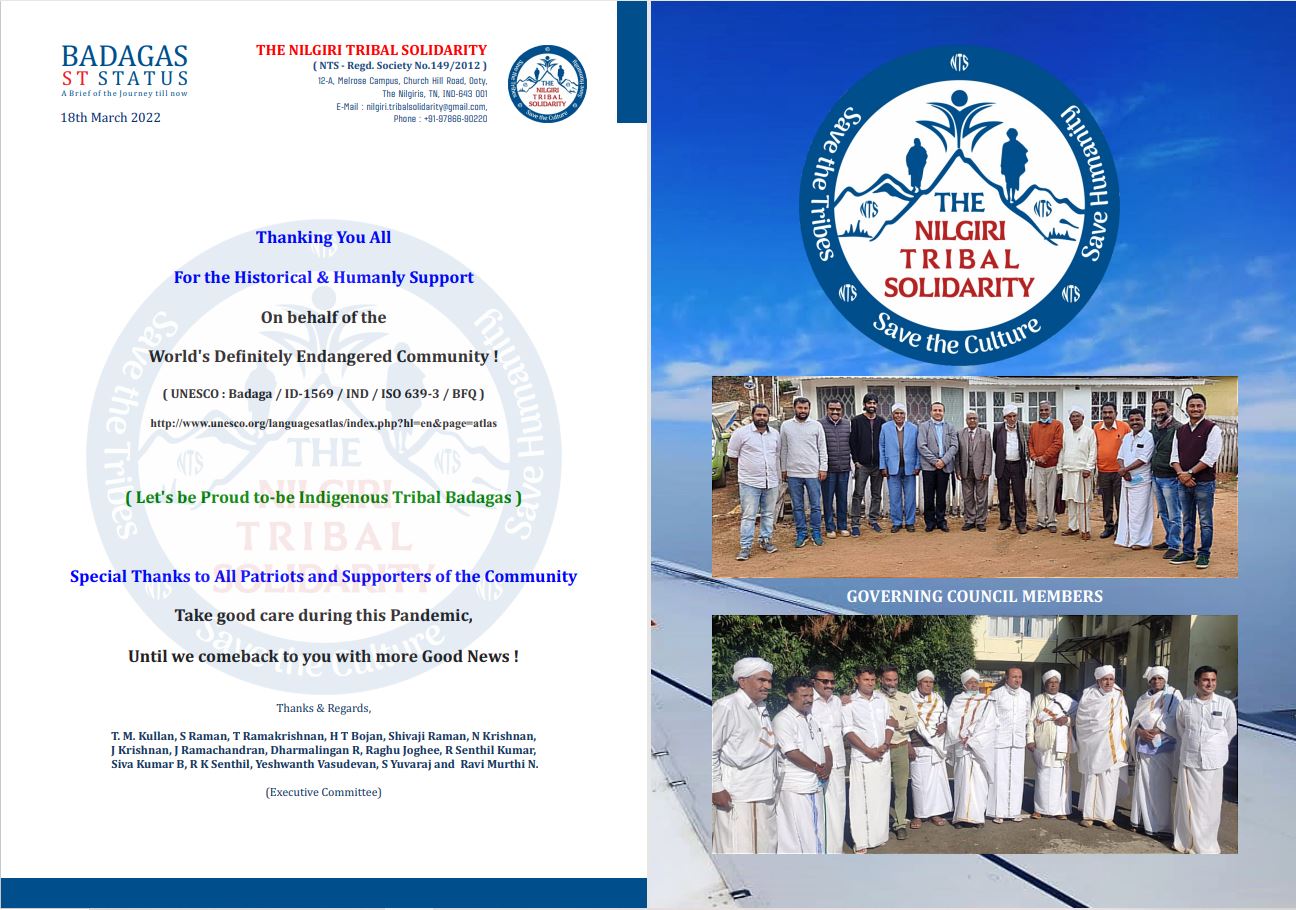
Ganesh Ramalingam who is spear heading the movement:
******************
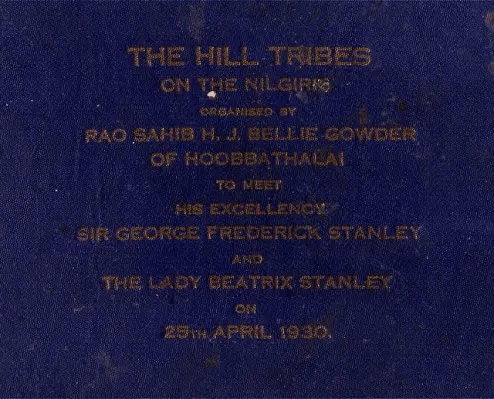
BADAGAS as ST – wrtten in 22/03/2019
Many Badagas are under the mistaken impression that if they are brought under the “Scheduled Tribe”, it is a degrading step. I do not think so. Badagas are one of the ‘ORIGINAL’ tribes of the Nilgiris along with Todas, Kothas and Kurumas.
The enormous improvements achieved by Badagas in all social factors, in spite of many impediments, should make us feel proud. This success is attributed to one SINGLE factor. Education. For that we must remember with gratitude the pioneer, visionary and philanthropist Rao Bahadur [Hubbathalai Jogi Gowder] Bellie Gowder who built the first FREE School in 1920s for Badagas – along with free hostel accommodation & Food in Hubbathalai and his son Rao Bahadur HB Ari Gowder who fore-saw that in educating a girl, indeed we are educating a family and hence insisted on education for girls and encouraged it fully.
To know more about Rao Bahadur Bellie Gowder, considered the undisputed Nakku Betta Leader during his days, go to http://badaga-general.blogspot.com/2011/11/rao-bahadur-h-j-bellie-gowder.html
இந்தியர் என்று எழுந்து நிற்போம் , படகர் என்று நிமிர்ந்து நிற்போம்
Posted in badaga
ARI GOWDER ROAD, Correct name restored
The road in front of the West Mambalam Railway Station in Chennai is named after the Great Badaga Leader of the Nilgiri Hills Rao bahadur H B ARI GOWDER who donated the land for public purposes. But unfortunately, the name was misspelt as ARYA GOWDER Road.
The Badaga Association, Chennai has always been celebrating Ari Gowder’s birthday, 4th Dec, every year, at the site with a grand function.

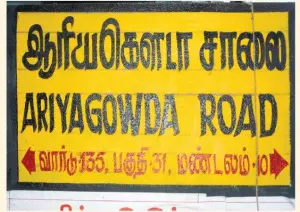
Ganesh Ramalingam along with other members has taken keen interest to get the name of the road correctly changed to ARI GOWDER ROAD. The petition and other details are given below.
Incidentally, Ganesh Ramalingam, who is highly educated and held many big posts, including the Vice President, Citibank, has taken over the mantle of solving many issues that have been agitating the minds of many Badagas in the Blue Mountains, known as Nakku Betta. Rather young in age, in his early forties, Ganesh’s knowledge in many fields, including Legal Affairs, is well recognised and much sought after.

We sincerely hope that Ganesh Ramalingam will fulfil the void that has been in existence ever since Rao Bahadur Ari Gowder’s death in 1971.
Proud of you, Dr. H Bhojraj

Dr. H.Bhojraj, B.E.(Hons.),M.D. ( Acu) Scientist Healer
There are many educated, talented and highly recognised Badagas about whom not much is known outside since they are simple and humble and choose to keep their achievements to themselves.
One such person is Dr. Bhojraj, son of Mr.Hala Gowder and Rukkammal from Kiyoor Kokkalada hatti (Mekkunadu Seemay). He studied in Kokkalada Government High School up to tenth and completed in SSLC (11th Std) in Bishop Ubagarasamy High School, Tirupur. Did his PUC from Government Arts College, Ooty. Completed his B.E. degree from ACCET, Karaikudi.
He is married to Mrs. Meera, from Mullimalai and grand daughter of Mr.M.S. Linga Gowder. Behind every successful man, there is a woman aptly suits her.
He is the First Badaga Scientist of ISRO (Indian Space Research Organisation.
I am so happy and honoured to present his life story in his own words.
A HARDCORE ENGINEER TO ACUPUNCTURE DOCTOR: The Journey So Far…
By H BHOJRAJ, Chairman, Academy for Acupressure and Acupunture
“The Only Time You Should Ever Look Back Is to See How Far You Have Come” – Anonymous
I completed my Engineering in Mechanical field from Madurai University in the year 1971 with Honours and got my admission in IISc for MS in the same academic year. I had also just recovered from a stomach problem after consulting a specialist in Coimbatore. The elixir he prescribed solved my digestive problem within a month and also improved my skin condition (I also had to apply a solution prescribed by a skin specialist for this.)
All was well… In the final year of my engineering, I had a gastric problem and took the exam with the assurance of the then Principal Late. Shri W P Vijayaraghavan, that I would be allowed to use the toilet in between the examination. All went on smooth and I also received my degree with Honours. However, I did not join IISc even though I got admission based on my mark sheets up to the fourth year.
YEAR 1972 THAT GOT ME HERE…
There was a time, I was searching for a job. We never got any newspaper in our village but somehow, I managed to get ‘The Hindu’ from Coonoor and started applying for a suitable job. I applied for the Junior Engineer post at TNEB and was selected in 1972 after the interview in Chennai. In the same year I also got married but was jobless from others point of view as the order was to be issued within a ‘few months’. To effectively use this waiting period, I applied for the JRF post in PSG Tech, Coimbatore and joined Prof Subramanian in Mechanical Engineering Department as Junior Research Fellow to assist him on thermal fatigue on metals along with other two Professors.
July 1972, I saw the advertisement for Scientific Assistance C with BE qualification for Indo Soviet Satellite Project in Bangalore. In October 1972 I received the call for interview letter. I was on double mind – whether to attend or not as I already have a job in TNEB.
It was my wife who motivated me to go to Bangalore and that one decision truly changed my entire course of life. I attended the interview at IISc Bangalore and it was Prof U R Rao himself conducting the interviews, handpicking the best from the Universities! I got the appointment order within a week and joined Indo Soviet Satellite Project (ISSP) in Peenya Sheds A1 to A6 which were then half completed.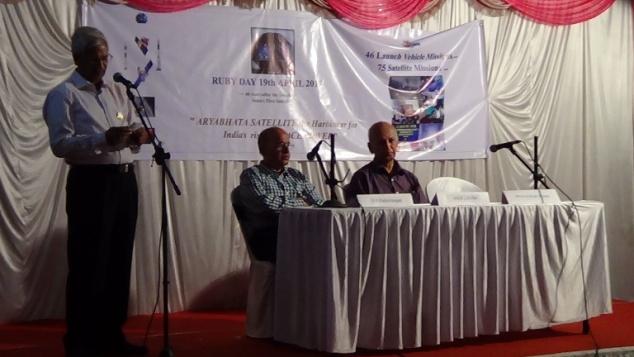
It was much later that I came to know Mr Suryanarayana Rao our AAA Trustee had only screened our applications and selected me for the interview. The project name was changed to the Indian Scientific Satellite Project (ISSP) and later after Aryabhata launch in 1975 it became a Centre known as ISRO Satellite Centre (ISAC) and a few years later renamed as U R Rao Satellite Centre (URSC) to honour the Father Of Satellite Technology in INDIA.
Prof Rao in my first meeting asked me about my research project in PSG Tech and as soon as I mentioned Thermal Fatigue, he asked me to join the Thermal Group for Satellite Thermal control. I was the first one in that Group and the senior people from Trivandrum joined after a month or two.
Mr H Naryanamurthy was heading our group and I attended my Boss’s wedding in Tumkur in middle 1973. He was introduced to all his relatives as a father of a child since my daughter was born on 19th April 1973. India’s first Satellite Aryabhata was launched on the same day in 1975 from Russia and I was one among those 50 Engineers who took part in the launch campaign from Kapustheniar near Volgograd.
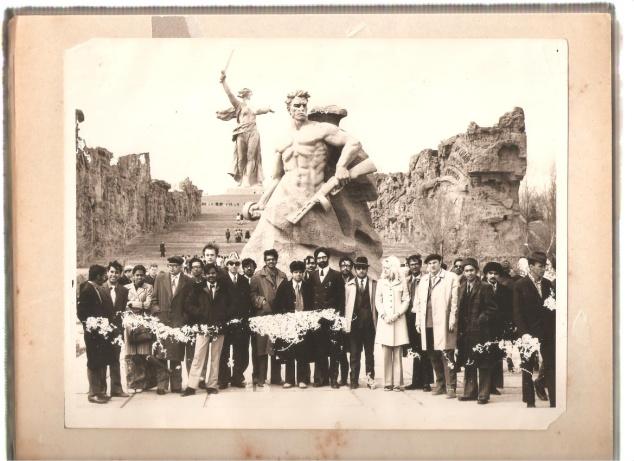
Dr U R Rao encouraged me to take up higher studies in 1984 and my application was accepted for MS by research in IIT Madras. I did my course work very successfully got excellent ratings in all five subjects with Prof Shastri and Prof S P Venkatesan. Due to the heavy workload in the office, I could not concentrate on the project work and submit it in time for the degree. Still, I consider my stay in Kaveri Hostel for four months in IIT as my best in life for learning with really brilliant students nearly 15 years younger than me. My theoretical ability and thinking capability changed a lot after this study in IIT.
HEALTH-RELATED CHANGE
All was well until 1976 but my wife developed slight wheezing problem in 1977. The Doctors declared it as allergy and bronchitis. Her treatment went on for five years. Our Trustee Dr Kanaka Rao was our consulting Doctor in 1980. Three times till 1982, she was admitted to the hospital with an Asthma attack. With intravenous injection and steroids, she got back to normal mode within 3 days. One specialist suggested we go out of Bangalore to avoid this weather and the pollen pollution at that time.
We decided to stay put in Bangalore and fortunately Dr P C Wodayar our Office Approved Doctor suggested my wife take up Yoga under Dr Nagarathna since Vivekananda Kendra had been treating patients with Yoga Therapy particularly Asthma. I admitted her to Yoga classes in Malleshwaram and our pleasant surprise, she recovered fully within a month. After six months, she asked me to take her to Dr Nagarathna for joining the Yoga Teachers Course. I used to take her in my Vespa scooter every day at 6 PM and bring her back at 8 PM. Dr Nagendra, presently Vice-Chancellor, VKYOGAS was giving special lectures and asked me also to join the course instead of sitting there. After three months I stood first in the exams both in theory and practicals. It changed my life. We both served as voluntary yoga teachers for Vivekananda Kendra for eight years till 1992.
Dr Jiten Bhatt visited Bangalore in 1992 and was giving free Acupressure class, which was attended by my wife and my sister in law. I also attended one free class and never believed his concepts mainly because of our scientific background. When I experimented with the single point ie root of the thumbnail for the headache it worked like a miracle for me. I experimented with many of my colleagues and it worked. I took it seriously and asked Dr Jiten Bhat to give a course for one full day. Nearly 400 people attended that course held at the Institution of Engineers on December 25, 1992 which was also recorded on TV camera. Based on his advice I wrote the book on Acupressure and Fitness and published it with the help of Dr R P Sahu, President, Space Officers Association (SOA) and distributed it almost free to all officers at a nominal cost of Rs 10 with Rs 20 as subsidy from SOA.
I attended almost all Alternate Therapy courses conducted in Bangalore. Radionics by Dr Evan Comb from France, Pranic Healing by Dr Hector from Philipines, Reiki healing by Shri Sundararajan from Singapore, Dr Nagendran from Thanjore on Acupuncture, Dr Anton Jayasurya from Sri Lanka on Acupuncture, Dr Mohan Selvan from Chennai and Dr Violetta from Russia on SuJok Acupuncture and Dr Subash Mani from Chennai on Dorn Therapy.
Based on my research I formulated my acupuncture theory combining Classical Acupuncture and Su Jok acupuncture and started taking classes in the nineties. Our scientific community was so much impressed and they wanted it in a book form. The book “The drugless path to good health” was released by Dr Surendra Pal in the year 2000. I seriously attended the course and got my degree in Acupuncture from Medicina Alternativa, Sri Lankan Open University in the same year 2000. The degree was awarded in Bangalore by Dr Anton Jayasurya in the presence of 400 participants from all over India.
My journey as Doctor started in the year 2000 and I thank all those who supported me to start the Academy for research. I enjoyed my post-retirement much more due to this noble profession which helped many people to learn and give relief to the needy. My main aim is to get recognition from the government for this scientific therapy and start an integrated hospital either in Bangalore or in Nilgiris within the next few years. the recognition from the government for this scientific therapy and start an integrated hospital either in Bangalore or in Nilgiris within next few years.

I am sure the life and achievements of Dr.Bhojraj are truly inspirational.
Proud of you Bhoj – Wg Cdr JP
‘A Grammar of Baḍugu’ by R Anandhan
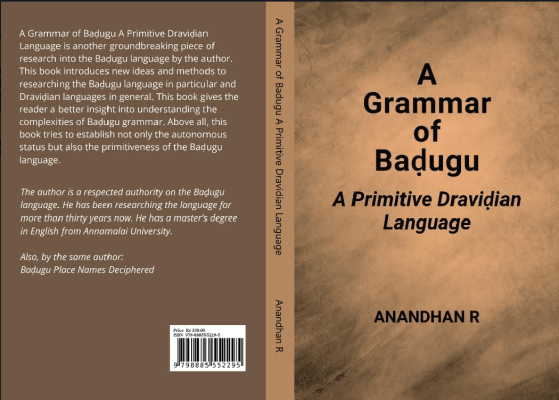

R Anandhan is an authority on Badaga/Badagu/Badugu language and has written and published a book entitled “A Grammar of Badugu: A Primitive Dravidian Language” recently. He had also developed a script for the language. He has been doing research on Badaga/Badugu language for the past thirty odd years.
A Grammar of Baḍugu A PrimitiveDraviḍian language is another groundbreaking piece of research into the Baḍugu language. This book introduces new ideas and methods to researching the Baḍugu language in particular and Draviḍian languages in general. This book gives the reader a better insight into understanding the complexities of Baḍugu grammar. Above all, this book tries to establish not only the autonomous status but also the primitiveness of the Baḍugu language.
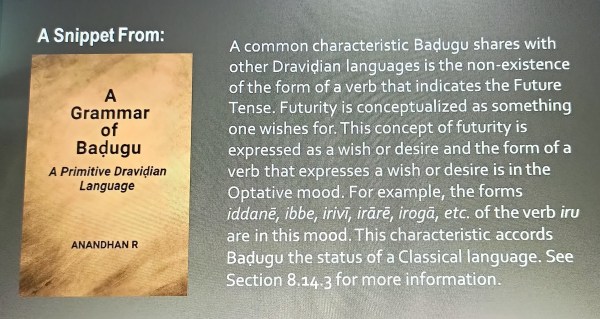

His other book is Badugu Place Names deciphered
This book A Grammar of Baḍugu A PrimitiveDraviḍian language can be purchased online using the following links. The price is Rs.330/-
Notion Press:
https://notionpress.com/read/a-grammar-of-badugu-a-primitive-dravidian-language
Badaga Migration theory is a BLUNDER!!
Badaga Migration – the myth and the MISTAKE
The Professor who corrected the colonial blunder about Badaga migration !!!
Ethnography is the study of peoples and cultures with their customs, habits, and mutual differences. Ever since, British rule in 1800, foreign Ethnographers have been studying the native people of Nilgiris.
Ethnographic and general accounts of Nilgiris and its people began with Evans Macpherson (1820) followed by James Hough (1829), Henry Harkness (1832), Bernhard Schmid (1837), Harry Congreve(1847), Richard Burton (1851), Rev.Metz (1856), John Shrott (1868), William Marshall (1873), Breeks (1873), Grigg (1880), Edgar Thurston and Natesa Sastri (1898), Francis (1906) and Rivers (1908). This was followed by local writers and later by Western scholars from America, Germany, UK and so on.
They wrote about the different communities on the Nilgiris including the Badagas. They had their different viewpoints. But they had one common view. That is, Badagas migrated from Karnataka some 300 or 500 or 800 years ago. Every writer repeated this religiously as if it was a God given truth. Many Badaga scholars and elders have questioned this conclusion over the years.
But where is the evidence?
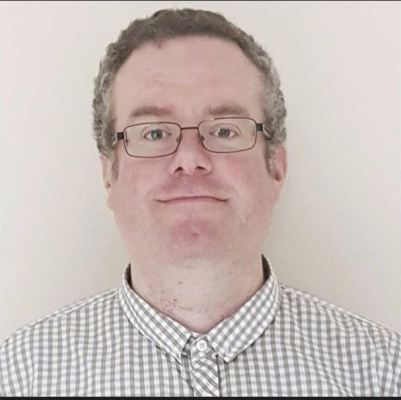
Gareth Davey is UK scholar with a Ph.D in Anthropology and Psychology. He has authored several books and articles on varied subjects and has done extensive work in Asia. In 2018 he wrote a book, ‘Quality of Life and Well Being in an Indian Ethnic Community: The Case of Badagas’.
He reviewed all the literature written about the Badagas over the past 200 years and raised a simple, basic question- Where is the evidence to show Badagas migrated from Karnataka? The hundreds of books written till then had only one evidence- some Badagas told they came from Mysore. Who were they? On what basis they said that? Did they show any evidence? Nothing was known.
Now, Prof. Davey asks how so many scholars from so many countries repeated the same claim in their books without looking for any evidence- anthropological, archeological, and historical or any other source. No scholar, Indian or Western, has come forward with any evidence.
The problem, Prof. Davey, is that all these scholars seemed to have made up their mind about Badaga migration even before studying or researching the Badagas.
Prof. Davey categorically states, “Badagas have been misrepresented in the literature with a migrant identity. Grammatical homogeneity of Badagu and the language of Kotas, Kurumbas and Todas might indicate they have always resided in the Nilgiri hills. Also genetic studies show Badagas share similarities with other indigenous people of Nilgiris.
In summary, separation of Badagas from other people based on history and migration seems unfounded”. It is poetic justice that it has taken a UK scholar to undo the injustice of a 200 year old Colonial Blunder !!!
- Dharmalingam Venugopal
Posted in badaga
128th Birth Anniversary
128th Birth Anniversary
Rao Bahadur
H B Ari Gowder
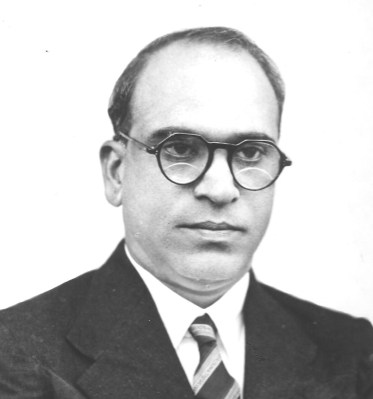
Remembering you with reverence and gratitude for all the social service & reforms to the society, especially to the Badagas of the Blue Mountains !
Posted in badaga
Badagas – who are they and what is their ORIGIN?
Recently I had posted an article under the tiltle “Who are BADAGAS?” (see below the text high lighted in blue) and wondered whether Odayas and Thoraiyas can be included as Badagas. Sudha Arjun has sent her strong views which I feel deserve a careful study.
Sir, with the evolution of science in every field, this is the right time to further explore the truth about the origin of the Badagas. I have read most of your articles on this website which insist that Badagas have not migrated from the plains towards Mysore but the proximity of the language to Kannada cannot be denied in spite of centuries of isolation. Even to this day a Badaga can easily understand Kannada because of the major similarities between the two. We have genetics, anthropology and social sciences which will be able to provide a far more accurate picture than the lore of the Badaga forefathers- much of it lost in transmission from one generation to another. Due respect must be paid to the in-depth research of Prof Paul Hocking, without casting aside all that he has studied. On the topic of Odaiyas and Thoriyas, am not clear what you would like to prove- that they should no longer be included as Badagas, though the exact same customs, language and culture is followed for centuries as far as we can remember?
The Odaiyas seem closer to the royal family of Mysore by name (Odaiya/ Wodeya) and further research into this is definitely merited. On the Thoraiyas- there could be several possible reasons why they have been made the servants of the Badagas. These could only be because –
a) they were living in the mountains before the Badagas but were subjugated
b) they came after the Badagas, therefore had no claims of their own and had to be subservient to them
c) for reasons unknown, a few people were set aside and made servants within the Badagas themselves. If I am right, there are less than 10-15 Thoraiya hattis which itself makes the claim that they were servants to Badagas of 274 hattis require more investigation.
Leaving aside the topic of the original Badagas, would like to know what you plan to achieve through further separate of these 3 groups – do you want the Odaiyas and Thoraiyas to stop calling themselves Badagas and continue to maintain the rigidity of exclusion for the next 100 centuries?Either way in the spirit of seekers of the truth, let us hire/ engage scientists who can give us an accurate view of the past, starting with genetic and DNA matching to identify the truth about the origins of all these groups.
******
Who are Badagas? – by Wg Cdr JP
First of all, both the people and the language are called Badaga. The question, though appears to be a simple and straight forward one, is more complex than initially assumed. It was taken for granted that anyone speaking Badaga language ( also known as Badugu/Badagu) was considered a Badaga. The initial ‘research’ done by the westerners, in fact a large number of them being Italian/German missionaries whose ‘mission’ was to convert the hill tribes to Christianity (later joined by British officials and some anthropologists) wrongly clubbed all Badaga speaking people together and wrongly assumed that Badagas to be a community who migrated from the plains of Mysore (Karnataka).
Though, the Badagas were, initially divided into three distinct groups known as Odaya, Gowda and Thoraiya, and the Gowdas further sub-divided themselves into sects like Gowda, Haruva, Kanakka, Adhikari, Lingaites etc.
But a deeper analysis and research may lead us to come to the conclusion that the title Badaga should belong ONLY to Gowdas who were/are one of the original indigenous tribes of the Nilgiri hills in Southern India. Living in the hills for thousands of years. The myth of migration was thrust upon them due to the fact that a smaller number of, Vokkaligas from the plains of Mysore (Chamaraja Nagar), might have migrated to the hills during the reigns of Malik Kafur in the 12th centaury and later the ruthless regime of Tipu Sultan.
The clear distinction that divides the Badagas is due to the fact the the Gowdas do not marry Odayas or Thoraiyas.
Odayas consider themselves superior to Badaga Gowdas, being initially temple priests. Confined to a few villages and generally economically weaker, the Odayas, especially the males, would not enter individual Badaga houses (inner rooms like Ede Mane) though they would come to Badaga villages (hattis) and take alms of grains (mainly rice and millet (Batha). They would cook the food outside hattis and eat among themselves.
Thoraiyas were considered as domestic help (Aevil Thoraiyaru) in olden days, and were deployed to carry out errands between the hattis mainly to convey messages. Now, Thoraiyas do not like to be known as inferior to Badagas. They also live in cluster of villages and marry only among themselves.
So, it may not be out of place to call only the Gowdas as Original Badagas who live in 274 villages called hattis spread around the length and breath of the hills of the Nilgiris called NAKKU BETTA in the four Seemes (Nadus).
Please do give your views in the comments column.
_________________________________________________
Hariharan EB
1) There are 44 Thoreya hatties. I have details with me.
2) The caste division in the Badaga Community mimics the same divisions which exist in the Mysore and Kongunadu plain areas.
3) Wodeyas, Adhikaris and Kanakkas were/are Lingayats. Wodeyas trace their heritage to the royal family of mysore and married among themselves, based on existing “MORAY” within their framework. Few decades ago, they changed their community certificates from “Hindu Badagar” to “Veerashaiva Langayat”.
4)Adhikaris (field officers) and Kanakkas (accountants) too trace their origin to the Mysore royal kingdom, but not to the royal family. nevertheless, all the three Jatis (Kola) became lingayats once the royal family themselves converted to lingayatism during the 1300s. there are many sources available in google to verify this fact.
5) The Gowdas were/are the Agricultural group with their own land holding and domestic animals. they had/have “moray” system and used to marry only among themselves until about 100 years ago. There is a strong Gowda Community in today’s Karnataka too.
6) The Thoreyas belonged to the service class in the bottom of the existing Community pyramid. they had/have “moray” system and marry only among themselves. There is a Thoreya Community in today’s Karnataka too. Few years ago, they changed their community certificates from “Hindu Badagar” to “Hindu Thoreya” to get MBC status benefits.
7) The Haaruvas were the Brahmanical priests in almost all Gowda/thoreya (Maalingayya and Herodayya) temples not very long ago. Times have changed, they are mostly confined to their own 8 major villages in Naakubetta.Of late, in order to get ST status, quite a few self styled Historians have delineated the Badaga Community from its historical past on “popular demand” to show us as one separated from other Communities, living in complete isolation in the Hills without any Jati divisions. I dont agree with this claim. Its my firm opinion that about 600-700 years ago, the language of Badugu and Kannada were probably one and the same.
~~~~~~~~~~~~~~
Dr. Sundaradevan Nanjiah IAS
I agree. In my opinion, it doesn’t matter whether we are migrants or indigenous. After all, the entire human species is supposed to have evolved from the migrants from Africa (the so-called ‘Out of Africa’ theory). It is high time we get a DNA profile of each kola and each subsect, especially when the cost of DNA sequencing has come down. If we could spend about Rs. 5-7 lakhs for a DNA analysis of about 100 persons, both male and female, we could set this issue at rest for ever. Incidentally, the Govt Arts College, Ooty has been quietly doing some important research and their primary analysis seems to be exciting. Let us await the publication of their findings.
Posted in badaga
The Badagas of the Blue Mountains
Who are Badagas?
First of all, both the people and the language are called Badaga. The question, though appears to be a simple and straight forward one, is more complex than initially assumed. It was taken for granted that anyone speaking Badaga language ( also known as Badugu/Badagu) was considered a Badaga. The initial ‘research’ done by the westerners, in fact a large number of them being Italian/German missionaries whose ‘mission’ was to convert the hill tribes to Christianity (later joined by British officials and some anthropologists) wrongly clubbed all Badaga speaking people together and wrongly assumed that Badagas to be a community who migrated from the plains of Mysore (Karnataka).
Though, the Badagas were, initially divided into three distinct groups known as Odaya, Gowda and Thoraiya, and the Gowdas further sub-divided themselves into sects like Gowda, Haruva, Kanakka, Adhikari, Lingaites etc.
But a deeper analysis and research may lead us to come to the conclusion that the title Badaga should belong ONLY to Gowdas who were/are one of the original indigenous tribes of the Nilgiri hills in Southern India. Living in the hills for thousands of years. The myth of migration was thrust upon them due to the fact that a smaller number of, Vokkaligas from the plains of Mysore (Chamaraja Nagar), might have migrated to the hills during the reigns of Malik Kafur in the 12th centaury and later the ruthless regime of Tipu Sultan.
The clear distinction that divides the Badagas is due to the fact the the Gowdas do not marry Odayas or Thoraiyas.
Odayas consider themselves superior to Badaga Gowdas, being initially temple priests. Confined to a few villages and generally economically weaker, the Odayas, especially the males, would not enter individual Badaga houses (inner rooms like Ede Mane) though they would come to Badaga villages (hattis) and take alms of grains (mainly rice and millet (Batha). They would cook the food outside hattis and eat among themselves.
Thoraiyas were considered as domestic help (Aevil Thoraiyaru) in olden days, and were deployed to carry out errands between the hattis mainly to convey messages. Now, Thoraiyas do not like to be known as inferior to Badagas. They also live in cluster of villages and marry only among themselves.
So, it may not be out of place to call only the Gowdas as Original Badagas who live in 274 villages called hattis spread around the length and breath of the hills of the Nilgiris called NAKKU BETTA in the four Seemes (Nadus).
Please do give your views in the comments column.
Posted in badaga



 Mookuthi
  Chinna




 ==
==