Hope for Small Tea Growers

Mountain Day hope for Small Tea Growers

Dharmalingam Venugopal

[Nilgiri Documentation Centre, Kotagiri]

There is hope for small tea growers of Nilgiris if only they can reinvent themselves as family growers catering to a value added niche market. This was the conclusion of the workshop on ‘Sustaining Small Family Growers in the Nilgiris’ oragnised by Nilgiri Documentation Centre and supported by Hill Area Development Programme and Fortune Hotel Sullivan Court on International Mountain Day 2014.

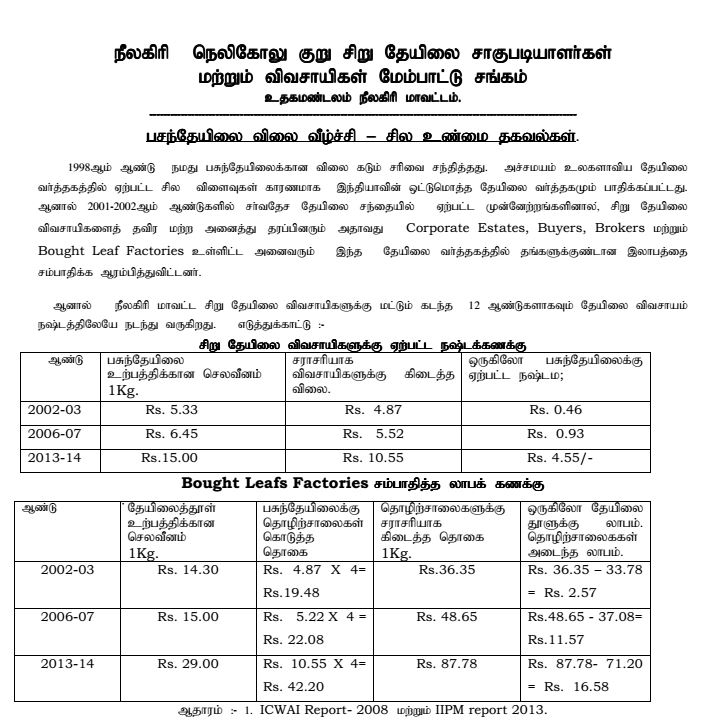
Small growers currently face high risks due to weather, price and market fluctuations and are caught in a classic ‘Scissor crisis’. When they entered the tea industry in the 1980s tea prices were high and the labour cost was low. Since then, labour and other costs have steadily increased while prices have declined leaving them caught in between the two blades of the scissor.

Small growers should give up their attitude of despondency and be creative to find solution to their problems by substituting quality for quantity and family labour for hired labour. Small growers can better control the various quality parameters that affect tea such as nutrients in the tea bush, quality of plucking and quality in the manufacturing process and make small quantities of high value teas rather than merely growing more and earning less. They must learn the manufacturing techniques for high value teas from organizations such as UPASI and Tea Board. The decline in volume will automatically help in realizing a higher price for green leaf from Bought Leaf and co-operative factories.
Nilgiri teas are high grown with a lot of flavour more comparable to Darjeeling teas which are consumed without milk than Assam teas which depend on strength. However, while both Darjeeling and Assam teas are playing to their strength, Nilgiri teas are playing to their weakness, thereby keeping their teas at the bottom of the value pyramid.

Small growers should focus on black tea and other value added products like organic and green teas. Small growers who manufacture their own teas should set up a common brand to collectively sell their teas. Already a number of consortium initiatives have been taken to grow organic teas, bio-dynamic teas, soft leaves and so on. With such concerted backward and forward linkages on a consortium mode and with the assistance of Tea Board, Small farmers can confidently sustain themselves.

In recognition of the ‘increasing significance of the small-growers sector’, the Tea Board has allocated Rs.200 crores for development of small-holdings for the five year period from 2012-13 to 2016-17.

A large number of small tea growers are Badagas who have been caught in the storm – definitely not a ‘storm in the tea cup’ – unremunerative price for green leaf, unscrupulous green leaf tea agents, unhelpful attitude of the Tea factories and not easily approachable Tea Board & UPASI.

The initiative taken by NDC, hope and pray, will bring some cheer in this winter chill – Wg Cdr JP

Badaganadu

Senthil [semthil.jrk@gmail.com]
comments on Badaganadu
This community people are different from Badagas of Nilgiris.  They speak Kannada not Badaga language. So please don’t confuse Badagas of Nilgiris with these people.

I am in total agreement with Senthil. The idea of the post is that there are others associated with just the name BADAGA and not BADAGAS – JP

The following information is from badaganadusangha website

The Badaganadu are a Brahmin community that mainly resides in Karnataka, and now due to the advent of globalization they are spread throughout the world. Badaganadu Community is one of the three main streams of adherents to the Advaita Vedanta propounded by Sri Shankaracharya and are followers of the Smarta tradition (known as Smartism). Smarta is derived from ‘Smrithi’ a Sanskrit word with the meaning of one who “remembers or reveres their teacher/Guru”.

Origins
Literally, Badaganadu means the northern land, probably originating from badaga (north). Referred to the community, it might mean people from the northern parts, who were brought to perform pujas in Sanskrit language. The mother tongue of Badaganadu community has been Kannada, and are largely spread around the northern parts of Karnataka, Bellary and Anantapur districts, Bangalore, Shivamogga, Chikkamagaluru, Davanagere, Chitradurga, Holenarasipura, Madhugiri, Tumkur and other parts of Karnataka.
Badaganadu Community emphasises a strong education, thus most of the community members are well educated and are Engineers, doctors, Officers etc.

The main deity of some of the Badaganadus is Lord Venkateshwara and for some it is Lord Mylaralingeshwara or Lord Malatesha of Devaragudda or Mailara near Ranebennur in Haveri District, the last three located in Norther parts of Karnataka. Badaganadu’s celebrate most of the South Indian Festivals like Ugadi, Navaratri, Deepavali and Gowri Ganesha festivals.

There are many Badaganadu organizations spread all over Karnataka, like The Badaganadu sangha in Bangalore, Badaganadu Balaga in Mysore etc.

Culture
One can find Badagandu people hailing from around Mysore, Mandya and even Coimbatore. Though Badaganadu people adhere to AdiShankara’s teachings and are advaitins. They celebrate almost all festivals and vrathas be it pertaining to please Shiva or Krishna or Rama or Narasimha or Ganesha or any other deity/God. Truly cosmopolitan Hindu outlook is shown by this community. Though most of the Badagandu community are Smarthas, there is a large Badaganadu sect amongst Madhwas; some say that Madhwas were originally advaitins but chose to profess Madhwacharya’s Dwaita teachings due to reasons of losing in religious debate or were overcome by the influence of the new thought. Whatever it might be, this community truly blends well without any show off of ego or fanfare. Nanajanagoodu shrikanteshwara is the main deity for most of the Badaganaadu Brahmins.

[This interesting piece of information was sent by ARI JOGHIE ]

Barki

Ooty ‘varkey’ may be a local innovation
Dharmalingm Venugopal

[Nilgiri Documentation Centre,Kotagiri]

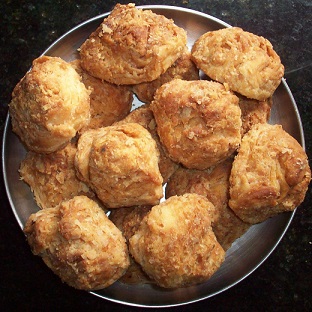
The Ooty ‘varkey’ due for Geographical Indication,  appears to have been an innovation of a local baker, quite likely from Kerala. There is no mention about ‘varkies’ in the British period.  The Blue Mountain Bakery advertises as late as 1916 about so many items of  breads, biscuits, cakes and pastries but no ‘varkies’. In any case, this  humble, semi-sweet, coarse pastry would hardly have appealed to the English palate.

Barki

photo: jp

The ‘varkey’ may be an innovation which was necessitated during the World Wars when maida and other ingredients were in terribly short supply. World War II is more likely the period as that is when the local Badagas started replacing the departing English population in the towns.  Since then the Badagas have been hooked to ‘varkies’ which has given an almost ritual status.

As for the name  goes, it could simply refer to one Varkey who invented or innovated it as a Stanes’ alumni recalls, ‘The baker Varkey, from The Nilgiri Modern Bakery would come around 7 am… I always wondered if the snack, saada and Naii varkey was named after our baker! ‘

Varkey recipes today include varkey payasam and paratha varkey. However the ubiquitous varkey is eaten best deep dipped (ajjudhu, in Badaga) in tea or coffee.

[People who have tasted ‘barki’ – varkey is barki in Badaga, always get hooked to this Nilgiri special pastry. Whenever I go to Bengaluru, the only item my friends tell me to bring is this delicacy. Many prefer Kunna Barki – smaller variety of varkey. I recently read in the Hindu that ‘Ooty varkey is 100% vegetarian and no animal fat is added‘. But some disagree – Wg Cdr JP]

Sustaining Small Family Farming in the Nilgiri Mountains

Dharmalingam Venugopal

Nilgiri Documentation Centre, Kotagiri

International Mountain Day (IMD) is being celebrated on Dec 11 since 2002 to raise awareness about the importance of mountains, to highlight the opportunities and constraints in mountain development and to build partnerships that will bring positive change to world’s mountain areas.

This year the theme of IMD is ‘Farming in Mountains, farming for families’ to focus on valuable contribution of mountain family farming to livelihoods. Family farming in mountain regions is undergoing rapid transformation due to world population growth, economic globalization, urbanization and migration. At the same time recent trends present opportunities for local development in diverse activities.

The objective is to reposition family farming at the centre of agricultural, environmental and social policies in the national agendas by identifying gaps and opportunities to promote a shift towards a more equal and balanced development. How to increase awareness and understanding of the challenges faced by smallholders and help identify efficient ways to support family farmers?

Sustaining Small Tea Growers

To celebrate IMD 2014, Nilgiri Documentation Centre will  organise a One Day Workshop on ‘Sustaining Small Family Tea Growers in the Nilgiris’ on Dec 11, 2014. The workshop will seek to identify and  profile small family growers and seek answers for questions like  Are they viable? Are there any alternatives? Can they go back to vegetables, partly or wholly? How can they supplement their income? Can they add value to their product like promoting a niche market? What is the way forward? How to synergize the working of development institutions like Tea Board, Indcoserve? Can Small Family Growers and Bought Leaf Factories live together on mutual goodwill and benefit?

Nilgiri Conservation Award 2014

On the occasion, NDC will present the Nilgiris Conservation Award 2014 to the Hill Area Development Programme in recognition of its role in the development and conservation of Nilgiris in the last four decades.  As the HADP is poised to enter its 40th year, its future has turned into a question mark with the abolition of the Planning Commission.  Whatever may be the new Avatar of the HADP, its contribution to development and conservation in the Nilgiris needs to be acknowledged. It has touched all corners, all aspects and all sections of the Nilgiri society in the past four decades.

[Being a farming community & a large number being small tea growers, the Badagas have a big stake in the issues high lighted by D.Venugopal. They must attend the workshop to be held on 11-12-14 and make it a success. I can only recall the words of Thangadu Krishna Gowder [rendered in his golden voice in a song] ” elay hattalay belay elle dho “. The steep fall in the price of green leaf tea and the terrible menace of monkeys and other so called ‘protected wild life’ in the cultivation of farm produce, have made us desperate and dejected. Resulting in sometimes ‘desperate sale’ of our small holdings (tea estate – thotta). We have been taken for a ride by the green leaf  agents who cheat us in weight and price, unscrupulous tea factory owners who have no qualms in producing adulterated tea as well as the corrupt and cunning tea brokers. Not double damakka but triple damakka – Wg Cdr JP]

4th December is the 121th Birth Anniversary of Ari Gowda

Bowing our heads in silent reverence and respect for all that he had done for our community

Ari Gowderrbhbag.jpgAri Gowder2Ari Gauda[above – text] From the book ” A BADAGA – ENGLISH DICTIONARY ” by Prof.Paul Hockings and Christiane Pilot-Raichoor]

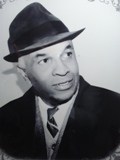
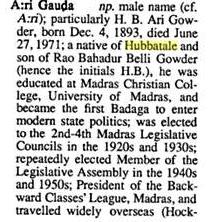
Rao Bahadur H.B.Ari Gowder, the first Badaga graduate & first Badaga M.L.C & M.L.A for a long time  including the British time. He brought many reforms in/to Badaga Community including ‘prohibition’ (no alcohol – kudi) to Nilgiris in British days itself.

Ari Gowder lead the Indian contigent (yes, “INDIAN CONTIGENT”) to World Scouts Jamboree held in Europe in the 1930s.

Ari Gowder was associated with the Nilgiri Mountain Railways, now an UN Heritage,  right from the time this great and beautiful track was established in early 1900s till his death in 1971. In fact his father Rao Bahadur H.J.Bellie Gowder was contracted by the British to lay the mountain railway from Mettupalayam to Ooty. Also, probably, Bellie Gowder and Ari Gowder are the only father -son duo who were conferred with Rao Bahadur title in India, though Ari Gowder hardly used the title being a great nationalist.

He was not associated with any political party  but was a true representative of the people, a powerful orator and  welfare minded  social reformer’ – says A.Kari Gowder [“Prongadu Seeme Welfare Association”] in his booklet published in  May 2006.

                                        AG1 bridge

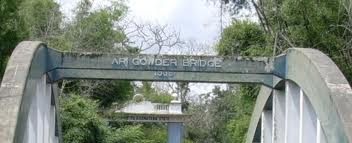
He was the President of the Nilgiris District board in 1930s and 1940s and carried out a lot of welfare measures for the upliftment of the residents of the hill district, mainly tribals in those days. To remember his contribution to the society, the bridge connecting Tamil Nadu [then Madras] state and Karnataka [then Mysore] state, built in 1936, is named ARI GOWDER bridge (above pix).

Ari Gowder was listed as one of the famous leaders of South East Asia – Who’s who in India, Burma & Ceylon. Who’s Who Publishers. 1940. p. 681.

H. B. Ari Gowder’s name figures in the Famous Madras Christian College Alumni list along with people like Sarvepalli Radhakrishnan

Continue reading

Nilgiri Mountain Railway

  <a href="/channel/UCXOhrdRpgxCo9jOiORYm9Qw" class=" yt-uix-sessionlink     spf-link  g-hovercard" data-sessionlink="ei=O1V5VIz6ON38oAO08oDQDw" data-ytid="UCXOhrdRpgxCo9jOiORYm9Qw" data-name="">BoxKite Films</a>

What a beautiful documentary which offers not only a great visual treat but valuable information about the ‘Toy Train’ – Nilgiri Mountain Railway. Being a native of the Nilgiris and belonging to a family that is deeply involved in the construction of this unique railway system of the world, [my maternal grandfather Hubbathalai Bellie Gowder was involved in the construction and maintenance of this railway line from Mettupalayam to Ooty, till his death in 1935 and later by my uncle, the H.B.Ari Gowder [till  1971] and both of whom were great Badaga Naakku Betta leaders and recognised for their contribution and conferred with the title of RAO BAHADUR by the British], my mind and memories are filled with thrilling thoughts.

Not only that, traveling in this train from Aravankadu to Ooty everyday in 1964-65 while doing PUC in the Govt.Arts College, Ooty, the journey was nothing but a carefree but enjoyable experience of an adolescent in the company of other students and later in 1970-71 as a junior engineer, in the PWD along with other colleagues working in different fields – the travel would steer around with discussions of worldly affairs and politics, the days are still fresh in mind. I remember the  return journey to Ooty from Aravankadu would cost a ‘royal’ sum of Rs.3 for three months in 1964-65 for what was known as student pass.

A must see documentary for all. Hearty congratulations to Mohan Krishnan!

Mohan Krishnan’s film on NMR is commendable and well documented. That it is by a son of the soil makes it all praiseworthy. May other competent sons of the soil go about documenting visually other treasures of the Nilgiri hills. Best wishes

Dharmalingam Venugopal,

Nilgiri Documentation Centre,Kotagiri

**************

First ever portrait of a Badaga woman?

Displaying 1844 Badaga woman.JPG
First ever portrait of a Badaga woman
Dharmalingam Venugopal (Nilgiri Documentation Centre,Kotagiri)

Dr. James Cowles Prichard, an English Physician and Ethnologist wrote two books. ‘Researches into the Physical History of Man in 1813 and ‘The Natural History of Man: Comprising Inquiries into the Modifying Influence of Physical and Moral Agencies on the Different Tribes of the Human Family’ in 1843.
For the later he had commissioned the pictures of a Toda man and woman. Obviously, there was a mistake and the pictures sent from here were of a Badaga woman.
This print of a hand-colored aquatint engraving of an obvious Badaga woman was published in 1844. This could probably be the first ever picture of a Badaga woman.
An original of the engraving has been obtained by Nilgiri Documentation Centre thanks to the support of Mr. Colin Sullivan, the great grandson of John Sullivan, who visited the Nilgiris recently.

While thanking Venugopal for sending this information, couple of doubts creep into mind. Earlier days, Badaga Jewellery worn by women has distinct designs – the Ear rings – Kivi Chinna, Nose ring – Mookkuthi, and neck chocker – Saradu. In the painting above they are different.

 Badaga women also had very different type of tattoo on their foreheads. Not the Pottu – Bindu[dot].  So is the head cover – Pattu.

Update :- Venugopal feels that “it is 170 years ago and it is a painting and therefore interpretation of the artist. It is certainly not a Toda”. I agree.

– Wg Cdr.JP

Prof.Paul Hockings

I tend to agree with Wg Cdr JP that this might not actually have been a Badaga lady. The earring is not unusual for Badagas then, and is illustrated by Feodor Jagor from his expedition around 1873 (1914: Fig. 70). But the puttu is more of a problem. Jagor also illustrates (Fig. 60) several typical brow tattoos of Badaga ladies, which must have been pretty-well universal at that time, and rather rule out sticking a puttu on top of them. It is certainly not a Toda; but could it be an Irula? That seems most likely to me.

Badaga Script [Barey]

Badaga, now considered to be one of the ORIGINAL and old dravidian languages, is not a derivative of Kannada or Tamil, but  unique in its concept, construction, pronunciation and grammar. One of the regrets of many Badaga enthusiasts like me is that our language does not have a script of its own.

Recently I received an email from

Richard Parry <appleaccess@icloud.com>
Hello WC Jayaprakash,

I’m currently looking at the languages of India and the similarities between the various scripts.
I’m interested in adding Badaga into the mix, but currently have no way of entering the letters into the document.

Earlier Microsoft considered to include Badaga as a possible Indian Language in its OS developments.

Though some serious attempts have been made by RAJUS, Ananda, Kadasolai and Saravana [not related to each other but a sheer coincidence that Raju is in their names], still their scripts have not been fully accepted and adopted.

Saravana Raju, from Karimora hatti, is a gifted youngster with lots of original and ‘out of box’ ideas in developing a Badaga Script. He has just released his concept in the form of a booklet.

SaravanaWhen he called on me to present the book, his passion and dedication came out clearly. What is highly satisfying is the fact that some very young children of his hatti are able to read and write in his Badaga script

He has listed 12 letters as ‘AYYA Bare(y)’ and 27 letters as ‘ Heththe Bare(y)’ and combined them to call it ‘Mammakka Bare(y).

100_9113100_9114100_9115

Wishing Saravana Raju the very best and hope his contribution will find an unique place in Badaga !

‘Touch the Sky with Glory’

After graduating as a Mechanical Engineer, (Madras University – GCT, Coimbatore), I joined Indian Air Force (IAF) as a permanent commissioned officer in 1972  and took voluntary retirement after 20 years when I was a Wing Commander. My ‘bond’ [job agreement] was for a minimum of 20 years [guaranteed pension].

I gave my youth to IAF and in turn IAF gave me everything. Full of pleasures and some pains, but what an experience. Forever I am PROUD to have been associated with a great institution of the Defence Services that is involved in keeping the integrity and independence of our nation.

Probably, I am the first Badaga to have joined IAF as an officer (and there are many officers now – both serving and retired)

I am delighted to urge our youngsters (both men and women) to join

IAFwhose motto is

‘Touch the sky with Glory’

Defence Services offer you a great career!

Register between 6th December 2014 and 3rd Jan 2015.

Complete details in http://www.careerairforce.nic.in

Remember, as an Engineer, you can either join the FLYING branch (pilot) or Aeronautical Engineering Branch (Ground Engineer and can become a Flight Engineer in Transport/Helicopter streams later on)!!

‘Converting’ to Badaga??

The topic sounds a little strange? Yes, it does.

I get many emails/comments from non -Badaga boys and girls asking HOW TO CONVERT TO (BE) BADAGA. It generally goes like this, ” I am a non Badaga but in love with a Badaga girl/boy. Since, Badagas marrying non Badagas is rare and ‘difficult’, I want to convert to Badaga”

Badaga is not a religion, and hence the question of conversion to Badaga, does not arise. But then, this important question also begs a larger answer.

In this modern age and time, we have to accept that Badaga Society cannot remain isolated and will have to accept the reality that many marriages will take place between Badagas and non Badagas. That may happen sooner or later and the present trend points towards that.

Though we may hope and pray that these ‘mixed matches’ do not ‘happen’ to preserve our culture and traditions, we cannot change the changing times.

If we look beyond what we see, don’t we want an INDIA that is truly beyond  restrictions of religion and region but an united one? But then, how do we preserve the cultural and traditional ‘uniqueness’ of a community in this vast and diverse country? Aren’t they contradictory?

As far as Badaga ‘conversion’ is concerned, why don’t we accept if a non Badaga wants to follow the customs and culture of Badagas after marriage, with no reservations? I am aware this question is bound to invite strong reactions.

Better to be bold and face the facts than to be blind and left behind!