sunaMO

Update: 17-05-14

The General Election results have been announced : Indeed there was a sunaMO – TsunaMO ?- and Narendra Modi has indeed, single handedly, swept the elections in BJP and NDA favour.

Latest : BJP – 282  NDA – 336

It is 10.59a.m. 16-05-14

Let us leave the NakkuBetta and take a ‘trip’ around this great country called India for a change.

Election trends and results are coming out thick and fast.
As I was hoping, there is a sunami or, rather,

sunaMO, – a sunami in favour of MODI.

modi
In him we will have a great PM. Yes, NM will be PM very soon. For a change, we have voted the right man in.

I predict BJP to get 275 and NDA – 330.

Let us see.

Badaga Day

Today, 15th May, is Badaga Day ! A day for celebration !!


badaga-flag.jpg150507-021.jpg

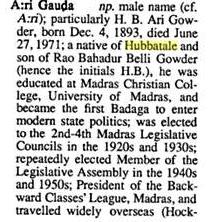
May 15th is also celebrated as Ari Gowder Day due to the selfless work done by Rao Bahadur HB Ari Gowder for the community. Many reforms were introduced by him and developments carried out due to his efforts.

Ari Gowder2

Ari Gowder

Ari Gowder

Ari Gowder

The hard truth is that , ever since his demise in 1971, we do not have a great Badaga leader like Ari Gowder who can unite and lead our community.

Nanjanadu Crisis – an open appeal


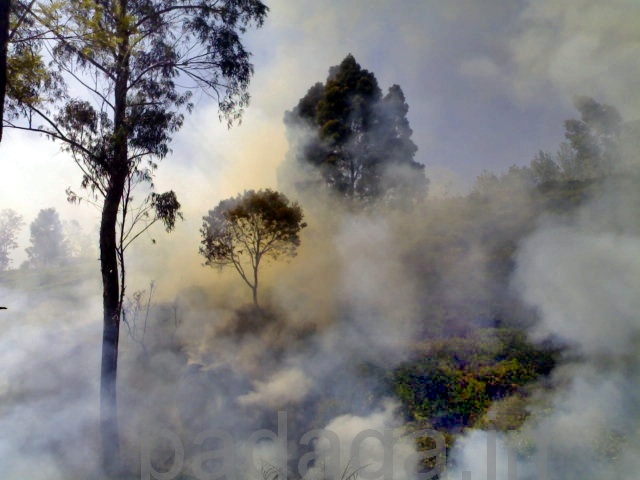
Nanjanadu crisis that resulted in clashes [in Feb 2014] where two persons lost their lives and large scale arson and looting took place, is a classic example of how a minor spark [ in the garb of who should/should not conduct pooja in the common village temple] can result in a major fire in a peace loving community. The biggest fallout is the loss of trust among close relatives. If bitterness can be smelt and felt, all one has to do is talk to anyone from Nanjanadu /connected with Nanjanadu.

While, we have mentioned the way forward in many posts, a permanent solution is possible, only with the help of the highest authority in the state, the Chief Minister of Tamil Nadu.

With her reputation of being a tough administrator, accepted by all as a friend and well wisher of Badagas and most importantly having her ‘second’ home in the Nilgiris [the ONLY native place of Badagas], it should take less than day to solve the problem if the matter is brought to her personal attention.

We appeal to the Honourable Chief Minister of Tamil Nadu, to

1. Order the police to conduct an immediate and fair enquiry and bring the guilty to book.

2. Issue strict instructions for easy and free movements of the minority group and other PEACE lovers, to their damaged houses, tea estates and fields so that day to day life can take place without any hinderance or threat.

3. Last but not the least, give  monetary help from the CM’s funds to the families of the deceased and badly affected persons whose houses are destroyed.

When normalcy is established, let the Hatti People decide, whether they want  GOD to unite them  by conducting common Poojas.

Let us remember, ARASU ANDRU KOLLUM, DEIVAM NINDRU KOLLUM.

Ex-Hav Sivakumar, Muckimalai writes :
As we know, jealousy and revenge mentality  are basic nature of the human beings…….
My earnest request to  “Aiyyanavakka, Annanavakka” of A Party, loss of two lives cannot be compensated by any means and by anybody. Whole community feels very sad for the incident. But revenge is not a permanent solution.  Please realise that SOME people who are away from village are innocent and also very close and blood relation with you.


Nanjanadu – the way forward

There were some strong emails, especially from [supporters of] the larger group expressing dismay and distress that while the expressions of the minority group have found place in the public domains, the real causes and deep rooted  reasons for distrust have not been high lighted.

The truth is that the minority group has expressed their feelings and frustrations openly and publicly whereas the majority group, staying in the hatti, is not forth coming with their views. I understand that some of them did not permit the Peace Committee to see and seek the truth for themselves when they visited Nanjanadu on 12thMay 2014.

The brutal killing of two on 16th Feb 2014 night cannot be condoned and brushed aside. The police, I am sure, are investigating the incident and the guilty will be brought to book. The law will take its own course. The sad fact is that the two lives cannot be brought back. Our hearts go  to the bereaved families.

Similarly, the arson and looting in the aftermath, also should be investigated and the guilty punished.

It is high time, to dig deeper and find out the truth behind the ill feelings that have been allowed to linger on. This may help in resolving the basic but fundamental problems that are affecting not only Nanjanadu but the Badaga Society at large.

A village that was peaceful till 1987 [when a temple was built] was permitted to destroy itself. Was it due to the EGO hassles of a few, from both the parties, who wanted to treat some as second class citizens or resented being treated as unwanted? Or, due to selfish motives of some who in the guise of serving the society, permitted the embers of URI – jealousy-  to keep glowing?

I would like to quote the words of ‘the soon to be Prime Minister’ NarendraModi

This is the right time to look ahead. It is a time to connect with each other. Lets place people over politics, hope over despair, healing over hurting, inclusion over exclusion and development over divisiveness. It is natural for the spirit of bi-partisanship to get temporarily lost in the midst of  emotions but now is the time to move forward ….

Nanjanadu Crisis – an update

There was a meeting at YBA, Ooty on 10 -05 – 2014 called by the Nanjanadu Peace Committee, where one of the affected parties [called B Party – minority] came in full strength – [gratifying to see  ladies participating]. By the way, it is really  a sad reflection that we have to address people from the same hatti as A and B parties.

11514 011

These  families of about 500 persons from about 120 houses  who had to abandon their houses in the aftermath of violent incidents on the night 16th Feb 2014 are yet to return to their homes and are living like refugees in rented houses and with relatives. REFUGEES IN THEIR OWN LAND- called NAKKU BETTA. What an irony in this age and time!

When I questioned one gentleman, why has he not returned home, he shot back, ” home, where is our home now – the one we owned and lived for hundreds of years has been destroyed by arson; the roof broken and dismantled, all the belongings including utensils have been looted, even the floor tiles have been broken with crow bars…”. His eyes welled up with tears.

When these ‘distraught, displaced and deeply saddened’ people were requested to describe their plight, what came out ‘straight from their hearts’ are indeed stories that should shock all Badagas.

‘We are not getting any posts and  pension’ said an old and retired headmaster who listed a lot of grievances from a petition. ‘All our records like ration cards and revenue records have been destroyed’ he added.

‘Do we have to live like slaves and second class citizens forever just because we are in a minority [Nattas]’ lamented one,

‘The police who took us away in the night, saying that they were protecting us, instead put us in prisons’ alleged  another,

‘No cases have been made against the four men who have been arrested under ‘goondas’ act and not released still’,

‘The district administration has not listened and responded to our requests and petitions and we are  treated badly and made to run from pillar to post by the concerned authorities’

‘The education of our children have been badly affected and what will do when school session starts soon?’ he added

‘I am an unmarried woman, where can I go now?’ cried another soul,

‘Have you heard of Badaga women being put behind bars when we tried to protect our properties and inform the police?’ said a young mother,

‘The monsoon is approaching fast, what will happen to our houses that have no roofs [burnt down by mobs earlier]’

‘My aged mother was dragged out of the house and driven away from the house and hatti’

‘The workers are not permitted to pluck tea leaves from our estates and whatever they had already plucked was snatched and thrown down. The outsiders who have taken our ‘thotta’ – tea fields are being forced to abandon and threatened to leave denying us of any income.’

‘The root cause for all the trouble is one individual who is a politician’ told many.

‘Can all these things happen to us when the Honourable Chief Minister, who is known to be sympathetic to the suffering and strict with law breakers, is staying just a stone throw away in Kodanadu?’ cried a woman unconsolably ??

The ‘crowning glory of this very sad story is that the MILITARY medals of the soft spoken Doctor, who was a COLONEL with the Indian Army, have been detached from the display case, stolen and destroyed.

Shocking – yes. Beyond words. We all should hang our heads in shame.

[Meanwhile the peace committee is planning to visit Nanjanadu to initiate a dialogue with the majority – A party on monday 12th, May.

I sincerely hope and pray that the peace committee will not fall pray to a few publicity seekers who have the potential to derail the peace process].

Jeyasankar Matha

[jeyasankar.matha@gmail.com]
This is the saddest story about our community I am reading so far in my lifetime. Really feeling very sad for all those affected people. Hope the team will find a good solution soon.


Lessons from Nanjanadu Crisis – 4

Badaga community is high on many social factors. Take, DOWRY – the cursed custom in many communities in our country where a bride has to pay a HUGE [beyond the means] amount , both in cash and kind, before marriage. Apart from the monetary burden this puts on the girl’s family, the consequences of this custom goes much deeper. So deep that many communities consider the birth of a girl as a curse.

Fortunately, this dowry system is generally absent among Badagas. Hence, the birth of a girl is accepted as normal. Education to girl child is given importance.

But the sad part is that in DECISION MAKING, be it in the village [hatti] level, seemay  or Nakku Betta levels, the fairer sex is completely neglected. They are NOT part of any KOOTU [panjayats/gatherings] where important matters are discussed and decided affecting the COMPLETE community. So far, no lady is part of the Nanjanadu Peace Committee also; though they are directly and actively involved in the unfortunate happenings.

Unfair to the fairer sex. Keeping away half of a community in any decision making is unacceptable and a blot on our society. When we accept and pray to GODDESS HETHE as our deity and benefactor and seek HER blessings, this custom of keeping away ladies, appears strange.

High time, we learn to accept, allow and ‘APPOINT’  FEMALES in every field.

Lesson – 4 from Nanjanadu crisis is – in our dealings and decision making, include and involve the fairer sex in a FAIR measure and manner. To put it simply – EMPOWER WOMEN

SivakumarSivakumar.B
Ex-Hav , (Presently Sub Post Master, Chamraj Estate PO),Muckimalai

writes on Lessons from Nanjanadu Crisis – 4

Right lesson to be learned. It may be due to giving high respect to Girls (Henga & Makka). In most of the villages where two parties exist, girls (Heng & Makka) are always welcome by whole village during FuneralCremation.
However, the point of participation of girls in KOOTU will be the Renaissance of our community and should be taken with an immediate effect, right now from this Nanjanadu Conflict (Not in due course).
Going through the website & all posts, we can understand that the Nanjanadu case is the continuation of problem (Uri) from the previous generation ( for more than decades).
Now-a-days, the young generation of our community is going ahead in the field of education with great enthusiasm, irrespective of gender [including Engineering, Communication and IT Fields]. Many are often flying to abroad.
We should not allow the conflict to our next innocent and enthusiastic generation who are having capability and may proceed to other planets also with the blessing of HETHAY AMMA in forthcoming days.
My humble request on behalf of whole community is to solve the problem at once and don’t allow this to extent further till future generation.
Moreover, as we know, not only in Nanjanadu, the mentality of `Uri’ (Jealousy) is prevailing in almost all hatties and even with Badagas who are settled outside, to a considerable extent. This `Uri’ should not be allowed to extend its octopus hands resulting in another `Nanjanadu incident’.
So, my earnest request is the `Nanjanadu Peace Committee’ may be re-named as `Badagas Peace Committee‘ and members of the committee may please extend their noble service to all hatties [and whole community] to eliminate `Uri’ among all, instead of being only in the case of Nanjanadu.
Dear Sivakumar, thanks for your kind and encouraging words. Your sentiments will be put forward in the forth coming NPC meeting – Wg Cdr JP

Jeyasankar Matha comments on Lessons from Nanjanadu Crisis – 4

Very well said and a very important point taken for discussion. Thank you very much for taking up such a simple but important point. Hope all will encourage this.

Lessons from Nanjanadu Crisis – 3

There are many important lessons that Badagas should learn from Nanjanadu crisis due to which a great hatti has been divided vertically. These lessons will help us to avoid such situations in future.

The  Badaga society was a close knit tribal group with many far advanced social factors. To name, just a few, we can proudly claim that 1) the evil of dowry has not permeated very deep, 2) divorce and remarriage are permitted thus saving a lot of young girls from total ruin and 3) many festivals and funerals are a village affair, not individual, thus uniting the complete village.

In the ancient and early days, as the houses in any hatti are in a row, called THARA in Badaga, and there was no scope for expansion, the house was left to the youngest son so that he would take care of aging parents. The elder brothers, usually built their own houses. The married sisters were treated with love and respect and they could walk into their parents house at any time. While the property of the parents, specially father’s, excepting the house, was partitioned among only the brothers, it was an unwritten law that the brothers would not DESERT their sisters. The brothers would stand by their sisters through thick and thin.

But, like in many societies in India, the girls were not treated as equals among Badagas. Their education was restricted, mainly due to early marriages and they had to undertake the complete burden of running the house holds in those houses to which they were married to. With widely prevalent drinking, the men would fritter away whatever they earned on drinks. The daughter in law, SOSE in Badaga, was mostly treated differently and many times, degradingly.

Badaga leaders like ARI GOWDA, realised the double ‘damakka’ of drinking among men and exploitation of women. He was probably the first INDIAN in the British Raj, to successfully bring in prohibition in the Nilgiris much before independence and insisted on compulsory education of girl child.

In Badaga society, education among the girls, is slowly but surely, bringing a change.

The Indian Law Makers have made both education and equal rights in property  to girls into laws. EQUAL share in property to girls is LAW. We cannot bypass this LAW by claiming that Badaga traditions meant the opposite.

In Nanjanadu, there are many daughters of the majority group married to men from the minority faction. But, unfortunately, these daughters are not treated fairly and equally by the very same parents who gave them in marriage to the ‘other side’. Which, as of now, is against law.

The lesson we have to learn is – TREAT DAUGHTERS AND SONS AS EQUALS.

A well recognised KV Teacher and President’s medal winner RAJMA writes : –

Well said. Nanjanadu Crisis has taught us enough of lessons. The most important one is respect to womenfolk and their education. A woman is the epitome of tenderness, care and wisdom. She is the real architect of the society. She is strong, beautiful, compassionate , tolerant , amazing and much more than words could say. But who realizes this.? The responsibilities held and the sufferings faced by our Badaga women are endless. The younger generation should bring positive changes..! Let us hope…”TREAT DAUGHTERS AND SONS AS EQUALS ” Will it be a reality or a distant dream…?

Lessons from Nanjanadu Crisis – 2

The FIRST LESSON, we suggested, is to treat NATTARU with respect. This is true for all Badaga hattis. But, the sad fact is that Nattaru are treated as SECOND CLASS citizens in the mistaken impression that ‘tradition tells so’.

From our interaction with people belonging to Nanjanadu, this is one of the points that was brought out as the root cause.

It is nobody’s case that Nattaru should be FREELY PERMITTED to participate in all the rituals like AKKI Eththodhu etc against the unwritten rules that are in existence for hundreds if not thousands of years. I am sure the Nattaru in Nanjanadu understand that.

But, generally, there is no restriction that the village temple poojari has to be from a particular family excepting probably in the HETHE GUDI at Beraganni and Peddhuva.

Here, our simple request to both the parties is, please be big hearted and choose a person acceptable to both sides. God, being present in every heart, treats all as equals.

We are aware that the High Court ruling permits both the sides to perform pooja in Nanjanadu. We have to respect the LAW of the land and cannot hide behind pride and petti mindedness and non existant traditions. And at the same time, Minority B Party, please do not make this a prestige issue. EGO and URI are slow killers. Do not succumb to them.

Before we come to the ‘temple & poojari issue’, we must realise that nobody can take ‘law’ into his/her own hands and involve in killing and looting. No tradition permits that.

No set of people, call them nattaru or minority, can be driven out of the village using the brute majority mentality. Those driven away are our own blood and flesh. They have not come from a different planet. The majority party, in the interest of peace and everlasting love, should welcome those who have left the hatti out of fear. Their safety and security should be assured.

SO,PERMIT THE MINORITY PARTY TO RETURN TO THEIR HOMES IMMEDIATELY. And in the event of any death, the common community hall should be made available for the use of all and cannot be kept under lock and key.

So, Lesson #2, is learn to live with different opinions.

Lessons from Nanjanadu Crisis – 1

Nanjanadu is the biggest Badaga hatti [a village is known as hatti in Badaga language] with over a thousand houses.

Like any typical Badaga Village, the name Nanjanadu is due to the fact that a thorny plant ‘Nanju Mullu’ was found around this village [Dr.Haldorai] when it was established. By the way, no Badaga village has been named after any deity or person by our ancestors.

As  in any Badaga hatti, there are many ‘Nattaru’ settled in Nanjanadu. A natta is generally a person from a different hatti but married a girl from the hatti where he is settled before or after marriage . The reason for this could be based on many factors – for eg., there is no male member to take care of the elderly in laws or proximity to work place etc etc.

Over a period of time, the number of Nattaru in a hatti grows to be substantial which results in many marriages are arranged between the ‘hattikararu – original settlers’ and ‘nattaru’.

One of the hattis where this matrimonial inter-actions is quite large is KODHUMUDI. On expressing surprise that a Kodhumudian is  married to another Kodhumudian, we realise that there are in fact two distinct factions settled in Mel Kodhumudi and Kiya Kodhumudi, one being largely made of Nattarus and hence with perfect ‘Moray’ to marry.

In Nanjanadu, there are are two factions called A Party [Majority with more than 800 houses] and B Party [minority]. This naming of A and B party is probably is of recent nature after litigation. While it was, generally believed that the B Party people are Nattarus from Porthy and other places, the people belong to B party contest this and claim that they are the ORIGINAL settlers and their ancestors have laid the ‘BALLA Kambu’ – a wooden post – in fact a long trunk of a tree – that was planted by the early/initial settles around which the sacred first house ‘DHODDA MANE’ was built. Of course, this claim is fiercely contested by the A Party.

The planting of Balla Kambu [Kambu Nadodhu] in establishing a new village, existed among early Badaga settlers ‘thousand‘ of years ago.

Badagas are one of the ORIGINAL  tribal settlers/inhabitants of the Nilgiri hills. Unfortunately, there are still many researchers, including some Badagas, who keep harping on the ‘unfounded’ theory that Badagas have migrated from Mysore a few hundred years ago. The main reason for their mistaken theory based on empty enthusiasm is based on the simple assumption that Badaga means Northerner. These learned friends are yet to find and give any conclusive evidence of the origin of other tribes, let alone Badagas, like Thodas, Kothas or Kurumas with which the BADAGA TRIBE was intricately interlinked for time immemorial.

It is due to the sad reality that NATTARUs are not treated as equals in many Badaga Hattis. And,  that is the basic reason for bad blood being permitted to develop and destroy the basic trust and structure. The jealousy – URI in Badaga – grows many folds when Nattaru are economically better positioned. The hattikararu, sometimes, forget that the Nattaru are having a better life due to their shear hard work.

The so called Nattarus were not accepted as full ‘members’ and not  treated as equals, is a matter of fact in Nanjanadu.

Treat Nattaru with respect.

This, could be the first lesson the Badagas will have to learn when we try to solve the Nanjanadu crisis.

[Read more in future posts..]
I am very glad that the above posts have brought in comments from many young friends. These comments are reproduced below and my observations appended below :

1.Murugesh [hmurugesh@gmail.com]

Is it Balla Kambu or Kalla Kambu?

Also I’m asking this question with curiosity. How to treat Natturus? Should we give them all the rights original inhabitants have?

2.Hariharan Emerald Bhojan [ebhari@gmail.com]

Nanjanadu is a good case study for the Badugu Community in the long run. Its a case of how a hatty should be and how it should not be. As a well travelled man but with a strong insight into the Badugu Community, I have my opinions to share, which may or may not go well with the majority but the fundamental basis on which the Badugu Community is built.

Across all Badugu villages, Nattaru have always been accorded respect by the Original inhabitants (Hatti Kattidhavakka) as people who have left their land of birth for various reasons and found refuge in another village. No restrictions have been made on their way of life, accumulation of wealth, intra hatty relationships, so on and so forth. Having said that, certain ancient privileges have always been reserved for the Original Inhabitants as the true sons of the soil, even if they happen to be a minority. Conducting Poojas inside the oldest temple built by their forefathers is one of them. There are lot of other customs in traditional Badugu culture where the Hatty Kattidhavakka (Original Inhabitants) take precedence over the Nattaru (Settlers). Disturbing these tenets which are fundamentally an integral part of Badugu way of life means disturbing the entire social fabric of the Badugu Community. Hence, as learned socially conscious men, it is very important to carry forward this message to Nattaru in the overall well being of the Community. At the same time, the Hatty Kattidhavakka should refrain from violence of any sorts in future and should maintain cordial relations with the Nattaru for a serene, beautiful Nanjanadu.

3.Kumar Bellie [kumarsk10@yahoo.com]

You forgot to mention that, without nattaru there cannot be certain functions/ceremonies conducted as per sasthra. Nattaru is not a low caste.

To answer Murugesh, Balla Kambu is the correct one that is planted when a hatti was established. Kalla Kambu, as the name indicates, is planted later.

As the Dhoddaru Shlokas mention, ‘Natta elladha hatti holla, gasu elladha udhakka holla’ – Nattaru are an integral part of many ancient rites and rituals. These nattaru are respectfully addressed as ‘Mamma’ and ‘guru mane kaararu’ in some cases.

Coming to Emarald Hari’s comments, he has brought out the points that was forming my second part of the article.

There are certain rites, especially during funerals, the Nattaru do not participate in ‘Akki Eththodhu’ and ‘Korambu Kaipadhu’.

Now let us come to conducting ‘pooje’ in the village which is the crux of the problem at Nanjanadu.

In ancient days, Badagas were nature worshipers and the most sacred area of a hatti was/is the Suththu Kallu with a bikkamora. There were no temples in the name of many Hindu Gods in every village. Definitely not more than one temple as is the case now. There were a couple of Bana Gudis deep in the middle of forests to which annual pilgrimage was undertaken by a cluster of villages. The phenomena of temples and festivals based on the deity installed therein, are of recent origin of about 100/200 years. Recent because Badaga Origin is much more than thousands of years.

Even a hundred years ago, one of the original reformers of Badaga Society Hubbathalai Ari Gowder, identified that some of the problems in our hattis were due to temples and temple management. ‘Hattiga Ettu gudi Katti, kettaru Badagaru’. His man FRIDAY – Haikke Maathi would go around the villages to propagate this with his songs and lectures.

Now, every hatti is having atleast one gudi and the main festival of the hatti is based on the temple deity like ‘Rama Navami, Sivaraaththri, Krishna Jayathi etc’ is a hard reality.

In most, if not all hattis, the poojari is a ‘nominated’ person and selected on certain personal attributes [- pure vegetarian, non alcoholic]. Generally, a non-natta person. It is here that we see an avoidable spark that ignited the Nanjanadu crisis.

I strongly believe that when we go to a temple, our faith is in the deity/GOD of that temple. Think of Palani or Thirupathi. As Dr.Sundaradevan mentions, do we know who the poojari is in those temples?

The painful question that begs for an immediate answer is, a village that was peaceful for many centuries, becomes a hotbed of debates and disputes after a temple is constructed/renovated in late 1980s over who should conduct the daily poojas.

Did the ‘A and B parties’ let a minor point to blow out of proportions by insisting that one among them should be the Poojari?

Or, is the dispute much more fundamental in deciding who are the Hatti Kattidhavakka and who are the nattarus in Nanjanadu.

The Nanjanadu Peace Committee has its hands full.

VOTE even if it is NOTA

April 24th. Parliament Elections in Tamil Nadu.

People do not vote due to a couple of reasons. Mainly,

# They are apolitical and do not like any political party.
# They do not like anyone of the candidates in their constituency.

In the olden days, when we are far away from home, like in my case [as being in the Indian Air Force], we had no choice and the so called postal votes never reached us.

Now, in 2014, for the first time in the history of democratic India, the Election Commission has given us a choice, even when we have no choice. Confused?

That choice is called NOTA. None Of The Above. As it comes at the end, as a last button in the Electronic Voting Machine, after all the names of candidates, it means I DO NOT WANT TO VOTE FOR ANYONE OF THE ABOVE candidates.

But this NOTA sends a powerful message. Over a period of time, this can open the doors to making the political parties to choose the right candidate.

In 2014, in our mountain district, Nakkubetta, Nilgiris, I am going to opt for NOTA.

I would have voted for MODI [indirectly through a BJP candidate] but that party’s candidate just ‘vanished’- [when is the party going to order a proper enquiry in to this betrayal??]

So, my request to all, please move your bottoms and take the trouble of VOTING. VOTING IS A MUST. Even if it is NOTA.

Remember – NOTA IS A CHOICE and NOT A WASTE!