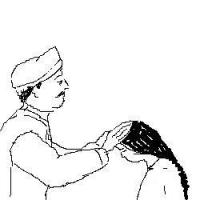
Gasu Dhotti – Potato Bread, a Badaga delicacy

[Excerpt from] A garden party – K. JESHI in the Hindu [March 10,2011]

…….At Hotel GAD (Gateway All Day -THE GATEWAY HOTEL, UPPER COONOOR) you can choose between a buffet and a la carte from Indian, Chinese and Continental cuisines. There is the super-soft gass dhotti (rotis), made of maida, mashed potatoes and butter, a regional Badaga speciality. It is melt-in the mouth and goes well with the Nilgiri kaai curry, a traditional preparation of boiled vegetables in a mint and coriander sauce. Other local delights are avarai uthaka, made from locally-available fresh beans, and chicken ball curry (minced chicken dumplings in coconut milk)……

The breaking marriages….

A sacred institution that is meant to be for life is not even lasting for a few months. I heard the shocking story, recently, that the girl returned home the same evening of the wedding not for ‘marumanay’ [part of a wedding rituals among Badagas where the bride or rather the newly married daughter returns to her parental home for the first time after marriage] but for good. She was forced by her parents and those of the groom’s to go through the wedding ceremony when she refused to get married in the ‘first place’ that a lot was at stake including the ‘pride and honour’ of both the families. Really sad ! What are the reasons?

One is surprised to see so many nice looking, educated and employed boys and girls among Badagas ready for marriage but hesitate to tie the knots since they are not sure for how long the sacred marriage would last?

Is it the ‘old mind set’ of the boys and their parents that the ‘wife – hendaru or daughter in law – sosay’ is expected to be only a second class citizen bringing water, cleaning the house, cooking and bearing children even if she is educated and can be gainfully employed?

Shockingly, it appears, the BPO driven ‘night shift’ non-performing boys, cannot carryout the fundamental principal of a marriage [that proclaims that a marriage is nothing but a public announcement of a private affair] and suffer from erectile dysfunctions and sexual deficiencies and thus cannot face their partners. Then they blame it all on the girl when they are grilled by his parents and relatives with the typical but crude Badaga sense of outrage, ‘ Ennu basaru aapillay’ya? – has she not become pregnant yet??’

Are the educated and employed girls not ready to share and enjoy life but live in a false world that they are ‘more’ than equal in most respects and forget the adage that the fundamental requirement for a successful marriage is nothing but ‘adjustment’? Do they feel being single is better than being singled out for failures??

Seeking a non – Badaga partner seems to be a fashion and passion without differentiating between love and infatuation.

Where is the problem, really?

Are we, the elders, with blinkers firmly in place, not seeing the truth in a broader perspective?

Is the insistence on ‘MORAY’ – that you cannot marry from certain villages as the boys and girls become brother- sister [relationship] – becoming the biggest stumbling block ? While one can understand and appreciate this moray system which was adopted by our ancestors due to medical and ethical reasons when there were few hattis established by brothers in the olden days, what is the ‘true’ picture now??

Are we contributing to the cause in a negative way and condemning our great community to a curse??


Have you visited these badaga websites

here or  here?


Dr. Prakash Krishnan from KURUTHUKULLI writes…


Dear Mr. Jayaprakash, First of all I would like to thank you for gifting such a wonderful and informative BADAGA website on the Internet. I really appreciate your efforts and interest in the era when everybody busy with their own machinery life. The site provides many useful information which is need of the hour. The Badaga culture will be remain in the heart of the young ones when not may elders now convey the message at this juncture. I really thank your efforts to put in all together for the betterment and future of the Baduga community.

…… The purpose of this mail was to thank you and also to tell you that there is a tremendous potential in the agricultural crops, especially the one which our Baduga people work on. I wanted to tell you that I have worked on a few plants (Rubiaceae and Violaceae) collected from my home village, Kuruthukulli. The purpose was to check the potential of the collected plants for its pharmaceutical and other biological activities. What I found and observed was amazing, the plant(s) I collected from crops of Kuruthukulli village got a remarkable bio-control and pharmaceutical property. This I published in various INTERNATIONAL/NATIONAL Journals which is now available over the Internet. I am sending you the article/research papers as well for your glance. This I want to inform you that we baduga people are dealing with the Gold back there in our crops.
My efforts are to go ahead and explore more plants from all the baduga villages and extract the potentiality of the plants.

I hope you find my mail and articles published relevant in any manner. You may consider my mail as an information of what we are having in our crops.

Thanking you once again.

Truly yours,
Dr. Prakash Krishnan.
[29 years, working as a Senior Research Fellow in North Maharashtra University]
Dept. of Biochemistry, School of Life Sciences, North Maharashtra University,
Po.B No.80, Jalgaon, Maharashtra-425 001
[ Phone:- 09823 109 109]

Dr.Prakash, thanks a ton for your kind words about this website and the info on crops. Hope, many of our friends will find it interesting and informative apart from educative. I will be in touch with you – Wg Cdr JP

Want to listen to some nice Badaga songs as you browse….

1.Nadukattuna – A love song on a  cheerful note.Your heart will beat faster listening to this love song..ah..ah

2.Moga Nodi – A sad but very melodious song of separated lovers

3.Neneppella – Another beautiful love song

(unfortunately, I do not know the names of the singers who deserve to be quoted. will somebody help please?)

4.Manessella – A beautiful song by Dr.Selvaraj that captures the ‘Badaga’ life now in the blue mountains

A tiny Badaga hamlet where everyone is a…

A tiny Badaga hamlet where everyone is a non-smoker

Shantha Thiagarajan, TNN, Feb 20, 2011( from THE TIMES OF INDIA)

UDHAGAMANDALAM: A blue mist wraps Melur, a Badaga village near Ooty, but the villagers don’t light up beedis or cigarettes to warm themselves in the cool dawn. For Melur, about 20 km from Ooty in the Nilgiris, has imposed and enforced a complete ban on smoking and chewing tobacco.
At the two entry points to the village, a signboard declares: Smoking is prohibited within the village’. The 600 men in this village of 1,000 people don’t smoke or chew tobacco inside the village. Not one of the seven village shops sells cigarettes or beedis.

“After we imposed the ban, 80% of the villagers have quit smoking. The rest leave the village if they want to smoke,” said village panchayat president MK Krishnan. “We imposed the ban a couple of years ago,” he says, adding that he is not sure of the exact date or year.

There is no penalty for violating the ban, “Till now, nobody has violated it. We just tell people about our ban and they respect it. Since we are all living in the same community and respect one another, there is no need for a penalty,” says Krishnan.

B Shivaraj, a farmer, says they noticed that young people were smoking even in front of their elders. “They had been influenced by TV and movies. Our Badaga way of living has always placed emphasis on values and respect for elders. So we thought we should do something about it and imposed the ban,” he said. Melur is the head village’ of the 33 villages in the merkunadu semai’, There are four prominent ‘semais’ (societies) in the Badaga community in the Nilgiris. “We felt we should set an example for the others,” says another resident MK Ramakrishnan. Most of the villagers are small tea growers or government employees.

Even construction labourers who come to the village for work follow the non-smoking orders. “Till a few years ago, both young people and elders would laze around all day, smoking. The village committee or the mahasabai decided to change people’s attitudes,” says R Balamurugan, the village school teacher. S Janaki, another resident, said, “I’m happy that the men have stopped smoking. Many have started working. In future, I hope the rest also give up.”

Read the article here: A tiny hamlet where everyone is a non-smoker – The Times of India


This is simply superb and showing our unity. One thing I am seriously worried about nowadays, is the  divorce rate in our community, is just like fire. I am very seriously thinking how can we prevent this? Most of our people are educated and working and they are not respecting marriage and marry with other community people. This will  destroy our community. There are a lot of people to lead but nobody has taken care about this. Will you/anybody please think about this? – Bellie Kumar

What Bellie Kumar writes – needs our immediate attention. The high DIVORCE RATE has really reached alarming proportions. We need to do something about it . It is high time – Wg Cdr JP


More rare pics sent by Ravi Balraj

This slideshow requires JavaScript.

All photos sent by Ravi Balraj

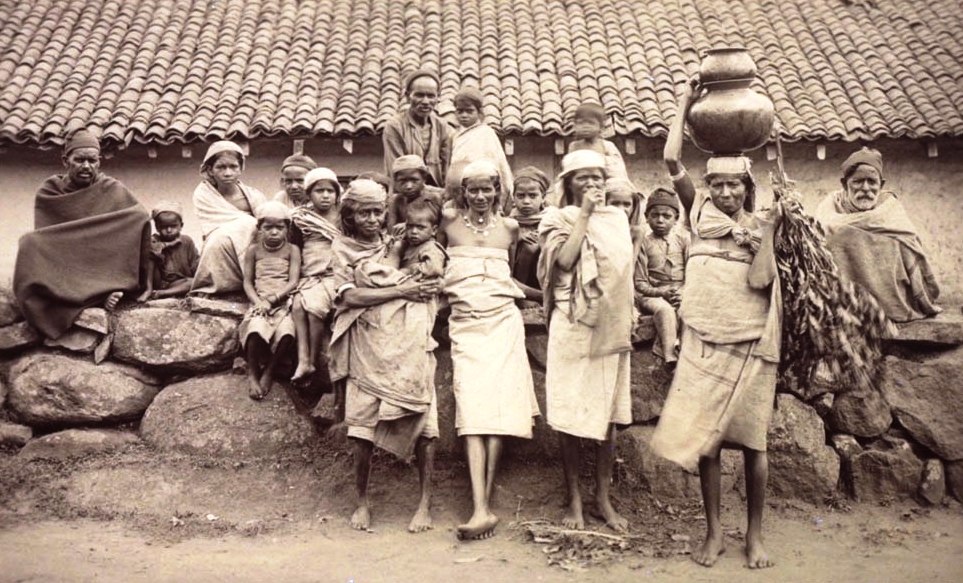
Group of Badagas

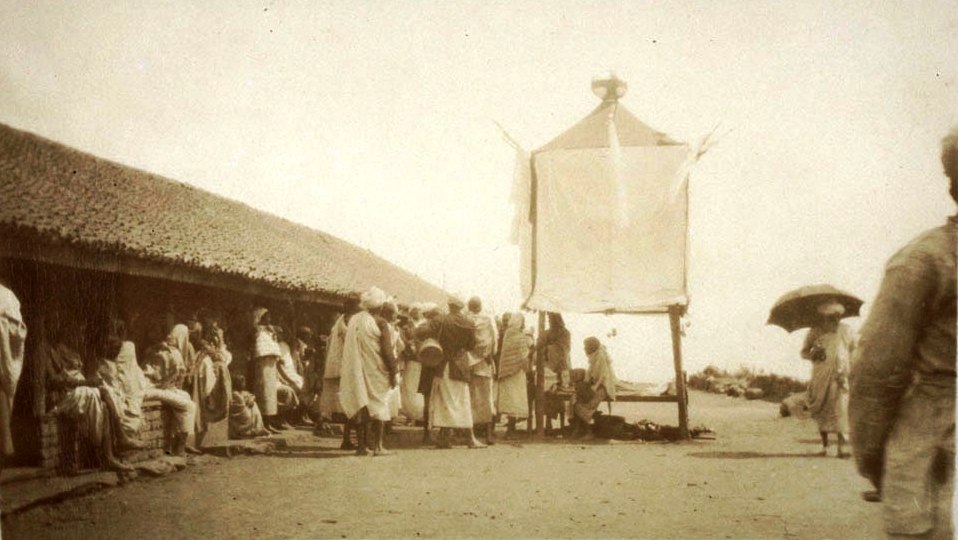
A Badaga funeral at Kalhatti

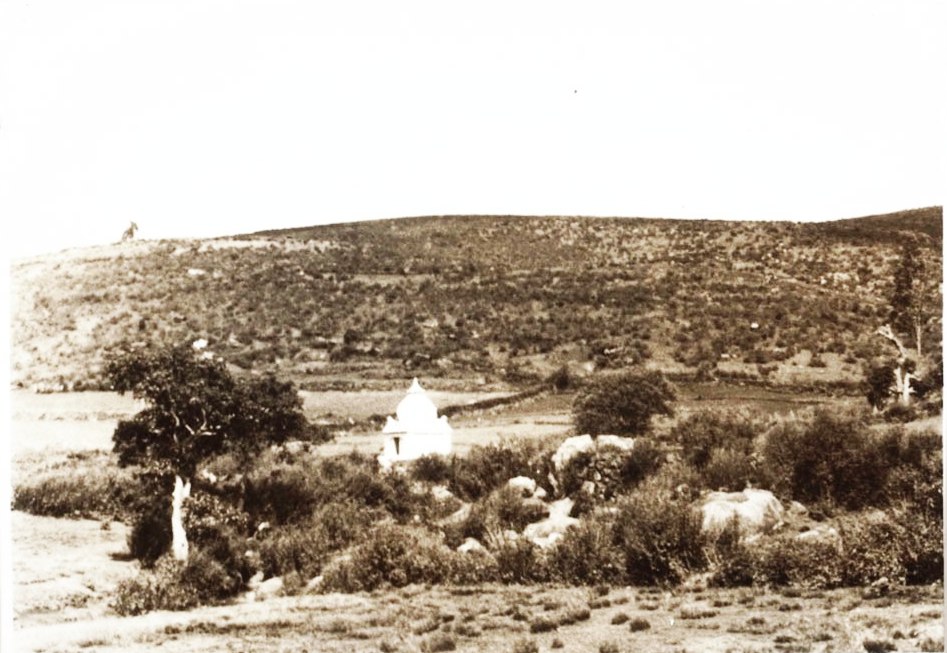
BadagaTemple near Kalhatti

Funeral - Kalhatti

Funeral - Kalhatti

Badaga women

Rare pix of Badagas sent by Ravi Balraj

I have mentioned many times that Ravi Chandran Balraj from Manjoor and now in Kuwait is a well wisher of this website and has always shared his thoughts and sent many rare Badaga  pictures. I am greatly indebted to this true and great Badaga for sharing these excellent pictures with us. Thank you a million times,  Ravi

This slideshow requires JavaScript.

Badaga Cremation - picture sent by Ravi Balraj

Badaga Farm - picture sent by Ravi Balraj

Badaga Farmer - picture sent by Ravi Balraj

Kenda Habba (Fire Festival) - picture sent by Ravi Balraj

Badaga Funeral - picture sent by Ravi Balraj

Badaga Man - picture sent by Ravi Balraj

Badaga Priest - picture sent by Ravi Balraj

Badaga School Kateri (ketti) - picture sent by Ravi Balraj

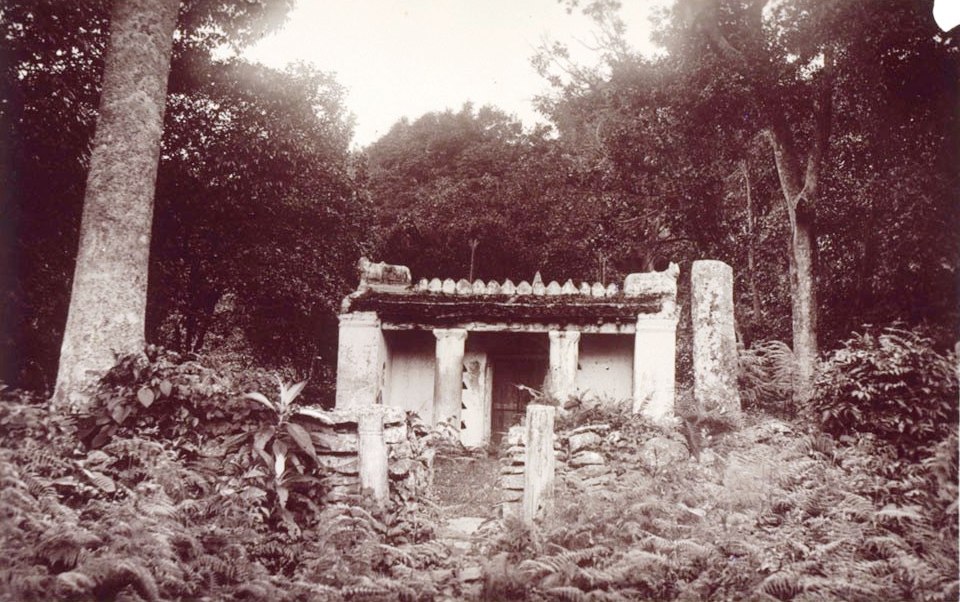
Badaga Temple - picture sent by Ravi Balraj

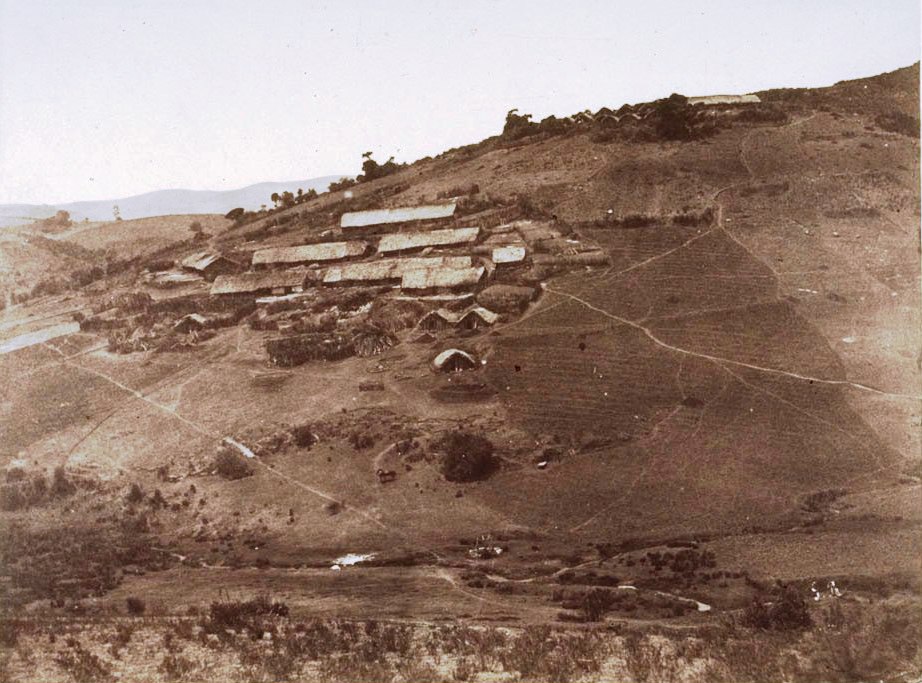
Badaga Village - picture sent by Ravi Balraj

Badaga Village - picture sent by Ravi Balraj

Badaga Village - picture sent by Ravi Balraj

Ketti Temple and Badaga houses - picture sent by Ravi Balraj

Mahalinga (Badaga) Temple - picture sent by Ravi Balraj

Badaga Calendar

Sad but true: I am aware that a lot of our young Badaga  friends copy from my websites and from them many posts and pictures and reproduce them in their blogs or social networking sites as well as submit them for their Ph.D doctorate thesis. Though I have reservation to this ‘unauthorised and illegal’ reproduction, the least that can be done is to acknowledge the source and give credit to the original author. Most importantly – do not distort and give wrong information.

Recently, it has been brought to my notice that a person from Kotagiri has produced a Badaga Calendar 2011 [and now selling it at Rs.125 [and also during Hethay Habba] based on my imputs but has started the first month Koodalu on the [English month] Jan 4th. I do not know how he has chosen that particular date.

Badagas have their own calendar.

Like in any other calendar, there are 12 months and each Badaga month starts on the 10th of English Calendar month but for a few exceptions due to the fact that the month of Feb has 28/29 days [leap year].

I have attempted to make the Badaga Calendars for 2011, keeping in mind that a Badaga month normally starts on the 10th of an English month as far as possible and also to ensure that the number of days in a month is either 30 or 31 days.

Since Badagas consider ‘Sovara’ (Monday) as the most auspicious and ‘holy’ day, they have attached a lot of importance to that day. Generaly, no non-vegetarian food is taken on Mondays. This is also the weekly holiday and hence shown on top in red colour. No ‘Hola Gelcha’[field work] is usually done on ‘sovara’s.

The biggest festival of Badagas is day-specific and not date-specific. That is to say that this festival – HETHAY HABBA – always falls on a Monday [after twelve full moons and on the first Monday of the thirteenth fullmoon]. By the way,full Moon (‘Pournami’ in Tamil) is ‘HUNNAVE’ [pronounced similar to :- hunnu – wound, awai – mother] and New Moon is ‘MUTTU’ in Badaga.

I must put on record my great appreciation to Mr.Sivaprakash. B.Sc.,B.Ed (Dhavane Village) and ‘Naakku Betta’ magazine [1979 Goodalu issue] for their pioneering effort on this subject. Go to next page…

Mrs.Deepa Raju from USA writes

Ms.Deepa Raju from USA writes in FACEBOOK Badaga Group

“..And I am personally very grateful to Wg.Cdr.Bellie Jayaprakash’s website, as I have discovered a wealth of information there. If one individual can do such a massive compilation, just imagine the output when all like minded souls join for a noble cause”.

Thank you ever so much Deepa for your kind words – JP

Kinnakorai visit – worth every minute.

This slideshow requires JavaScript.

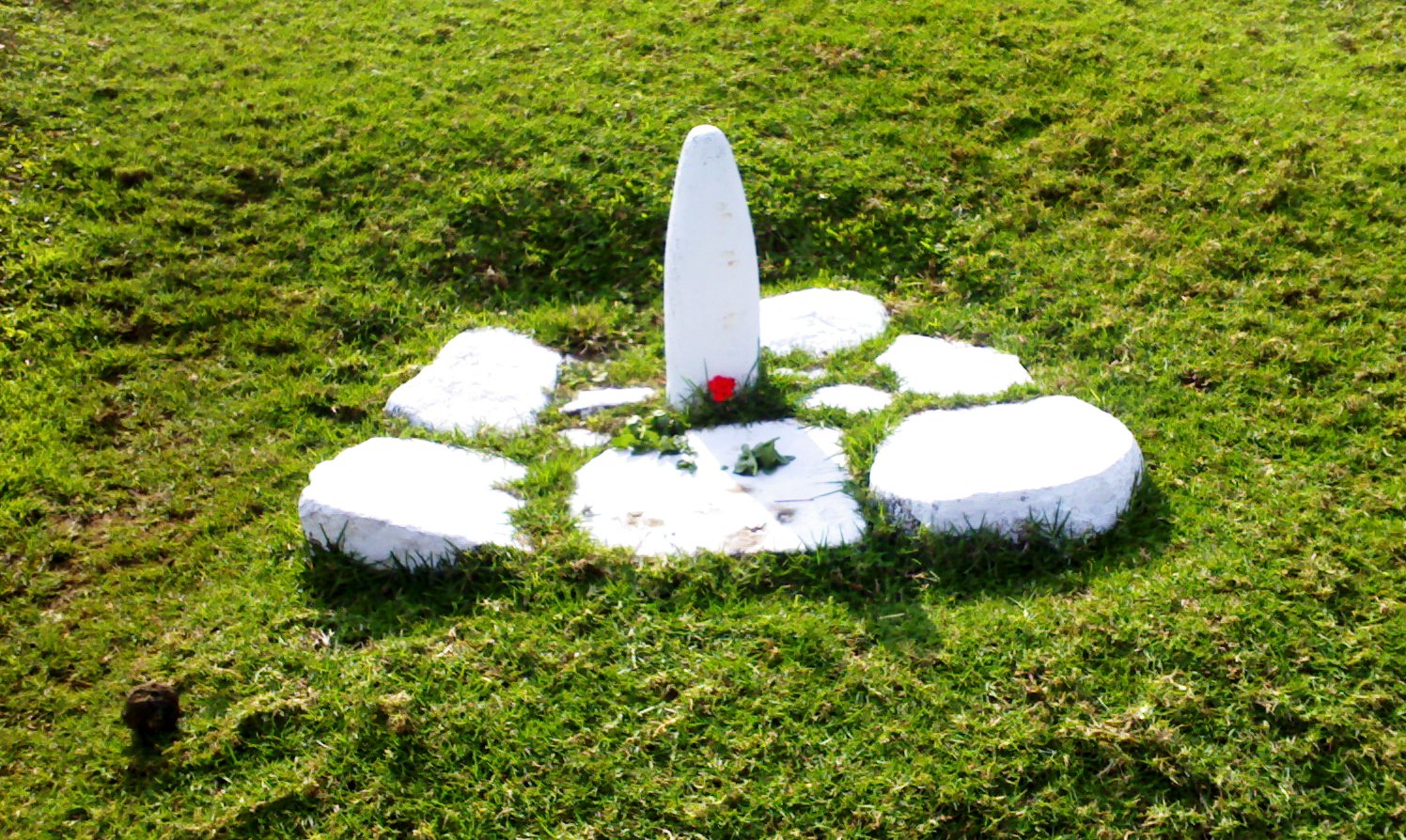
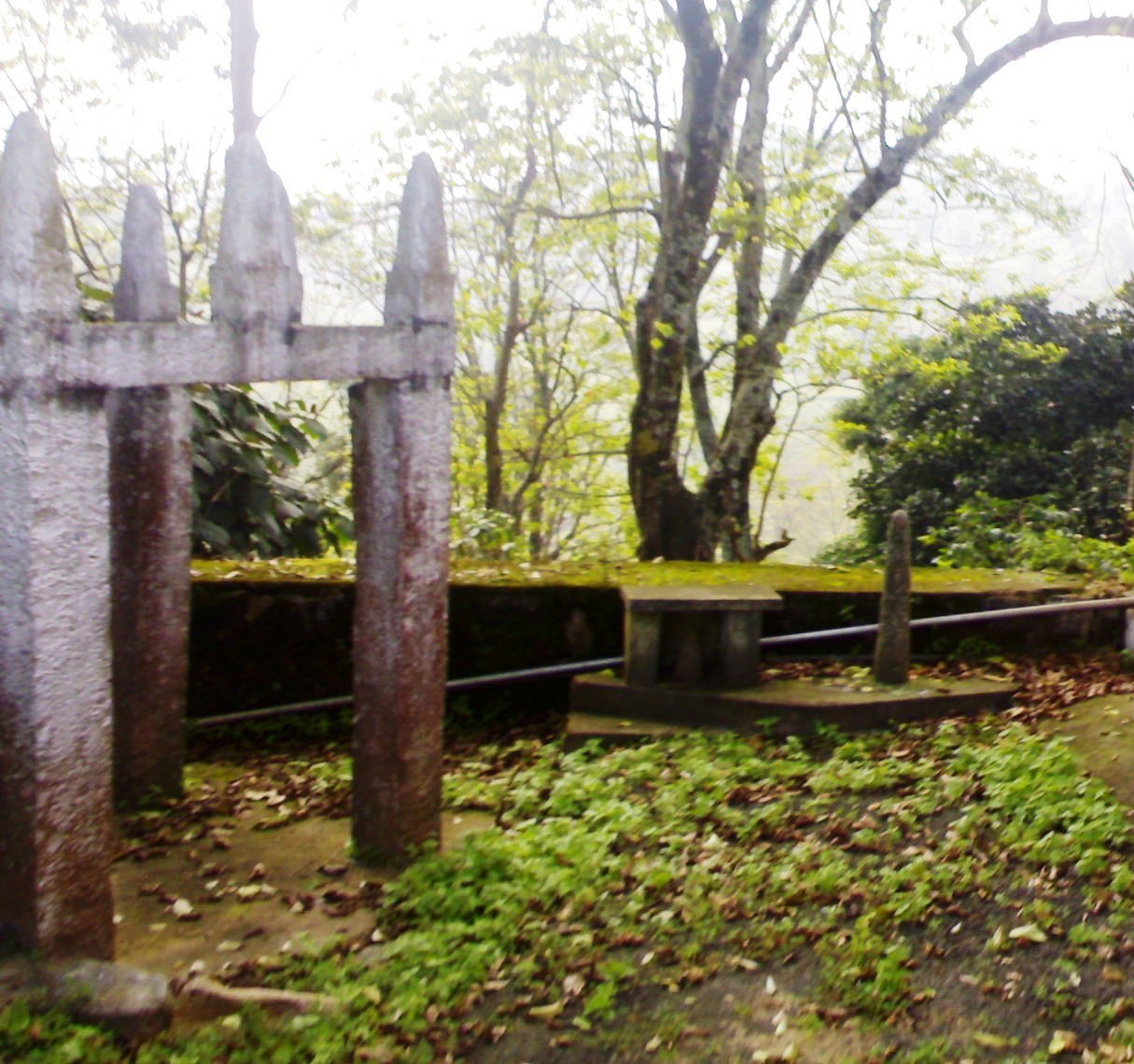
It has been in my mind for a long time, to visit KINNAKORAY and HIRIYASEEGAY villages. For the simple reason that they are quite far off from the main towns of Ooty and Coonoor and I was sure that the sheer distance from the maddening crowd would help these hattis to retain the old world charm of ORIGINAL BADAGAS. To add to my curiosity, part of the lands – holas and thottas [agricultural fields and tea estates]- of these villages fall under the jurisdiction of Kerala. That too in the forest areas of the stunning silent valley region.

I wondered,’could it be also a point to prove the theory that Badagas are one of the original inhabitants of the Nilgiris massif as Kinnakorai and Hiriyaseegay are  far away from the Mysore plains from which it is generally assumed that Badaga migration started. Imagine, the sheer determination of our ancestors to choose such places to build their villages amidst thick forests that are cut off from the ‘world’ literally.

Some time earlier, Dr.Sudhakar wrote from Dubai to say that Kinnakorai belongs to Porangadu Seemae and not to Kunday Seemae as I had assumed (based on Dr.P.Hockings findings). Recently a young budding engineer Anand wrote to say the same thing. Kinnakorai is part of Porangadu. I could not wait any longer. Availing an opportunity of a visit to Ketchigatti (Manjoor), and unable to resist the ‘open invitation’ of Anand [whom I have not met so far], I visited Kinnakorai on 9th Jan, 2011 along with my better half who shares my passion for and about Badagas.

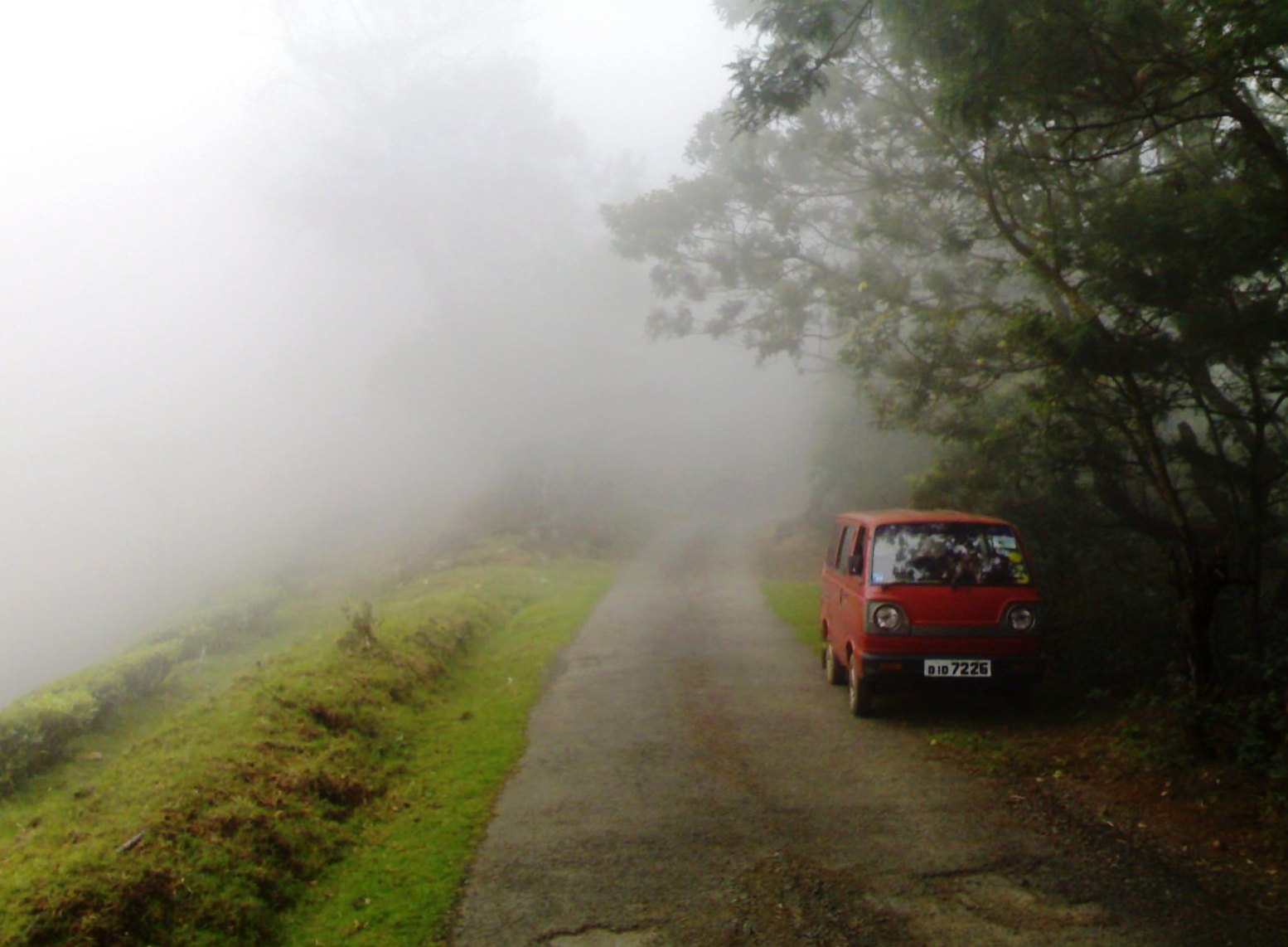
Kinnakorai is about two hours of  journey from Manjoor via Mel Kunday and Thiasolai [is it THAI SOLAI or THIASOLAI?]. By the way Manjoor itself is about 2 hours journey from Hubbathalai (Coonoor). As Anand had mentioned the climate changes dramatically without any warning. The day we travelled, the winter mist covered the road forcing us to use fog lamps but adding to the mystique and unique experience.

Every minute of the visit was worth it and I feel very happy that I have seen a bit of Badaga heritage and would strongly recommend that every Badaga should visit this wonderful place.

On the way, we had the pleasure of seeing some wild life – Sambar , Kada maanu – [See photo]. The never failing Badaga hospitality was in full force with Anand’s father Ravi, who works in the HPF, Ooty but had come to his hatti on the weekend, called up to say that we have to have lunch in his house.

Only after reaching Kinnakorai and exchanging pleasantries with Anand’s parents and his ever cheerful, warm hearted grand mother, did I realise that Kinnakorai is indeed a cluster of hattis with one hatti being a ‘nattaru’ hatti and hence marriage [among the cluster] is possible. And, Kinnakorai is part of Porangadu. I am convinced after talking to the village elders, especially Bella Gowder.

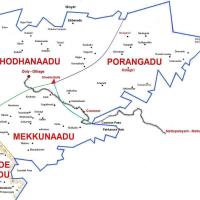
Kinnakore commune [Ooru] consisits of Kinnakorai, Heria seeege,Hosahatti,Ummattipadige Melur, Bikkatti

The beauty is that both Kinnakorai and Heriaseegay have Hakka- Bakkas.


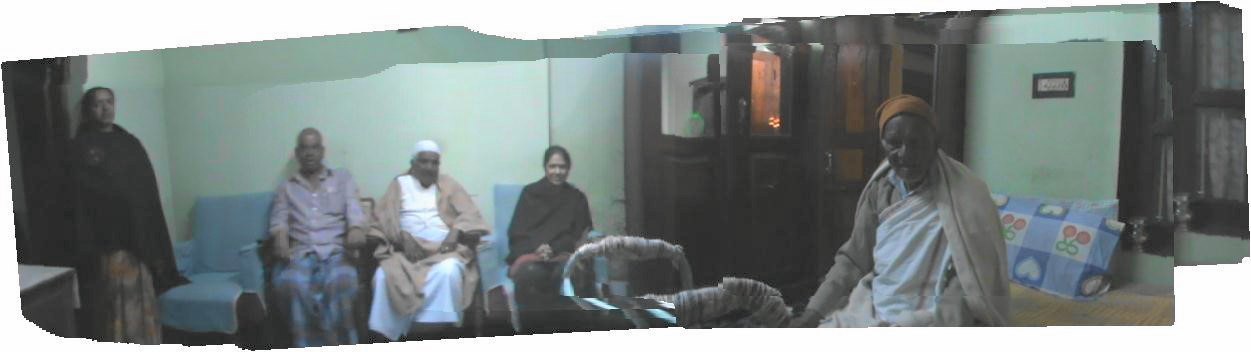
We had a wonderful session with Anand’s younger grandfather [above] who gave us many insights to Badaga migration at his house. Hope to put this video recording  in youtube.

We could not refuse the fantastic lunch of avaray udakka and special rasam prepared by Anand’s mother Mallika , though we could have it only at 4pm due to my insistance that we visit the hattis first.

How can I forget to put on record my deep gratitude to Anand’s grandmother who, being a ever graceful Badaga lady, would not say goodbye to us without ‘nattu’ [gift] of coffee beans grown in her estate.

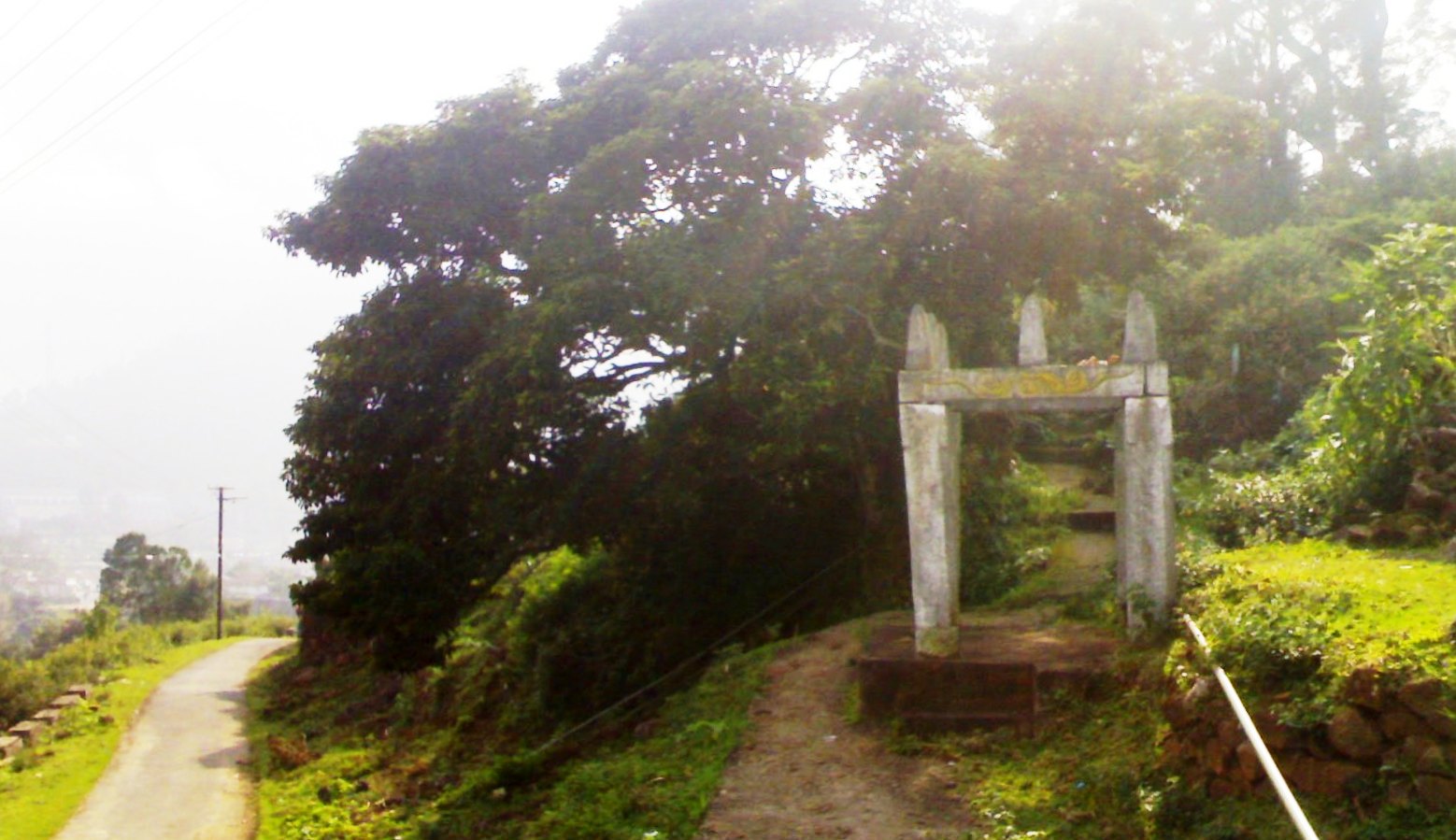
Anand has also sent many pix of his village, some of which are given below :

Let me end with my deep appreciation to Anand, his parents and grandma for the wonderful trip!