Badaga Hatti [Village] Names

One of the unique traditions of Badagas is the naming of their Villages – called hatti (individual village) or Ooru (can be an individual village or a cluster of villages of a ‘commune’).
Generally, the names are based on a topographical feature. Prof.Paul Hockings has elaborated this aspect in his book ‘Ancient Hindu Refugees – Badaga Social History 1550-1975’.
Some of these interesting names and their meanings as mainly given in the above book. Hope to cover all the 380 odd hattis.

1. Aanayhatti – Aanay + Hatti – Elephant + Village
2. Achinakal – Achuna + Kallu – Achu [well proportioned like ‘printed’] + Stone
3. Adikaratti – Athikari + Hatti – Adhigari clan + Village
4. Akasu – Akasu -sky , very high hill
5. Anehatti – Anay + Hatti – Water channel- Bund + Village
6. Aramanehatti – Aranmanay + Hatti – Palace + Village
7. Arebennu – Aray + Bennu – Large flat rock + Upper back [shoulder]
8. Arehatti – Aray + Hatti – Large rock + Village
9. Arekombe – Aray + Kombay – Large rock + Kuruma hamlet [earlier]
10. Asaganathore – Asagana + Thoray – Washerman’s + Riverside

A fundamental question…..

Monisha from K… village writes : “I like Badaga cultural……I loved one boy very sincerely but we didnot have “morai”.We departed [as we could not marry].We want to change this [custom] alone….”

Yes, Monisha, you have raised a fundamental question….this custom of ‘morai’ was followed by Badagas in the olden days when there were not many Badagas and  to avoid marriage between very close relatives – literally brothers and sisters. This made  plenty of sense, medically also. But over a period of time, this particular ‘custom’ seems to have met with a lot of ‘heart burning’, may be due to its ‘blind’ adherence. Or does morai still make a valid condition for marriage ….more in a detailed article soooon…Wg Cdr JP

Deepak [Kethorai] replies : After going [thro’] some of the customs of our culture,I m sure there is a meaning for every custom and practice that our ancestors followed. But to us it seems different and difficult (I guess) to tag on to those customs into our today’s life style. Even I am eager to know the answer for the question and to know more about the custom of “Morai”………

~~~~~~~~~~~~~~~~~

Shiva adds : I am 27 and into buisness and I have seen many communities all over india. I feel what is said about ‘morai’ is bad and before having an affair with someone peoplel must know about our ‘Morai’. One more thing is that, now a days many Badaga girls running behind other community boys (not only before marriage as well as after marriage); if, things go as it is our community wil get perish soon. A small adivice of mine for our good (soft) girls.. I have seen many Badaga girls who have gone behind other community ppl, nobody seems to be having a good life. So be patient and get married according to our parents wish… Am also unmarried and plz note, its not ‘Ottai Kichu’. Boys can also run behind other community girls but for ‘Sothu Soga’ and ‘Mana Mariyadai’, we are hesitating to do. Girls, please pick up the right choice (rich or poor doesnt matter and please marry our boys and help our community retrieve the good name soon)

Deepak from Kethorai writes :-

Deepak from Kethorai writes :-

Really fantastic… The things like EDHA MANE, DHARSAE PETTI / BALLA, HAGALAE clearly explain how our people had planned and prepared for their life in olden days. Its miserable that we are losing those treasures in today’s busy life. There are somethings like ERAGI METTODHU, BATHA HOKKUDHU which nowadays are just in the stories that our elders (Hetthai,Ayya) tell to us. Our people were clear about what is good and healthy for us. Also the different recipes for different seasons were in such a way to defend ourselves from diseases.

Your work is simply amazing JP. I thank you on behalf of youngsters for letting us know our cultures value.We really feel proud to be Badaga. We are getting to know a lot of things about our civilization. Thanks a ton! Continue your superb work.

New FORUM on Badaga

Do you feel very strongly about any issue concerning  Badaga Community? Have the urge to pour your heart out ?

Create your own topic, kindle your imagination and tell the world what you feel in your own language and style!

Feel free to express yourself without any inhibition at the new FORUM http://www.badaga.biz

(Login [Registration] at right hand top corner)

[Registration page http://badaga.biz/SignUp.aspx]

Have you visited http://www.baduga.info ?


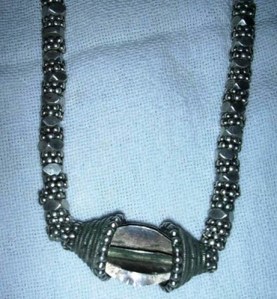
Badaga Bangara – Jewellery

Do you know that Badagas have an unique set of jewellery ? I have added a lot more pictures here

Mani Maalay

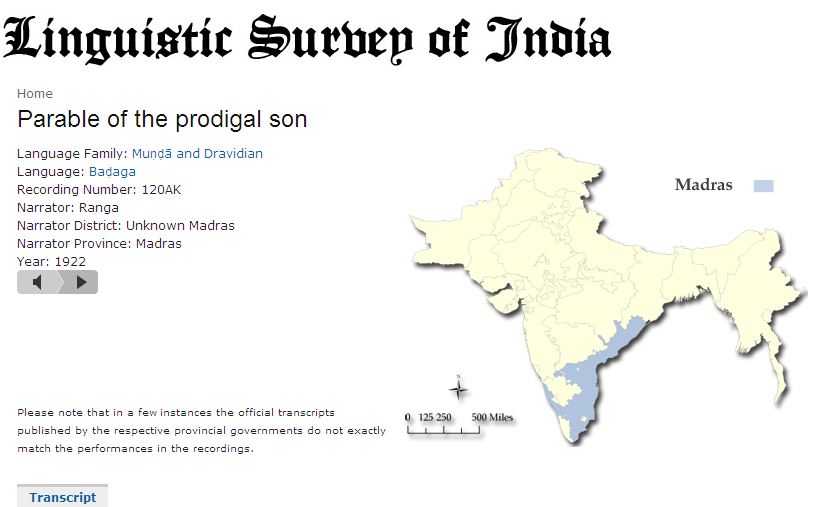
Badaga Language recorded in 1922

Based on an article in the Times of India, I was wondering whether Badaga would form part of the collection of gramophone – audio recordings of languages in India in early 1900s undertaken by Linguistic Survey of India. Sure enough, our great language is there. Recorded in 1922.


” This presentation of Gramophone Recordings from the Linguistic Survey of India consists of digitized recordings originally collected in South Asia during a period from 1913 until 1929. Intended as a supplement to Sir George A. Grierson’s Linguistic Survey of India published between 1904 and 1927, the recordings of stories, songs and poems were collected by provincial and presidential governments of British-ruled India in cooperation with Grierson and the Gramophone Company, Calcutta. “

You can see the transcript and  listen to the audio here

A letter on Badaga Hospitality

On Thu, Oct 14, 2010, littlesmith <rohitgopan@gmail.com> wrote:

I was surprised and felt very happy when I happened to go through your web site.  I did my schooling at  KV Aruvankadu and Mountain Homes , Coonoor . I really love the place The Nilgiris. I love the Badaga language, the people; their cultures and customs. Those days, many of my friends were badagas and I remember they took me to some villages and gave me good food, sweets and they treated me very well. I think no where else  in this world I could find such affectionate people.  I really miss all of them.  May I take this opportunity to thank you for this magnificent work. This is really wonderful to bring back the old memories. If ever I get a chance, I would certainly make a visit The Nilgiris.
Thanks for the website, I had book marked this as one of my favourites.
best regards, Little Smith – facebook
Hello Little Smith,
Thank you very much for your kind words about my website as well as about our Badaga community. I have taken the liberty of putting your email in my site http://badaga.in
In case you want to recall / reconnect with your Badaga friends, pl give their names, we may include them in the post.
I do not know where you are based now, but whenever you want to visit the Nilgiris, pl do let us know. You may be surprised to see that the Badaga hospitality has not changed in spite of the material and messy changes around the Nilgiris.
With warm regards – Wg Cdr JP

Bravo, Rajamma of Kethorai


Kethorai Rajamma, who made all  those known her , especially the Badagas, very proud by winning an award from the President of India, recently has written to say,

Dear Mr.JP…,
My earnest greetings..Your efforts for the beautiful bagadas of the the most beautiful Nilgiriis make me elated beyond Doddabetta’s height…May the sway of tall dignified trees, the tinkling water falls, the smiling colourful flowers and the hugging chill breeze shower wonderful and abundant blessings to you by laying a green carpet welcome by the tea plantations. God bless you..
With regards,
Kethorai Rajma

Thank you ever so much for these kind words. If I could achieve a small percentage of what you have achieved [that has been recognised by all], then I am truly blessed. With the warmest of regards, JP


Rajamma of Kethorai village has made us proud once again. She won an award from the President of India.

Santhosh Kumar JB has sent the info and the link in ‘The Hindu’ and we have great pleasure in sharing the same with all Badagas.

It was not before the age of 15 that she was first taught the English alphabet. Now, 35 years later, she is a successful teacher in the same subject and is getting ready to leave for New Delhi to receive the Dr. Radhakrishnan Best Teacher Award from President Pratibha Devisingh Patil.
The fact that R.Rajammal is the first generation learner from her family may not be uncommon. But that she belongs to the Badagar community from remote Kethorai Village of Kethi Village Panchayat in Nilgiris District and has come thus far is an inspiring story. People travelling on the famous Nilgiri Mountain Railway might have noticed the Kethi railway station Coonoor and Udhagamandalam. Her native village Kethorai is a good five-kilometre trek from there.
Ms. Rajammal teaches English and Science to primary students at Kendriya Vidyalaya (II) at Madambakkam near Tambaram. Recognising her rise from modest backgrounds, her contribution to teaching and the Guides movement, the Ministry of Human Resource Development selected her for the prestigious award.
“I am the eldest among five children. I still remember the hardwork of my parents who toiled through the day in tea plantations and small farms raising vegetables,” Ms. Rajammal recalled her childhood days at Kethorai. Five decades back, education in remote hilly areas was scarce but Rajammal made the best of it, excelling in academics till high school.
Being a first generation learner did come in the way but having imbibed the quality of sheer hard work from her parents M.Ramachandran and R.Saraswathi, she never gave up. “We used to walk eight kilometers to high school and back home. It was not before class nine that we were first taught the English alphabet,” Ms. Rajammal said.
As those were the days of college education immediately after S.S.L.C., they had very little time to master English and when she joined Providence College, Coonoor, she found it even more difficult in the initial days. However, with the help of her teachers and classmates, she finished her B.Sc in Botany in high grades and came to Chennai, where she managed to get the job as a teacher at St. Michael’s Academy in Adyar.
Deputation to Moscow
Seven years later, she joined the Kendriya Vidyalaya. After a nation-wide test, she was selected to go on a three-year deputation to Moscow where she served the KV school there. A compere for programmes at INS Rajali in Arakkonam and also during passing out parades of Central Industrial Security Force establishments, Ms. Rajammal has earned popularity for her motivational speeches and also for her work among the underprivileged sections involving school students.
Her association with welfare homes for the senior citizens, destitute women and children had its origins in her childhood. “I visit my native village at least six times a year and spend a long time during the summer vacation. I insist on the importance of education and encourage young girls never to give up till they succeed in life,” Ms. Rajammal said.
Actively involved in the Girl Guides movement, Ms. Rajammal has received the NCERT Award in 2003 for Innovative Teaching Practices in Environmental Studies and the Kendriya Vidyalaya Sanghatan Incentive Award in 2008.
She wants to be a role model for rural women, especially among her Badagar community. Ever indebted to the Kendriya Vidyalaya Sanghatan for the exposure that she has received, she said that she would be only too glad to serve KVS even after her retirement.
She lives in Madambakkam and can be reached at 2229 2403 and 98413 57720. E-mail: nilgiriraji@yahoo.com.    nilgiriraji@hotmail.com
K. Manikandan
R. NELSON RAJKUMAR writes : 

Dear Sister Rajammal,
These comments are after I called you over phone on 17.08.10. I read all the articles in The Hindu and I really appreciate you on your consistency for greater heights inspite of all the short comings in your early stage and congratulate you on your achievements. As I was born and brought up in Chamraj Estate which is via Kundha Bridge and studied in Kokkalada school till 12th STD (1974) I have my own love and affection on the Badaga Community. I visited my school in the year 1994 and presented a TV to the school. Again I visited the school many times and I took videos of the complete school, students, teachers and their class teachings, which gives me tremndous joy whenever I open my laptop to see them. Now I am settled in Chennai with my family and having my own Shipping and Cargo Clearing Company. Dr. Raman of ex-UPASI is my great admirer. My God bless you and your family more and more in the future.

Badaga KAPP panjayats…?!

In the olden days, Badagas lived a very simple but highly cohesive life. Evey village -hatti, consisted of one or two ‘families or Kudumbas’. Each kudumba, as the name indicates, consisted of brothers and they usually lived in the same street – ‘thara’. The ancestral home was given to the youngest son and, due to space constraints, the elder brothers moved out to build separate houses.
The youngest son  [when married] was expected to take care of the elderly parents. The sister(s) married off to other hattis were always welcome to the parents house and for the children of the these females, their parents house was a source of great safety and security and the brother’s house was a sacred house known as ‘GURU Manay’. Though the property was given ONLY to sons, the married daughters could come back to the parents house anytime in case of any matrimonial discord. The daughters were given all the respect and they never felt neglected. Mind you, this was a time when girls were married off at a very young age and in most of cases, not educated.
Every family lived a contented life with total cooperation. This, of course, was the time when the undivided Hindu family wealth and property was given to only sons in our Country.
But all that changed over time. Material lust took control over conventional matters. The daughters, more often than not, were not welcomed by the brothers (generally due to their wives pressure). This combined with lack of education and absent of other alternatives, forced many daughters to suffer in silence. If they had children and a wayward husband who indulged in wasteful life with drinking being an eternal curse, the life was not only miserable but unbearable. Like in all other communities in our great country, the girls were forced to live a condemned life.
This is the time visionaries and forward looking Badaga leaders like Rao Badahur Ari Gowder insisted that the girl child should be educated and equal rights and property be given as the boys among Badagas. Empowering women. Now, even the laws in our country has been amended wherein the boys and girls have equal rights on the property of the parents.
Sadly, even in this day and time, in many hattis, the property is recommended to be given ONLY to sons by the so called hatti ‘elders’ in what can be termed as ‘kapp’ panjayats to sort out property disputes. As you may be aware KAPP panjayats are popular male dominated forums in Hariyana and wester UP who had given the ‘OK’ for honour killings, acting as extra constitutional authorities and are in trouble as Supreme Court is looking into their actions.
The problem is, in olden days a complaint was made to the common wisdom of hatti elders when the disputes could not be solved within the family – Kudumba. The Badaga proverb – doddaru shloka – ‘manay ya maathaadi, mandaga hogu’ aptly describes this. Also, in olden days, the options of going to the court or seeking remedy through legal channels were not easy. Tthe ‘core committee’ of elders looking into complaints was made up of non partisan, experienced and where available educated people and their rulings were acceptable to all.
These days, in most of the hattis the ‘Gowda’ chosen is the one who does not have a permanent or regular job as he has to attend to a lot social functions both in his as well as in other hattis.  Other members of the ‘problem solving’ group are youngsters selected for collection of tax – wari and to organise temple festivals – habbas etc. By no stretch of imagination, they can can be considered as competent or qualified and least of all experience which is a must.
And, most importantly, when it comes to property allocation to daughters, how can these panjayats go against the law of the land? The feeble argument that only a son can be called a ‘WARISU’ is blatantly brutal, one sided, gender biased and ‘anti-female’ like many other social issues in our society.
A personal note:
We have a son and a daughter. We have educated them in the best of schools like Lawrence School, Lovedale and both have done their Masters from Canada and USA. Our [two] flats in New Delhi and Bangalore along with our property in the Nilgiris and Mettupalayam have been equally divided between these two. Rao Bahadur Ari Gowder, the only Badaga leader who is still remembered even after forty years of his death, gave his property equally to his two grand daughters and one grandson along with their mother. Being his nephew and grand daughter, I and my wife would like to follow his footsteps.

|*|*|*|*|*|


Origin of Badagas – the myth of migration

Nilgiri Hills from atop Doddabetta Peak

Nilgiri Hills from atop Doddabetta Peak - wikipedia

I am firmly of the view that our history viz Badaga Origin is much older- may be thousands of years – than what many scholars including Badagas consider and my initial ‘research’ confirms that. The general belief, over a period of time thrust down our throats, is that we migrated from Mysore area mainly due to the simple fact that Badaga means from the north. Ridiculous, it sounds.
In “ Paamé ” – The history and culture of the Badagas of the Nilgiris by B.Balasubramaniam, a highly educated Badaga,  feels that Badagas migrated from Southern Karnataka [then Mysore State] about 700 years back, much before Tipu’s time, around 1311 AD during the plundering raid of Malik Kafir.

Though I am in agreement with Bala that ‘some‘ Badaga migration, if at all, took place much earlier then Tipu’s time [ late 1700s], I am firmly of the view that “It is possible that Badagas have lived in the Nilgiris for thousand of years like the Thodas [Thodhamaru ] or Kothas [Kotharu] and migration theory is an attempt by historians and anthropologists to explain away a ‘historical puzzle“.

Only based on the name ‘Badaga’ or on the so called local legends that are open to many interpretations or on the basis of similarity of Badaga [language] with haliya /mid Kannada, can we conclude that Badagas migrated from Southern Mysore? When there is no definite evidence about the origin of Todhas or Kothas, how can we presume that they predated Badagas as natives of the Nilgiris??

I am sure the mystery of migration is far from over. If you look at the issue as of ‘definitive migration’ then you try to guess about the dates but what happens if we believe that Badagas have always been there in the Nilgiris much before or along with Todhas or Kothas? Uncomfortable questions that are very interesting and worth digging deeper into.

Given the diversity but highly commendable unity and uniformity with minor changes in their customs, it appears that Badaga Migration could have taken place even within the Nilgiris Hills [reverently called ‘Naakku Betta’ by the Badagas].

What we DO NOT know about Badagas is more than what we know about them. Such is the mystery of Badaga Origin.

D.Rajesh writes :

Dear Sir,

I visited Nilgiris recently and was starting to wonder about Badagas and Thodas.

Having seen your website about Badagas, here are my thoughts on their origin.

To start with and to be frank I did not know much about Badaga culture except for the fact that they are unlike general “hill people” that one could see. That is, I was aware that Badagas were much more advanced in culture and civilization (should not misunderstand that hill people are of less culture; I am just trying to contrast two different things and hence nothing is inferior here) than normal tribal population. Now that I am trying to understand the origins of Badagas, my theory will be as below……….
[Read the complete article here]